


Multi-level distribution warehouses combine some of the hardest automation requirements in intralogistics: vertical transfer between floors, high-density pallet storage on each level, tight column grids, and fluctuating outbound work. The right automated solution needs to solve building-level flow first, then storage and picking. This guide explains the main system choices, the specification details that matter for multi-level buildings, where cost is usually hidden, and how to evaluate suppliers without accepting vendor narratives at face value.
Why Multi-Level Distribution Warehouses Need a Different Automation Logic
A multi-level warehouse is not simply a taller manual warehouse. Floor load capacity, column spacing, ceiling height per level, and the vertical movement path between receiving and dispatch all shape what automation can actually be installed. If the vertical transfer route is specified late, even a well-designed storage system can become a bottleneck at peak hours.
The first design question should be whether the building will move pallets level by level through a single main route, or whether each floor can operate with independent inbound and outbound buffers. This decision controls rack orientation, aisle count, elevator or shuttle position, and how many robots or cranes are required to sustain required throughput.
Automated Solutions That Fit Multi-Level Buildings
Transportador en cuatro direcciones Almacenamiento Denso
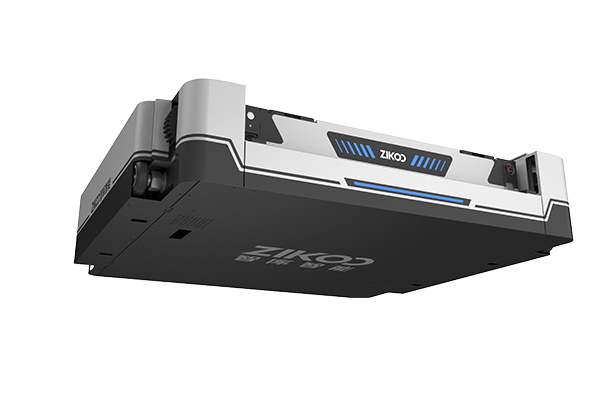
sistema de transporte de cuatro víass are often a practical first choice for multi-level distribution buildings because they replace fixed-aisle movement with pallet-level handling inside the rack. Shuttles travel along rails, switch lanes through cross-docking positions, and manage pallets in deep lanes. This creates a flexible storage block that can be reconfigured by software as SKU profiles change.
A four-way shuttle architecture also supports phased expansion. Because shuttle robots are distributed across racks rather than tied to one aisle, capacity can be added by extending rack blocks and placing additional robots where demand is highest. That flexibility matters in multi-level buildings where space is irregular and full-floor standardization is rare.
Vertical Bidirectional Shuttles and Level-Changers
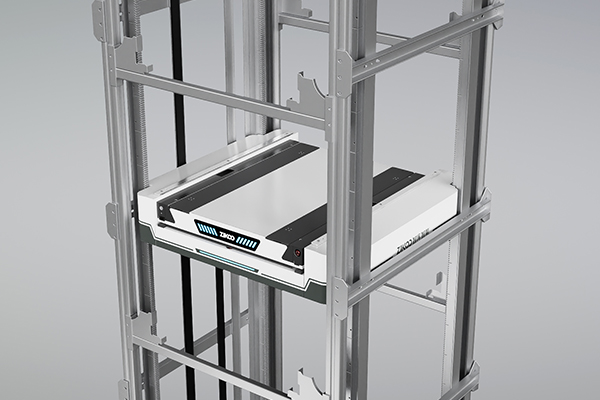
Between floors, dedicated vertical transporters are usually more effective than general freight elevators. A vertical bidirectional shuttle can occupy a compact floor cutout, carry a pallet to a designated rack position, and hand off directly to a horizontal shuttle or conveyor. This removes the manual step of staging pallets at an elevator landing and reduces reliance on forklifts near floor openings.
Vertical transfer points should be specified around pallet dimensions, peak pallets per hour, and the need for simultaneous up and down movement. If all levels feed one vertical shaft, the shaft must be able to handle inbound receipts and outbound order demand without contention.
AS/RS Stacker Cranes in Multi-Level Buildings
Stacker crane AS/RS systems work well in high-bay, single-level rack structures, but they can also serve individual floor levels in multi-storey buildings. The decision between a crane-based AS/RS and shuttle-based storage usually comes down to ceiling height, aisle length, and whether the building has a clear single-level high bay or repeated lower floors. Shuttle systems generally recover more storage density in lower-height floors, while cranes can service taller rack more efficiently.
If you are weighing a stacker crane against a shuttle architecture for an existing building, <Grúa apiladora vs Transbordador de cuatro vías: ¿Cuál se adapta mejor a tu [Almacén ASRS](https://www.zikooint.com/asrs-automated-storage-and-retrieval-system-solutions)?> covers the structural, ceiling-height, and throughput trade-offs in detail.
Software and Order Flow Integration
Multi-level automation depends on synchronized control across WMS, WES, WCS, and robot-level scheduling. The software should allocate storage positions across floors, group order release to avoid sending every pallet through the vertical transfer point at once, and re-plan tasks when robots become unavailable. Without that control layer, added automation can create traffic jams instead of faster dispatch.
WMS and WCS behavior determines whether automated capacity is actually used efficiently during peak periods. <El Software de Almacén Inteligente PTP Empodera a las Empresas para Mejoras Inteligentes> covers how software-driven task release and order grouping improve multi-level workflow.
Throughput, Vertical Flow, and the Six-Way Difference
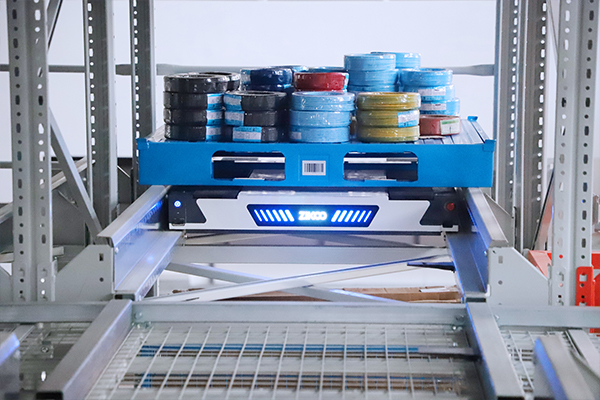
The most common failure mode in multi-level automation is under-sizing the vertical link. A shuttle may be fast on the rack level, but if the level-changer cannot move pallets quickly enough, throughput is capped at the shaft. A sistema de transporte en seis vías concept addresses this by combining horizontal movement in four directions with vertical movement through a connected level-changer. Each pallet can move in any spatial direction without returning to a fixed aisle.
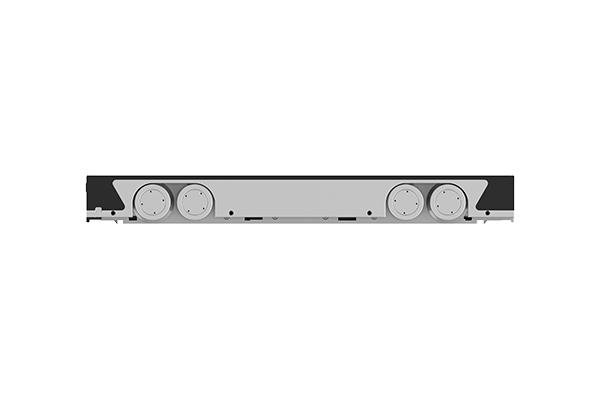
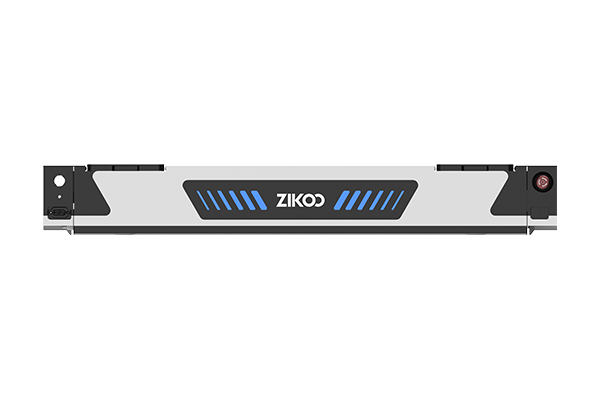
As a technical example, some available modular equipment illustrates the required compactness and speed envelope. A four-way shuttle with a body height of 125 mm can operate in dense rack while carrying pallet loads up to about 1,200 kg in standard configurations. In a connected six-way arrangement, vertical transporters with positioning accuracy of about ±1 mm can place pallets at floor openings reliably. These are not universal industry values; they are examples of current equipment capability and should be checked against the supplier’s actual test protocol.
| Performance area | Example capability from one available modular system | Qué verificar |
|---|---|---|
| Horizontal shuttle speed | Empty approximately 1.6 m/s; loaded approximately 1.2 m/s | Speed under rated load and during lane changes |
| Vertical transfer speed | Empty approximately 1 m/s; loaded approximately 0.5 m/s | Cycle time per floor, including acceleration and positioning |
| Precisión de posicionamiento | Vertical shuttle approximately ±1 mm | Pallet placement repeatability in live operation |
| Continuous operation | Approximately 8 hours before charging | cURL Too many subrequests by single Worker invocation. To configure this limit, refer to https://developers.cloudflare.com/workers/wrangler/configuration/#limits |
| Temperatura de operación | cURL Too many subrequests by single Worker invocation. To configure this limit, refer to https://developers.cloudflare.com/workers/wrangler/configuration/#limits | cURL Too many subrequests by single Worker invocation. To configure this limit, refer to https://developers.cloudflare.com/workers/wrangler/configuration/#limits |
cURL Too many subrequests by single Worker invocation. To configure this limit, refer to https://developers.cloudflare.com/workers/wrangler/configuration/#limitsTransbordador de Seis Vías: La Solución Definitiva para Almacenes para Reducir Costos y Mejorar la EficienciacURL Too many subrequests by single Worker invocation. To configure this limit, refer to https://developers.cloudflare.com/workers/wrangler/configuration/#limits
cURL Too many subrequests by single Worker invocation. To configure this limit, refer to https://developers.cloudflare.com/workers/wrangler/configuration/#limits
cURL Too many subrequests by single Worker invocation. To configure this limit, refer to https://developers.cloudflare.com/workers/wrangler/configuration/#limits almacenamiento automatizado cURL Too many subrequests by single Worker invocation. To configure this limit, refer to https://developers.cloudflare.com/workers/wrangler/configuration/#limits
cURL Too many subrequests by single Worker invocation. To configure this limit, refer to https://developers.cloudflare.com/workers/wrangler/configuration/#limits
cURL Too many subrequests by single Worker invocation. To configure this limit, refer to https://developers.cloudflare.com/workers/wrangler/configuration/#limits
cURL Too many subrequests by single Worker invocation. To configure this limit, refer to https://developers.cloudflare.com/workers/wrangler/configuration/#limits
cURL Too many subrequests by single Worker invocation. To configure this limit, refer to https://developers.cloudflare.com/workers/wrangler/configuration/#limits
cURL Too many subrequests by single Worker invocation. To configure this limit, refer to https://developers.cloudflare.com/workers/wrangler/configuration/#limits
cURL Too many subrequests by single Worker invocation. To configure this limit, refer to https://developers.cloudflare.com/workers/wrangler/configuration/#limits
| cURL Too many subrequests by single Worker invocation. To configure this limit, refer to https://developers.cloudflare.com/workers/wrangler/configuration/#limits | Qué solicitar |
|---|---|
| cURL Too many subrequests by single Worker invocation. To configure this limit, refer to https://developers.cloudflare.com/workers/wrangler/configuration/#limits | cURL Too many subrequests by single Worker invocation. To configure this limit, refer to https://developers.cloudflare.com/workers/wrangler/configuration/#limits |
| cURL Too many subrequests by single Worker invocation. To configure this limit, refer to https://developers.cloudflare.com/workers/wrangler/configuration/#limits | cURL Too many subrequests by single Worker invocation. To configure this limit, refer to https://developers.cloudflare.com/workers/wrangler/configuration/#limits |
| cURL Too many subrequests by single Worker invocation. To configure this limit, refer to https://developers.cloudflare.com/workers/wrangler/configuration/#limits | cURL Too many subrequests by single Worker invocation. To configure this limit, refer to https://developers.cloudflare.com/workers/wrangler/configuration/#limits |
| cURL Too many subrequests by single Worker invocation. To configure this limit, refer to https://developers.cloudflare.com/workers/wrangler/configuration/#limits | cURL Too many subrequests by single Worker invocation. To configure this limit, refer to https://developers.cloudflare.com/workers/wrangler/configuration/#limits |
| cURL Too many subrequests by single Worker invocation. To configure this limit, refer to https://developers.cloudflare.com/workers/wrangler/configuration/#limits | cURL Too many subrequests by single Worker invocation. To configure this limit, refer to https://developers.cloudflare.com/workers/wrangler/configuration/#limits |
| cURL Too many subrequests by single Worker invocation. To configure this limit, refer to https://developers.cloudflare.com/workers/wrangler/configuration/#limits | cURL Too many subrequests by single Worker invocation. To configure this limit, refer to https://developers.cloudflare.com/workers/wrangler/configuration/#limits |
cURL Too many subrequests by single Worker invocation. To configure this limit, refer to https://developers.cloudflare.com/workers/wrangler/configuration/#limits
cURL Too many subrequests by single Worker invocation. To configure this limit, refer to https://developers.cloudflare.com/workers/wrangler/configuration/#limits
cURL Too many subrequests by single Worker invocation. To configure this limit, refer to https://developers.cloudflare.com/workers/wrangler/configuration/#limits
- cURL Too many subrequests by single Worker invocation. To configure this limit, refer to https://developers.cloudflare.com/workers/wrangler/configuration/#limits
- cURL Too many subrequests by single Worker invocation. To configure this limit, refer to https://developers.cloudflare.com/workers/wrangler/configuration/#limits
- cURL Too many subrequests by single Worker invocation. To configure this limit, refer to https://developers.cloudflare.com/workers/wrangler/configuration/#limits
- cURL Too many subrequests by single Worker invocation. To configure this limit, refer to https://developers.cloudflare.com/workers/wrangler/configuration/#limits
- cURL Too many subrequests by single Worker invocation. To configure this limit, refer to https://developers.cloudflare.com/workers/wrangler/configuration/#limits
- cURL Too many subrequests by single Worker invocation. To configure this limit, refer to https://developers.cloudflare.com/workers/wrangler/configuration/#limits
cURL Too many subrequests by single Worker invocation. To configure this limit, refer to https://developers.cloudflare.com/workers/wrangler/configuration/#limits
Preguntas frecuentes
cURL Too many subrequests by single Worker invocation. To configure this limit, refer to https://developers.cloudflare.com/workers/wrangler/configuration/#limits
cURL Too many subrequests by single Worker invocation. To configure this limit, refer to https://developers.cloudflare.com/workers/wrangler/configuration/#limits
cURL Too many subrequests by single Worker invocation. To configure this limit, refer to https://developers.cloudflare.com/workers/wrangler/configuration/#limits
cURL Too many subrequests by single Worker invocation. To configure this limit, refer to https://developers.cloudflare.com/workers/wrangler/configuration/#limits
cURL Too many subrequests by single Worker invocation. To configure this limit, refer to https://developers.cloudflare.com/workers/wrangler/configuration/#limits
cURL Too many subrequests by single Worker invocation. To configure this limit, refer to https://developers.cloudflare.com/workers/wrangler/configuration/#limits
cURL Too many subrequests by single Worker invocation. To configure this limit, refer to https://developers.cloudflare.com/workers/wrangler/configuration/#limits
cURL Too many subrequests by single Worker invocation. To configure this limit, refer to https://developers.cloudflare.com/workers/wrangler/configuration/#limits
cURL Too many subrequests by single Worker invocation. To configure this limit, refer to https://developers.cloudflare.com/workers/wrangler/configuration/#limits
Prepare warehouse drawings, pallet sizes and weights, inbound and outbound rates, SKU depth, storage conditions, peak order patterns, and current labor or forklift operations data. This allows the supplier to simulate system performance against your actual constraints rather than produce a generic equipment list.
Referencias
[1] ISO 9001:2015, Quality management systems — Requirements, International Organization for Standardization.
[2] ISO 45001:2018, Occupational health and safety management systems — Requirements with guidance for use, International Organization for Standardization.
[3] EN 528:2008, Rail dependent storage and retrieval equipment — Safety requirements, European Committee for Standardization.
[4] ISO/IEC 27001:2022, Information security, cybersecurity and privacy protection — Information security management systems — Requirements, International Organization for Standardization.
If you’re interested, check out these related articles:
Transbordador de Seis Vías: La solución de doble motor para alta capacidad de transporte
La estandarización impulsa la entrega global: Zikoo Robotics Six-Way Shuttle amplía su presencia en el extranjero
El transporte de seis vías impulsa el almacenamiento denso, rompiendo las limitaciones espaciales
Transbordador de Seis Vías: La Solución Definitiva para Almacenes para Reducir Costos y Mejorar la Eficiencia
El transporte de seis vías desbloquea la era del almacenamiento inteligente 3D real


