


The question of automated warehouse maintenance staffing surfaces early in any automation project. Once the throughput gains and space savings are quantified, operations managers start asking: who will keep these machines running? With over a decade spent deploying sistema de transbordadores de cuatro víass, cURL Too many subrequests by single Worker invocation. To configure this limit, refer to https://developers.cloudflare.com/workers/wrangler/configuration/#limitss, and vertical elevators across power, cold chain, manufacturing, and 3PL environments, I have learned that the answer is never a straight yes or no. It hinges on the specific equipment, the supplier’s support infrastructure, and how much downtime your operation can absorb before the financial impact turns unacceptable.
Do Automated Warehouses Need Dedicated Maintenance Staff?
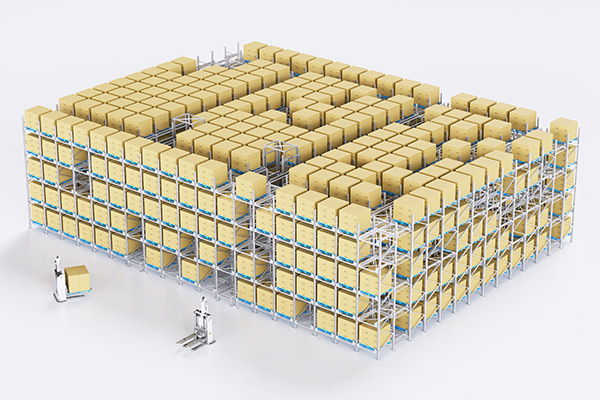
Systems with high complexity and critical uptime requirements almost always justify at least one in‑house technician. A cold‑storage facility running twenty‑four hours a day with R‑bot shuttles and H‑bot elevators cannot afford to wait for a third‑party engineer when a position error stops a feeding lane. In contrast, a single‑shift operation with a modest shuttle fleet and a strong supplier service‑level agreement can often manage with a shared maintenance resource.
The more useful question is not whether you need a dedicated person, but what maintenance tasks must be performed and who can execute them reliably within an acceptable response window. The answer flows directly from the equipment on your floor.
What Maintenance Tasks Do Automated Warehouses Require?
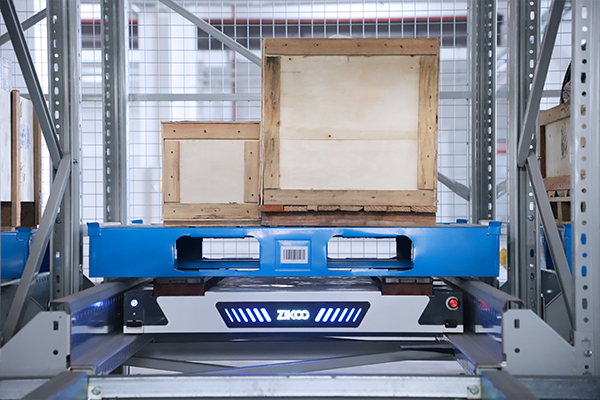
Pallet‑to‑person robotics are not install‑and‑forget machines. They combine electro‑mechanical drives, lithium batteries, laser navigation, and embedded software, all of which demand scheduled attention.
| Equipment | Daily Checks | Weekly / Monthly Tasks | Quarterly / Annual Tasks |
|---|---|---|---|
| Four‑way shuttle | Battery charge and temperature; error log review | Sensor cleaning; drive wheel inspection; communication test | Battery health assessment; motor current profiling; capacitor bank check |
| Stacker robot | Navigation diagnostics; mast visual inspection | Mast chain tension; laser head alignment; payload calibration | Drive motor inspection; mast bearing replacement per schedule; full‑load safety test |
| Elevator / H‑bot | Position drift check; brake status | Guide rail lubrication; door interlock test | Load‑cell calibration; rope or chain wear measurement; brake disc inspection |
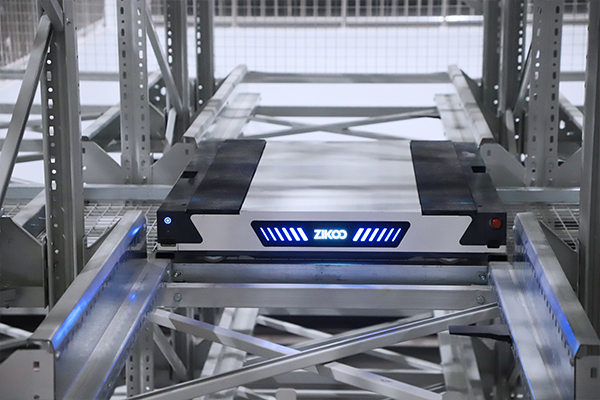
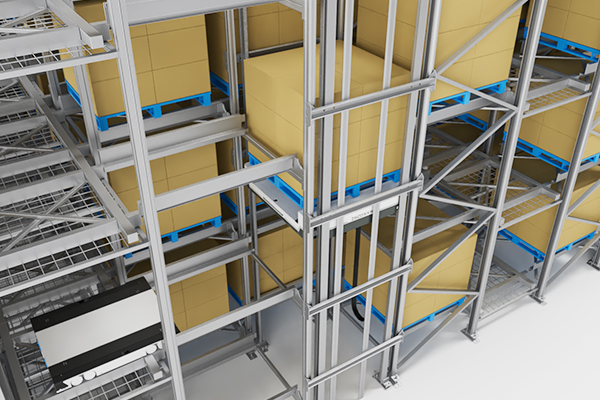
Take the R‑bot four‑way shuttle. Its lithium‑iron battery runs at 51.2 V / 40 Ah, delivering roughly eight hours of continuous operation. After roughly two thousand charge cycles – typical in a high‑throughput facility – capacity degradation becomes measurable, and battery replacement needs to be planned before charging intervals shrink enough to disrupt pallet moves. The H‑bot vertical shuttle holds positioning accuracy of ±1 mm; that precision requires periodic recalibration, especially after heavy load cycles or temperature swings in cold‑chain environments. Skip that calibration, and pallet engagement failures become a daily event.
How Does Supplier Support Affect Staffing Decisions?
Supplier support directly shapes how much in‑house capability you must build. A supplier that offers remote condition monitoring with real‑time fault alerts can reduce the urgency of having a technician on‑site around the clock. Zikoo’s PTP software stack – covering WCS and RCS – pushes component‑level alerts to the control room, often flagging a degrading motor before it trips a line stop. In several installations I have worked on, the remote team identified a shuttle wheel bearing issue via vibration signatures and dispatched a technician before the client’s on‑site staff noticed anything.
When the supplier commits to quarterly preventive‑maintenance visits, carries regional spare‑parts stock, and provides 24/7 phone support, the pressure to hire full‑time specialists drops substantially. The decision then becomes: do you still want a lead technician who can handle Level‑1 recoveries and simple mechanical swaps, or can your existing facilities team absorb those tasks? For complex, multi‑shuttle, multi‑level systems, the answer tends to converge on keeping at least one dedicated person who acts as the first line of defense.
If your project involves high‑throughput cold‑storage or a JIT manufacturing line where a two‑hour stoppage cascades into downstream penalties, it is worth confirming battery cycle‑life expectations and local spare‑parts availability before finalizing your staffing roster. Reach out at info@zikoo-int.com for a rapid technical assessment of your layout.
What Skills Do Automated Warehouse Maintenance Technicians Need?
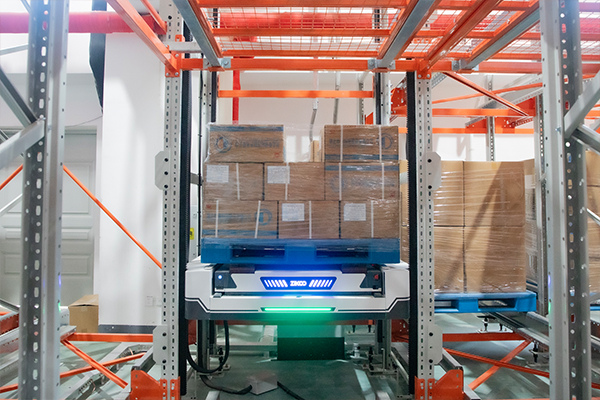
A technician supporting pallet‑to‑person robotics does not need to be a software engineer, but single‑discipline mechanics rarely succeed. The most effective people I have seen combine electromechanical fundamentals with a working knowledge of PLCs, industrial networking, and sensor configuration. They can swap a drive unit, re‑home a laser after a collision, and read a WMS fault log to distinguish a software handshake failure from a physical jam.
Suppliers like Zikoo provide structured training that covers mechanical disassembly of shuttles, battery handling, and diagnostic workflows inside the PTP software. We typically recommend our clients assign a lead technician with at least two years of industrial automation experience. That person becomes the internal expert who interfaces with supplier support and trains shift operators on basic recovery procedures. The upfront investment in targeted training pays back every time a ten‑minute manual recovery prevents a service‑call fee and a half‑day of lost throughput.
How Do You Calculate the Cost of Dedicated Maintenance Staff?
The cost equation for automated warehouse maintenance staffing is not just a salary line; it is salary plus recruitment plus training plus spare‑parts inventory minus the avoided cost of unplanned downtime. In markets I have worked in, a competent electromechanical technician with automation experience costs roughly $50,000 to $80,000 per year, fully burdened. For a 24/6 operation, you might need two technicians on opposite shifts, pushing the annual figure past $120,000.
| Staffing Model | Annual Labor Estimate | Spare‑Parts Responsibility | cURL Too many subrequests by single Worker invocation. To configure this limit, refer to https://developers.cloudflare.com/workers/wrangler/configuration/#limits | cURL Too many subrequests by single Worker invocation. To configure this limit, refer to https://developers.cloudflare.com/workers/wrangler/configuration/#limits |
|---|---|---|---|---|
| cURL Too many subrequests by single Worker invocation. To configure this limit, refer to https://developers.cloudflare.com/workers/wrangler/configuration/#limits | cURL Too many subrequests by single Worker invocation. To configure this limit, refer to https://developers.cloudflare.com/workers/wrangler/configuration/#limits | cURL Too many subrequests by single Worker invocation. To configure this limit, refer to https://developers.cloudflare.com/workers/wrangler/configuration/#limits | cURL Too many subrequests by single Worker invocation. To configure this limit, refer to https://developers.cloudflare.com/workers/wrangler/configuration/#limits | cURL Too many subrequests by single Worker invocation. To configure this limit, refer to https://developers.cloudflare.com/workers/wrangler/configuration/#limits |
| cURL Too many subrequests by single Worker invocation. To configure this limit, refer to https://developers.cloudflare.com/workers/wrangler/configuration/#limits | cURL Too many subrequests by single Worker invocation. To configure this limit, refer to https://developers.cloudflare.com/workers/wrangler/configuration/#limits | cURL Too many subrequests by single Worker invocation. To configure this limit, refer to https://developers.cloudflare.com/workers/wrangler/configuration/#limits | cURL Too many subrequests by single Worker invocation. To configure this limit, refer to https://developers.cloudflare.com/workers/wrangler/configuration/#limits | cURL Too many subrequests by single Worker invocation. To configure this limit, refer to https://developers.cloudflare.com/workers/wrangler/configuration/#limits |
| cURL Too many subrequests by single Worker invocation. To configure this limit, refer to https://developers.cloudflare.com/workers/wrangler/configuration/#limits | cURL Too many subrequests by single Worker invocation. To configure this limit, refer to https://developers.cloudflare.com/workers/wrangler/configuration/#limits | cURL Too many subrequests by single Worker invocation. To configure this limit, refer to https://developers.cloudflare.com/workers/wrangler/configuration/#limits | cURL Too many subrequests by single Worker invocation. To configure this limit, refer to https://developers.cloudflare.com/workers/wrangler/configuration/#limits | cURL Too many subrequests by single Worker invocation. To configure this limit, refer to https://developers.cloudflare.com/workers/wrangler/configuration/#limits |
cURL Too many subrequests by single Worker invocation. To configure this limit, refer to https://developers.cloudflare.com/workers/wrangler/configuration/#limits
cURL Too many subrequests by single Worker invocation. To configure this limit, refer to https://developers.cloudflare.com/workers/wrangler/configuration/#limits
cURL Too many subrequests by single Worker invocation. To configure this limit, refer to https://developers.cloudflare.com/workers/wrangler/configuration/#limits
cURL Too many subrequests by single Worker invocation. To configure this limit, refer to https://developers.cloudflare.com/workers/wrangler/configuration/#limits
cURL Too many subrequests by single Worker invocation. To configure this limit, refer to https://developers.cloudflare.com/workers/wrangler/configuration/#limits
cURL Too many subrequests by single Worker invocation. To configure this limit, refer to https://developers.cloudflare.com/workers/wrangler/configuration/#limits
cURL Too many subrequests by single Worker invocation. To configure this limit, refer to https://developers.cloudflare.com/workers/wrangler/configuration/#limits
cURL Too many subrequests by single Worker invocation. To configure this limit, refer to https://developers.cloudflare.com/workers/wrangler/configuration/#limits
cURL Too many subrequests by single Worker invocation. To configure this limit, refer to https://developers.cloudflare.com/workers/wrangler/configuration/#limits
cURL Too many subrequests by single Worker invocation. To configure this limit, refer to https://developers.cloudflare.com/workers/wrangler/configuration/#limits
cURL Too many subrequests by single Worker invocation. To configure this limit, refer to https://developers.cloudflare.com/workers/wrangler/configuration/#limits
cURL Too many subrequests by single Worker invocation. To configure this limit, refer to https://developers.cloudflare.com/workers/wrangler/configuration/#limits
If you’re interested, check out these related articles:
El inicio del almacenamiento inteligente aquí: Sistemas de lanzaderas de cuatro vías rentables
Revolución del Almacenamiento Inteligente: Visión general completa de los sistemas de transbordadores de cuatro vías para almacenes automáticos 3D
Plataforma de Almacenamiento Inteligente PTP: Construyendo un Ecosistema Logístico Flexible e Inteligente


