


sistema de transporte de cuatro vías operating costs have a reputation problem. Many warehouse operators assume they’re high, but I’ve found that long-term expenses depend far more on component quality and supplier support than on the technology itself. A poorly designed shuttle with cheap batteries will drain your maintenance budget. A well-engineered one, on the other hand, keeps costs predictable for a decade. This article breaks down the real cost drivers—batteries, mechanical wear, software, and supplier choices—and shows what procurement teams should actually look for when evaluating a system’s total cost of ownership.
What Makes Up the Operating Costs of a Transportador en cuatro direcciones System?
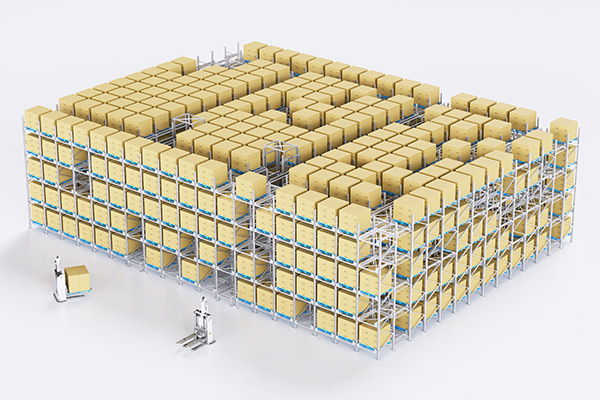
Operating costs for a four-way shuttle system go far beyond the electricity bill. The main contributors are battery replacement cycles, mechanical wear on wheels and sensors, software license renewals and upgrades, spare parts inventory, and the labor for preventive maintenance and emergency repairs. Each of these can vary dramatically depending on how the shuttle was designed and whether the supplier offers transparent after-sales support.
To put it in perspective, a system running 20 shuttles 24/7 in a cold storage facility will see a very different cost structure than one operating 10 shuttles for two shifts in ambient temperature. The intensity of use, the operating environment, and the design margins built into the hardware all play a role. I’ve seen facilities where the electrical consumption for the shuttles themselves accounted for less than 15% of annual operating spend, while component replacements and unscheduled downtime made up the rest. The key is knowing which line items will dominate in your specific case.
How Battery Technology Affects Long-Term Running Costs
Batteries are often the single largest recurring cost in a four-way shuttle fleet. The difference between a standard battery and a high-quality lithium-iron-phosphate pack with proper thermal management can mean replacing batteries every two to three years versus every six to eight years.
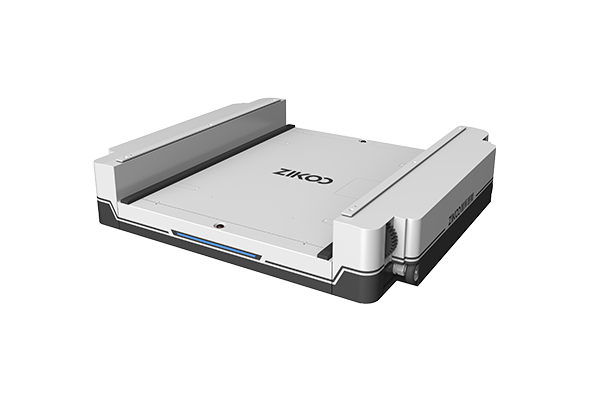
Consider temperature extremes. In -25°C cold storage, ordinary batteries lose capacity fast, and they need to be swapped more frequently, which adds labor and spare battery inventory costs. A dedicated low-temperature lithium battery, like the 51.2V/40Ah packs we use on our R-bot shuttles, can sustain 6–8 hours of continuous operation even at -15°C while protecting against deep discharge. That keeps one battery working through a shift without mid-shift swaps. We also coat the PCBA to guard against humidity and condensation, which prevents corrosion and electrical faults that would otherwise drive up repair costs.
Charging infrastructure also matters. A well-designed shuttle should dock automatically and charge during idle moments, extending battery life without manual intervention. If the charging strategy relies on manual swaps or forced cycle charges, you’ll see faster degradation and higher battery replacement frequency.
How Long Do Shuttle Batteries Last?
Battery lifespan depends on cycle count and depth of discharge. Under normal 8-hour shift profiles with opportunity charging, a quality lithium battery in a four-way shuttle can last 5–7 years before capacity drops below 80%. In heavy 24/7 duty cycles, expect closer to 4–5 years. But we’ve observed that when the battery management system (BMS) is properly tuned and charging follows a controlled protocol, even high-use shuttles can hit 10,000 cycles before major decline. Always ask for cycle-life data and the BMS protection strategy when you evaluate a shuttle supplier.
Component Wear and Mechanical Maintenance: The Hidden Expense Driver
The shuttle body takes constant vibration and shock. Wheels, drive motors, sensors, and linear guides wear down. The thinner the shuttle profile, the lighter the chassis, but this can come at a cost to structural rigidity if not engineered correctly. Our R-bot uses a 125 mm body with a rigid frame that supports up to 1.5 tons. That slim design enables dense storage, but it doesn’t sacrifice strength, which translates to fewer frame distortions and alignment problems over time.
Wheel replacement is the most common maintenance item. Polyurethane wheels on a four-way shuttle traveling several kilometers per day inside a racking system will degrade after 2–3 years. The exact lifespan depends on floor flatness, rack alignment, and load weight. I’ve walked through installations where the racking tolerance was off by just a few millimeters, and it chewed through wheels twice as fast. That’s a hidden cost that’s not on the data sheet.
Sensors and cables are another failure point. In dusty or high-humidity environments, photoelectric sensors can drift. A supplier that uses sealed connectors and provides easy diagnostic tools will reduce the labor hours needed to chase intermittent faults. When you’re calculating long-term costs, ask what the supplier’s mean time between failures is for sensors and actuators, and whether those parts are field-replaceable by your own staff.
How Often Do Wheels and Guide Rollers Need Replacing?
In a 24/7 operation, expect wheel replacement every 2–3 years on average. In lighter operations, 4–5 years is realistic. Always keep a set of spare wheels on site. We recommend clients budget 2% of the shuttle’s initial purchase price annually for wheel and bearing maintenance. It sounds small, but over 10 years and 20 shuttles, that becomes a significant line item. Good design reduces it; poor racking installation multiplies it.
Software Updates, Licensing, and System Management Over Time
The physical shuttle is only half the picture. The software stack—WCS, RCS, and WMS—requires ongoing licensing, updates, and support. Some vendors charge annual license fees that increase every year. Others include a fixed number of years of support in the initial purchase and then transition to a maintenance contract.
I’ve seen operations where the WCS license renewal jumped unexpectedly because the vendor tied it to transaction volume. That’s why you should clarify whether licensing is based on number of shuttles, number of SKUs, or transaction throughput, and get the renewal terms in writing before signing.
Software updates themselves can be a hidden cost if they require system downtime or hardware modifications. A modular software architecture, like our PTP platform that separates WMS, WES, WCS, and RCS, allows targeted updates without taking the entire warehouse offline. That keeps uptime high and minimizes lost productivity. Also ask about cybersecurity patches—warehouses connected to corporate networks need regular updates that should be covered under a support agreement, not billed as extras.
Comparing Long-Term Costs: Four-Way Shuttle vs. Alternatives
To understand whether four-way shuttle operating costs are high, you need a benchmark. Over a 10-year horizon, compare the shuttle system to stacker crane AS/RS, narrow-aisle forklifts, or manual pallet racking. The upfront capital for a shuttle system is higher, but the operational headcount drops significantly.
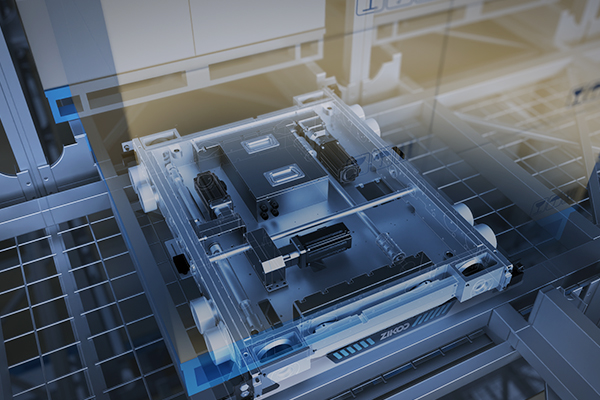
Consider a facility with 5,000 pallet positions. A manual warehouse might need 6–8 forklift operators per shift. At $50,000 per operator fully loaded per year, that’s $300,000–$400,000 annually. A four-way shuttle system with the same throughput could run with 1–2 system managers and see maintenance costs around $50,000–$80,000 per year depending on fleet size. That’s a net labor saving that often pays back the capital in 3–4 years, after which the operating costs are comparatively low.
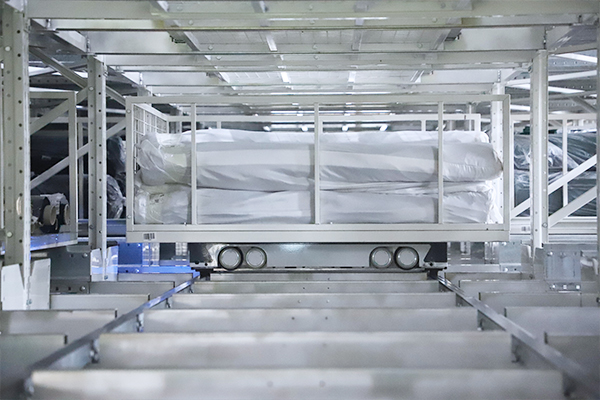
Stacker cranes have their own operating costs: they typically use more energy per pallet move, require taller and stronger building structures, and have longer repair downtimes because the entire aisle goes down if the crane fails. Shuttles offer redundancy; if one shuttle fails, the rest keep running. This distributed design is a built-in insurance policy against downtime.
The table below gives a rough annual cost comparison for a 5,000-pallet facility operating 365 days.
| Cost Item | Transportador en cuatro direcciones | cURL Too many subrequests by single Worker invocation. To configure this limit, refer to https://developers.cloudflare.com/workers/wrangler/configuration/#limits | Manual Forklift |
|---|---|---|---|
| Labor (annual) | $60k–$90k | $70k–$100k | $300k–$400k |
| Energía | $8k–$12k | $15k–$25k | $0 (propane/electric) |
| Maintenance & parts | $40k–$60k | cURL Too many subrequests by single Worker invocation. To configure this limit, refer to https://developers.cloudflare.com/workers/wrangler/configuration/#limits | cURL Too many subrequests by single Worker invocation. To configure this limit, refer to https://developers.cloudflare.com/workers/wrangler/configuration/#limits |
| cURL Too many subrequests by single Worker invocation. To configure this limit, refer to https://developers.cloudflare.com/workers/wrangler/configuration/#limits | $15k–$25k | cURL Too many subrequests by single Worker invocation. To configure this limit, refer to https://developers.cloudflare.com/workers/wrangler/configuration/#limits | $0 |
| cURL Too many subrequests by single Worker invocation. To configure this limit, refer to https://developers.cloudflare.com/workers/wrangler/configuration/#limits | cURL Too many subrequests by single Worker invocation. To configure this limit, refer to https://developers.cloudflare.com/workers/wrangler/configuration/#limits | cURL Too many subrequests by single Worker invocation. To configure this limit, refer to https://developers.cloudflare.com/workers/wrangler/configuration/#limits | cURL Too many subrequests by single Worker invocation. To configure this limit, refer to https://developers.cloudflare.com/workers/wrangler/configuration/#limits |
cURL Too many subrequests by single Worker invocation. To configure this limit, refer to https://developers.cloudflare.com/workers/wrangler/configuration/#limits
cURL Too many subrequests by single Worker invocation. To configure this limit, refer to https://developers.cloudflare.com/workers/wrangler/configuration/#limits
cURL Too many subrequests by single Worker invocation. To configure this limit, refer to https://developers.cloudflare.com/workers/wrangler/configuration/#limits
cURL Too many subrequests by single Worker invocation. To configure this limit, refer to https://developers.cloudflare.com/workers/wrangler/configuration/#limits
cURL Too many subrequests by single Worker invocation. To configure this limit, refer to https://developers.cloudflare.com/workers/wrangler/configuration/#limits
cURL Too many subrequests by single Worker invocation. To configure this limit, refer to https://developers.cloudflare.com/workers/wrangler/configuration/#limits
cURL Too many subrequests by single Worker invocation. To configure this limit, refer to https://developers.cloudflare.com/workers/wrangler/configuration/#limits
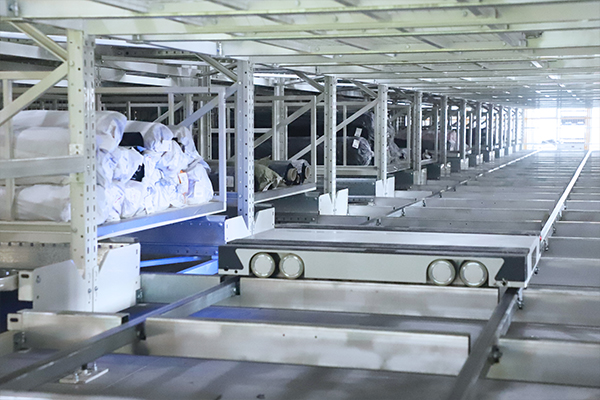
cURL Too many subrequests by single Worker invocation. To configure this limit, refer to https://developers.cloudflare.com/workers/wrangler/configuration/#limits
cURL Too many subrequests by single Worker invocation. To configure this limit, refer to https://developers.cloudflare.com/workers/wrangler/configuration/#limits
cURL Too many subrequests by single Worker invocation. To configure this limit, refer to https://developers.cloudflare.com/workers/wrangler/configuration/#limits
cURL Too many subrequests by single Worker invocation. To configure this limit, refer to https://developers.cloudflare.com/workers/wrangler/configuration/#limits
cURL Too many subrequests by single Worker invocation. To configure this limit, refer to https://developers.cloudflare.com/workers/wrangler/configuration/#limits
cURL Too many subrequests by single Worker invocation. To configure this limit, refer to https://developers.cloudflare.com/workers/wrangler/configuration/#limits
cURL Too many subrequests by single Worker invocation. To configure this limit, refer to https://developers.cloudflare.com/workers/wrangler/configuration/#limits
cURL Too many subrequests by single Worker invocation. To configure this limit, refer to https://developers.cloudflare.com/workers/wrangler/configuration/#limits
cURL Too many subrequests by single Worker invocation. To configure this limit, refer to https://developers.cloudflare.com/workers/wrangler/configuration/#limits
cURL Too many subrequests by single Worker invocation. To configure this limit, refer to https://developers.cloudflare.com/workers/wrangler/configuration/#limits
cURL Too many subrequests by single Worker invocation. To configure this limit, refer to https://developers.cloudflare.com/workers/wrangler/configuration/#limits
cURL Too many subrequests by single Worker invocation. To configure this limit, refer to https://developers.cloudflare.com/workers/wrangler/configuration/#limits
cURL Too many subrequests by single Worker invocation. To configure this limit, refer to https://developers.cloudflare.com/workers/wrangler/configuration/#limits
cURL Too many subrequests by single Worker invocation. To configure this limit, refer to https://developers.cloudflare.com/workers/wrangler/configuration/#limits
cURL Too many subrequests by single Worker invocation. To configure this limit, refer to https://developers.cloudflare.com/workers/wrangler/configuration/#limits
If you’re interested, check out these related articles:
Grúa apiladora vs Transbordador de cuatro vías: cuál se adapta mejor a su almacén ASRS
Six-Way Shuttle permite a los proveedores 3PL construir centros logísticos inteligentes de próxima generación


