


sistema de transporte de cuatro víass have become a go-to solution for high-density pallet storage, but for 3PL warehouses the question is not about technology in general—it is about fit. A 3PL operation must serve multiple clients with different pallet sizes, inventory profiles, throughput demands, and IT systems, all within the same building. Having overseen numerous 3PL automation projects, I can say that a sistema de transbordador de cuatro vías system often excels in this environment, but the decision hinges on a few operational specifics that generic ROI calculators miss.
What Makes 3PL Warehouses Different from Standard DCs
A company-owned distribution center answers to one set of inventory rules, one pallet standard, and one IT system. A 3PL warehouse answers to five or ten sets of all three and more. I have walked into facilities where three different pallet types (American 1016×1219 mm, Euro 1200×800 mm, and Japanese 1100×1100 mm) were in active use across three client zones, each with its own order cutoff times, putaway rules, and billing logic.
This multi-client reality drives demands that go beyond simple storage density. The warehouse floor may need to rebalance lane assignments quarterly as contracts shift. Peak season for one client may overlap with the off-season for another, making it necessary to flex labor and automation capacity toward whichever operation is surging. A standard pallet racking layout with fixed aisle configurations struggles to rebalance quickly. A software-defined automation system that can reassign storage zones on the fly is a better match for this environment.
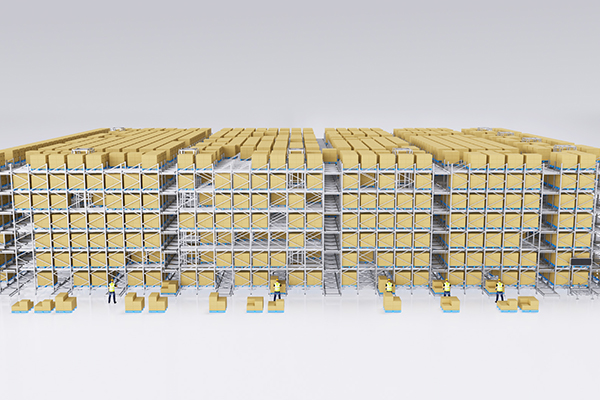
How Four-Way Shuttle Systems Handle Multi-Client Complexity
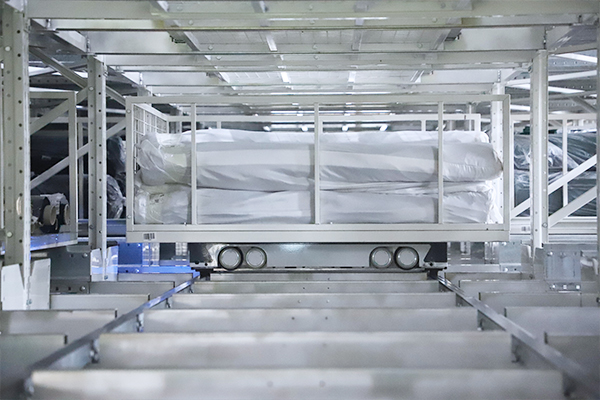
The core advantage for 3PL operations is that a four-way shuttle system decouples storage density from client segmentation. Deep lanes can be divided logically into client-specific virtual areas without physically separating them with access aisles. The WCS layer assigns inventory to a client, and the shuttle fleet simply routes to the correct lane and depth coordinate.
Equipment flexibility matters here. The same shuttle model cannot handle every pallet type a 3PL encounters. In our product range, the R-bot Four-Way Shuttle is available in multiple configurations to match the pallet diversity that a multi-client warehouse faces.
| Modelo | Pallet Type Supported | Carga Nominal | Body Width |
|---|---|---|---|
| R-bot Estándar (R1200B) | 1200×800–1000 mm (Euro) | 1,200 kg | 972 mm |
| R-bot American (R1200A) | 1016×1219 mm | 1,200 kg | 840 mm |
| R-bot Japanese (R1500J) | 1100×1100 mm | 1,500 kg | 900 mm |
| R-bot Heavy-duty Large Pallet (R2000B) | 1400 mm | 2,000 kg | 1,300 mm |
A 3PL that switches from a client using American pallets to one using Japanese pallets mid-year does not need to rip out racking. The shuttle fleet can be partially reconfigured, and new shuttle units deployed to the dedicated lanes, while existing racking remains in place. This modularity preserves the capital investment even as the client mix changes.
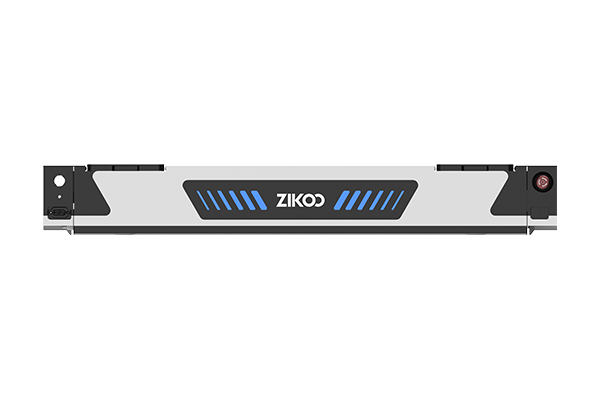
Flexibility: Pallet Variety and Layout Reconfiguration
Beyond pallet dimensions, 3PLs deal with temperature requirements, client-specific handling rules, and seasonal capacity swings. A four-way shuttle system supports these variations through a combination of hardware options and software zoning.
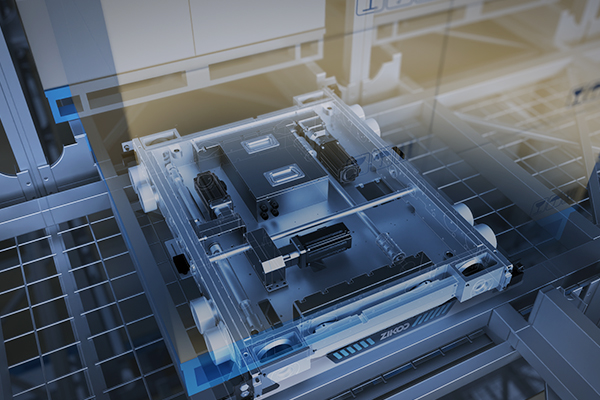
For cold chain clients, for instance, the shuttle must operate reliably at sub-zero temperatures. Our cold chain configuration uses a dedicated lithium battery rated for continuous operation at minus 25 °C, with a low-temperature charging port and a protective PCBA coating that resists condensation. These are not afterthoughts; they are built into the shuttle from design, which is critical if a 3PL plans to cross-subsidize ambient storage with higher-margin frozen services.
Reconfiguration speed is another operational metric worth watching. When a new client signs on, the warehouse operations team must set up putaway rules, pick paths, and inventory slotting. On a software-defined shuttle system, the WMS can define these client-specific parameters within hours, and the physical adjustment may involve only reallocating a block of lanes and swapping a few shuttles if pallet types differ. I have seen this take under a week from contract signature to live operation, compared with several weeks of racking modification in a static system.
Software Integration: WMS, WCS, and Client Connectivity
A 3PL’s technology stack rarely starts from scratch. Clients may require EDI feeds, REST API calls, or batch file exchanges between their ERP and the warehouse WMS. Adding a complex automation layer on top of that can turn into an integration nightmare if the software platform was designed for single-tenant use.
The software component of a four-way shuttle system should provide multi-tenant data isolation within a single physical warehouse. Each client must see only its own inventory, order status, and activity logs, while the 3PL operator sees a consolidated view for resource planning. Our Software de almacén inteligente PTP platform handles this through a logical partitioning model, where the same physical shuttle fleet and racking are exposed to each client as a dedicated zone. Billing and performance reporting then draw from clean per-client data sets without manual reconciliation.
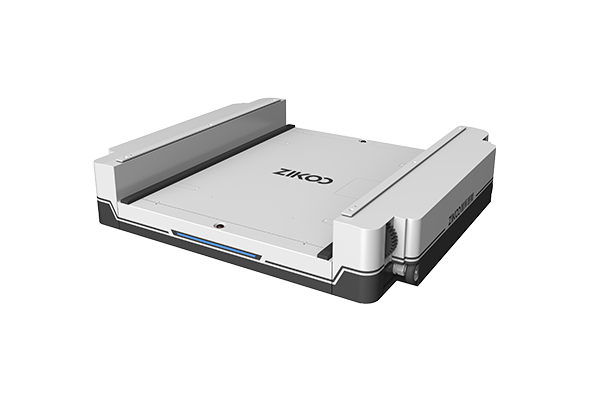
From an engineer’s perspective, the more interesting challenge is how the WCS and RCS handshake when three clients submit urgent orders within the same 30-minute window. Good software does not simply pick the next task in FIFO sequence; it understands which client SLAs require priority, which pallets are on the deep end of a lane, and how to resequence shuttle movements to minimize empty travel. This is where a long history of 3PL project delivery separates mature suppliers from newer entrants.
Cost, ROI, and When a Four-Way Shuttle System Fits
Any automation investment in a 3PL context must answer two questions: how long until it pays back, and which client mix makes it worthwhile. A four-way shuttle system typically reduces direct labor by 60 to 80 percent compared to reach truck operations in a comparable facility, depending on throughput and shift patterns. In regions where forklift operator costs exceed $45,000 per year fully loaded, removing four to six operators per shift delivers a noticeable payback within three to four years before factoring in other gains.
The bigger economic lever for 3PLs is often the ability to sell higher-density storage service tiers. If a client’s inventory can be stored in deep lane configurations instead of conventional wide-aisle racks, the 3PL can charge more per square foot without increasing its own building footprint. This revenue uplift, combined with reduced damage rates and near-zero mis-shipments, shifts the ROI calculus toward even shorter payback periods for facilities with a high client turnover or a premium cold storage offering.
cURL Too many subrequests by single Worker invocation. To configure this limit, refer to https://developers.cloudflare.com/workers/wrangler/configuration/#limits
cURL Too many subrequests by single Worker invocation. To configure this limit, refer to https://developers.cloudflare.com/workers/wrangler/configuration/#limits
cURL Too many subrequests by single Worker invocation. To configure this limit, refer to https://developers.cloudflare.com/workers/wrangler/configuration/#limits cURL Too many subrequests by single Worker invocation. To configure this limit, refer to https://developers.cloudflare.com/workers/wrangler/configuration/#limits cURL Too many subrequests by single Worker invocation. To configure this limit, refer to https://developers.cloudflare.com/workers/wrangler/configuration/#limits
cURL Too many subrequests by single Worker invocation. To configure this limit, refer to https://developers.cloudflare.com/workers/wrangler/configuration/#limits
cURL Too many subrequests by single Worker invocation. To configure this limit, refer to https://developers.cloudflare.com/workers/wrangler/configuration/#limits
cURL Too many subrequests by single Worker invocation. To configure this limit, refer to https://developers.cloudflare.com/workers/wrangler/configuration/#limits
cURL Too many subrequests by single Worker invocation. To configure this limit, refer to https://developers.cloudflare.com/workers/wrangler/configuration/#limits
cURL Too many subrequests by single Worker invocation. To configure this limit, refer to https://developers.cloudflare.com/workers/wrangler/configuration/#limits
cURL Too many subrequests by single Worker invocation. To configure this limit, refer to https://developers.cloudflare.com/workers/wrangler/configuration/#limits
cURL Too many subrequests by single Worker invocation. To configure this limit, refer to https://developers.cloudflare.com/workers/wrangler/configuration/#limits
cURL Too many subrequests by single Worker invocation. To configure this limit, refer to https://developers.cloudflare.com/workers/wrangler/configuration/#limits
cURL Too many subrequests by single Worker invocation. To configure this limit, refer to https://developers.cloudflare.com/workers/wrangler/configuration/#limits
cURL Too many subrequests by single Worker invocation. To configure this limit, refer to https://developers.cloudflare.com/workers/wrangler/configuration/#limits
cURL Too many subrequests by single Worker invocation. To configure this limit, refer to https://developers.cloudflare.com/workers/wrangler/configuration/#limits
cURL Too many subrequests by single Worker invocation. To configure this limit, refer to https://developers.cloudflare.com/workers/wrangler/configuration/#limits
cURL Too many subrequests by single Worker invocation. To configure this limit, refer to https://developers.cloudflare.com/workers/wrangler/configuration/#limits almacenamiento automatizado cURL Too many subrequests by single Worker invocation. To configure this limit, refer to https://developers.cloudflare.com/workers/wrangler/configuration/#limits
If you’re interested, check out these related articles:
Multi-Scenario Smart Adaptation: Zikoo’s Six-Way Shuttle Powers the Digital Transformation of Warehousing
Sistema de transbordadores de seis vías lidera el cambio de máquinas a robots en la automatización de almacenamiento denso
Transbordador de Seis Vías: La Herramienta Inteligente de Almacenamiento para la Reducción de Costos y Eficiencia
Transbordador de Seis Vías: Pionero en el Futuro del Almacenamiento Inteligente
Transbordador de Seis Vías: La Solución Definitiva para Almacenes para Reducir Costos y Mejorar la Eficiencia


