


パレット 四方向シャトルシステムs have become a cornerstone of 密な収納 automation, but procurement teams often ask: are these systems prone to failure? In over a decade of deploying shuttle-based AS/RS projects across cold chain, manufacturing, and e-commerce warehouses, I’ve seen that the failure rate of a properly specified 四方向シャトル is low—however, when failures occur, they tend to trace back to a small set of recurring causes. Understanding these failure modes before you commit to a system protects throughput targets and long-term operational costs. This article breaks down the mechanical, software, and environmental causes of shuttle failures, along with the design features and maintenance practices that separate reliable systems from the rest.
What Are the Most Common Four-Way Shuttle Failure Modes?
The failures I see in the field fall into four categories: mechanical wear, battery degradation, communication loss, and sensor drift. Mechanical issues are the most frequent—wheel tread wear on rail surfaces, misalignment of the lifting mechanism, or wear on the pallet centering guides. Battery degradation usually appears after 3–5 years of continuous cyclic operation, particularly in cold storage environments where low temperatures accelerate capacity fade. Communication loss between the shuttle and the WCS often stems from physical damage to wiring or from WiFi interference in high-rack steel structures. Sensor drift, especially on the photoelectric or laser positioning sensors, causes the shuttle to lose its fine positioning accuracy of ±1 mm, triggering fault stoppages.
How Do Mechanical Components Fail in Pallet Shuttles?
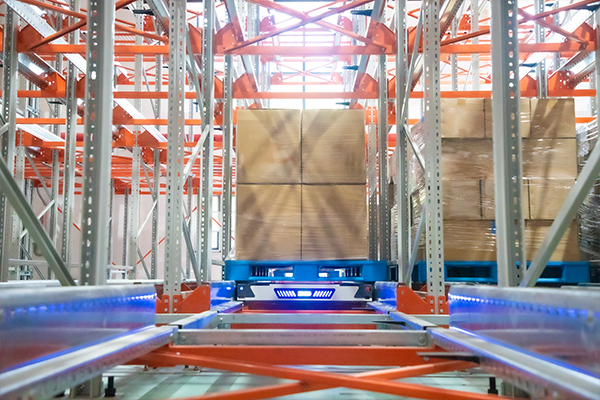
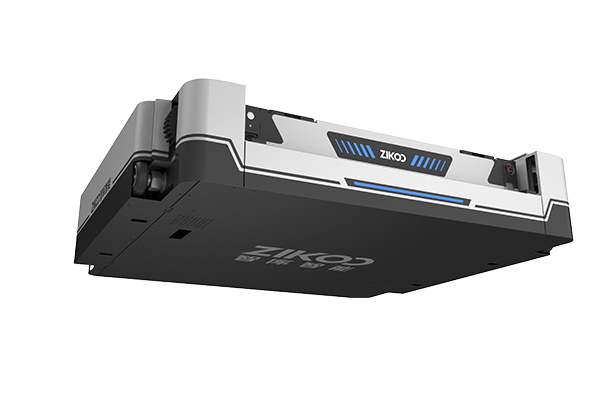
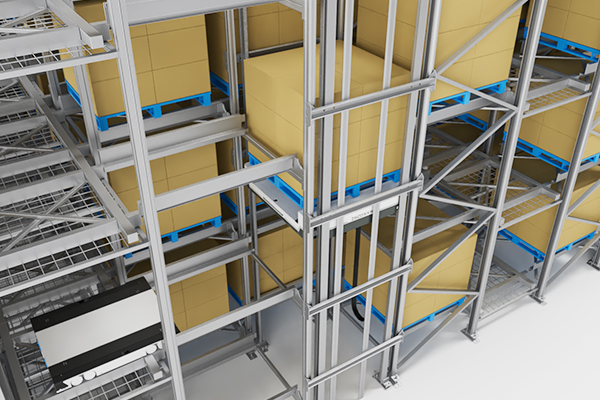
Mechanical reliability starts with component selection. In my experience, the most overlooked factor is the frame rigidity and the quality of the wheel-to-rail interface. A shuttle with insufficient chassis stiffness distorts slightly under a 1.5-tonne load, and that tiny deflection accelerates wheel wear unevenly. We’ve designed the R-bot series with a 125 mm slim body and a rigid welded frame that holds its geometry even after years of use. The wheels are precision-machined polyurethane with a hardness matched to the steel rail, and the drive system uses a dual-motor differential that eliminates skidding during lateral lane changes. Another common failure point is the pallet lift mechanism—if the lifting cam or leadscrew lacks proper sealing, dust or debris can cause jamming. In heavy-duty applications, the lift carriage’s guide rollers must withstand repeated cycling without developing play; overspecifying these on the R2000B model, for instance, was a direct response to early failure data from 24/7 cold store operations.
How Does Software and Control System Failure Affect Operations?
Failures are not only mechanical. A four-way shuttle’s movement is orchestrated by the fleet control software—if the WCS path-planning algorithm cannot resolve deadlock situations or if the wireless handshake between the shuttle and the upper-level WMS is interrupted, the system will halt. I’ve diagnosed cases where the root cause was not a faulty shuttle but a network latency issue in the WCS that caused the shuttle to miss a heartbeat signal, triggering a safety stop. The PTPスマート倉庫ソフトウェア stack (WMS/WES/WCS/RCS) we deploy at Zikoo uses a distributed edge computing approach: each shuttle runs local trajectory planning and only synchronizes task status with the central controller. This reduces reliance on a perfect wireless network and allows the shuttle to complete its current task even during a brief communication drop.
How Can Environmental Factors Cause Shuttle Failures?
Temperature extremes and airborne particulates push shuttle systems past their standard operating envelopes. In cold storage warehouses running at -25°C, standard lithium batteries cannot deliver the peak current needed for loaded acceleration, and condensation on circuit boards can cause short circuits. We address this with a purpose-built cold chain shuttle configuration: a -25°C rated lithium battery with low-temperature charging capability, and a conformal coating on the PCBA that protects against moisture ingress. For dusty environments—cement plants, building materials warehouses, or paper mills—fine particles settle on optical sensors and within the lift mechanism. Here, the mechanical design must include positive bellows seals on the lift columns and pressurized enclosures for the lidar and camera modules. Failing to specify these from the start leads to a spike in sensor faults within the first year.
How to Prevent Four-Way Shuttle Failures with Proper Maintenance
Prevention centers on three practices: scheduled inspections, battery health monitoring, and software diagnostics. On every project, we recommend a weekly check of wheel tread depth and rail alignment; a monthly inspection of lift mechanism lubrication and sensor calibration; and a continuous review of the shuttle’s self-diagnostic logs that record cycle counts, motor current draw, and temperature history. These logs let you spot trends—a gradual increase in motor current on one drive unit suggests bearing wear long before a hard fault occurs. The shuttle’s own battery management system tracks state of health and can trigger an alert when capacity drops below 80%, well before it affects a full shift. I’ve found that sites that integrate these checks into a standard operational procedure see fewer than one unplanned stoppage per shuttle per quarter.
If your operation involves multi-shift use or cold storage, it’s worth confirming the maintenance schedule and remote diagnostic capabilities before finalizing your system choice—reach out to us at info@zikoo-int.com with your operational profile and I’ll outline the relevant wear points to monitor.
Choosing a Reliable Four-Way Shuttle System: Key Design Factors
When I compare shuttle systems for reliability, I look at component-grade specifications, not just rated load. Check the wheel material and hardness rating; the IP rating on sensors and electrical enclosures; the battery cell manufacturer and cycle life curve; and the controller’s real-time operating system. The R-bot’s standard configuration, for example, uses 51.2V/40Ah lithium batteries with an 8-hour continuous duty cycle, and the heavy-duty R2000B uses a 150 mm body height to accommodate larger drive motors and wheel assemblies sized for 1.35 m/s speeds with 2-tonne loads. These choices are invisible when the system is running but define the maintenance interval over a 10-year lifespan.
Common Questions About Pallet Four-Way Shuttle Reliability
What is the expected service life of a four-way shuttle?
A well-engineered shuttle should operate for 10–15 years with proper maintenance. The lithium battery pack typically requires replacement after 4–6 years depending on daily cycle count and operating temperature.
Do shuttle failures bring the entire warehouse to a halt?
Not necessarily. In multi-shuttle systems, the WCS can dynamically reassign tasks to other shuttles during a single-unit fault. A well-designed layout also keeps a buffer shuttle or holds a spare to swap in within 15 minutes.
Are domestic shuttle systems as reliable as imported ones?
The gap has narrowed substantially. Today’s leading Chinese manufacturers use the same battery cells and motor suppliers as European integrators. The difference often comes down to the engineering maturity of the control software and the thoroughness of factory testing.
How does a shuttle handle emergency stops without damaging the load?
The shuttle’s motor drivers are programmed with deceleration profiles that bring the load to a controlled stop without sliding the pallet on the forks. Backup power capacitors in the drive unit maintain control if main power is lost.
What documentation should I ask for to verify reliability?
Request the mean time between failures (MTBF) report from field data, the battery cycle life test report, and the software validation protocol. If your program involves cold storage or high-dust environments, also confirm that the shuttle has undergone accelerated life testing under those conditions—share your requirements at info@zikoo-int.com or call (+86)-19941778955 and I’ll walk through what we test for.
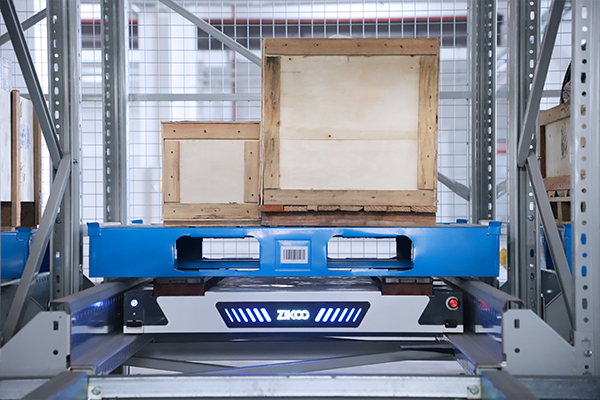
The failure causes I’ve outlined are well-understood and preventable through design and maintenance. A pallet four-way shuttle system that is correctly specified for the operating environment, equipped with industrial-grade components, and supported by a vetted maintenance plan will deliver more than a decade of reliable dense storage operation. If you are evaluating shuttle suppliers for a new build or a retrofit, start the conversation with a detailed operational profile rather than a price comparison. Reach us at info@zikoo-int.com or (+86)-19941778955—send your storage dimensions, throughput targets, and environmental conditions, and we’ll confirm the shuttle configuration that meets your reliability expectations.
If you’re interested, check out these related articles:
標準化がグローバル配送を強化:Zikoo Roboticsの6方向シャトルが海外展開
6方向シャトルが3PLプロバイダーによる次世代スマートロジスティクスハブ構築を支援
Six-Way Shuttle:高密度ストレージ向けのデュアルエンジンソリューション
倉庫価値の再構築:六方シャトルがデジタルトランスフォーメーションを牽引
六方向シャトルが倉庫のアップグレードを推進し、インテリジェントな自動3D倉庫を構築


