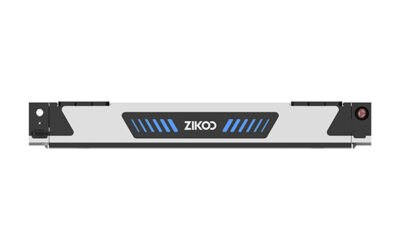
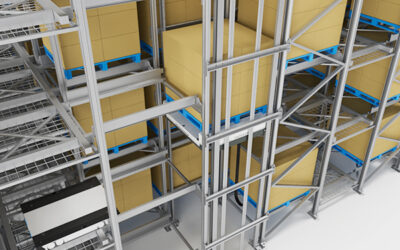
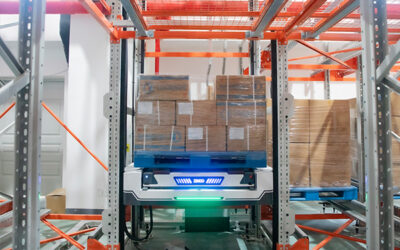
When procurement teams evaluate a 四方向シャトルシステム they often compare published performance specs and upfront equipment prices, yet the costs that destabilize a project budget appear later, buried in environmental requirements, integration labor, and maintenance contracts. Having spent over a decade designing and delivering パレットシャトルシステムs across cold chain, new energy, and general manufacturing facilities, I see the same hidden cost patterns surface in projects that skip the engineering-level detail. These costs do not come from hardware markups; they come from design choices that look neutral on a spreadsheet but shift the total cost of ownership significantly once the system is installed.
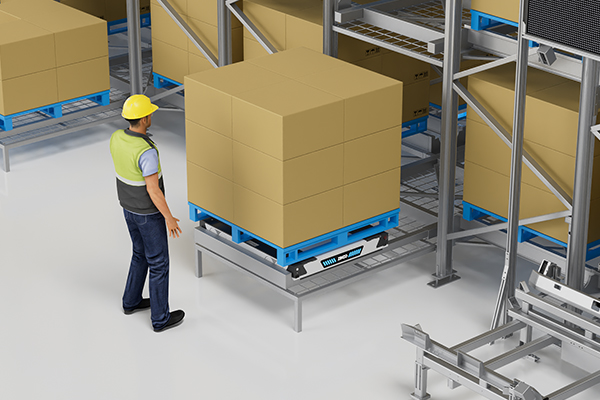
What Actually Counts as a Hidden Cost in a Pallet Shuttle Project
Hidden costs in a 四方向シャトル system are not mysterious line items. They are the necessary expenditures that standard budgeting templates too often omit because those templates assume a generic warehouse with no special material, no temperature extremes, and no software integration complexity. The three largest hidden cost categories I encounter in projects are facility readiness costs, environmental adaptation costs, and the downstream price of under-scoping maintenance and software licensing. A storage system rated at 1,500 kg per pallet and 1.2 m/s loaded speed only delivers its planned throughput when the floor, power supply, network infrastructure, and fire suppression modifications are already accounted for.
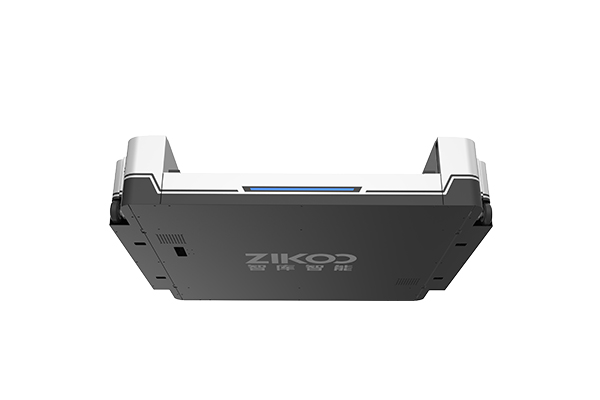
Another cost that stays hidden until commissioning is the labor required to integrate the shuttle fleet with the warehouse management ecosystem. The R-bot four-way shuttle communicates through the WCS layer, and if the existing WMS was not designed to handle real-time position feedback from 20 or 30 autonomous vehicles moving across four horizontal directions, you will spend more on middleware customization than the initial software line item suggests.
Infrastructure Costs That Show Up Only During Site Preparation
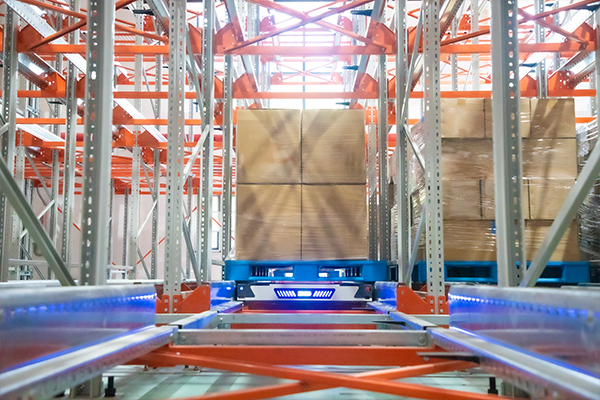
Facility costs are the most predictable of the hidden expenses only because they are the most consistently ignored. Every shuttle requires a floor flatness specification that permits reliable travel at 1.6 m/s empty speed. Retrofitting an older warehouse to meet that tolerance often involves grinding, self-leveling underlayment, or even partial floor replacement, none of which appears in a standard rack-and-shuttle quotation.
Power distribution is a second quiet cost. A dense shuttle system may need multiple charging stations distributed across the storage grid. For the standard R1200B model with a 51.2V/40Ah lithium battery, operators want charging points near staging areas so that depleted shuttles do not travel across half the warehouse to recharge. In an existing building, running power to these points may require new conduit, panel upgrades, and in some cases backup power circuits for temperature-controlled zones. I have seen projects where the electrical work added 8 to 12 percent to the total automation budget simply because the initial layout was drawn without consulting the facility team.
Network cabling and wireless coverage create a third layer. The shuttle positioning system relies on stable, low-latency communication between the vehicles and the WCS, and dead spots in a steel storage rack structure are common. Pre-installation radio-frequency surveys and industrial-grade wireless access points add hardware and configuration cost that does not appear on the mechanical equipment quotation. All three of these infrastructure items should be captured in the budget during the site survey phase, not after the racking is already being assembled.
Environmental Requirements Drive Cost in Ways a Data Sheet Does Not Show
When someone asks me what will change the project price more than anything else, the answer is almost always temperature. The R-bot shuttle operates down to -15°C with its standard lithium battery, but in -25°C cold storage the battery chemistry, the lubrication, and the electronics all require a dedicated solution. Zikoo’s cold chain package uses a low-temperature lithium battery with a heated charging port and a special PCBA coating to prevent moisture damage in high-humidity freezer environments. That is a design choice that adds unit cost and also changes the maintenance cadence, because batteries in extreme cold will still cycle differently than those at ambient temperature.
The same principle applies in the other direction. In the new energy sector, battery manufacturing facilities often forbid copper, zinc, or nickel in any material that could become airborne and contaminate cell production. Our new energy variant of the shuttle uses stainless steel frames with blackening treatment and all-rubber buffer wheels to eliminate metal contamination risk. That specification is not an option; it is a requirement for the permit to operate in those cleanrooms. If a buyer compares quotes without flagging this constraint, the lower quote almost certainly reflects a standard machine that cannot be used on that production floor. The hidden cost here is not the stainless steel itself; it is the project delay and rework when the wrong equipment is delivered.
For a procurement engineer reading across industries, the pattern is straightforward: any special environment—cold, corrosive, cleanroom, or explosive atmosphere—will require a variant that is not the price you see on the standard product page. Ask the supplier for an environment-specific reference installation before you accept the base-model price as the real project cost.
If your facility operates at -25°C or requires metal contamination prevention, it is worth confirming the exact shuttle configuration and battery strategy early. Reach out at [email protected] with your storage conditions and we can share the specifications that match your environment.
Maintenance and Software Costs Compound Over the System’s Life
When I talk to warehouse managers who have had 自動倉庫 running for three years, they rarely point to the capital purchase as the surprise. They point to the ongoing costs that were estimated at 3 to 5 percent of purchase price and turned out to be 7 or 8 percent when spare parts, software license renewals, and dedicated technician time were counted properly.
For the R-bot fleet, lithium battery replacement is the largest predictable expense after the initial installation. A 51.2V/40Ah battery delivering eight hours of continuous operation under normal ambient conditions will still need replacement after a certain number of charge cycles. In cold chain operations that run multiple shifts, that interval shortens. Budgeting for a full battery refresh in year three or four protects uptime and prevents a scenario where half the fleet is waiting for a charging bay while orders queue.
The software side is equally material but discussed less often. The PTPスマート倉庫ソフトウェア platform that we deploy includes WMS, WES, WCS, and RCS modules that communicate across the hardware layer. The license model, whether subscription or perpetual, and the cost of version updates that keep the system current with new shuttle firmware and security patches are real line items. More importantly, if the shuttle fleet grows by 30 percent in year two, the concurrent connection licenses may need to scale. That is a cost you can forecast, but you must ask the supplier to model it.
Building a Total Cost Picture Before the Purchase Order
When I am asked to help a client put together a realistic TCO analysis for a four-way shuttle system, we work through five categories that go further than the equipment invoice. First, we carry the facility and infrastructure costs discussed above. Second, we add the environmental adaptation surcharge if the site operates outside standard conditions. Third, we assign a maintenance reserve that reflects the specific shuttle model and duty cycle—1,200 kg, 1,500 kg, or 2,000 kg loads put different wear on drive components. Fourth, we schedule software and connectivity costs for five years, not one. Fifth, we build in a one-time integration contingency for WMS connection and end-to-end testing with the existing material flow.
The table below shows how these categories distribute across a representative mid-size deployment with 20 R-bot shuttles in an ambient warehouse and a cold chain variant for comparison.
| コストカテゴリー | Ambient (20 R-bot, 1200 kg) | Cold Chain (20 R-bot, 1200 kg) |
|---|---|---|
| Shuttle hardware and control system | USD 320,000–380,000 | USD 380,000–450,000 |
| Rack structure and guides | USD 180,000–220,000 | USD 200,000–240,000 |
| Facility prep (floor, power, network) | USD 60,000–90,000 | USD 80,000–110,000 |
| cURL Too many subrequests by single Worker invocation. To configure this limit, refer to https://developers.cloudflare.com/workers/wrangler/configuration/#limits | cURL Too many subrequests by single Worker invocation. To configure this limit, refer to https://developers.cloudflare.com/workers/wrangler/configuration/#limits | cURL Too many subrequests by single Worker invocation. To configure this limit, refer to https://developers.cloudflare.com/workers/wrangler/configuration/#limits |
| cURL Too many subrequests by single Worker invocation. To configure this limit, refer to https://developers.cloudflare.com/workers/wrangler/configuration/#limits | cURL Too many subrequests by single Worker invocation. To configure this limit, refer to https://developers.cloudflare.com/workers/wrangler/configuration/#limits | cURL Too many subrequests by single Worker invocation. To configure this limit, refer to https://developers.cloudflare.com/workers/wrangler/configuration/#limits |
| cURL Too many subrequests by single Worker invocation. To configure this limit, refer to https://developers.cloudflare.com/workers/wrangler/configuration/#limits | cURL Too many subrequests by single Worker invocation. To configure this limit, refer to https://developers.cloudflare.com/workers/wrangler/configuration/#limits | USD 80,000–110,000 |
cURL Too many subrequests by single Worker invocation. To configure this limit, refer to https://developers.cloudflare.com/workers/wrangler/configuration/#limits
cURL Too many subrequests by single Worker invocation. To configure this limit, refer to https://developers.cloudflare.com/workers/wrangler/configuration/#limits
cURL Too many subrequests by single Worker invocation. To configure this limit, refer to https://developers.cloudflare.com/workers/wrangler/configuration/#limits
cURL Too many subrequests by single Worker invocation. To configure this limit, refer to https://developers.cloudflare.com/workers/wrangler/configuration/#limits
cURL Too many subrequests by single Worker invocation. To configure this limit, refer to https://developers.cloudflare.com/workers/wrangler/configuration/#limits
cURL Too many subrequests by single Worker invocation. To configure this limit, refer to https://developers.cloudflare.com/workers/wrangler/configuration/#limits
cURL Too many subrequests by single Worker invocation. To configure this limit, refer to https://developers.cloudflare.com/workers/wrangler/configuration/#limits
cURL Too many subrequests by single Worker invocation. To configure this limit, refer to https://developers.cloudflare.com/workers/wrangler/configuration/#limits
cURL Too many subrequests by single Worker invocation. To configure this limit, refer to https://developers.cloudflare.com/workers/wrangler/configuration/#limits
cURL Too many subrequests by single Worker invocation. To configure this limit, refer to https://developers.cloudflare.com/workers/wrangler/configuration/#limits
cURL Too many subrequests by single Worker invocation. To configure this limit, refer to https://developers.cloudflare.com/workers/wrangler/configuration/#limits
興味があれば、これらの関連記事もご覧ください:
スマート倉庫の始まり:コスト効果の高いフォーウェイシャトルシステム》をお読みください。
PTPインテリジェント倉庫ソフトウェアは、企業のスマートアップグレードを支援します