


When evaluating warehouse automation, one of the first concerns is whether the existing building can support the new equipment without major modifications. In my experience as an automation engineer, the answer depends far more on the type of system chosen than on the building itself. Modern pallet-to-person robotics like 四方向シャトルs and cURL Too many subrequests by single Worker invocation. To configure this limit, refer to https://developers.cloudflare.com/workers/wrangler/configuration/#limitss are designed to minimize facility modifications, often working within existing narrow aisles and standard floor conditions. This article examines the real facility requirements for warehouse automation and shows how the right technology choice can reduce structural upgrades, disruption, and cost.
Understanding the Real Facility Demands of Automation
The common perception is that any 自動倉庫・搬送システム demands a purpose-built facility with high ceilings, conveyor trenches, and perfectly flat floors. While traditional stacker crane AS/RS installed in high-bay warehouses do impose stringent requirements, the current generation of automation, particularly パレットシャトルシステムs, has fundamentally changed the facility equation.
The core facility parameters that affect automation feasibility are:
- Floor flatness and load capacity
- Clear ceiling height and column spacing
- Power supply and network infrastructure
- Dock and staging area layout
Each of these must be evaluated, but the tolerable range has broadened significantly. Floor flatness tolerance for a four-way shuttle rail system is typically ±3 mm over any 2-meter length, which is achievable in most modern industrial floors without grinding. Similarly, floor load requirements can be engineered around by placing load distribution plates beneath racking legs, which often avoids the need for full slab reinforcement.
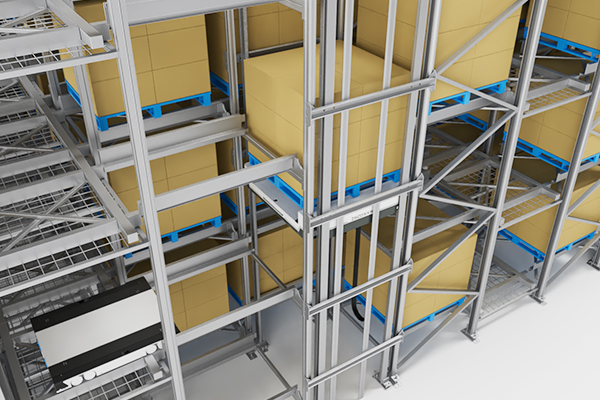
I’ve seen warehouses originally built for manual pallet racking converted to automated 密な収納 with no structural changes to the building shell, simply by choosing the right automation system.
Automation Systems Designed to Minimize Building Changes
The most impactful decision in reducing facility modifications is selecting automation that adapts to the building, rather than forcing the building to adapt to automation. Two categories of equipment stand out for retrofit scenarios: four-way shuttles and omnidirectional stacker robots.
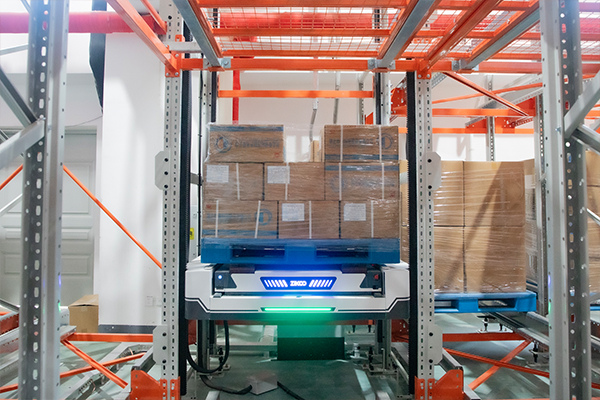
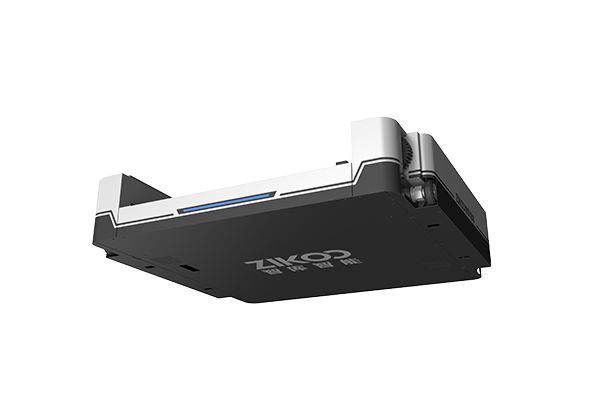
Four-way shuttles, such as Zikoo’s R-bot, slide under pallets on rails that can be integrated into existing racking. With a body thickness of only 125 mm and a load capacity up to 1,500 kg, these shuttles operate in aisles as narrow as the pallet size plus clearance, requiring no wider pathways. They can also function in temperatures down to -25°C with specialized lithium batteries, making cold storage retrofits possible without rebuilding the envelope.
Omnidirectional stacker robots like the U-bot navigate narrow aisles of just 2,100 mm wide using dual laser SLAM hybrid navigation. A standard warehouse with existing selective racks can often accommodate an automated putaway and retrieval system without removing columns or widening aisles. The U-bot’s ability to compensate for pallet position deviations up to ±50 mm via its 3D depth camera further reduces the need for perfectly straight racking rows.
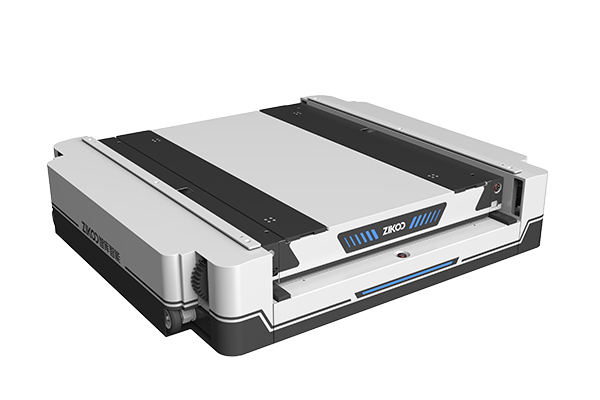
For multi-level access, vertical bidirectional shuttles such as the H-bot occupy only a single storage position and connect all levels of a rack, eliminating the need for mezzanines or dedicated elevator shafts. Together, these components form a dense storage system that retrofits into the existing tall building volume without new structural elements.
| システムタイプ | Typical Aisle Width | Floor Load Requirement | Ceiling Height Minimum | Retrofitting Difficulty |
|---|---|---|---|---|
| Traditional Stacker Crane AS/RS | 1.8–2.0 m | ≥2,500 kg per rack leg | ≥10 m | High (guide rails, slab work) |
| フォーウェイシャトルシステム | Pallet width + 200 mm | ≥2,000 kg/m² (distributed) | 6–8 m (rack-supported) | Low (rails mount to existing racking) |
| 全方向スタッカーロボット | 2.1 m minimum | ≥2,000 kg/m² (mobile load spread) | 8 m operable, lower possible | Medium (surface flatness) |
These figures are indicative; the specific building always dictates the exact modifications. I’ve found that many facilities classified as “not suitable for automation” by a quick glance actually meet the criteria once the alternative systems are considered.
cURL Too many subrequests by single Worker invocation. To configure this limit, refer to https://developers.cloudflare.com/workers/wrangler/configuration/#limits
cURL Too many subrequests by single Worker invocation. To configure this limit, refer to https://developers.cloudflare.com/workers/wrangler/configuration/#limits
cURL Too many subrequests by single Worker invocation. To configure this limit, refer to https://developers.cloudflare.com/workers/wrangler/configuration/#limits cURL Too many subrequests by single Worker invocation. To configure this limit, refer to https://developers.cloudflare.com/workers/wrangler/configuration/#limits
cURL Too many subrequests by single Worker invocation. To configure this limit, refer to https://developers.cloudflare.com/workers/wrangler/configuration/#limits cURL Too many subrequests by single Worker invocation. To configure this limit, refer to https://developers.cloudflare.com/workers/wrangler/configuration/#limits
cURL Too many subrequests by single Worker invocation. To configure this limit, refer to https://developers.cloudflare.com/workers/wrangler/configuration/#limits cURL Too many subrequests by single Worker invocation. To configure this limit, refer to https://developers.cloudflare.com/workers/wrangler/configuration/#limits
cURL Too many subrequests by single Worker invocation. To configure this limit, refer to https://developers.cloudflare.com/workers/wrangler/configuration/#limits cURL Too many subrequests by single Worker invocation. To configure this limit, refer to https://developers.cloudflare.com/workers/wrangler/configuration/#limits
cURL Too many subrequests by single Worker invocation. To configure this limit, refer to https://developers.cloudflare.com/workers/wrangler/configuration/#limits
cURL Too many subrequests by single Worker invocation. To configure this limit, refer to https://developers.cloudflare.com/workers/wrangler/configuration/#limits
cURL Too many subrequests by single Worker invocation. To configure this limit, refer to https://developers.cloudflare.com/workers/wrangler/configuration/#limits
cURL Too many subrequests by single Worker invocation. To configure this limit, refer to https://developers.cloudflare.com/workers/wrangler/configuration/#limits
cURL Too many subrequests by single Worker invocation. To configure this limit, refer to https://developers.cloudflare.com/workers/wrangler/configuration/#limits
The key enabler is software integration. Zikoo’s PTP Smart Warehouse platform coordinates pallet moves across the mix of automated and manual zones during the transition, preventing the “dual inventory” problem that often stalls retrofit projects.
cURL Too many subrequests by single Worker invocation. To configure this limit, refer to https://developers.cloudflare.com/workers/wrangler/configuration/#limits
cURL Too many subrequests by single Worker invocation. To configure this limit, refer to https://developers.cloudflare.com/workers/wrangler/configuration/#limits
cURL Too many subrequests by single Worker invocation. To configure this limit, refer to https://developers.cloudflare.com/workers/wrangler/configuration/#limits
cURL Too many subrequests by single Worker invocation. To configure this limit, refer to https://developers.cloudflare.com/workers/wrangler/configuration/#limits
cURL Too many subrequests by single Worker invocation. To configure this limit, refer to https://developers.cloudflare.com/workers/wrangler/configuration/#limits
cURL Too many subrequests by single Worker invocation. To configure this limit, refer to https://developers.cloudflare.com/workers/wrangler/configuration/#limits
cURL Too many subrequests by single Worker invocation. To configure this limit, refer to https://developers.cloudflare.com/workers/wrangler/configuration/#limits
cURL Too many subrequests by single Worker invocation. To configure this limit, refer to https://developers.cloudflare.com/workers/wrangler/configuration/#limits
cURL Too many subrequests by single Worker invocation. To configure this limit, refer to https://developers.cloudflare.com/workers/wrangler/configuration/#limits
cURL Too many subrequests by single Worker invocation. To configure this limit, refer to https://developers.cloudflare.com/workers/wrangler/configuration/#limits
cURL Too many subrequests by single Worker invocation. To configure this limit, refer to https://developers.cloudflare.com/workers/wrangler/configuration/#limits
cURL Too many subrequests by single Worker invocation. To configure this limit, refer to https://developers.cloudflare.com/workers/wrangler/configuration/#limits
cURL Too many subrequests by single Worker invocation. To configure this limit, refer to https://developers.cloudflare.com/workers/wrangler/configuration/#limits
cURL Too many subrequests by single Worker invocation. To configure this limit, refer to https://developers.cloudflare.com/workers/wrangler/configuration/#limits
cURL Too many subrequests by single Worker invocation. To configure this limit, refer to https://developers.cloudflare.com/workers/wrangler/configuration/#limits
cURL Too many subrequests by single Worker invocation. To configure this limit, refer to https://developers.cloudflare.com/workers/wrangler/configuration/#limits
cURL Too many subrequests by single Worker invocation. To configure this limit, refer to https://developers.cloudflare.com/workers/wrangler/configuration/#limits
If you’re interested, check out these related articles:
コールドチェーン物流の革新:Zikoo Robotics六方向シャトルが高密度・高効率倉庫を実現
標準化がグローバル配送を強化:Zikoo Roboticsの6方向シャトルが海外展開


