


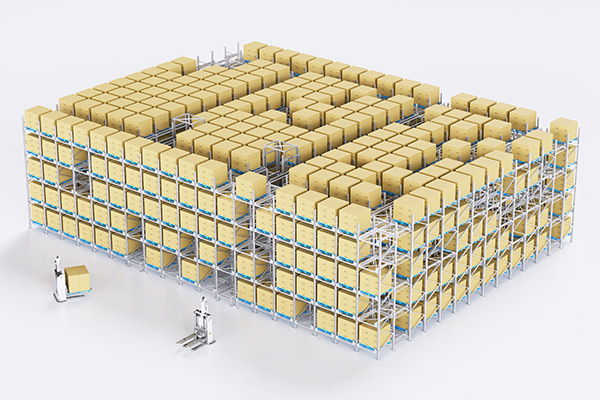
High-SKU warehouses face a structural conflict: they need dense pallet storage, but they also need frequent access to a large number of different pallet positions. Conventional wide-aisle rack and forklift operations solve access but consume floor space; deep-lane and drive-in systems gain density but reduce order flexibility. Pallet-to-person shuttle systems change the equation by combining dense lane storage with on-demand retrieval of full pallets to picking stations.
For operations managing thousands of SKUs across e-commerce, 3PL, manufacturing, and cold chain, the effective question is no longer whether to automate, but which pallet automation logic will not collapse as SKU breadth grows. This guide explains the architecture, software layer, and configuration decisions behind smart warehouse pallet solutions for high-SKU operations.
A practical first step is to map your current SKU profile to storage and throughput targets. If you need a preliminary capacity check, send pallet dimensions, SKU count, and order lines per day to info@zikoo-int.com or call (+86)-19941778955.
Why High-SKU Warehouses Need a Different Pallet Automation Logic
High-SKU does not simply mean more inventory; it means more unique pallet positions to manage, more mixed picks, and more order lines that involve low and medium movers rather than only full-pallet movers. In a manual or conventional truck-based operation, that profile increases travel, cuts picking accuracy, and consumes docks and staging areas. Research on warehouse order picking consistently identifies travel time as the dominant variable in picker productivity [1].
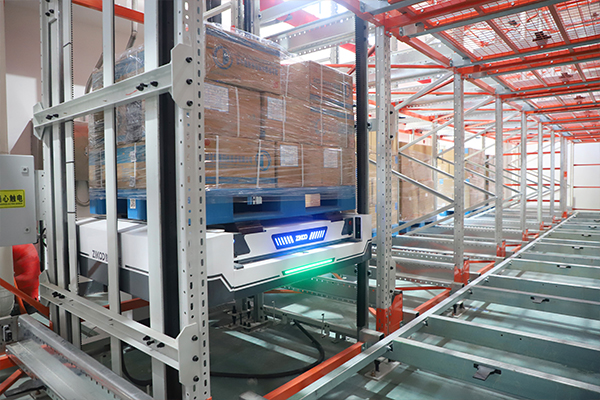
In a pallet-to-person system, travel is shifted from operators to autonomous shuttles. 四方シャトルs travel across the rack in both horizontal directions, while vertical transfer units connect storage levels. The system can retrieve a pallet from a deep lane without requiring a forklift to enter the rack. That access model is a central advantage for high-SKU environments where slow movers must remain reachable without disturbing fast-moving pallets.
This does not mean every shuttle system fits every high-SKU operation. The decisive factors are the order profile, pallet mix, SKU velocity distribution, and the degree to which the warehouse control system can re-slot and sequence work in near real time.
Pallet-to-Person Architecture for High-SKU Storage and Retrieval
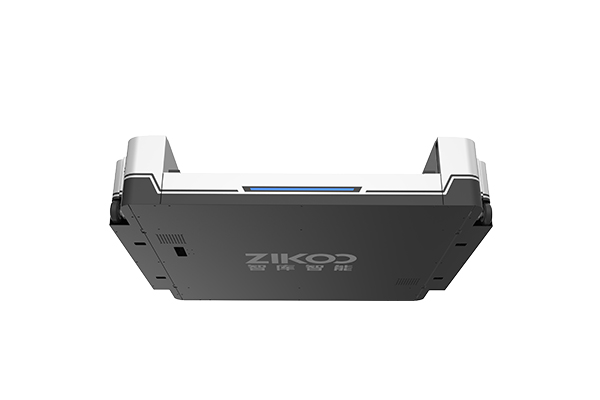
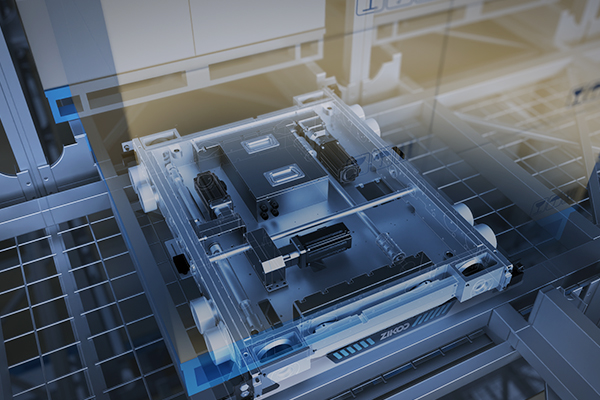
A practical high-SKU pallet solution often combines low-profile four-way shuttles with vertical transfer hubs. The R-bot四方向シャトル travels within rack lanes at speeds of up to 1.6 m/s empty and 1.2 m/s loaded on standard models, with a body height of 125 mm. That thin profile allows high beam-level density because the shuttle fits into the same storage layer as the pallet. The H-bot垂直双方向シャトル transfers pallets between levels with positioning accuracy of ±1 mm, forming a 六方向シャトル network with horizontal and vertical movement.
For high-SKU operations, the value is not speed alone but combination: the shuttle handles dense horizontal retrieval, and the H-bot creates a vertical transportation spine. A pallet for a slow-moving SKU can remain in a deep lane without compromising access to a fast-moving pallet in another lane. The system can also operate with mixed pallet types, which matters when high-SKU catalogs span standard, American, Japanese, and large pallet footprints.
| モデル | 定格負荷 | Body height | Supported pallet | 積載速度 |
|---|---|---|---|---|
| R1200B Standard | 1,200 kg | 125 mm | 1200×800–1000 mm | 1.2m/秒 |
| R1200A American | 1,200 kg | 125 mm | 1016×1219 mm | 1.2m/秒 |
| R1500J Japanese | 1,500 kg | 125 mm | 1100×1100 mm | 1.2m/秒 |
| R1500B Heavy-duty | 1,500 kg | 125 mm | 1200mm | 1.2m/秒 |
| R2000B大型パレット | 2,000 kg | 150 mm | 1400 mm | 1.0m/秒 |
As with 自動倉庫 and retrieval machines, shuttle robot safety loops should be validated against applicable safety standards [3]. The table is not a feature checklist; it is a pallet-profile filter. The right model set follows the actual pallet dimensions in your order data.
Software Orchestration: The Control Layer That Makes Thousands of SKUs Manageable
Hardware density is necessary but not sufficient. High-SKU operations live or die on the ability of the warehouse control system to decide what to retrieve, when, and in what sequence. The PTPスマート倉庫ソフトウェア platform spans WMS, WES, WCS, and RCS functions. In practice, that means four layers of control: inventory and order management, order release and wave planning, equipment-level orchestration, and robot mission execution.
Without that separation, a shuttle fleet can generate retrievals faster than the picking workstations can process them, or it can flood the vertical transfers with poorly sequenced moves. In high-SKU environments, the control layer should support dynamic slotting, waveless order release, and task interleaving. These methods let the system combine inbound putaway and outbound retrieval missions, instead of executing every movement as an isolated cycle [2].
This is the area where a pallet shuttle project becomes a software project. The shuttle hardware may be reliable, but if the mission logic cannot regroup orders by velocity class, sequence mixed pallets by workstation, or re-slot SKUs after seasonal shifts, the operation will still pay an efficiency penalty.
The control layer often determines whether shuttle hardware reaches its rated capacity. <ソフトウェア駆動型ハードウェア:シックスウェイシャトルが倉庫効率を最大化> covers how mission orchestration and shuttle motion interact in high-density pallet systems.
If you are evaluating a high-SKU pallet automation project, do not separate hardware and software procurement. A preliminary software-functionality review — mission orchestration, waveless order release, and re-slotting rules — will tell you more about long-term scalability than a shuttle speed sheet. Send your current WMS/WCS integration scope to info@zikoo-int.com or call (+86)-19941778955 for a focused technical review.
Slotting, Sequencing, and Retrieval Logic for High-SKU Throughput
High-SKU throughput depends more on slotting logic than on maximum travel speed. Fast-moving SKUs should be placed near pick faces or vertical transfers; slow movers can be stored in deeper lanes; correlated SKUs that frequently appear in the same order can be grouped to reduce retrieval missions. In a pallet-to-person operation, the shuttle system can apply dynamic slotting continuously as velocity data changes, rather than relying on a single annual ABC classification.
The retrieval sequence matters because high-SKU orders often require multiple pallet positions for one order line or multiple order lines grouped into a single workstation visit. Task interleaving allows a shuttle to complete a retrieval and then perform a putaway mission instead of returning empty. In systems with vertical transfer hubs, batching by destination level can remove unnecessary vertical moves. Academic and industry studies of warehouse control commonly treat task interleaving and storage assignment as the two control decisions with the largest practical effect on travel and throughput [1][2].
高密度ストレージ and Six-Way Shuttle Networks: Scaling Without Extra Aisles
A high-SKU warehouse often runs out of space before it runs out of machines. 四方シャトルシステムs can use deep lane storage to raise pallet positions per square meter while retaining access to individual lanes. The link to high-SKU operations is subtle: density does not help if it turns slow movers into inaccessible pallets. A six-way shuttle network mitigates this because horizontal shuttles and vertical H-bot transfers create alternate retrieval paths.
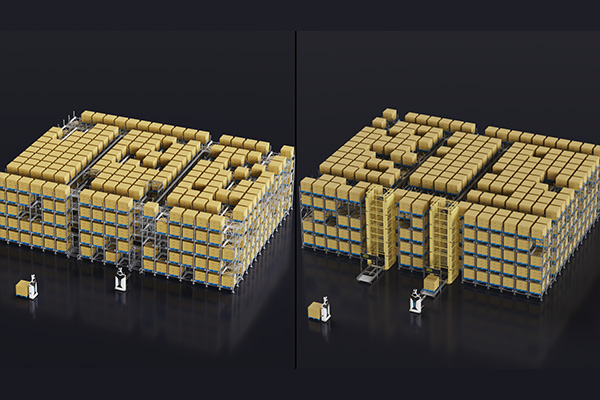
That flexibility is particularly valuable when an operation adds clients, product lines, or seasonality. A facility that starts with a few thousand SKUs may need to absorb several thousand more after adding contract logistics clients. In a lane-restricted system, absorbing new slow-moving SKUs often means disturbing existing storage. In a six-way shuttle layout, new SKUs can be placed in available deep positions and retrieved on demand.
High-SKU buildings rarely have a single storage pattern. <Multi-Scenario Smart Adaptation: Zikoo’s Six-Way Shuttle Powers the Digital Transformation of WarehousingcURL Too many subrequests by single Worker invocation. To configure this limit, refer to https://developers.cloudflare.com/workers/wrangler/configuration/#limits
cURL Too many subrequests by single Worker invocation. To configure this limit, refer to https://developers.cloudflare.com/workers/wrangler/configuration/#limits
cURL Too many subrequests by single Worker invocation. To configure this limit, refer to https://developers.cloudflare.com/workers/wrangler/configuration/#limits
cURL Too many subrequests by single Worker invocation. To configure this limit, refer to https://developers.cloudflare.com/workers/wrangler/configuration/#limits
cURL Too many subrequests by single Worker invocation. To configure this limit, refer to https://developers.cloudflare.com/workers/wrangler/configuration/#limits6方向シャトルが3PLプロバイダーによる次世代スマートロジスティクスハブ構築を支援cURL Too many subrequests by single Worker invocation. To configure this limit, refer to https://developers.cloudflare.com/workers/wrangler/configuration/#limits
cURL Too many subrequests by single Worker invocation. To configure this limit, refer to https://developers.cloudflare.com/workers/wrangler/configuration/#limits
cURL Too many subrequests by single Worker invocation. To configure this limit, refer to https://developers.cloudflare.com/workers/wrangler/configuration/#limits
- cURL Too many subrequests by single Worker invocation. To configure this limit, refer to https://developers.cloudflare.com/workers/wrangler/configuration/#limits cURL Too many subrequests by single Worker invocation. To configure this limit, refer to https://developers.cloudflare.com/workers/wrangler/configuration/#limits
- cURL Too many subrequests by single Worker invocation. To configure this limit, refer to https://developers.cloudflare.com/workers/wrangler/configuration/#limits cURL Too many subrequests by single Worker invocation. To configure this limit, refer to https://developers.cloudflare.com/workers/wrangler/configuration/#limits
- cURL Too many subrequests by single Worker invocation. To configure this limit, refer to https://developers.cloudflare.com/workers/wrangler/configuration/#limits cURL Too many subrequests by single Worker invocation. To configure this limit, refer to https://developers.cloudflare.com/workers/wrangler/configuration/#limits
- cURL Too many subrequests by single Worker invocation. To configure this limit, refer to https://developers.cloudflare.com/workers/wrangler/configuration/#limits cURL Too many subrequests by single Worker invocation. To configure this limit, refer to https://developers.cloudflare.com/workers/wrangler/configuration/#limits
cURL Too many subrequests by single Worker invocation. To configure this limit, refer to https://developers.cloudflare.com/workers/wrangler/configuration/#limits
cURL Too many subrequests by single Worker invocation. To configure this limit, refer to https://developers.cloudflare.com/workers/wrangler/configuration/#limits
cURL Too many subrequests by single Worker invocation. To configure this limit, refer to https://developers.cloudflare.com/workers/wrangler/configuration/#limits
cURL Too many subrequests by single Worker invocation. To configure this limit, refer to https://developers.cloudflare.com/workers/wrangler/configuration/#limits
- cURL Too many subrequests by single Worker invocation. To configure this limit, refer to https://developers.cloudflare.com/workers/wrangler/configuration/#limits
- cURL Too many subrequests by single Worker invocation. To configure this limit, refer to https://developers.cloudflare.com/workers/wrangler/configuration/#limits
- cURL Too many subrequests by single Worker invocation. To configure this limit, refer to https://developers.cloudflare.com/workers/wrangler/configuration/#limits
- cURL Too many subrequests by single Worker invocation. To configure this limit, refer to https://developers.cloudflare.com/workers/wrangler/configuration/#limits
- cURL Too many subrequests by single Worker invocation. To configure this limit, refer to https://developers.cloudflare.com/workers/wrangler/configuration/#limits
- cURL Too many subrequests by single Worker invocation. To configure this limit, refer to https://developers.cloudflare.com/workers/wrangler/configuration/#limits
cURL Too many subrequests by single Worker invocation. To configure this limit, refer to https://developers.cloudflare.com/workers/wrangler/configuration/#limits
よくある質問
cURL Too many subrequests by single Worker invocation. To configure this limit, refer to https://developers.cloudflare.com/workers/wrangler/configuration/#limits
cURL Too many subrequests by single Worker invocation. To configure this limit, refer to https://developers.cloudflare.com/workers/wrangler/configuration/#limits
cURL Too many subrequests by single Worker invocation. To configure this limit, refer to https://developers.cloudflare.com/workers/wrangler/configuration/#limits
cURL Too many subrequests by single Worker invocation. To configure this limit, refer to https://developers.cloudflare.com/workers/wrangler/configuration/#limits
cURL Too many subrequests by single Worker invocation. To configure this limit, refer to https://developers.cloudflare.com/workers/wrangler/configuration/#limits
cURL Too many subrequests by single Worker invocation. To configure this limit, refer to https://developers.cloudflare.com/workers/wrangler/configuration/#limits
cURL Too many subrequests by single Worker invocation. To configure this limit, refer to https://developers.cloudflare.com/workers/wrangler/configuration/#limits
cURL Too many subrequests by single Worker invocation. To configure this limit, refer to https://developers.cloudflare.com/workers/wrangler/configuration/#limits
cURL Too many subrequests by single Worker invocation. To configure this limit, refer to https://developers.cloudflare.com/workers/wrangler/configuration/#limits
cURL Too many subrequests by single Worker invocation. To configure this limit, refer to https://developers.cloudflare.com/workers/wrangler/configuration/#limits
参考文献
[1] R. De Koster, T. Le-Duc, and K. J. Roodbergen, “Design and control of warehouse order picking: A literature review,” European Journal of Operational ResearchcURL Too many subrequests by single Worker invocation. To configure this limit, refer to https://developers.cloudflare.com/workers/wrangler/configuration/#limits
cURL Too many subrequests by single Worker invocation. To configure this limit, refer to https://developers.cloudflare.com/workers/wrangler/configuration/#limits cURL Too many subrequests by single Worker invocation. To configure this limit, refer to https://developers.cloudflare.com/workers/wrangler/configuration/#limitscURL Too many subrequests by single Worker invocation. To configure this limit, refer to https://developers.cloudflare.com/workers/wrangler/configuration/#limits
cURL Too many subrequests by single Worker invocation. To configure this limit, refer to https://developers.cloudflare.com/workers/wrangler/configuration/#limits Industrial Robots and Robot Systems — Safety RequirementscURL Too many subrequests by single Worker invocation. To configure this limit, refer to https://developers.cloudflare.com/workers/wrangler/configuration/#limits
If you’re interested, check out these related articles:
六方向シャトル:スマート倉庫の未来を切り拓く
PTPインテリジェントウェアハウジングプラットフォーム:柔軟でスマートなロジスティクスエコシステムの構築
六方向シャトルが倉庫のアップグレードを推進し、インテリジェントな自動3D倉庫を構築
標準化がグローバル配送を強化:Zikoo Roboticsの6方向シャトルが海外展開


