


Automated Storage and Retrieval Systems are reshaping how warehouses operate. For businesses facing rising labor costs, shrinking available space, and pressure to fulfill orders faster, AS/RS offers a path forward. The question is whether to build a new facility around the automation or retrofit an existing one. Both approaches carry real trade-offs in cost, timeline, and operational impact. Getting this decision right requires understanding what each path actually involves.
What AS/RS Does and Why It Matters
AS/RS refers to automated material handling systems that store, retrieve, and track inventory without constant human intervention. The core components include storage racks, retrieval machines (stacker cranes, shuttles, or robots), and software that coordinates movement and manages inventory data.
The operational benefits are measurable. Storage density increases because automated systems can work in narrower aisles and reach higher than manual operations. Throughput improves since machines move goods faster and more consistently than people. Labor costs drop, inventory accuracy climbs, and safety incidents decline. These are not theoretical gains. They show up in facility audits and operational metrics within months of deployment.
Several AS/RS types exist, each suited to different applications. Unit-load systems using stacker cranes handle pallets and large items, common in manufacturing and distribution. Mini-load systems manage smaller items in totes or cartons, which fits e-commerce and parts distribution well. Shuttle-based systems like the R-bot Four-way Shuttle offer high-density storage with rapid access for both pallets and smaller units, particularly in cold chain or high-throughput environments. Vertical lift modules and carousels work for small parts storage. The U-bot Omnidirectional Stacking Robot handles narrow-aisle, high-density pallet storage, while the H-bot Vertical Bidirectional Shuttle functions as a vertical transport hub, creating multi-dimensional storage networks when paired with the R-bot.
Building a New Facility Around AS/RS
Designing a greenfield warehouse around AS/RS means the building serves the automation rather than the other way around. This approach eliminates the compromises that come with fitting equipment into an existing structure.
Layout planning can optimize material flow from the start. Rack structures, aisle widths, ceiling heights, and equipment placement all align with the chosen AS/RS technology. The result is higher storage density and faster throughput on day one, not after months of adjustments. Software integration also benefits. Systems like Zikoo’s PTP Smart Warehouse Software (WMS/WES/WCS/RCS) can be implemented from the ground up, coordinating all automated equipment and inventory processes without the friction of legacy system interfaces.
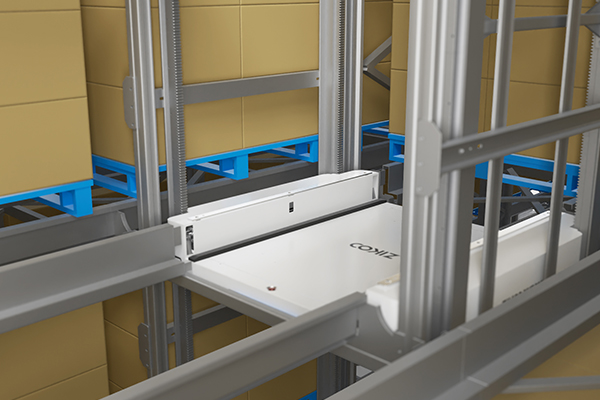
Scalability is another advantage. Designing with future expansion in mind allows businesses to add modules or equipment as demand grows without major structural changes. This forward-thinking approach means the facility can adapt to evolving business needs rather than becoming a constraint.
The trade-off is time and capital. A new build takes longer and costs more upfront than a retrofit. For businesses that can absorb that investment and timeline, the long-term operational efficiency often justifies it.
Retrofitting an Existing Facility
Retrofitting introduces a different set of challenges. The building already exists, which means working within constraints that were never designed for automation.
Common obstacles include limited ceiling height, irregular floor plans, and existing infrastructure that cannot be easily moved. Operational disruption is also a factor since the facility typically needs to keep running during installation.
Modern AS/RS solutions have become more flexible in response to these realities. The U-bot Omnidirectional Stacking Robot requires a minimum aisle width of only 2100 mm, allowing significant storage density improvements without extensive structural modifications. The R-bot Four-way Shuttle adapts to various existing rack systems, offering scalable solutions that work within building constraints.
A pharmaceutical warehouse project illustrates what is possible. The facility faced severe space constraints, and manual operations struggled with high picking errors and slow throughput. Implementing U-bot Omnidirectional Stacking Robots reduced aisle widths from 3.5 meters to 2.1 meters, increasing storage density by over 30% without expanding the building footprint. Picking accuracy improved to nearly 99.9%. The key was careful planning to minimize disruption during installation.
Implementation timelines for retrofits vary widely. Simple shuttle systems might take 6 to 12 months. More complex integrated systems involving structural changes could extend to 18 to 24 months. Minimizing operational disruption during this period requires phased implementation and often off-hours installation work.
| Challenge | Typical Solution |
|---|---|
| Limited Ceiling Height | Vertical lift modules, multi-level shuttles |
| Irregular Floor Plan | Modular AS/RS, flexible robot navigation |
| Operational Disruption | Phased implementation, off-hours installation |
| Legacy System Integration | API development, WMS/WES/WCS/RCS |
| Structural Limitations | Lightweight systems, minimal rack modifications |
Comparing the Two Approaches
The choice between new construction and retrofit depends on capital availability, timeline constraints, and long-term operational goals.
New construction offers a blank slate. The facility can achieve maximum efficiency and scalability from the outset, which often results in lower long-term operating expenses due to streamlined operations and reduced maintenance. The initial capital expenditure and extended construction timeline are substantial, but the facility is purpose-built for the automation it houses.
Retrofitting typically involves lower initial capital and a shorter implementation timeline since it reuses existing infrastructure. Businesses can continue operations during the transition, though some disruption is unavoidable. The challenge is adapting AS/RS to the building’s limitations, which might mean a less-than-optimal layout or more customized solutions.
| Feature | New Warehouse Construction with AS/RS | Retrofit Existing Facility with AS/RS |
|---|---|---|
| Initial Capital Cost | Higher (land, building, AS/RS) | Lower (AS/RS, minor modifications) |
| Implementation Time | Longer (18-36 months) | Shorter (6-24 months) |
| Operational Disruption | Minimal (new facility) | Moderate to High (active operations) |
| Design Optimization | High (custom-designed for AS/RS) | Moderate (constrained by existing structure) |
| Scalability | High (designed for future expansion) | Moderate (limited by existing footprint) |
| Long-Term Efficiency | Higher (optimized flow, lower OpEx) | Variable (depends on existing layout) |
The decision often comes down to a trade-off between speed to market, budget constraints, and the long-term vision for operational efficiency. Neither approach is universally better. The right choice depends on the specific circumstances of the business.
ROI and Long-Term Value
AS/RS investment is a strategic move aimed at securing competitive advantages over time. Return on investment typically comes from several areas: labor cost reductions as automation replaces manual tasks, improved space utilization that defers or eliminates expensive warehouse expansion, and enhanced operational accuracy that reduces errors and product damage. Increased throughput capacity and faster order fulfillment also contribute to improved customer satisfaction and market responsiveness.
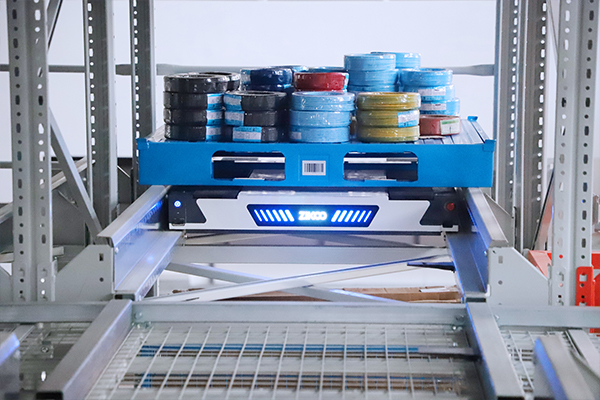
Zikoo’s robot lineup and software contribute to rapid ROI through improved throughput and reduced operational costs. By automating repetitive and physically demanding tasks, businesses can reallocate human resources to more value-added activities.
Beyond immediate financial returns, AS/RS provides the flexibility and scalability needed to adapt to fluctuating market demands, e-commerce growth, and evolving customer expectations. The ability to handle a wider range of SKUs, process orders faster, and maintain higher inventory accuracy positions businesses for sustained growth in a dynamic supply chain environment.
Typical ROI for an AS/RS implementation ranges from 1 to 5 years, depending on system complexity, operational scale, and labor cost savings. Many businesses see significant returns within 2 to 3 years through reduced operational expenses, increased storage capacity, and improved order fulfillment accuracy.
Frequently Asked Questions
Is AS/RS only suitable for very large warehouses?
AS/RS solutions are increasingly scalable and adaptable for various warehouse sizes, including smaller facilities. Modern systems, particularly shuttle-based AS/RS, offer modularity that allows businesses to optimize space and throughput efficiently regardless of scale. This flexibility makes automation accessible to operations that would not have considered it a decade ago.
How does AS/RS integrate with existing warehouse management systems?
AS/RS typically integrates with existing WMS or WES through standardized APIs or custom interfaces. This ensures seamless data flow and coordinated operation between automated equipment and overall inventory control. Proper integration is essential for a unified and efficient system, and most implementation projects include significant time for this work.
What are the long-term maintenance considerations for an AS/RS?
Long-term AS/RS maintenance involves routine inspections, predictive maintenance, and software updates to ensure optimal performance and longevity. Most providers offer service contracts that include preventative care and rapid support, minimizing potential downtime and extending the system’s operational lifespan. If your operation depends on consistent uptime, discuss maintenance terms and response time guarantees before committing to a provider.
To discuss specific requirements for your next AS/RS deployment, whether a new build or a retrofit, contact us at info@zikoo-int.com or (+86)-19941778955.
If you’re interested, check out these related articles:
Six-Way Shuttle: The Smart Warehousing Tool for Cost Reduction and Efficiency 2
Six-Way Shuttle: Pioneering the Future of Smart Warehousing


