


The question of whether your warehouse can support an Automated Storage and Retrieval System comes down to five measurable factors that most facility assessments overlook. Ceiling height, floor flatness, throughput patterns, SKU characteristics, and operational continuity requirements each carry veto power over AS/RS viability. I have evaluated dozens of warehouses where the initial assumption was “we need automation” but the physical constraints or operational profile made a shuttle-based or stacker crane system the wrong investment. The reverse happens just as often: facilities that appear too small or too old turn out to be excellent candidates once the actual parameters are measured. This article walks through each factor with the specific thresholds that separate viable projects from expensive mistakes.
Why Ceiling Height Determines Your AS/RS Options
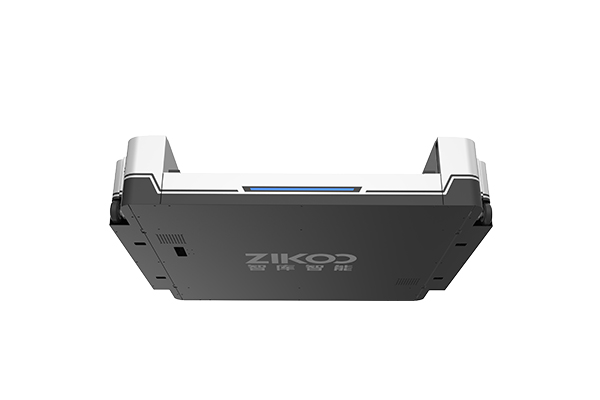
Clear height is the first filter. A four-way shuttle system with an H-bot vertical shuttle requires a minimum of approximately 6 meters of usable vertical space to justify the infrastructure cost. Below that threshold, the storage density gains over conventional racking shrink to the point where payback periods stretch beyond acceptable limits. The R-bot Four-way Shuttle operates with a body thickness of only 125 mm, which means the racking beam spacing can be tighter than stacker crane systems, but the overall system still needs vertical room to generate value.
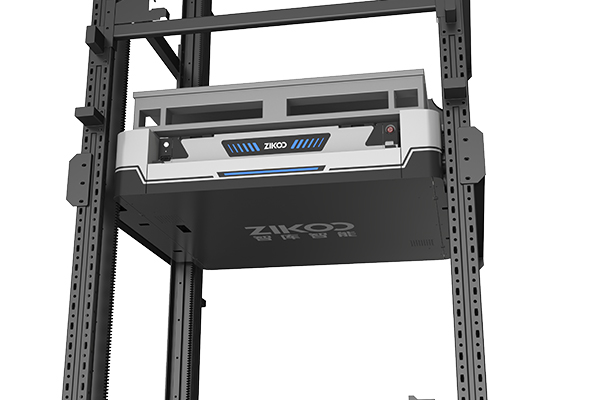
Warehouses with 10 meters or more of clear height become candidates for high-density six-way shuttle configurations where R-bots handle horizontal movement and H-bots manage vertical transfers. At these heights, storage density improvements of 30% or more over manual operations become achievable. The H-bot Vertical Bidirectional Shuttle occupies only a single storage location while providing ±1 mm positioning accuracy, which allows tighter rack spacing than traditional stacker cranes require.
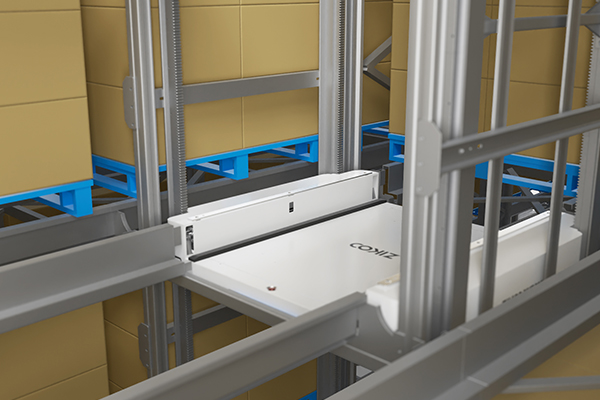
Floor condition matters as much as height. Shuttle systems tolerate floor flatness variations better than stacker cranes, but significant slopes or surface irregularities still require remediation. If your facility has floor levelness issues exceeding ±5 mm over 3 meters, budget for floor preparation before committing to any AS/RS configuration.
How Throughput Patterns Reveal the Right System Type
Raw pallet movement numbers tell only part of the story. The distribution of those movements across time determines whether a shuttle-based AS/RS fits your operation. Facilities with steady, predictable throughput throughout the day are straightforward to size. The challenge comes with operations that experience sharp peaks, such as manufacturing plants feeding production lines or distribution centers handling morning order waves.
Four-way shuttle systems scale throughput by adding shuttles rather than by adding entire aisle systems. This modularity means you can start with fewer units and add capacity as demand grows. A single R-bot moves at 1.6 m/s empty and 1.2 m/s loaded, with rated capacity up to 1,500 kg for standard models and 2,000 kg for heavy-duty configurations. Multiple shuttles operating in the same system multiply throughput without multiplying infrastructure.
| Throughput Profile | Recommended AS/RS Approach |
|---|---|
| Steady 40–60 pallets/hour | Standard four-way shuttle with moderate shuttle count |
| Peak-driven 80+ pallets/hour | Higher shuttle density or six-way configuration with H-bot elevators |
| Low volume under 30 pallets/hour | Evaluate whether automation payback justifies investment |
| Mixed pallet and case picking | U-bot + AMR hybrid system for vertical task separation |
The U-bot + AMR Narrow Aisle Picking System handles mixed scenarios where pallet storage and split-case picking coexist. This configuration achieves inbound and outbound efficiency of 80 pallets per hour while supporting picking rates of 300 pieces per hour. If your operation combines bulk storage with order fulfillment, a hybrid architecture often outperforms a pure pallet AS/RS.
What SKU Characteristics Mean for AS/RS Selection
SKU count and velocity distribution shape system design more than total inventory volume. A warehouse holding 500 SKUs with relatively even movement patterns requires different logic than one holding 5,000 SKUs where 20% of items generate 80% of movements.
High-SKU operations benefit from the random access capability of four-way shuttle systems. Unlike stacker cranes that serve fixed aisles, shuttles can reach any location in their zone without waiting for other equipment. The PTP Smart Warehouse Software platform manages up to 10,000 SKUs with dynamic slotting that positions fast-moving items closer to outbound points.
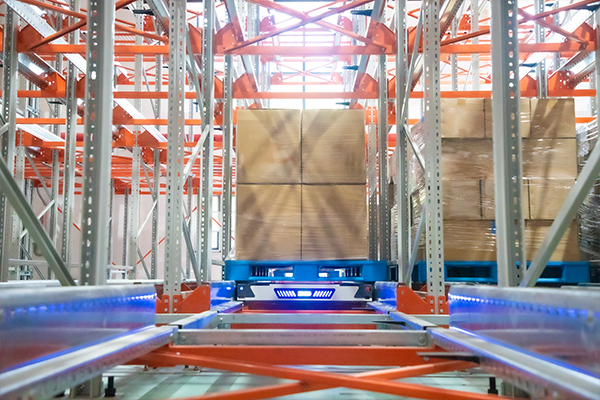
Product dimensions and weight also constrain options. The R-bot product line covers standard European pallets (1200 × 800–1000 mm), American pallets (1016 × 1219 mm), Japanese pallets (1100 × 1100 mm), and heavy-duty large pallets up to 1400 mm. If your operation handles non-standard pallet sizes or loads exceeding 2,000 kg, confirm compatibility before proceeding with system design.
Temperature requirements add another layer. The R-bot operates in environments as cold as -25°C with specialized low-temperature lithium batteries and PCBA coating for humidity protection. Cold chain facilities often achieve stronger AS/RS payback than ambient warehouses because labor costs in cold environments run higher and worker productivity drops in extended cold exposure.
When Existing Facilities Can Be Retrofitted
New construction offers flexibility that existing buildings do not, but retrofit projects succeed more often than most facility managers expect. The determining factors are structural capacity, column spacing, and fire suppression compatibility.
Structural capacity for racking loads typically requires floor slab thickness of 150 mm or more with appropriate reinforcement. Column spacing becomes the primary constraint in retrofit scenarios. Four-way shuttle systems adapt to irregular column grids better than stacker cranes because the racking layout can work around obstructions. The U-bot Omnidirectional Stacking Robot requires only 2,100 mm aisle width, which fits into existing facilities where conventional reach trucks already operate.
Fire suppression systems designed for manual warehouses may need modification for high-density automated storage. In-rack sprinkler systems become necessary when storage heights exceed the coverage of ceiling-mounted systems. This cost should be included in retrofit budgets from the beginning rather than discovered during permit review.
I have seen retrofit projects fail when the facility assessment underestimated electrical capacity requirements. Shuttle charging infrastructure, WMS servers, and conveyor systems add load that older buildings may not support without panel upgrades. Request a detailed electrical study before finalizing any retrofit commitment.
The Operational Continuity Question Most Assessments Miss
AS/RS systems change how your operation handles disruptions. A manual warehouse with forklifts can continue operating at reduced capacity when equipment fails. An automated system with a single point of failure can halt operations entirely.
System architecture determines resilience. Six-way shuttle configurations with multiple H-bot elevators maintain partial operation when one elevator goes down. Shuttle-based systems where individual R-bots can be swapped without stopping the entire system offer better uptime than stacker crane systems where a crane failure blocks an entire aisle.
Software reliability matters as much as hardware. The WMS/WES/WCS/RCS stack must include redundancy and failover capability. Ask potential suppliers about their software architecture, backup procedures, and mean time to recovery for different failure scenarios. A system that runs perfectly 99% of the time but takes 8 hours to recover from a software crash may not fit operations that cannot tolerate extended downtime.
Maintenance capability is the operational continuity factor that separates successful AS/RS implementations from troubled ones. If your facility lacks in-house technical staff, confirm that the supplier provides response time guarantees and remote diagnostic capability. The R-bot and H-bot systems support remote monitoring, but local intervention is still required for mechanical issues.
If your facility has ceiling height above 6 meters, predictable throughput patterns, and either new construction flexibility or a retrofit-compatible existing structure, an AS/RS evaluation is worth pursuing. Share your facility dimensions, current throughput data, and SKU profile with our team at info@zikoo-int.com or call (+86)-19941778955 to determine which system configuration fits your specific constraints.
Common Questions About AS/RS Warehouse Suitability
What minimum warehouse size justifies an AS/RS investment?
Floor area alone does not determine viability. A 2,000 square meter warehouse with 12 meters of clear height and 60 pallets per hour throughput can justify automation more easily than a 10,000 square meter facility with 5 meter ceilings and 20 pallets per hour movement. The calculation depends on storage density improvement, labor cost reduction, and throughput requirements. Facilities below 1,000 pallet positions rarely achieve acceptable payback periods, but the threshold varies by labor market and operational intensity.
Can AS/RS systems work in warehouses with irregular column spacing?
Four-way shuttle systems adapt to column grids that would disqualify stacker crane installations. The racking layout can route around columns with minimal storage position loss because shuttles do not require the long, straight aisles that cranes need. During facility assessment, we map column locations and design rack configurations that maximize usable positions within the existing structure. Columns spaced at 6 meter intervals or wider typically allow efficient layouts.
How do I know if my throughput is high enough for AS/RS?
Throughput thresholds depend on labor costs and operational hours rather than absolute pallet counts. A facility moving 40 pallets per hour across two shifts with high labor costs may achieve faster payback than one moving 80 pallets per hour with low labor costs and single-shift operation. The relevant question is whether automation reduces total cost of operation over a 5–7 year horizon. If your current labor cost per pallet moved exceeds the projected automated cost by 20% or more, the throughput level is likely sufficient.
What happens to AS/RS operations during power outages?
Battery backup systems maintain WMS and control system operation during brief outages, but shuttle movement stops when power fails. The R-bot lithium batteries hold charge for 7–8 hours of continuous operation, so shuttles in transit complete their current task and park safely. Recovery after power restoration typically takes 15–30 minutes for system reinitialization. Facilities with critical uptime requirements should evaluate uninterruptible power supply configurations during system design.
Are older warehouses automatically unsuitable for AS/RS retrofit?
Building age matters less than structural condition and dimensional parameters. Warehouses built in the 1980s with adequate floor capacity and ceiling height have been successfully retrofitted with modern shuttle systems. The assessment focuses on floor flatness, structural load capacity, electrical infrastructure, and fire suppression compatibility rather than construction date. If your facility meets the physical requirements, age alone does not disqualify it from automation. Share your building specifications and we can confirm whether a detailed assessment is warranted.
If you’re interested, check out these related articles:
Software-Driven Hardware: Six-Way Shuttle Maximizes Warehouse Efficiency
Six-Way Shuttle Powers Dense Storage: Breaking Space Limitations
Stacker Crane vs Four-Way Shuttle: Which Fits Your ASRS Warehouse Best
Looking for Reliable Four-Way Shuttle Manufacturers? Choose Zikoo Robotics
Revolutionizing Cold Chain Logistics: Zikoo Robotics Six-Way Shuttle Powers High-Density, High-Efficiency Warehousing


