


Deciding whether to invest in an AS/RS system is one of the most consequential choices a warehouse operation can face. The promise of higher density and lower labor costs is real, but the path to achieving it is littered with mismatched technology choices and unrealistic cost projections. After ten years designing and deploying pallet-based automation across cold chain, manufacturing, and e-commerce facilities, I’ve learned that the right time to automate isn’t when competitors do it—it’s when your specific throughput, storage density, and inventory profile align with what a well-specified system can actually deliver. This guide walks through that decision process, focusing on the pallet shuttle technologies that have transformed how we think about AS/RS.
Is AS/RS the Right Choice for Your Warehouse?
Not every high-bay operation needs an AS/RS, and pushing automation into the wrong environment is the fastest way to burn capital. I generally look for three conditions before recommending a pallet automated storage system: consistent throughput above about 30 pallets per hour, storage density requirements that exceed what standard racking and narrow-aisle forklifts can economically provide, and an inventory profile where SKU depth per location justifies the investment in fixed infrastructure. A facility moving a handful of pallets per shift or one where 80% of the volume comes from 5% of the SKUs may find that selective racking with reach trucks still yields a stronger ROI.
There’s another factor that doesn’t show up on spec sheets: process stability. An AS/RS system freezes your warehouse logic into a physical layout. If your picking strategies, pack sizes, or supplier shipment profiles change radically every quarter, the system will fight you. I’ve seen operations retrofit a shuttle-based system only to discover that seasonal reshuffling required reprogramming entire zones—a cost they hadn’t budgeted. The best candidates are facilities where the core material flow has been stable for at least 18 months and growth is predictable.
How Do Pallet Shuttles Compare to Stacker Cranes in AS/RS Design?
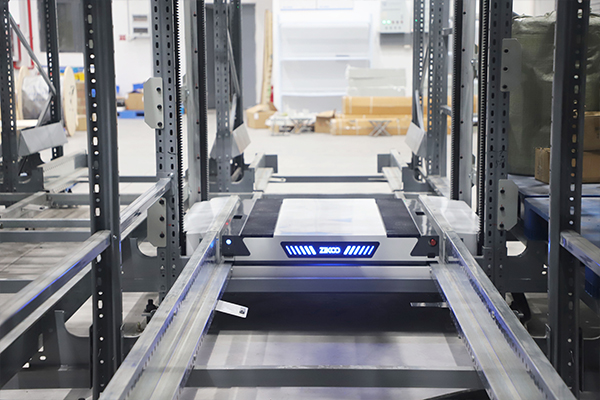
Once you’ve committed to automation, the next fork is whether to use a traditional stacker crane or a pallet shuttle system. Both retrieve pallets, but they solve different problems. A stacker crane moves in a single aisle, one pallet at a time, with a mechanical arm that extends into the rack. It’s proven, it’s predictable, and it works well in moderate-throughput environments where you need reliable, high-bay storage. But in dense storage facilities where every square meter counts and throughput demands are higher, four-way shuttle systems deliver density numbers that cranes simply can’t match.
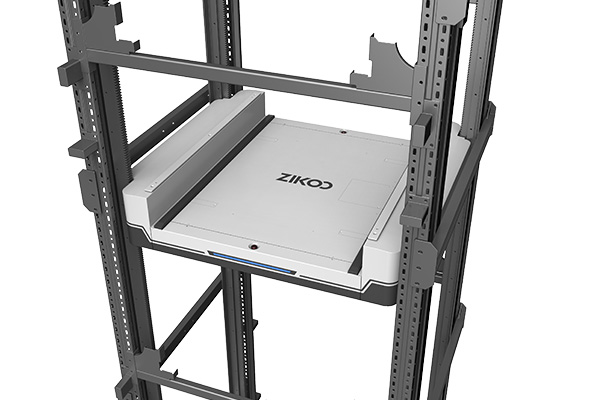
The difference is in the rack structure and what drives it. A shuttle rides inside the lanes, shuttling pallets horizontally into deep storage positions, while lifts or elevators handle vertical movement. This decouples horizontal and vertical motion, meaning you can run multiple shuttles per level and multiple levels simultaneously. It also eliminates the crane’s need for an aisle-wide turning radius, squeezing more storage positions out of the same floor area. Our R-bot four-way shuttle, for instance, has a body thickness of just 125 mm and can carry up to 1.5 tons, making it possible to stack pallets higher and denser than any crane system with comparable clearance.
However, shuttle systems aren’t universally superior. They add complexity to the control software, and if your operation requires frequent access to every pallet (as in some production supply roles), a crane’s simpler pick-path may reduce latency. The decision table below summarizes the trade-off.
| Factor | Stacker Crane | Pallet Shuttle System |
|---|---|---|
| Storage density | Moderate: fixed aisle width | High: deep-lane storage, minimal aisle |
| Throughput | Single pallet at a time | Multi-shuttle parallel operation |
| Flexibility | Good for varied SKU access | Best for depth-oriented, high-volume SKUs |
| Software complexity | Lower | Higher: requires WCS coordination |
| Implementation cost (per position) | Lower for low-density projects | Cost-effective at high density |
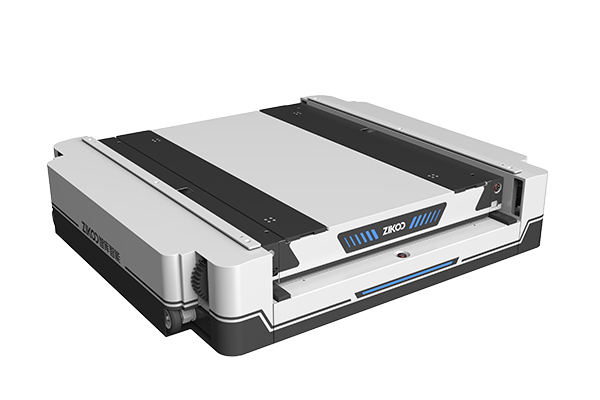
For operations that need pallet-to-person picking with narrow aisles, there’s a third path—the omnidirectional stacker robot. It doesn’t require deep lanes; instead, it operates in aisles as narrow as 2,100 mm, lifting pallets up to 8 meters. I’ve found this hybrid approach invaluable in existing building retrofits where you can’t rebuild the column grid but still need automated vertical storage.
What Industry-Specific Challenges Change the AS/RS Equation?
The AS/RS selection math changes sharply when you factor in industry constraints. Three segments worth highlighting: cold chain, new energy manufacturing, and pharmaceutical.
In cold storage, temperatures below -25°C aren’t just uncomfortable; they attack batteries and electronics. A standard lithium battery that performs well at room temperature can lose over half its capacity at -20°C, and repeated charging in that environment accelerates degradation. We’ve addressed this in our cold chain solution by specifying low-temperature-dedicated lithium batteries that sustain 6–8 hours of continuous operation. Equally important, the charging station itself must be designed for the environment—a warm charging port that prevents condensation and a special PCBA coating to protect against humidity. If your RFP doesn’t include these details, the system will limp through the first winter.
New energy battery and component manufacturing adds a different rule: zero metal contamination. You can’t have copper, zinc, or nickel anywhere near cathode materials. That means every structural component must be stainless steel, with blackening treatment and no exposed ferrous surfaces. Wheel materials shift to all-rubber buffers. It’s a constraint that eliminates standard shuttle platforms and makes off-the-shelf solutions non-viable. I’ve seen procurement teams discover this only after delivery, leading to expensive on-site retrofits.
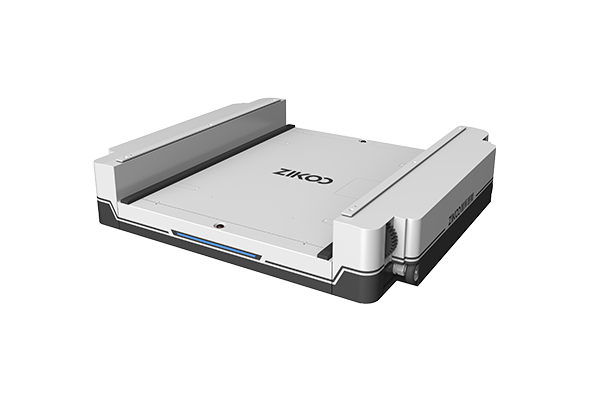
Pharmaceutical constant-temperature storage throws yet another curveball: not just temperature but also humidity control, cleanroom compatibility, and traceability requirements that demand tight integration between the AS/RS and the site-level manufacturing execution system. The shuttle’s material choices and control unit become regulated variables, not just engineering decisions.
Why Should You Care About the Software Layer in AS/RS?
Hardware specs dominate early conversations, but the WMS/WCS software stack is what makes or breaks daily operations. The difference between an AS/RS that runs at 95% utilization and one that runs at 65% often comes down to how well the warehouse control system orchestrates shuttle dispatching, lift scheduling, and order release logic.
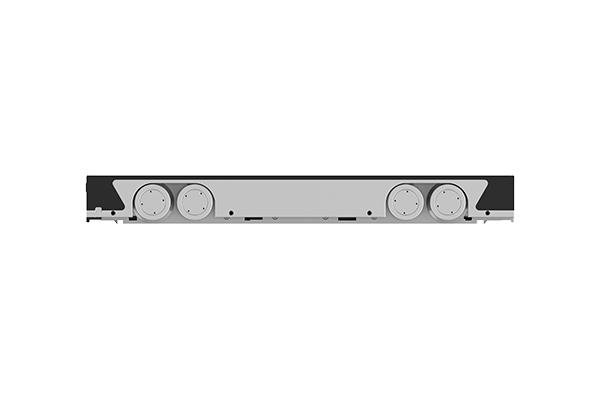
A pallet shuttle system with six-way capability (R-bot moving horizontally in four directions plus H-bot elevators) creates a three-dimensional material flow that traditional sequential logic can’t handle. The software needs to dynamically route shuttles to the nearest lift, re-sequence outbound pallets based on truck arrival times, and hot-swap shuttles between levels when one area gets overwhelmed. Our PTP Smart Warehouse Software platform integrates WMS, WES, WCS, and RCS layers specifically to handle this complexity. But the larger point is that procurement should never treat software as a bundled afterthought. Ask for a dedicated demo of the WCS before signing any PO.
What Is the Real Cost and Payback Timeline for Pallet AS/RS?
The purchase price of hardware is only about 40–50% of the total project cost. Installation, software customisation, facility modifications, and the first year of maintenance contracts can easily double the upfront figure. I recommend building a three-year total cost of ownership model that includes energy, spare parts, and labor reallocation (not just elimination).
For a well-fitted system with consistent throughput, the payback period typically lands between 2.5 and 4 years. That estimate, however, depends heavily on how aggressively you reduce non-value-added labor and how much inventory accuracy improves—two benefits that require manager commitment, not just robot performance. I’ve seen sites that hit their projected savings in 18 months because they eliminated 90% of pallet misplacements and cut replenishment time by half. Others took five years because they kept the same manual verification steps, effectively paying for automation without changing their operating model.
Understanding What Drives Long-Term Costs
Beyond the initial AS/RS cost, maintenance and energy are the steady leaks that erode ROI unless they’re designed out from the start. Shuttle systems have fewer single points of mechanical failure than cranes, but they add complexity in battery management. For example, our R-bot series achieves 8 hours of continuous operation on a single charge, but in a high-throughput cold chain environment, that window tightens. Specifying high-capacity lithium batteries (51.2V/40Ah) and planning rapid-swap charging carts cuts downtime drastically, but only if the facility’s power infrastructure and shift patterns are designed for it. If your team plans to operate 18 hours a day, you need enough spare batteries and charging slots to maintain that rhythm—and that cost never appears on the hardware quote.
How Do You Identify a Long-Term AS/RS Partner?
The final decision isn’t just about the machine; it’s about the supplier’s ability to support iterative expansion, software upgrades, and global delivery. A vendor that treats the project as a one-time equipment sale will leave you stranded when you need to add a new warehouse zone or integrate a picking robot. Look for evidence of sustained R&D investment (shuttle platforms evolve quickly, and backward compatibility matters), in-house software teams that can customize the WCS without third-party middleware, and documented experience in your specific industry.
For operations that expect to grow into new geographies, global delivery capability is non-negotiable. I’ve been involved in rollouts where inconsistent component supply and missing certifications delayed site acceptance by months. A partner with standardized, modular platforms and a track record of multi-country installations can compress that risk dramatically. Ask for a list of projects in your target region and, if possible, visit one.
Taking the Next Step Toward an AS/RS Decision
The gap between a smart AS/RS investment and an expensive shelf system often comes down to a handful of specification decisions that procurement teams can’t make alone: battery chemistry for your temperature profile, material compatibility for contamination-sensitive products, and a WCS architecture that scales across your facility. These aren’t generic benchmarks; they’re choices that must be built into the proposal at the design stage.
If your project involves cold storage, cleanroom handling, or multi-site rollout, it’s worth running your pallet and throughput data through a vendor’s simulation model before finalizing the RFP. At Zikoo Smart Technology, we routinely build system-level simulations that map shuttle movement, lift loads, and order release logic against real shift schedules so you can stress-test the design. Send your SKU data and throughput targets to info@zikoo-int.com, or call (+86)-19941778955 to start that simulation. The earlier these parameters enter the conversation, the fewer surprises you’ll face at commissioning.
What Every Operations Team Asks Before Committing to Pallet Shuttle AS/RS
How quickly can a shuttle-based AS/RS be installed without interrupting ongoing operations?
A typical installation for a greenfield site runs 12 to 20 weeks from ground-breaking to commissioning, depending on rack height and system complexity. In existing warehouses, we phase the implementation by zone: a quarter of the floor is taken out of service, new racking and shuttle rails go in, and the system goes live in that zone while manual operations continue elsewhere. The key is that the WCS must be capable of running a hybrid manual-automated operation during the transition, which not every software platform supports. Plan on 6 to 8 weeks of partial disruption per zone, and budget for temporary labor or off-site overflow if your capacity is already tight.
Won’t a four-way shuttle system be overkill for low-turnover inventory?
It depends on your definition of low-turnover. If you hold safety stock deep in lanes and access only the oldest pallets via FIFO, a dense shuttle configuration can actually reduce floor space without penalizing access time. However, if your inventory turns fewer than two times a year and you frequently need to retrieve specific pallets from the middle of a lane, a dedicated crane with random-access picking may be less costly in terms of shuttle repositioning time. I’d recommend sending your SKU velocity profile to a supplier for a simulation before dismissing the shuttle option—in many cases, lane depth can be shortened to match velocity, preserving density without sacrificing retrieval speed.
How does a pallet shuttle system handle seasonal peaks without over-investment?
The modular nature of shuttle systems is their biggest strength here. You can start with, say, four shuttles per level and add two more during peak season, or battery-charging carts can cycle faster with extra spares. The software simply registers the additional units and integrates them into the routing logic. We’ve seen operations scale throughput by 40% for a two-month peak by leasing extra shuttles—something that’s impossible with a fixed crane installation. The constraint is always the lift shaft capacity, so design that for your peak, not your average.
Can the same AS/RS handle both ambient and cold storage within one facility?
Yes, but the transition zone requires engineering attention. The shuttle that moves between a 22°C ambient staging area and a -25°C freezer will condense moisture, which can damage electronics and cause icing on wheels. The solution is a buffer zone with dehumidified air and a dwell time that allows the shuttle’s temperature to shift gradually. We’ve used a combination of air curtains and pre-cooling alcoves to manage this. It’s not a standard feature of every system, so make it a line item in the specification. If a vendor tells you it’s a problem, they may not have deep cold chain experience.
How do I know if a supplier’s project references are reflective of what they’ll actually deliver?
Ask for the project timeline against the original promise, not just the final result. A supplier that delivered a working system six months late with three months of post-installation fixes is not delivering a smooth experience. Request a reference from a project that went operational in the last 18 months, not five years ago, and ideally one that matches your industry and pallet type. If the reference won’t share the commissioning punch list, that’s a flag. For peace of mind, start with a simulation engagement—sending your data to info@zikoo-int.com lets you evaluate the vendor’s technical response before committing to a site visit.
If you’re interested, check out these related articles:
Six-Way Shuttle: The Ultimate Warehousing Solution for Cost Reduction and Efficiency
Reshaping Warehouse Value: Six-Way Shuttle Leads the Digital Transformation
Smart Warehousing Starts Here: Cost-Effective Four-Way Shuttle Systems


