


Pressure keeps climbing to do more with less in the warehouse. From firsthand projects, automated racking systems have proven to be a practical way to meet that demand. They bring advanced robotics and intelligent software together to streamline storage and retrieval. When put to work, the gains show up fast in throughput, accuracy, and overall operational safety. Knowing how these systems function is important for any business aiming to optimize logistics.
Understanding Automated Warehouse Racking Systems
Automated warehouse racking systems mark a clear step forward in material handling and storage. Early operations leaned on manual labor and static shelving, which capped storage density and slowed workflows. Mechanized tools like forklifts improved matters but still depended heavily on people. As robotics and computing advanced, fully automated setups emerged. These systems limit human touchpoints while pushing speed and accuracy higher.
A typical automated racking setup includes several core elements. High-density storage racks provide the structural base and can reach considerable heights. Within them, automated handling equipment moves goods, including shuttles, stacker cranes, and conveyors. Intelligent software platforms such as Warehouse Management Systems (WMS), Warehouse Execution Systems (WES), and Warehouse Control Systems (WCS) orchestrate all movements. These platforms coordinate hardware components tightly and optimize inventory flow. The result is an integrated, responsive storage environment that runs with impressive efficiency.
Core Benefits of Automation in Warehousing
Implementing automated racking systems offers numerous advantages for modern warehousing. These benefits address common operational pain points, making logistics a strategic asset.
Enhancing Operational Efficiency and Throughput
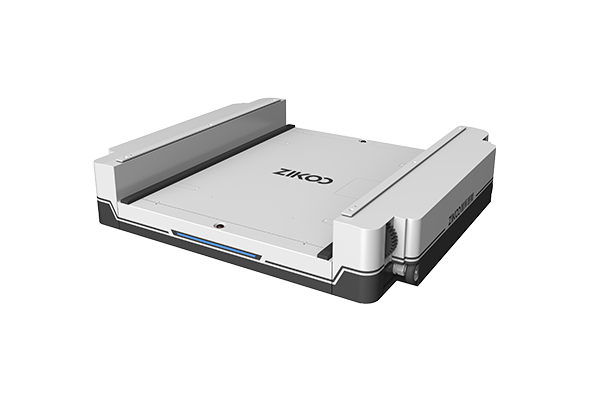
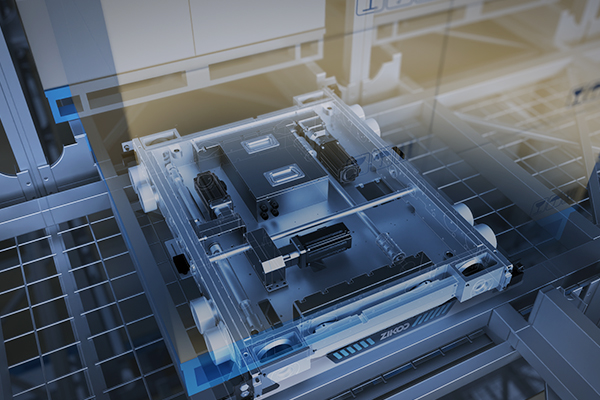
Automated systems significantly boost operational efficiency. Robots and shuttles run continuously, often at higher speeds than human workers. Throughput rises as more goods move in less time. For instance, our R-bot Four-way Shuttle can move at 1.6 m/s empty and 1.2 m/s loaded. This speed enables rapid pallet movement inside dense storage. Collaborative setups, such as pairing the R-bot with the H-bot vertical bidirectional shuttle, create a six-way shuttle system. By enabling simultaneous horizontal and vertical motion, the system lifts overall operational efficiency.
Reducing Labor Costs and Improving Safety
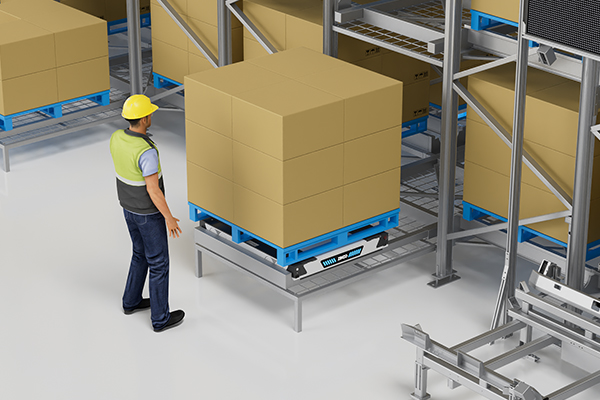
Automation tackles rising labor costs and shortages directly. Repetitive work shifts to machines, freeing people for more complex, value-added tasks. Exposure to physically demanding or hazardous jobs drops. Injuries fall, and the workplace becomes safer. Our U-bot Omnidirectional Stacking Robot, for example, handles heavy loads up to 1000 kg, eliminating manual lifting and its associated risks. Precision movement also reduces damage to goods and infrastructure.
Maximizing Storage Density and Space Utilization
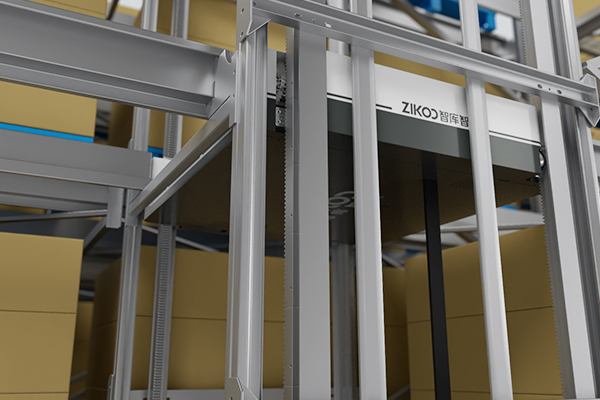
Space comes at a premium in warehousing. Automated racking systems prioritize high-density storage and make better use of vertical space than traditional methods. The slim body of the R-bot Four-way Shuttle, only 125 mm thick, supports tighter rack layouts. Capacity rises without expanding the footprint. The H-bot Vertical Bidirectional Shuttle occupies only a single storage location, which helps in high-rack stereoscopic warehouses. Businesses store more products in less space, delaying or avoiding costly expansions.
Boosting Inventory Accuracy and Order Fulfillment
Automated systems deliver exceptional inventory accuracy. Integrated software tracks each item’s location and movement in real time, reducing human error during picking and stocking. The U-bot + AMR Narrow Aisle Picking System reaches a positioning accuracy of ±10 mm, ensuring goods are placed and retrieved correctly. Higher accuracy leads to better order fulfillment rates and fewer stockouts, so customer demand is met more reliably.
Best Practices for Implementing Automated Racking
Successful implementation of automated racking systems requires careful planning and execution. We follow a structured approach to ensure optimal outcomes for our clients.
Strategic Planning and System Design
The initial phase involves a thorough analysis of current operations and future needs. We assess warehouse layout, inventory characteristics, and throughput requirements. This planning guides technology selection. For instance, dense storage in e-commerce warehouses might benefit from a four-way shuttle systemfour-way shuttle system. In contrast, narrow aisle scenarios could leverage an Omnidirectional Stacker RobotOmnidirectional Stacker Robot. System design then shapes a tailored solution that fits with existing infrastructure, including rack configurations, robot pathways, and workstation layouts.
Technology Integration and Software Solutions
Effective automation hinges on robust technology integration. This includes hardware such as the R-bot and H-bot, and the software that directs them. Our PTP Smart Warehouse SoftwarePTP Smart Warehouse Software (WMS/WES/WCS/RCS) provides full control. It manages inventory, optimizes task assignments, and orchestrates robot movements. Integration with existing enterprise resource planning (ERP) systems is key to reliable data flow. This connectivity ensures all operational data is centralized and accessible. Advanced analytics within the software support ongoing optimization.
Training and Change Management
Technology only works when people are ready for it. Comprehensive training programs help warehouse staff understand how to interact with automated systems and handle exceptions. Thoughtful change management encourages buy-in and smooth adoption of new workflows. We provide ongoing support and training to maintain user proficiency and system performance.
Zikoo’s Innovative Pallet-to-Person Solutions
At Zikoo Smart Technology Co., Ltd., we specialize in pallet-to-person roboticspallet shuttle system. Our product lineup offers flexible and efficient solutions for diverse warehousing needs.
The R-bot Four-way Shuttle4-way shuttle is a core handling solution for dense storage. With a slim body and load capacity up to 1.5 tons, it offers flexible four-way movement. It supports various pallet sizes, including standard, American, Japanese, and heavy-duty types. For specialized environments, we offer cold chain and new energy custom solutions. The R-bot operates efficiently in temperatures as low as -15℃ with long-lasting lithium batteries.
The H-bot Vertical Bidirectional ShuttleVertical Two-Way Shuttle acts as the vertical transportation hub. It integrates with the R-bot to form a Six-way shuttle systemSix-way shuttle system. This system creates a three-dimensional warehousing network, significantly enhancing efficiency. The H-bot offers high precision (±1 mm positioning accuracy) and various models to suit different pallet dimensions and load capacities up to 1800 kg.
The U-bot Omnidirectional Stacking Robot is designed for narrow aisle storage, requiring a minimum aisle width of only 2100 mm. Its U-shaped body and minimal turning radius support exceptional maneuverability. The U-bot lifts pallets up to 8 meters with a 1000 kg rated load. We also offer the U-bot + AMR Narrow Aisle Picking System for hybrid “To B palletization” and “To C split-case picking” scenarios. This system achieves picking efficiency of ≥300 pieces per hour and inbound/outbound efficiency of ≥80 pallets per hour, managing up to 10,000 SKUs.
Our PTP Smart Warehouse Software (WMS/WES/WCS/RCS) is the brain behind these operations. It provides control and optimization for all robotic movements and inventory management. This software-driven approach maximizes warehouse efficiency and throughput.
For more details on how our Six-way shuttle《Six-Way Shuttle Drives Warehouse Upgrades: Building an Intelligent Automatic 3D Warehouse》) can improve your operations, we invite you to explore our range of solutions.
Future Trends in Warehouse Automation
The future of warehouse automation points toward greater intelligence, scalability, and sustainability. Artificial intelligence (AI) and machine learning (ML) will further optimize routing, predictive maintenance, and inventory forecasting, allowing systems to learn and adapt over time. Expect broader use of modular and scalable solutions so businesses can expand automation in stages. Sustainability will move up the priority list, with energy-efficient robots and space optimization reducing environmental impact. Deeper integration with wider supply chain networks will build logistics that are both resilient and responsive.
Frequently Asked Questions
What is the primary difference between automated and traditional racking systems?
Automated racking systems utilize robotics and software (like Zikoo’s PTP Smart Warehouse Software) for storage and retrieval. This significantly boosts efficiency, accuracy, and space utilization. Traditional systems, conversely, rely on manual labor and human-operated equipment, which limits speed and introduces human error.
How do automated racking systems improve inventory management?
Automated systems, often integrated with WMS/WES/WCS, provide real-time inventory tracking. They reduce human error and enable precise stock rotation, leading to higher accuracy and better order fulfillment rates. Zikoo’s solutions ensure smooth data flow for optimal inventory control.
What are the typical ROI considerations for implementing automated warehouse racking?
ROI for automated racking systems is primarily driven by reductions in labor costs, increased throughput, optimized space utilization, and improved safety. While the initial investment can be substantial, long-term operational savings and efficiency gains, often facilitated by advanced robotics like Zikoo’s, usually yield a strong return.
Can automated racking systems be integrated with existing warehouse infrastructure?
Yes, many automated racking systems, including Zikoo’s modular solutions, are designed for flexible integration. Proper planning and advanced software like the PTP Smart Warehouse Software are key to ensuring solid compatibility with existing WMS and other operational systems.
What types of businesses benefit most from automated warehouse racking?
Businesses with high-volume throughput, limited warehouse space, high labor costs, strict safety requirements, or a need for high inventory accuracy benefit significantly. This includes sectors like e-commerce, manufacturing, 3PLs, and cold storage, all of which can leverage automated racking systems like those offered by Zikoo Smart Technology.
Partner with Zikoo Smart Technology
Ready to upgrade your warehouse operations with cutting-edge automation? Contact Zikoo Smart Technology today for a personalized consultation. Discover how our U-bot, R-bot, H-bot, and PTP Smart Warehouse Software can optimize your efficiency, reduce costs, and enhance safety. Visit our website or reach out to our experts to learn more about our global leadership in pallet-to-person robotics.
Email: info@zikoo-int.com
Phone: (+86)-19941778955


