


Southeast Asia’s warehouse sector is moving past the era when manual, low-cost operations were the default answer. Automated warehouse solutions for Southeast Asia are now being evaluated in Bangkok, Jakarta, Ho Chi Minh City, Manila and Penang for one core reason: rising order complexity is colliding with tighter land, labour and power constraints. The most workable automation projects in the region do not try to copy a European or Chinese high-bay design. They combine high-density storage, climate-hardened hardware and software that can handle local pallet standards, brownfield buildings and service interruptions.
This guide focuses on what actually changes in a Southeast Asian automation project: which storage architecture fits, how climate affects equipment choices, and what to verify before you compare supplier quotes.
1. The Southeast Asian Warehouse Opportunity Is Real — but the Constraints Are Different
Several structural forces are pushing Southeast Asian businesses toward automation.
First, e-commerce and domestic distribution growth have intensified throughput pressure in Thailand, Vietnam, Indonesia and the Philippines. Peak demand now tests warehouses that used to run on overtime labour alone. At the same time, the World Bank’s Logistics Performance Index continues to show that logistics capability varies widely across the region, which makes predictable order cycle times harder to maintain when facilities operate manually [1].
Second, labour availability is changing. Southeast Asia still has labour cost advantages compared with mature markets, but labour turnover, skill shortages in multi-shift operations and rising wages in industrial zones are changing the calculation. The International Labour Organization has tracked uneven labour productivity growth across ASEAN countries, and warehouse operators increasingly value systems that reduce daily dependence on large picking crews [2].
Third, urban land pressure and port-adjacent expansion are pushing companies to densify existing facilities. In cities such as Singapore, Bangkok and Manila, building outward is often not feasible. That raises the value of compact pallet storage and high-bay retrofits.
| Regional pressure | What it does to warehouse planning | Automation response that fits |
|---|---|---|
| E-commerce peak loads | Creates sharp inbound/outbound spikes | Shuttle or ASRS buffer with high retrieval frequency |
| Heat and humidity | Increases corrosion, condensation and cooling load | Coated electronics, stainless structural treatment, climate-rated batteries |
| Mixed pallet standards | Forces non-standard rack openings | Shuttles that handle 1200×1000, 1100×1100 and 1219×1016 pallets |
| Brownfield and low-clearance sites | Limits crane installation options | Four-way shuttle systems with thinner vehicle profile |
| Power disturbances | Risks system downtime or data loss | Battery-backed shuttle movement and software recovery routines |
The implication is not that Southeast Asian sites are “tougher” for automation. The implication is that automation must be selected for the local environment rather than imported as a standard package. Regional integration and trade facilitation programmes from ASEAN continue to expand cross-border goods movement, but imported automation packages still need local adaptation [4].
2. High-Density Storage Is Usually the Strongest Starting Move
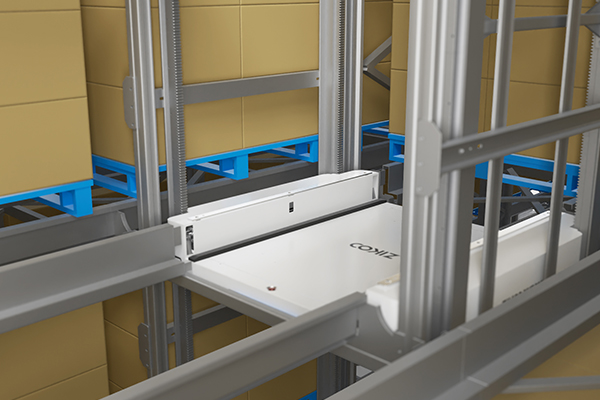
For many Southeast Asian operations, the first automation decision is between a unit-load stacker crane system and a four-way shuttle system. A stacker crane ASRS works well when ceiling height is sufficient and the layout can accommodate crane aisles. A shuttle system often fits better when the goal is to compress storage density without committing to a full high-bay structure.
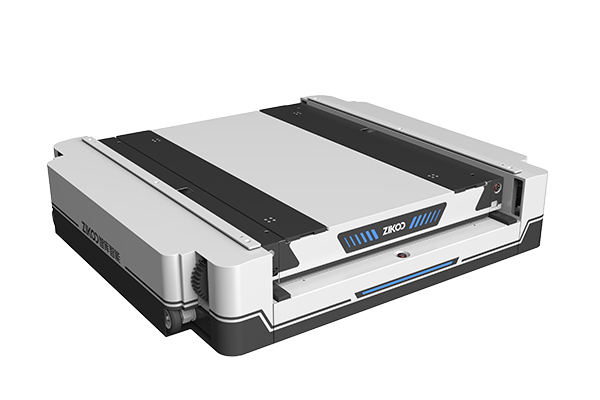
A four-way shuttle travels horizontally across rail systems and can change direction at intersections, rather than being confined to a single lane like a two-way pallet shuttle. When paired with a vertical lift or H-bot elevator, the configuration forms a six-way shuttle network: the shuttle covers horizontal movement within a level, while the lift covers vertical transfer between levels. This architecture can be phased into existing buildings more easily than a crane-based high-bay system because it does not require every aisle to be served by a dedicated crane.
For Southeast Asian warehouses with 6 to 12 metres of usable height, this flexibility is often more important than maximum crane throughput. Dense storage becomes practical without a massive civil works programme, and the vehicle-level redundancy can localise the impact of a single shuttle maintenance event.
Dense storage decisions often hinge on whether a shuttle needs to traverse aisles or wait for lift interfaces. <Stacker Crane vs Four-Way Shuttle: Which Fits Your ASRS Warehouse Best> covers the throughput and floor-usage trade-offs buyers should model before committing.
Four-way shuttles combine flexible horizontal travel with lift-assisted vertical transfer, but the network behaviour changes how storage positions relate to picking workstations. <Smart Storage Revolution: Comprehensive Overview of Four-Way Shuttle Systems for Automatic 3D Warehouses> covers how matrix movement, rack integration and software orchestration fit together.
3. Climate and Power Reality Must Shape the Equipment Specification
Southeast Asia has two operational factors that many generic automation manuals underplay: humidity and power stability.
Humidity creates condensation paths that affect motor windings, connectors, sensors and printed circuit boards. In a standard dry warehouse, a small amount of condensation may be manageable. In coastal distribution centres or cold-chain transition rooms, humidity control becomes a reliability issue. For that reason, equipment specifications should be checked for PCBA coating, sealed connection points and corrosion-resistant structural options. In cold storage, the problem is reversed: low-temperature batteries discharge differently, and charging must be designed for sub-zero conditions.
Product-level details matter here. As part of its dense storage range, the R-bot four-way shuttle offers a standard operating temperature down to -15°C and a cold-chain solution using a -25°C low-temperature dedicated lithium battery. The cold-chain configuration also includes a low-temperature charging port design and special PCBA coating to improve safety in high-humidity or low-temperature environments. The H-bot vertical shuttle is rated for operation from -25°C to 45°C, which gives layout engineers more freedom when transfer equipment must bridge cold rooms and ambient zones. These are not marketing figures; they are the kind of data that should be cross-checked against the temperature map of your facility.
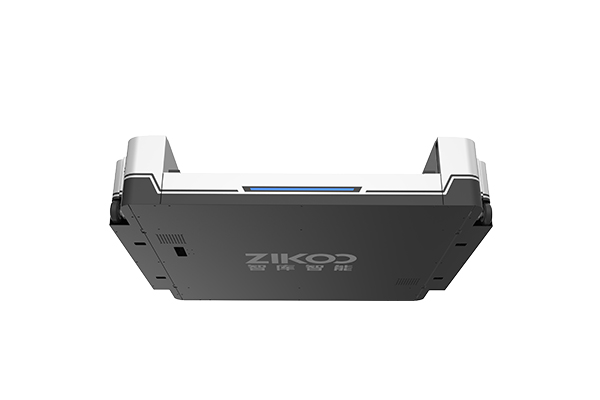
Power stability matters because a voltage dip should not leave the warehouse unable to recover. A shuttle system with onboard lithium batteries can complete current missions or return to a safe position during short interruptions. The bigger safeguard is software: the WCS or RCS layer must persist mission state so that recovered shuttles do not create inventory record errors. Buyers should ask how the system handles a loss of power mid-mission, how battery charging is scheduled during peak shifts, and whether charging algorithms adapt to hot ambient conditions.
4. Pallet Diversity and Mixed-SKU Pressure Are the Real Daily Test
Southeast Asian warehouses often run several pallet standards in the same building. A system set up only for one footprint will create exceptions at receiving and slow down retrieval.
The four-way shuttle range is designed to handle multiple pallet types. Standard models support pallet sizes around 1200×800–1000 mm, while specific regional variants accommodate 1016×1219 mm American-type pallets and 1100×1100 mm Japanese-type pallets. Rated load can reach 1,500 kg on selected models and up to 2,000 kg on heavy-duty large-pallet variants. For buyers, the critical verification point is not only the pallet footprint, but the minimum rack opening tolerance and the shuttle’s ability to centre a damaged or deformed pallet.
In high-SKU operations, four-way shuttles also support route-based mission sequencing. Instead of moving one load from ingress to first available location, the software can assign storage location based on velocity, expiry, weight class or outbound grouping. This is especially relevant in food and beverage, pharmaceutical and 3PL operations where the same building handles fast movers, slow movers and seasonal inventory.
5. Five Capability Checks Before You Quote a System
Before comparing quotations, run every supplier against these five checks. They reveal more than any single price figure.
Check 1: Can the system move in four directions without changing vehicles?
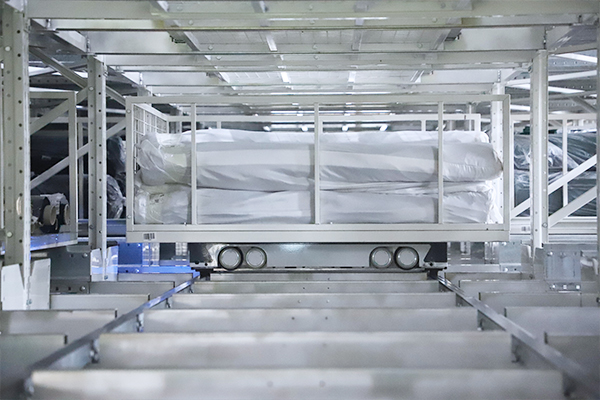
Some pallet shuttle systems still rely on transfer carts or manual repositioning between lanes. A true four-way shuttle should be able to change direction within the rack structure, not only at dedicated lift stations. Verify this by asking for a movement path diagram for a mixed retrieval sequence.
Check 2: Can the equipment prove climate qualification?
Ask for documented temperature range, PCBA coating, battery charge rating at low temperature, and structural corrosion control. A verbal commitment that the system “works in Asia” is not sufficient. The specification should match the humidity and temperature envelope of your specific building.
Check 3: Can the racking and shuttle accommodate your actual pallet mix?
Bring a sample pallet defect rate to the conversation. If your operation regularly receives 1200×1000 and 1100×1100 pallets, confirm that the shuttle can enter both rack types without manual reconfiguration.
Check 4: Can the software recover mission state after power loss?
Warehouse execution systems differ in how they persist task states. Ask what happens when a shuttle loses communication mid-task, how the system re-syncs with WMS inventory, and how long recovery takes in a real test environment.
Check 5: Can the supplier show delivered project evidence in similar operating conditions?
References should include sites with comparable temperature, pallet type or throughput, not only successful projects in dry ambient warehouses. A supplier that can explain the engineering changes made for past Southeast Asian deployments is more useful than one that offers only a standard catalogue.
For equipment performance evaluation, industry documents such as FEM performance data definitions provide a useful common vocabulary for shuttle and stacker crane comparisons [5]. Supplier quality systems should also be tested against management standards such as ISO 9001:2015, which provides a baseline for documented process control and corrective action [3].
6. Software Scope Determines Whether the Hardware Delivers
A shuttle project cannot run on shuttle hardware alone. The controlling layer must connect WMS, WES, WCS and RCS functions so that storage locations, charge states, maintenance schedules and retrieval missions stay coherent.
The PTP Smart Warehouse Software line is built around this layered approach. Rather than forcing a warehouse to use a rigid execution model, it links warehouse management strategy with equipment control. For example, the software can group outbound orders by route, assign retrieval sequences across multiple shuttles, and manage charging windows around peak periods. That is important in Southeast Asia because peak cycles are often uneven: a distribution centre may run near idle in the morning and hit full capacity in the late evening cut-off window.
When evaluating software, focus on three practical questions. Does it support staged go-live without changing the entire WMS? Does it expose equipment diagnostics to the operational team? And can it run in a degraded mode if one shuttle or lift is under maintenance? These questions matter more than screen design or dashboard colour.
7. Long-Term Supplier Capability Is More Important Than Initial Price
Southeast Asia has no shortage of automation proposals, but long-term support is where projects diverge. A system that works at commissioning can become an operational burden if spare parts, remote diagnostics and engineering support are not continuously available.
The strongest evidence is delivered project history. For manufacturing and 3PL operations, this includes whether the supplier can show how it handled racking tolerances, floor load limits, fire safety interactions and software handover. In one manufacturing-oriented dense storage layout, for example, a 60 m × 20 m warehouse envelope was configured to hold 1,616 storage locations, with inbound and outbound capacity of at least 80 pallets per hour. That kind of planning detail is more predictive than a generic render of a dark warehouse.
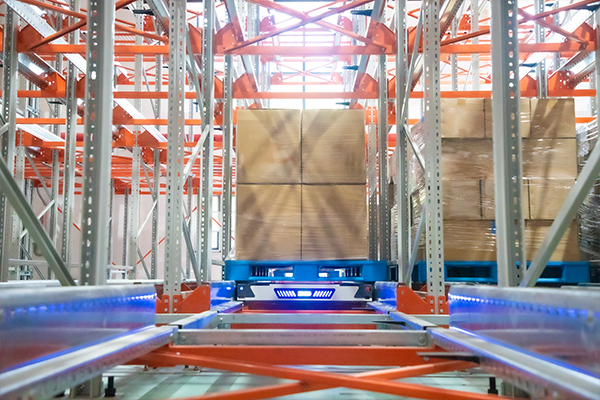
Supplier selection should be verified against delivered project evidence, not only brochure specifications. <Looking for Reliable Four-Way Shuttle Manufacturers? Choose Zikoo Robotics> covers how to evaluate manufacturer capability, delivery history and after-sales readiness.
Start with a feasibility bundle
If you are in the early stage, prepare a short brief that includes building drawings, usable height, pallet standards, temperature range, current inbound and outbound pallet volume, and the top three operational bottlenecks. That is enough for an initial architecture review.
Next Step: Stress-Test Your Southeast Asia Automation Plan
Automated warehouse solutions for Southeast Asia should be evaluated as a system decision, not a hardware purchase. The most successful projects are usually the ones where the storage vehicle, lift architecture, climate package and software recovery logic are designed as one continuous flow.
If you need a technical feasibility view, contact the engineering team at info@zikoo-int.com or call (+86)-19941778955. Share your building envelope, pallet type, temperature range and target pallets per hour. The response should focus on layout feasibility, realistic throughput assumptions and phased implementation options rather than a single glossy number.
Frequently Asked Questions
Are automated warehouse solutions suitable for existing Southeast Asian warehouses?
Yes, many existing facilities can be retrofitted. Four-way shuttle systems often fit brownfield projects because they can be phased into live operations without the full aisle structure of a stacker crane system. However, each building must be checked for floor flatness, column layout, ceiling height and power availability before design is frozen.
Which pallet standards must a shuttle system support in Southeast Asia?
The exact answer depends on the facility, but three formats appear frequently: 1200×1000 mm, 1100×1100 mm and 1016×1219 mm. A buyer should confirm that the shuttle can enter the racking with both the pallet footprint and the damaged-pallet tolerance that the operation normally receives.
How do four-way shuttle systems perform in cold rooms and humid environments?
Performance depends on the specification. For cold rooms, battery chemistry and charging behaviour are the biggest variables. Some systems are rated for -25°C with dedicated low-temperature lithium batteries. For humid or coastal sites, protection of PCBA and connectors matters most. Buyers should ask for operational test data, not only storage temperature limits.
Is a high-density shuttle system cost-effective for medium-sized operations in Vietnam or Thailand?
It can be, especially when space is leased or expansion is constrained. High-density pallet shuttle systems reduce the floor area required for the same number of pallet positions, but cost-effectiveness must be modelled against current wages, land cost, throughput peaks and project financing period. The best approach is to compare total cost over a 5- to 7-year operating horizon, not initial capex alone.
What should I prepare before requesting a solution proposal?
Prepare the building layout and clear height, pallet dimensions, cold-room or humidity conditions, inbound and outbound pallet volumes per day, peak-hour behaviour, current WMS environment and any known fire-safety constraints. This allows the supplier to model storage density and retrieval performance instead of replying with a generic brochure.
References
[1] World Bank. “Logistics Performance Index.” https://lpi.worldbank.org/
[2] International Labour Organization. “Labour Productivity in ASEAN: Trends and Implications.” https://www.ilo.org/asia/publications/
[3] International Organization for Standardization. “ISO 9001:2015 Quality Management Systems — Requirements.” https://www.iso.org/standard/62085.html
[4] ASEAN Secretariat. “ASEAN Economic Integration Brief.” https://asean.org/
[5] Fédération Européenne de la Manutention. “FEM 9.851: Performance Data of S/R Machines.” https://www.fem-eur.com/
If you’re interested, check out these related articles:
Six-Way Shuttle Drives Warehouse Upgrades: Building an Intelligent Automatic 3D Warehouse
Smart Cold Chain Era: Six-Way Shuttle System Redefines Storage Efficiency with Maximum Density


