


Warehouses are under steady pressure to deliver more with tighter margins. From what we see on the floor, pairing advanced robotics with intelligent software has shifted from nice-to-have to baseline. This piece shows how automated warehouse systems take on those pressures by streamlining processes, cutting costs, and raising overall productivity, with practical insights for teams ready to upgrade their logistics.
Understanding the Core: What Are Automated Warehouse Systems and Why Do They Matter?
Automated warehouse systems leverage technology to perform tasks traditionally handled by human labor. These systems integrate various robotic solutions and intelligent software to manage storage, retrieval, and movement of goods. We see a significant shift towards these automated solutions driven by the demands of e-commerce, labor shortages, and the need for greater operational precision.
1. Defining the Modern Automated Warehouse
A modern automated warehouse is a complex ecosystem where machines and software collaborate. We define it by its ability to execute tasks such as receiving, storing, picking, packing, and shipping with minimal human intervention. Key components include automated storage and retrieval systems (ASRS, robotic vehicles, and sophisticated software platforms. These systems enhance throughput, optimize space utilization, and ensure accuracy. Zikoo’s PTP Smart Warehouse Software (WMS/WES/WCS/RCS) orchestrates these operations with tight coordination.
2. The Driving Forces: Why Businesses Embrace Automation
Businesses embrace automation for several compelling reasons. Firstly, it mitigates the impact of labor shortages and rising labor costs. Secondly, automation significantly improves operational efficiency and speed, crucial for meeting growing customer expectations. Thirdly, it enhances inventory accuracy and reduces errors, leading to fewer returns and higher customer satisfaction. Finally, automated systems allow for better utilization of vertical space, increasing storage density. We consistently find that these factors drive widespread adoption across industries.
Addressing Key Challenges: How Automation Solves Common Warehouse Pain Points
Automation provides targeted solutions for persistent warehouse challenges. We analyze how these systems directly impact operational bottlenecks and inefficiencies. Our approach focuses on delivering measurable improvements in productivity and cost-effectiveness.
1. Overcoming Labor Shortages and Rising Costs
Labor shortages present a significant challenge for warehouse operators. Automated systems, such as Zikoo’s U-bot Omnidirectional Stacking Robot and R-bot Four-way Shuttle, reduce reliance on manual labor. These robots handle repetitive and physically demanding tasks, allowing human workers to focus on more complex, value-added activities. This reallocation improves job satisfaction and overall workforce productivity. Automation also reduces long-term operational costs associated with wages, benefits, and training.
2. Boosting Accuracy and Reducing Errors in Order Fulfillment
Manual order picking is prone to human error, leading to mis-shipments and customer dissatisfaction. Automated systems enhance picking accuracy through precision robotics and advanced software algorithms. Our PTP Smart Warehouse Software ensures that the right products are picked and dispatched efficiently. This precision minimizes errors, reduces return rates, and improves overall customer experience. The system’s ability to track inventory in real-time further contributes to accuracy.
Exploring the Landscape: Types and Technologies Powering Automated Warehouses
The landscape of automated warehouse technologies is diverse and continually evolving. We utilize various robotic solutions to meet specific operational needs. Understanding these technologies is crucial for designing an effective automation strategy.
| Technology Type | Key Functionality | Zikoo Product Example | Primary Benefit |
|---|---|---|---|
| Four-Way Shuttle | Dense pallet storage & retrieval | R-bot Four-way Shuttle | High-density storage, flexible movement |
| Vertical Shuttle | Vertical pallet movement | H-bot Vertical Bidirectional Shuttle | Maximized vertical space utilization |
| Stacking Robot | Narrow aisle high-reach stacking | U-bot Omnidirectional Stacking Robot | Space efficiency in tight layouts |
| Integrated System | Collaborative picking & storage | U-bot + AMR Narrow Aisle Picking System | Hybrid picking for diverse SKUs |
The R-bot Four-way Shuttle is a core handling solution for dense storage. It offers flexible four-way movement, intelligent autonomous handling, and multi-shuttle collaborative operation. With a slim body thickness of 125 mm and a load capacity of up to 1.5 tons, it optimizes pallet-to-person dense storage scenarios. The R-bot comes in various models, including Standard (R1200B), American (R1200A), Japanese (R1500J), Heavy-duty (R1500B), and Heavy-duty Large Pallet (R2000B), supporting different pallet sizes and load capacities. For example, the R1200B has a rated load of 1200 kg and measures L1000 × W972 × H125 mm. All models operate efficiently in temperatures as low as -15℃ and provide 7-8 hours of continuous operation on a single charge. The R-bot is ideal for dense storage in e-commerce, cold chain, and manufacturing. For those looking for reliable solutions, consider exploring options from Four-way shuttle manufacturers.
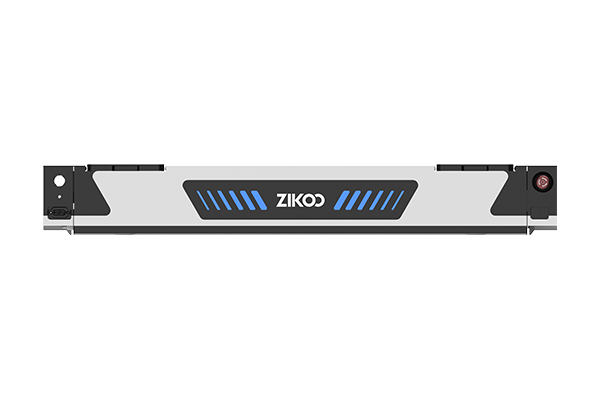
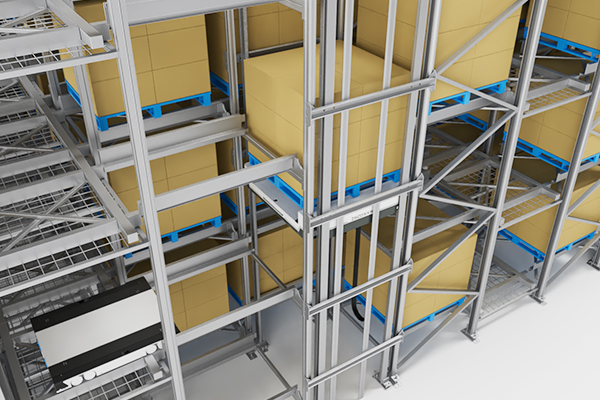
The H-bot Vertical Bidirectional Shuttle acts as the “vertical transportation hub” in intelligent warehousing systems. It is designed for pallet-to-person dense storage and storage-picking scenarios. The H-bot occupies only a single storage location and collaborates with the R-bot Four-way Shuttle to create a three-dimensional warehousing network. This integration significantly enhances overall operational efficiency. Available models include Standard (H1800B), American (H1800A), and Japanese (H1800J), all with a rated load of 1800 kg. These models achieve a positioning accuracy of ±1 mm and operate in temperatures from -25℃ to 45℃. The H-bot is crucial for vertical cargo transfer in high-rack stereoscopic warehouses and for urban warehousing centers.
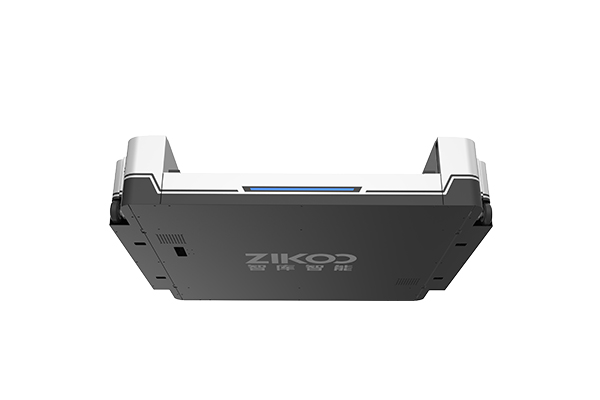
The U-bot Omnidirectional Stacking Robot is an intelligent warehouse robot designed for narrow aisle storage scenarios. It requires a minimum aisle width of only 2100 mm, offering exceptional maneuverability in tight spaces. The U-bot features a lifting height of 0–8 meters and a rated load capacity of 1000 kg. It can operate collaboratively with automated equipment such as AMRs and robotic arms. Models like the U1045, U1060, and U1080 offer lifting heights of 4500 mm, 6000 mm, and 8000 mm, respectively. All models use 48V/210Ah lithium iron phosphate batteries, providing 6–8 hours of continuous operation. The U-bot is perfect for narrow aisle high-density storage in e-commerce, pharmaceutical, and manufacturing industries.
The U-bot + AMR Narrow Aisle Picking System combines the strengths of the U-bot and AMRs for hybrid picking scenarios. This system supports “upper storage and lower buffering” or “upper storage and lower picking” architectures. The U-bot handles high-level storage, while AMRs manage low-level handling and picking. This vertical functional complementarity enhances scenario adaptability, enabling full-category outbound picking for large, medium, and small items. The system boasts a picking efficiency of ≥300 pieces per hour and an inbound/outbound efficiency of ≥80 pallets per hour. It also improves storage density by over 30% and supports up to 10,000 SKUs. This solution is particularly effective for multi-SKU split-case picking in e-commerce and manufacturing.
The Zikoo Advantage: Pallet-to-Person Robotics and Smart Software Integration
Zikoo Smart Technology Co., Ltd. leads the industry in pallet-to-person robotics. Our integrated solutions combine cutting-edge hardware with intelligent software to deliver unparalleled warehouse efficiency. We focus on creating flexible, scalable, and high-performance systems. Our full suite of products and software forms the backbone of modern automated warehouses.
We feature the R-bot Four-way Shuttle for dense storage, offering high load capacities and flexible movement. The H-bot Vertical Bidirectional Shuttle serves as the vertical transport hub, integrating with the R-bot to create a Six-way shuttle system. This combined system forms a robust three-dimensional warehousing network, significantly boosting throughput. Our U-bot Omnidirectional Stacking Robot excels in narrow aisle environments, maximizing space utilization with its compact design and high lifting capabilities. These robots are engineered for precision and reliability.
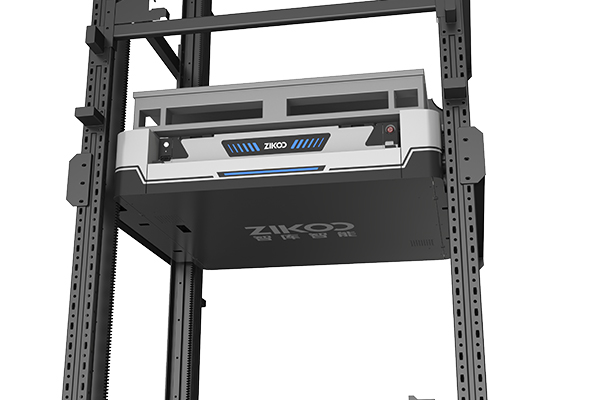
Our PTP Smart Warehouse Software (WMS/WES/WCS/RCS) provides the intelligence behind our robotic systems. This software suite manages inventory, optimizes robot movements, and orchestrates complex picking and storage tasks. It ensures reliable communication between different automated components and integrates with existing enterprise systems. This approach guarantees efficient operations, real-time visibility, and data-driven decision-making. We offer customized solutions, such as our Cold Chain Custom Solution for the R-bot, which utilizes -25℃ low-temperature dedicated lithium batteries and special PCBA coating for high-humidity environments. We also provide a New Energy Custom Solution, which avoids metal contamination by using stainless steel frames and all-rubber buffer wheels.
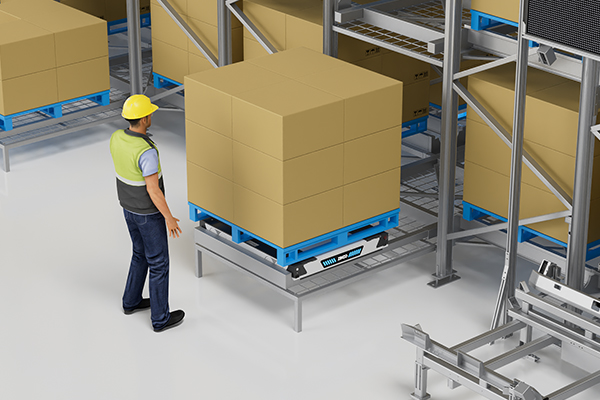
We have successfully deployed our systems across various industries, including e-commerce, cold chain logistics, and manufacturing. Our solutions consistently deliver improved storage density, increased operational efficiency, and reduced labor costs. For example, our manufacturing industry solution for the U-bot + AMR Narrow Aisle Picking System achieved an inbound and outbound efficiency of ≥80 pallets per hour in a 1616-location warehouse. Our expertise in pallet-to-person automation positions us as a trusted partner for warehouse modernization.
Implementing Automation: A Strategic Roadmap for Your Warehouse
Implementing warehouse automation requires careful planning and execution. We guide our clients through a strategic roadmap to ensure a successful transition. Our process involves assessment, design, implementation, and ongoing support.
- Assess Current Operations: We begin by thoroughly analyzing your existing warehouse layout, inventory flow, and operational bottlenecks. This step identifies areas where automation can deliver the most impact.
- Define Automation Goals: We work with you to establish clear objectives, such as desired throughput, storage density improvements, or labor cost reductions. These goals inform the selection of appropriate technologies.
- Design the Solution: Our engineers design a customized automation solution, selecting the optimal combination of Zikoo robots and software. This includes detailed layout planning and system integration strategies.
- Implement and Integrate: We manage the installation and integration of the automated systems, ensuring minimal disruption to your ongoing operations. This phase includes rigorous testing and calibration.
- Train and Support: We provide in-depth training for your staff and offer continuous support to ensure smooth operation and maximum system uptime. Our commitment extends beyond initial deployment.
- Monitor and Optimize: We continuously monitor system performance and provide recommendations for further optimization, adapting the solution to evolving business needs.
This structured approach ensures that your investment in automation yields significant and sustainable benefits. We are dedicated to partnering with you for long-term success. If you are interested in learning more about how our automated storage and retrieval system solutions can benefit your operations, we invite you to explore our detailed insights.
Frequently Asked Questions
What is the typical ROI for implementing automated warehouse systems?
The ROI for automated warehouse systems varies widely based on system complexity, initial investment, and operational savings. However, many businesses report achieving full ROI within 1-3 years through reduced labor costs, increased accuracy, improved throughput, and optimized space utilization. Zikoo Smart Technology can help conduct a detailed ROI analysis for your specific needs.
How do automated warehouse systems integrate with existing WMS or ERP platforms?
Modern automated warehouse systems, like Zikoo’s PTP Smart Warehouse Software (WMS/WES/WCS/RCS), are designed for straightforward integration. They use APIs and standard communication protocols to connect with existing WMS (Warehouse Management Systems) and ERP (Enterprise Resource Planning) platforms, ensuring data consistency and smooth operational workflows. This integration allows for real-time inventory updates, order processing, and resource allocation.
Are automated warehouse systems only suitable for large enterprises?
While large enterprises often adopt automation first, the technology is increasingly accessible and scalable for businesses of all sizes. Modular and flexible systems, such as Zikoo’s U-bot and R-bot, can be implemented in phases, allowing small to medium-sized businesses to start with specific areas of automation and expand as their needs grow. The key is to identify specific pain points where automation can deliver the most impact.
What are the key safety considerations for automated warehouses?
Safety is paramount in automated warehouses. Systems are designed with multiple safety features, including sensors, emergency stops, and designated safety zones to prevent collisions between robots and personnel. Proper training, clear operational protocols, and adherence to industry safety standards are crucial. Zikoo’s robots are built with advanced navigation and safety protocols to ensure a secure working environment.
What is the difference between WMS, WES, WCS, and RCS in warehouse automation?
WMS (Warehouse Management System) manages overall warehouse operations, inventory, and order fulfillment. WES (Warehouse Execution System) bridges the gap between WMS and automated equipment, optimizing task execution. WCS (Warehouse Control System) directly controls automated equipment like conveyors and robots. RCS (Robot Control System) specifically manages and optimizes the movement and tasks of robotic systems. Zikoo’s PTP Smart Warehouse Software integrates these functionalities for a holistic solution.
Transform Your Warehouse Operations
Ready to transform your warehouse operations with intelligent automation? Contact Zikoo Smart Technology Co., Ltd. today for a personalized consultation and discover how our pallet-to-person robotics and PTP Smart Warehouse Software can drive efficiency and profitability for your business. Email us at info@zikoo-int.com or call us at (+86)-19941778955.


