


Warehouse operations have reached a turning point. Labor costs keep climbing, qualified workers are harder to find, and customer expectations shift faster than most facilities can adapt. The old playbook of adding more staff or extending shifts no longer delivers results. What actually works now is rethinking how goods move through a building, how space gets used, and how decisions get made in real time. Smart warehouse solutions built around automation and integrated software have become the practical path forward for facilities serious about staying competitive.
Why Robotics Actually Deliver on Warehouse Efficiency Improvement
The promise of warehouse efficiency improvement through robotics sounds straightforward on paper. In practice, the gains come from specific design choices that match real operational constraints. Pallet-to-person robots eliminate the constant walking that eats up human labor hours. They also remove the variability that comes with fatigue, shift changes, and training curves.
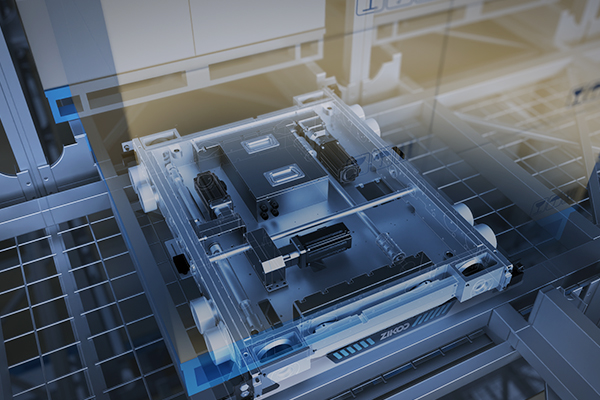
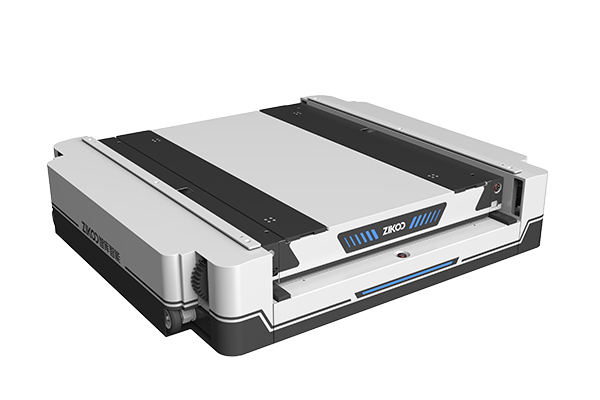
The R-bot Four-Way Shuttle handles dense storage scenarios where traditional equipment struggles. Its slim profile at 125 mm thick lets it operate in tighter spaces while still managing loads up to 1.5 tons. The four-way movement capability means it can navigate storage grids without the repositioning delays that slow down conventional shuttles. This matters most in facilities where floor space costs money and every square meter needs to earn its keep.
The U-bot Omnidirectional Stacker Robot takes a different approach for narrow aisle environments. It operates in aisles as tight as 2100 mm wide, which opens up storage configurations that would be impossible with standard forklifts. The U-shaped body design and 1370 mm minimum turning radius give it maneuverability that translates directly into usable storage density. Lifting heights reach 8 meters with a 1000 kg rated load, making it practical for facilities that need to build upward rather than outward.
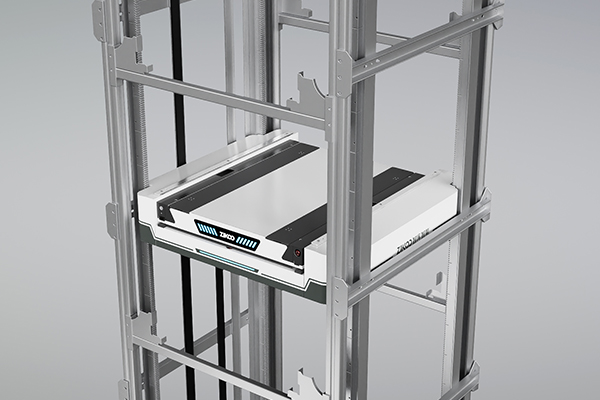
The H-bot High-Speed Elevators complete the system by handling vertical movement. When paired with R-bots, they create what amounts to a six-way shuttle system. Goods move horizontally across storage levels and vertically between them without the bottlenecks that typically form at lift points.
| Robot Type | Key Feature | Load Capacity | Aisle Requirement | Primary Benefit |
|---|---|---|---|---|
| R-bot | Four-Way Movement | 1.5 tons | Dense Storage | High-density storage, flexible movement |
| U-bot | Omnidirectional Stacking | 1000 kg | Narrow Aisle (2100mm) | Space utilization, maneuverability |
| H-bot | Vertical Bi-directional Shuttle | 1800 kg | Single Storage Location | Vertical throughput, six-way shuttle integration |
Cold chain operations present their own challenges. The R-bot addresses this with specialized -25℃ low-temperature batteries that maintain continuous operation for 6-8 hours. This solves a real problem in frozen goods facilities where equipment failures in cold environments can cascade into major operational disruptions.
The U-bot + AMR Narrow Aisle Picking System shows what happens when these technologies work together. Facilities running this configuration achieve picking efficiency of ≥300 pieces per hour and inbound/outbound efficiency of ≥80 pallets per hour. Storage density improvements exceed 30% compared to conventional layouts. These numbers reflect actual operational gains, not theoretical maximums. For a deeper look at how four-way shuttle systems work in practice, 《Smart Storage Revolution: Comprehensive Overview of Four-Way Shuttle Systems for Automatic 3D Warehouses》 covers the technical details.
Smart Warehouse Software Turns Data Into Operational Control
Hardware alone does not create warehouse efficiency improvement. The software layer determines whether robots operate as isolated machines or as a coordinated system that responds intelligently to changing conditions.
The PTP Smart Warehouse Software integrates four distinct system layers. The Warehouse Management System (WMS) handles inventory tracking and order management. The Warehouse Execution System (WES) optimizes task sequencing and resource allocation. The Warehouse Control System (WCS) manages equipment interfaces and material flow. The Robot Control System (RCS) coordinates the movements of individual robots across the facility.
This integration matters because warehouse operations involve constant trade-offs. Should an incoming pallet go to the closest available location or to a spot that positions it better for expected outbound orders? Should a robot complete its current task or divert to handle a higher-priority request? These decisions happen thousands of times per shift. Software that can make them intelligently, using real-time data about inventory positions, order queues, and equipment status, produces measurably different outcomes than systems that follow rigid rules.
Real-time visibility into inventory levels, order status, and equipment performance changes how managers run their operations. Problems become visible before they cascade into delays. Bottlenecks can be identified and addressed while there is still time to adjust. The data also supports continuous improvement efforts by revealing patterns that would be invisible in manual tracking systems.
The coordination between U-bots, R-bots, and H-bots depends on this software layer. Each robot type has different capabilities and constraints. The software ensures they work together without conflicts, deadlocks, or wasted motion. This orchestration is what turns a collection of robots into an integrated material handling system. More details on how this software enables smart upgrades are available in 《PTP Intelligent Warehouse Software Empowers Enterprises for Smart Upgrades》.
Space Utilization Gains That Change Facility Economics
The economics of warehouse operations have shifted. Land costs, construction costs, and lease rates have all increased faster than revenue per square foot for most operations. This makes space utilization a financial lever, not just an operational metric.
The R-bot Four-Way Shuttle creates dense storage configurations that would be impractical with manual handling. Pallets can be stored multiple positions deep because the robot can access any location without moving intervening loads. This eliminates the aisle space that conventional operations require for access.
When R-bots work with H-bot Vertical Bidirectional Shuttles, the system constructs three-dimensional transportation channels. Goods move through the storage volume rather than just across the floor. This approach aligns with lean warehousing principles by treating empty space as waste and systematically eliminating it.
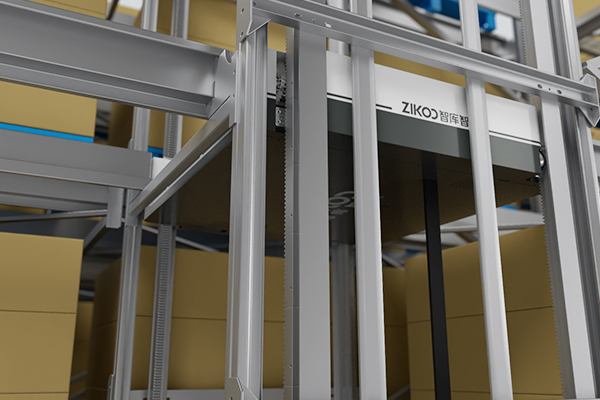
The U-bot Omnidirectional Stacker Robot addresses a different space challenge. Many facilities have existing buildings with fixed column spacing and ceiling heights. The U-bot’s ability to work in 2100 mm aisles lets these facilities add storage capacity without structural modifications. E-commerce warehouses and manufacturing facilities with diverse product mixes find this particularly valuable because it allows them to reconfigure storage layouts as their inventory profiles change.
Picking and packing operations also benefit from optimized storage. When items are positioned based on velocity and order patterns, travel times drop. The software layer handles this optimization continuously, adjusting storage locations as demand patterns shift.
| Optimization Area | Manual System | Automated System | Improvement |
|---|---|---|---|
| Space Utilization | Moderate | High-Density | 30%+ |
| Throughput | Variable | Consistent & High | 2x-3x |
| Picking Efficiency | Labor-Intensive | Automated (≥300 pieces/hr) | Significant |
| Error Rate | Higher | Minimized | Substantial |
Measuring ROI When Automation Changes Everything
Warehouse efficiency improvement through automation requires investment. Justifying that investment means understanding where the returns actually come from and how to measure them accurately.
Labor cost reduction is the most visible benefit. R-bot and U-bot systems reduce the number of workers needed for material handling tasks. This shows up directly in payroll, but the full picture includes training costs, turnover expenses, and the productivity losses that come with staffing variability.
Order fulfillment rates improve because automated systems maintain consistent performance across shifts and seasons. Manual operations typically see productivity drop during peak periods as workers tire and temporary staff struggle to keep pace. Automated systems scale differently, maintaining throughput as long as the equipment is running.
Inventory accuracy gains often surprise facilities that implement comprehensive automation. Manual handling introduces errors at every touch point. Automated systems with integrated software track every movement, reducing discrepancies and the costs associated with inventory adjustments.
Safety improvements translate into lower insurance costs and reduced workers’ compensation claims. Fewer people moving through active storage areas means fewer opportunities for accidents.
Energy consumption patterns change with optimized routing. Robots that take efficient paths and avoid unnecessary movements use less power than systems that follow fixed routes regardless of conditions. Over time, these savings accumulate.
Predictive maintenance capabilities extend equipment lifespan and reduce unplanned downtime. The integrated software monitors equipment performance and identifies developing problems before they cause failures. This shifts maintenance from reactive to proactive, reducing both repair costs and the operational disruptions that come with unexpected breakdowns.
Building Operations That Adapt to What Comes Next
Supply chain conditions change. Customer expectations evolve. Product mixes shift. Facilities that cannot adapt to these changes find themselves struggling against competitors who can.
Modular robotic solutions address this challenge directly. U-bot, R-bot, and H-bot systems can be expanded incrementally as volume grows. Additional units integrate with existing fleets without requiring system-wide reconfiguration. This modularity means facilities can start with automation that addresses their most pressing constraints and expand as they learn what works in their specific environment.
The PTP Smart Warehouse Software supports this scalability by managing fleets of varying sizes and configurations. As new robots come online, the software incorporates them into task allocation and coordination without manual reprogramming.
Flexibility extends beyond capacity scaling. Facilities can reconfigure storage layouts, adjust picking strategies, and modify material flow patterns as their operations evolve. This adaptability builds resilience against disruptions, whether they come from supply chain problems, demand spikes, or changes in fulfillment requirements.
The facilities that thrive over the long term are those that can respond to change without major capital projects or extended implementation periods. Automation designed for adaptability delivers this capability.
Frequently Asked Questions About Warehouse Efficiency Improvement
How can robotics significantly reduce warehouse operational costs?
Robotics reduce operational costs through multiple mechanisms working together. The direct labor savings come from handling tasks that would otherwise require workers. Space utilization improvements mean facilities can store more inventory without expanding their footprint, reducing real estate costs per unit stored. Error reduction eliminates the costs associated with mis-picks, inventory discrepancies, and customer returns. Intelligent routing minimizes energy consumption by avoiding unnecessary movements. The cumulative effect of these factors produces cost reductions that compound over time as the systems operate continuously without the variability that characterizes manual operations.
What are the key benefits of integrating a smart warehouse management system?
A smart warehouse management system provides real-time visibility into inventory positions, order status, and equipment performance. This visibility enables proactive management rather than reactive problem-solving. Order fulfillment optimization ensures that work gets sequenced efficiently and resources get allocated where they produce the most value. Labor management improves because the system can track productivity and identify bottlenecks. The integration with robotic systems means that software decisions translate directly into physical actions without manual intervention. Data analytics capabilities support continuous improvement by revealing patterns and opportunities that would be invisible in manual tracking systems.
Why is real-time data crucial for modern warehouse efficiency?
Real-time data changes how decisions get made. When managers can see current inventory levels, order queues, and equipment status, they can respond to problems before they cascade into delays. Dynamic resource allocation becomes possible because the system knows what needs to happen and what resources are available. Continuous process optimization depends on accurate, current information about how operations are actually performing. Without real-time data, facilities operate with lag times that prevent effective response to changing conditions. The speed of modern fulfillment expectations makes this responsiveness a competitive requirement rather than a nice-to-have capability.
What types of warehouses benefit most from pallet-to-person automation?
Facilities with high SKU counts benefit because automation handles the complexity of managing diverse inventory without the errors that come with manual handling of many product types. Operations with fluctuating order volumes benefit because automated systems scale their throughput without the staffing challenges that come with demand variability. Facilities facing labor shortages benefit because automation reduces dependence on a workforce that may not be available. E-commerce operations, retail distribution centers, and manufacturing facilities with diverse product lines and demanding fulfillment schedules see particularly strong returns from pallet-to-person automation because these environments combine multiple factors that favor automated approaches.
Transform Your Warehouse with Zikoo Smart Technology
Zikoo Smart Technology Co., Ltd. delivers pallet-to-person robotics and intelligent PTP Smart Warehouse Software engineered for real operational environments. Our U-bot, R-bot, and H-bot solutions address the specific challenges that limit warehouse performance. Contact us for a consultation that starts with your current constraints and builds toward measurable improvements. Reach our team at info@zikoo-int.com or call (+86)-19941778955.


