


A single four-way shuttle failure almost never halts the entire warehouse. The multi-shuttle fleet architecture isolates the fault to a temporary throughput dip, not a full stop. But that answer depends on system design: how the warehouse control software manages robot failover, and whether the vertical transport layer has redundancy. In my work deploying pallet shuttle systems across industries, I’ve seen how a well-designed R-bot cluster keeps running with one robot down, while a poorly integrated elevator can become the real bottleneck.
How Failure Isolation Works in Four-Way Shuttle Clusters
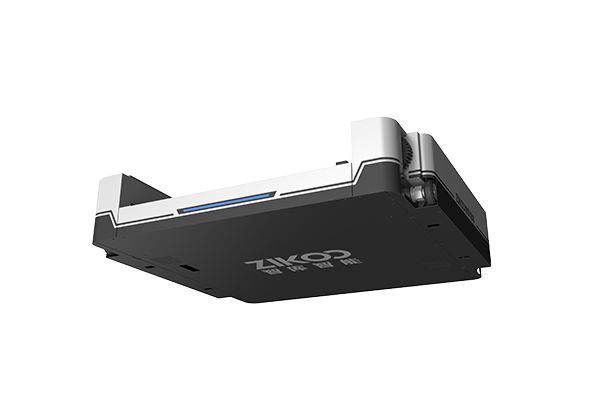
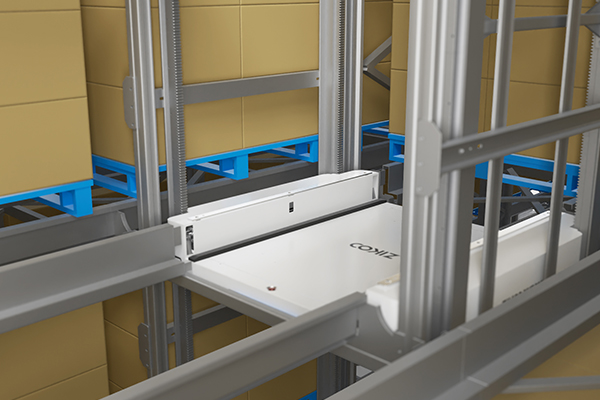
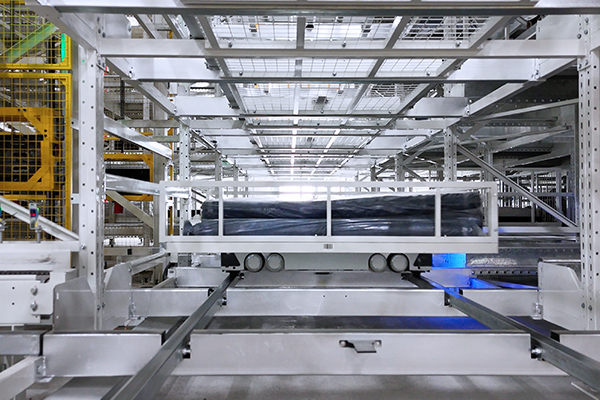
Four-way shuttle systems use multiple R-bot units operating simultaneously within a single level, managed by the Warehouse Control System (WCS). When one shuttle reports a fault — a drive motor overheating or a positioning sensor error — the WCS immediately flags that robot as unavailable and re-directs pending tasks to the remaining operational units. The cluster continues handling pallet moves, albeit at reduced throughput. The failure does not spread because the shuttle is physically isolated; it stops on the spot and does not block the main travel aisles due to its compact footprint of only 125 mm in height.
In our own system designs, we configure each level with n+1 shuttle redundancy for critical throughput requirements. If a 20-robot fleet on one floor loses one unit, the throughput drops by about 5% rather than stopping completely. This isolation is a fundamental architectural advantage over systems like stacker cranes where a single unit serves an entire aisle.
Multi-shuttle coordination is central to reliable automated storage, and <Smart Storage Revolution: Comprehensive Overview of Four-Way Shuttle Systems for [Automatic 3D Warehouse](https://www.zikooint.com/asrs-automated-storage-and-retrieval-system-solutions)s> covers how WCS algorithms dynamically reroute tasks in real time, maintaining flow even with partial fleet availability.
What Happens If a Single R-bot Breaks Down?
The immediate effect is limited to loss of that robot’s carrying capacity. All other shuttles on the same level continue normal operation. The WCS updates its task allocation map within seconds, and the maintenance team receives an alert with the robot’s precise location and error code. While the robot is down, the system runs at slightly reduced throughput, but outbound orders continue to be picked.
Can the WCS Automatically Re-route Tasks?
Yes. A modern WCS like Zikoo’s PTP software assigns tasks dynamically based on robot availability, battery levels, and travel distance. When a shuttle fails, the WCS re-optimizes the remaining fleet’s task list to prioritize urgent orders, ensuring that critical shipments are not delayed. The adjustment takes place automatically, requiring no manual intervention.
The Elevator Layer and Shared Infrastructure Risks
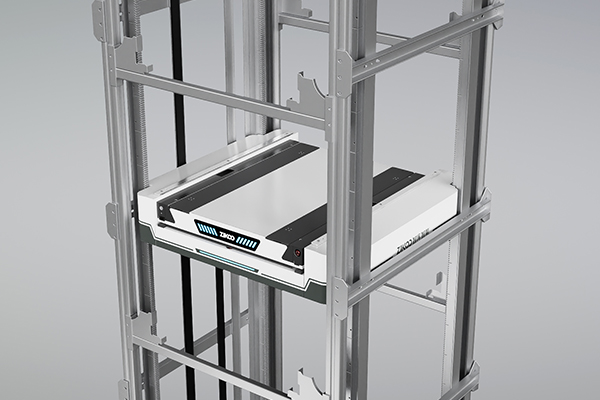
While a single shuttle failure is contained, failures in shared infrastructure can have wider impact. The H-bot vertical bidirectional shuttle is one such shared component: it transports pallets between levels. If an H-bot jams or loses positioning, the vertical transport for that aisle may halt. However, a properly designed system often includes multiple elevators per aisle or section, or uses a top-level shuttle distribution mechanism.
The six-way shuttle configuration, where R-bots and H-bots integrate to form a 3D transport network, adds resilience because pallets can be routed through alternative vertical paths if one elevator is down. In deployments where we have installed dual H-bot units per aisle, the failure of one elevator reduces vertical throughput by up to 50% for that aisle but does not stop horizontal shuttle movement on any level. The overall warehouse still operates, but outbound speed for that zone slows.
When evaluating vertical transport redundancy, the difference between a four-way and six-way shuttle architecture becomes critical, as <Six-Way Shuttle System Leads the Shift from Machines to Robots in [Dense Storage](https://www.zikooint.com/solution/r-bot-h-bot-six-way-shuttle-dense-storage-system) Automation> explains how six-way systems distribute vertical load across multiple robotic nodes, making a single H-bot failure far less disruptive.
Does an H-bot Failure Stop an Entire Vertical Section?
It can, if only one elevator serves that section. In a basic four-way shuttle system, each aisle or group of lanes typically has one dedicated elevator. If that elevator fails, pallet movement between the rack levels and the conveyor takeaway point stops for that group. However, because each elevator serves a limited number of lanes, the rest of the warehouse remains active. A well-planned layout uses multiple independent elevator zones to limit “blast radius.”
How to Design Elevator Redundancy for High-Availability Warehouses
For operations that cannot afford even a single aisle blockage, we recommend specifying dual elevators per aisle group, or configuring the top-level R-bot to move pallets horizontally to a neighboring elevator in case of failure. This requires careful system sizing and software logic but can sustain near-full throughput during single elevator outages. Ask your integrator to model worst-case failure scenarios during the design phase.
Real Failure Scenarios That Could Halt the Entire Warehouse
A true warehouse-wide halt typically requires a failure beyond the robot fleet: a central WCS server crash, total power loss, or a network switch outage that disconnects all robots from the control system. In our experience, these failures are rare if the IT infrastructure is properly specified.
We typically architect the WCS on redundant servers with automatic failover, and the robot network uses managed switches with ring topology so that a single switch failure does not isolate all robots. Power is backed by UPS for control devices and safe shutdown of robots on the tracks; however, full warehouse operation during a prolonged power outage still requires a generator. Below is a summary of failure scenarios and their typical impact:
| Failure Type | Impact on Warehouse | Mitigation |
|---|---|---|
| Single R-bot failure | Throughput dips 5-10%, rest operates | n+1 fleet sizing, WCS re-routing |
| H-bot failure (single, no redundancy) | Vertical transfer stops for served aisles | Dual elevators per aisle group, six-way topology |
| WCS server crash | All robot dispatching stops | Redundant server with failover, offline mode for each robot |
| Power grid outage | Total shutdown if no backup | UPS for controllers, generator for critical loads |
If your vertical transport design involves complex multi-aisle routing, confirming failover capacity before finalizing the rack layout is worth an engineering review. Reach out at info@zikoo-int.com with your floor dimensions and target throughput — we can simulate fault scenarios early.
What If the WCS Server Crashes?
If the WCS server fails without redundancy, the shuttle fleet stops receiving new commands, but the robots themselves remain powered and hold their positions. Once the server is restored (or fails over to a hot standby), operations resume from the last recorded state. To avoid even a brief pause, we deploy dual redundant servers so that a hardware failure on one does not cause any interruption.
Maintenance and Recovery: Minimizing Downtime From Failures
Preventing failures is cheaper than recovering from them. Our standard maintenance practice includes scheduled inspections of shuttle wheels, lift motors, and battery health every 500 operating hours. R-bot units are designed for rapid removal: a failed shuttle can be lifted off the rack rail in under 15 minutes using a maintenance cart, and the spare robot inserted and commissioned within an hour. This quick swap minimizes the period of reduced throughput.
Proactive monitoring is equally important. The WMS tracks each robot’s motor current, temperature, and vibration. A rising trend in motor current often precedes a bearing failure by days, giving the maintenance team time to schedule a swap during off-peak hours rather than reacting to an emergency.
How Quickly Can a Failed Shuttle Be Replaced?
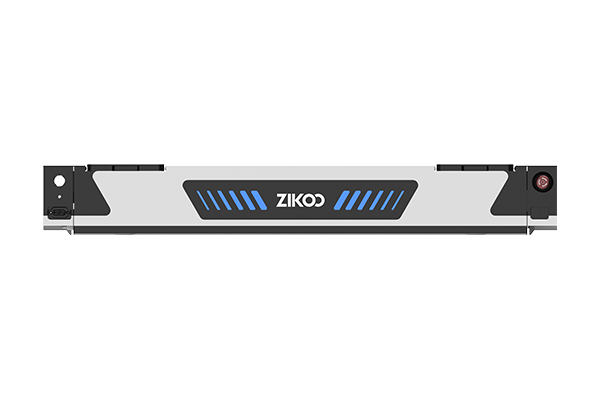
In a typical system, a failed shuttle replacement takes about one hour from identification to operational, provided a spare is available on site. We recommend customers keep at least one spare robot per 20 active units. The physical swap is straightforward because the shuttle’s low height and wheel-lock mechanism allow it to be lifted off the rail without affecting adjacent positions.
What to Evaluate in a Supplier’s System Resilience
When you compare four-way shuttle suppliers, reliability claims need evidence. We advise asking for a live demonstration of failure recovery: trigger a simulated robot fault and watch how the WCS handles it. Does the system re-route tasks automatically in under 5 seconds? Does the operator interface show clear fault location and recovery steps? If the vendor cannot demonstrate this live, their fault-tolerance design may be more marketing than engineering.
Another important factor is the vendor’s field service capability. How many spare parts depots do they have in your region? What is their guaranteed on-site response time? These practical details matter more than generic uptime guarantees. In our project delivery, we maintain local spare parts stocks and offer remote diagnostic support to resolve many issues without a physical visit.
Procurement teams weighing maintenance support models will find practical evaluation criteria in <Stacker Crane vs Four-Way Shuttle: Which Fits Your [ASRS Warehouse](https://www.zikooint.com/asrs-automated-storage-and-retrieval-system-solutions) Best>, which compares not just throughput but also service complexity and spare parts commonality across different automated storage technologies.
Ensuring Your System Stays Running
We understand that the idea of a robot failure bringing your warehouse to a standstill is alarming. The reality, based on over a decade of implementing pallet shuttle systems, is that a well-designed four-way shuttle deployment isolates failures to a small, manageable impact. The key is not just buying reliable robots, but investing in the right system architecture and supplier support. If you are evaluating shuttle systems and want to stress-test the failure handling capabilities, send your target throughput and layout specifications to info@zikoo-int.com or call (+86)-19941778955. We can model failure scenarios specific to your operation and show you how our R-bot and H-bot configuration maintains continuity.
Common Questions About Four-Way Shuttle Failures
How many shuttles can fail before my operations are affected?
A single shuttle loss reduces throughput linearly by roughly 100% divided by fleet size. With a 20-robot fleet, one failure drops capacity by about 5%, which is usually manageable. Two simultaneous failures on the same level might start to affect order cut-off times. The WCS management, however, does not stop the entire operation.
If the WCS goes down during a peak period, how long until recovery?
With redundant servers, the failover is instantaneous — operations continue without a pause. Without redundancy, the recovery time depends on how quickly the server can be rebooted or replaced. We design our systems with hot standby servers as standard because the cost of that extra server is negligible compared to even one hour of downtime.
What about power outages — can the robots hold their positions?
Yes. Each R-bot has an onboard lithium battery that maintains power for the controller and safety circuit even if the main power rail is down. The robot stops safely in place. When power returns, the WCS re-establishes communication and resumes tasks from the last checkpoint. No pallets are lost, and no physical recovery is needed.
Do you provide remote monitoring to prevent unexpected failures?
Yes. Our PTP software continuously gathers telemetry from every robot and elevator. The system can alert your maintenance team to anomalous patterns, such as rising motor temperature or degraded battery capacity, before they become breakdowns. This proactive monitoring avoids many unplanned stoppages entirely.
How do you ensure the system is ready for long-term operation?
We validate every design with a digital twin simulation that models fleet behavior, failure scenarios, and recovery actions before installation. Post-deployment, we offer service contracts that include quarterly health checks, on-site spares, and 24/7 remote support. If your operation runs 24/7 and cannot afford even minor hiccups, sharing your shift schedule with our team at info@zikoo-int.com will let us define a support plan that matches your risk tolerance.
If you’re interested, check out these related articles:
Stacker Crane vs Four-Way Shuttle: Which Fits Your ASRS Warehouse Best
Smart Cold Chain Era: Six-Way Shuttle System Redefines Storage Efficiency with Maximum Density
PTP Intelligent Warehouse Software Empowers Enterprises for Smart Upgrades
Six-Way Shuttle Empowers 3PL Providers to Build Next-Generation Smart Logistics Hubs


