


Modern warehouses are under pressure to move faster, do more with less space, and keep costs in check—and the right Automated Storage and Retrieval System (ASRS) can make all the difference. I’ve walked through facilities where a smart ASRS choice turned chaos into clockwork, and others where a mismatched system quietly drained performance. Selecting the “right” type isn’t just a checkbox; it’s a strategic fit that hinges on layout, inventory, throughput, and long-term goals. My aim here is to cut through the jargon, surface the critical decision points, and share a practical way to match ASRS technologies to real operational needs.
Understanding the Challenges in Modern Warehouse Operations
The demands on contemporary warehouses are more complex than ever before. Businesses navigate a competitive landscape where operational agility directly influences profitability and customer satisfaction. We see consistent challenges across various sectors that drive the need for advanced automation.
1. The growing demand for efficiency and speed
E-commerce growth and evolving consumer expectations necessitate faster order fulfillment and higher throughput. Manual processes often become bottlenecks, limiting a warehouse’s ability to scale and meet peak demands. Companies must process more orders with fewer errors, requiring systems that operate continuously and rapidly.
2. Overcoming labor shortages and rising costs
The logistics industry confronts persistent labor shortages and increasing wage costs. Relying heavily on manual labor becomes unsustainable, impacting both operational budgets and service levels. Automation provides a strategic alternative, reducing dependence on human intervention for repetitive and strenuous tasks.
3. Maximizing storage density in limited spaces
Real estate costs continue to rise, making efficient space utilization paramount. Many warehouses operate within existing footprints, needing solutions that maximize storage capacity without expanding physically. Dense storage systems become essential for optimizing vertical and horizontal space.
4. Ensuring accuracy and reducing errors in order fulfillment
Manual picking and packing are prone to human error, leading to mis-shipments, returns, and customer dissatisfaction. High accuracy is crucial for maintaining inventory integrity and ensuring precise order fulfillment. Automated systems significantly reduce error rates, improving overall operational quality.
Exploring Different Types of Automated Storage and Retrieval Systems (ASRS)
ASRS technology encompasses various systems, each designed to address specific warehousing challenges. Understanding these distinctions is critical for selecting the right solution. We categorize them primarily by their movement capabilities and storage approach.

1. Pallet Shuttles and their role in dense storage
Pallet shuttles excel in high-density storage applications. These systems use robotic carriers that move independently within racking structures, transporting pallets to and from designated locations. They are ideal for facilities requiring deep-lane storage and high throughput for homogeneous products. The key benefit lies in their ability to maximize cubic space utilization.
2. Stacking Robots for versatile narrow-aisle operations
Stacking robots, such as Omnidirectional Stacker Robot, offer exceptional maneuverability in narrow aisles. These robots can lift and place pallets at various heights, making them suitable for facilities with limited horizontal space but significant vertical storage potential. Their omnidirectional movement enhances flexibility, allowing them to navigate complex layouts efficiently.
3. Vertical Lift Modules and their space-saving benefits
Vertical Lift Modules (VLMs) are enclosed systems with trays or shelves that store items vertically. An automated extractor retrieves and presents the required tray to an operator at an ergonomic height. VLMs are particularly effective for storing small parts or irregularly shaped items, significantly saving floor space.
4. Integrated solutions combining multiple ASRS technologies
Many modern warehouses benefit from integrated ASRS solutions. These systems combine different ASRS technologies, such as pallet shuttles and vertical lift modules, to create a hybrid approach. This allows for optimized handling of diverse inventory types and throughput requirements within a single facility. For an in-depth look at how various systems integrate, consider reading The Future of Automated Warehousing: From ASRS Warehouse to Fully Intelligent Storage.
Key Factors to Consider When Selecting an ASRS for Your Needs
Choosing an ASRS is a significant investment that impacts long-term operational efficiency. We recommend a systematic evaluation process, focusing on factors directly relevant to your warehouse’s specific context and future goals.
1. Assessing your warehouse layout and available space
The physical characteristics of your warehouse are foundational to ASRS selection. Consider the ceiling height, column spacing, floor load capacity, and existing infrastructure. Some ASRS types require specific aisle widths or structural modifications. Optimizing space utilization is a primary driver for ASRS adoption.
2. Evaluating inventory characteristics and throughput requirements
Analyze your inventory’s attributes, including item size, weight, temperature sensitivity, and SKU variety. Your desired throughput, measured in items or pallets per hour, dictates the speed and capacity required from the ASRS. High-volume operations often demand faster, more dynamic systems.
3. Analyzing initial investment and long-term operational costs
The total cost of ownership extends beyond the initial purchase price. Factor in installation, maintenance, energy consumption, and potential labor savings. A thorough cost-benefit analysis helps determine the return on investment (ROI) and overall financial viability of different ASRS options.
4. Considering scalability and future growth potential
Your ASRS should accommodate future business growth and evolving operational needs. Choose a system that can be expanded or reconfigured as your inventory, throughput, or product mix changes. Scalability ensures your investment remains valuable over time.
5. Integrating ASRS with existing warehouse management systems
Seamless integration with your existing Warehouse Management System (WMS) and other software (like WES and WCS) is crucial. Data exchange between systems ensures smooth operations, accurate inventory tracking, and optimized workflow. Compatibility and robust API support are key considerations. For more insights into software integration, refer to PTP Intelligent Warehouse Software Empowers Enterprises for Smart Upgrades.
How Zikoo Smart Technology Optimizes Warehouse Automation
At Zikoo Smart Technology, we specialize in pallet-to-person robotics, offering a suite of advanced ASRS solutions designed to meet diverse warehousing demands. Our systems focus on maximizing efficiency, density, and operational flexibility.
1. Enhancing dense storage with R-bot Four-way Shuttles
Our Four-Way Pallet Shuttle (R-bot) is engineered for ultra-dense storage environments. With a slim 125 mm body and up to 1.5 tons load capacity, the R-bot offers flexible four-way movement. It supports multi-shuttle collaborative operations, making it ideal for e-commerce, cold chain, and manufacturing dense storage.
| Model | Weight (kg) | Rated Load (kg) | Body Dimensions (L×W×H mm) | Pallet Sizes Supported (mm) | Empty Speed (m/s) | Loaded Speed (m/s) | Battery Life (hours) |
|---|---|---|---|---|---|---|---|
| Standard (R1200B) | 270 | 1200 | 1000 × 972 × 125 | 1200 × 800–1000 | 1.6 | 1.2 | 8 |
| American (R1200A) | 265 | 1200 | 1192 × 840 × 125 | 1016 × 1219 | 1.6 | 1.2 | 8 |
| Japanese (R1500J) | 270 | 1500 | 1192 × 900 × 125 | 1100 × 1100 | 1.6 | 1.2 | 8 |
| Heavy-duty (R1500B) | 275 | 1500 | 1192 × 972 × 125 | 1200 | 1.6 | 1.2 | 8 |
| Heavy-duty Large Pallet (R2000B) | 400 | 2000 | 1250 × 1300 × 150 | 1400 | 1.35 | 1.0 | 7 |
The R-bot also features specialized solutions like a cold chain custom option with -25℃ dedicated lithium batteries and a new energy custom solution designed to avoid metal contamination.
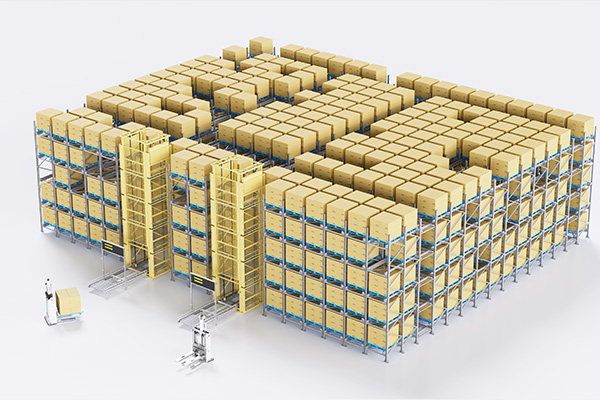
2. Maximizing vertical space with H-bot Vertical Bidirectional Shuttles
Our H-bot Vertical Two-Way Shuttle acts as a crucial vertical transportation hub. It integrates with R-bot shuttles to form a six-way shuttle system, creating a three-dimensional warehousing network. This significantly boosts throughput and efficiency in high-rack stereoscopic warehouses and urban fulfillment centers.
| Model | Body Weight (kg) | Body Dimensions (L×W×H mm) | Rated Load (kg) | Pallet Sizes Supported (mm) | Empty Speed (m/s) | Loaded Speed (m/s) | Acceleration Empty (m/s²) | Acceleration Loaded (m/s²) |
|---|---|---|---|---|---|---|---|---|
| Standard (H1800B) | 345 | 1300 × 1464 × 288 | 1800 | 1200 × 800–1200 | 1 | 0.5 | 1 | 0.3 |
| American (H1800A) | 325 | 1300 × 1332 × 288 | 1800 | 1016 × 1219 | 1 | 0.5 | 1 | 0.3 |
| Japanese (H1800J) | 335 | 1300 × 1392 × 288 | 1800 | 1100 × 1100 | 1 | 0.5 | 1 | 0.3 |
All H-bot models offer a positioning accuracy of ±1 mm and operate in temperatures from -25℃ to 45℃. This robust performance is critical for diverse applications.
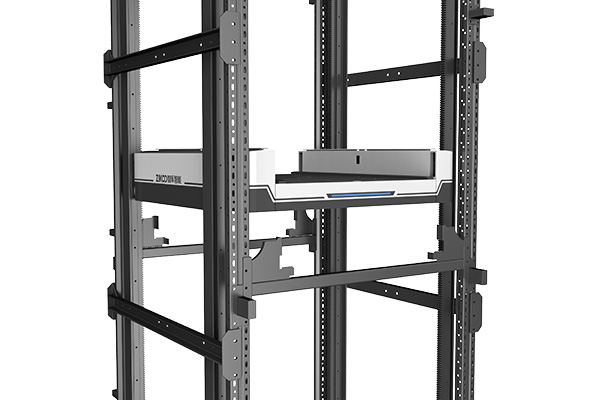
3. Navigating narrow aisles with U-bot Omnidirectional Stacking Robots
The U-bot Omnidirectional Stacker Robot is designed for narrow-aisle storage scenarios, requiring aisle widths as small as 2100 mm. Its U-shaped body and 1370 mm turning radius provide exceptional agility. With lifting heights up to 8 meters and a 1000 kg load capacity, the U-bot is ideal for e-commerce, pharmaceutical, and manufacturing warehouses.
| Model | Dimensions (L×W×H mm) | Rated Load (kg) | Self-weight (kg) | Lifting Height (mm) | Min. Aisle Width (mm) | Driving Positioning Accuracy | Battery Configuration | Continuous Operation (hours) |
|---|---|---|---|---|---|---|---|---|
| U1045 | 2198 × 1784 × 2100 | 1000 | 3000 | 4500 | 2100 | ±10 mm | 48 V / 210 Ah LiFePO4 | 6–8 |
| U1060 | 2198 × 1820 × 2685 | 1000 | 3300 | 6000 | 2140 | ±10 mm | 48 V / 210 Ah LiFePO4 | 6–8 |
| U1080 | 2198 × 1820 × 3465 | 1000 | 3500 | 8000 | 2140 | ±10 mm | 48 V / 210 Ah LiFePO4 | 6–8 |
The U-bot employs dual laser SLAM hybrid navigation and a 3D depth camera for precise pallet positioning, even with minor deviations.
4. Achieving hybrid picking efficiency with U-bot + AMR Systems
Our U-bot + AMR Narrow Aisle Picking System offers a highly efficient solution for hybrid picking scenarios, combining palletization and split-case picking. This system uses U-bots for high-level storage access and AMRs for low-level handling and picking. This architecture enhances adaptability, supporting full-category outbound picking for various item sizes and up to 10,000 SKUs.
| Performance Metric | Value |
|---|---|
| Picking Efficiency | ≥300 pieces per hour |
| Inbound/Outbound Efficiency | ≥80 pallets per hour |
| Storage Density Improvement | >30% |
| Positioning Accuracy | ±10 mm |
| Minimum Aisle Width | 2100 mm |
| Supported SKU Quantity | Up to 10,000 |
This system is particularly beneficial for e-commerce and manufacturing, where dynamic path planning and multi-functional workstations are essential.
Real-World Impact: Benefits of Implementing an ASRS Solution
Implementing an ASRS transforms warehouse operations, delivering tangible benefits that extend across the entire supply chain. From our experience, these systems consistently drive significant improvements.
1. Significant improvements in operational efficiency and productivity
ASRS systems automate repetitive tasks, allowing for continuous operation and faster processing times. This leads to substantial increases in throughput and overall operational efficiency. Reduced travel times and optimized picking paths contribute directly to higher productivity.
2. Substantial reduction in labor costs and human error
By automating storage and retrieval, ASRS significantly reduces the need for manual labor, addressing shortages and lowering wage-related expenses. The precision of automated systems minimizes human error, leading to fewer mis-picks, damaged goods, and inventory discrepancies.
3. Optimized space utilization and increased storage capacity
ASRS solutions, especially those designed for dense storage like pallet shuttles and vertical lift modules, maximize the use of available vertical and horizontal space. This can increase storage capacity by over 30%, deferring or eliminating the need for costly warehouse expansions.
4. Enhanced inventory accuracy and faster order fulfillment
Automated tracking and retrieval ensure real-time inventory visibility and accuracy. This translates into faster and more reliable order fulfillment, improving customer satisfaction and reducing lead times. The ability to quickly locate and retrieve items is a major competitive advantage.
If you want to learn more about how ASRS can benefit your warehouse, we recommend reading Understanding ASRS Systems for Modern Warehouse Efficiency.
Partner with Zikoo Smart Technology
Choosing the right ASRS is a strategic decision that can redefine your warehouse operations. We invite you to explore Zikoo Smart Technology’s innovative solutions tailored to your unique needs. Our team of experts is ready to discuss how our R-bot, H-bot, U-bot, and U-bot + AMR systems, powered by PTP Smart Warehouse Software, can optimize your storage, enhance efficiency, and prepare your facility for future growth.
Contact us today to schedule a consultation or request a detailed proposal.
Email: info@zikoo-int.com
Phone: (+86)-19941778955
About the Author
John Smith, Senior Engineer
John Smith is a Senior Engineer at Zikoo Smart Technology Co., Ltd. He specializes in designing and implementing advanced automation solutions for warehouses and fulfillment centers. With extensive experience in ASRS, 4-way shuttle systems, and intelligent robotics, John helps businesses maximize efficiency, reduce costs, and scale operations to meet the demands of modern logistics. His expertise ensures clients receive optimal, data-driven solutions for their unique challenges.
FAQs
1. What is an ASRS and how does it benefit a warehouse?
An ASRS, or Automated Storage and Retrieval System, is a computer-controlled system that automatically places and retrieves loads from storage locations. It benefits warehouses by increasing storage density, improving operational efficiency, reducing labor costs, enhancing inventory accuracy, and accelerating order fulfillment.
2. How do I determine which type of ASRS is best for my specific warehouse?
Determining the best ASRS involves assessing your warehouse layout, inventory characteristics (size, weight, temperature), throughput requirements, budget, and future growth plans. Consulting with an ASRS expert can help you analyze these factors and select a system that aligns with your operational goals.
3. What are the typical costs associated with implementing an ASRS?
ASRS implementation costs vary widely based on system type, size, complexity, and integration requirements. Costs include hardware, software, installation, and training. While initial investment can be substantial, businesses typically see long-term savings through reduced labor, optimized space, and improved efficiency.
4. Can ASRS systems integrate with my existing warehouse software?
Yes, most modern ASRS systems are designed for seamless integration with existing Warehouse Management Systems (WMS), Warehouse Execution Systems (WES), and Warehouse Control Systems (WCS). This integration ensures smooth data flow, real-time inventory updates, and optimized material handling processes.
5. How long does it take to implement an ASRS in a new or existing facility?
Implementation timelines for ASRS systems vary depending on the project’s scope and complexity. A small-scale system might take a few months, while large, complex installations can take over a year. Factors like site preparation, system customization, and integration with existing infrastructure influence the overall duration.


