


Cold storage warehouses face constraints that ambient distribution centers never see. Every cubic meter of refrigerated space costs more to build, more to power, and more to staff. Operators pay for cooling whether a rack position is full or empty, and every open door leaks cold air into the aisle while pulling warm, humid air inside. When labor scarcity collides with food-safety compliance and rising energy tariffs, the traditional response — more racking, more forklifts, more manual picking — stops closing the gap.
Four-way shuttle systems approach cold storage from a different direction. Instead of adding forklift aisles, a thin pallet shuttle travels inside the rack beneath the pallet, moving forward, backward, left, and right. The warehouse stores more pallets in the same frozen cube while shrinking the conditioned air volume. This guide walks through how cold-chain four-way shuttle automation actually works: system architecture, battery engineering, condensation control, software integration, common selection mistakes, and ROI planning.
Why Cold Storage Changes the Automation Equation
Refrigerated warehouses are not warm warehouses turned down. The differences start with thermodynamics and end with maintenance economics.
Cold storage spans three main temperature bands: chilled rooms typically run from 0°C to +4°C, frozen rooms from -18°C to -25°C, and deep-freeze environments below -25°C [1]. These conditions drive three problems that automation must solve directly.
First is energy. Refrigeration regularly dominates cold-store electricity demand, and industry energy surveys consistently show refrigeration accounting for half or more of total consumption [2]. Every aisle added to a cold room increases the air volume that must be conditioned and the door-opening losses that accompany forklift traffic. Equipment that reduces aisle count therefore attacks the dominant operating cost.
Second is labor. Shifts shorten in sub-zero conditions, breaks increase, and turnover runs higher than in ambient facilities. Manual pallet handling in insulated clothing is slower and more error-prone, which ripples into receiving, putaway, and order assembly accuracy.
Third is moisture. Warm air entering a freezer condenses and freezes. Ice accumulates on floors, rails, sensors, and racking, creating slip hazards, positioning errors, and corrosion. A machine designed for cold storage must accept condensation as a permanent design input, not an edge case.
The practical consequence is that cold storage automation earns its return on three fronts at once: density, throughput, and predictability. Dense storage reduces conditioned cubic meters per pallet. Faster, robot-driven pallet moves shorten door-open windows. Consistent machine pacing removes the variability of a fatigued night shift.
System Architecture: Four-Way Shuttle Plus Vertical Lift
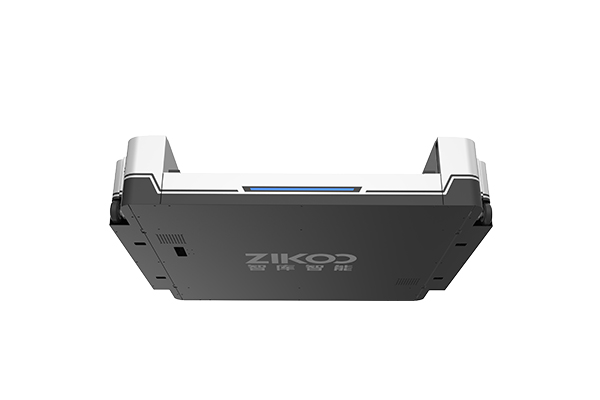
A four-way shuttle runs on rails inside the storage lanes. It positions itself beneath a pallet, lifts slightly, carries the pallet along the lane, and changes direction across the rack face to reach different aisle positions. Because the shuttle stays inside the rack, the warehouse no longer needs wide forklift aisles between every row.
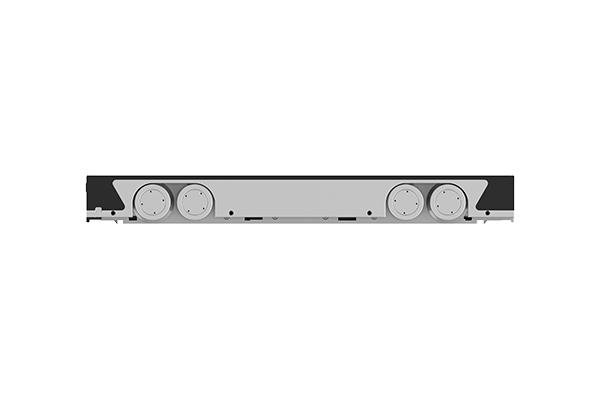
The core machine in this design is the R-bot four-way shuttle. Its body measures 125 mm in height with rated loads from 1,200 kg to 2,000 kg across standard, American, Japanese, and heavy-duty model variants. Travel speed reaches 1.6 m/s empty and 1.2 m/s loaded. For cold-chain applications, the shuttle operates down to -25°C with a dedicated low-temperature lithium battery providing 6–8 hours of continuous operation per charge.
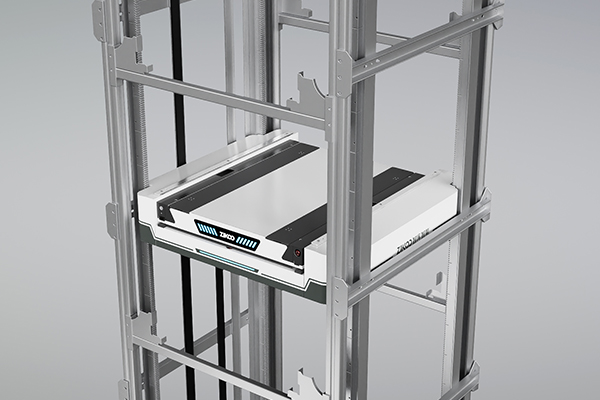
Four-way movement solves horizontal transport, but vertical transfer still requires a lift. That role falls to the H-bot vertical bidirectional shuttle, which occupies a single storage location and raises or lowers pallets between rack levels. The H-bot achieves ±1 mm positioning accuracy, carries rated loads up to 1,800 kg, and operates across a -25°C to 45°C range.
Together, the horizontal shuttle and vertical lift form a six-directional network: forward, backward, left, right, up, and down. Pallet storage becomes fully three-dimensional, with the system able to retrieve any stored pallet while other shuttles continue working elsewhere.
Cold chain logistics depends on exactly this combination of horizontal shuttle flexibility and vertical lift speed. <Smart Cold Chain Era: Six-Way Shuttle System Redefines Storage Efficiency with Maximum Density> covers how the six-way layout raises storage density while keeping order access fast.
Sub-Zero Battery and Charging Design
Battery performance is the most fragile link in cold automation. Standard lithium cells lose usable capacity as temperature drops, and charging a cell below freezing can cause permanent damage. A shuttle fleet selected without attention to battery chemistry will degrade quickly in a frozen warehouse.
The governing engineering reference for industrial lithium cells is IEC 62619, which sets safety requirements for secondary lithium batteries used in industrial applications, including short-circuit, thermal-abuse, and mechanical-stress tests [3]. This standard matters because a shuttle battery sits inside the conditioned space, subject to the same low-temperature cycles as the pallets themselves.
Cold-chain shuttle design therefore differs from ambient design in three ways. The battery uses low-temperature-dedicated lithium chemistry rated to -25°C rather than a room-temperature pack. The shuttle carries a low-temperature charging port, allowing automatic charging without removing the battery from the working zone. The electronics receive a special PCBA coating that protects against high humidity and condensation.
Charging strategy is a core design decision. Some systems pull shuttles into a conditioned charging alcove outside the deep-freeze zone; others charge in place using controlled low-temperature profiles. The correct choice depends on duty cycle and fleet size — both approaches work, but mixing them without planning creates availability gaps during peak putaway windows.
Condensation, Ice, and Material Selection
Moisture is the silent killer in cold storage automation. Warm, humid air penetrates through doorways and loading docks, and every intersection of warm machinery with cold structure becomes a condensation point.
Good cold-chain automation engineering treats humidity as a permanent condition. Control electronics receive conformal PCBA coating and sealed, moisture-resistant enclosures. Connectors are sealed and oriented to shed condensation. Structural components use corrosion-resistant materials; in demanding applications this can extend to stainless steel frames with blackening treatment and non-metallic buffer wheels that eliminate metal contamination risk.
Racking systems in freeze-thaw environments need periodic inspection aligned to EN 15635, covering beam deflection, anchor condition, corrosion, and load-sign integrity [4]. Ice formation on rails must be managed through floor flatness, defrost water drainage, and rail heating where needed, because shuttle positioning accuracy depends on clean, true-running rails.
Lubricants, cables, and plastic components must also be rated for low temperature. A material that performs well at 20°C can become brittle or viscous at -25°C, so component selection happens against the cold-chain specification, not the ambient one.
Throughput, Density, and Space Utilization
The economic justification for four-way shuttles in cold storage begins with the footprint. Forklift-aisle layouts sacrifice a large share of floor area to travel lanes and turning radii. Dense shuttle lanes recover that area, and because the shuttle body is only 125 mm high, each rack level carries more productive storage height — more pallets in the same building shell.
The exact gain depends on the starting layout and throughput profile. A facility converting from wide-aisle selective racking to dense shuttle lanes can typically reduce aisle count substantially, which translates into more pallet positions per square meter and fewer conditioned cubic meters per pallet stored. Deeper lanes store more pallets per shuttle position but require more movement to reach the far end, so the design trade-off is storage density versus access time.
Throughput comes from fleet coordination rather than single-unit speed. A warehouse control system dispatches multiple shuttles to handle inbound and outbound flows simultaneously, overlaying storage moves, replenishment, and picking requests so that lift capacity and shuttle capacity stay balanced.
Packing more pallets into each rack block is how cold storage projects hit their ROI targets. <Six-Way Shuttle Powers Dense Storage: Breaking Space Limitations> covers the space-breakthrough mechanics in dense storage layouts.
Software and Temperature-Controlled Inventory Management
Cold storage inventory control is stricter than ambient control. Perishable goods demand first-expired-first-out rotation, lot traceability, and temperature-logged handling. Errors are not just costly — they can be regulatory failures.
The software stack for shuttle automation splits into four layers. WMS manages inventory, lots, and order rules. WES sequences work across equipment zones. WCS coordinates the shuttle fleet, lifts, conveyors, and stations. RCS executes real-time robot commands. The PTP Smart Warehouse Software operates across these layers, so pallet movements remain traceable from receiving through putaway to outbound dispatch.
For food and pharmaceutical cold chains, this traceability maps naturally to ISO 22000 food-safety management principles, which require organizations to maintain documented control over storage conditions and product flow [5]. A properly integrated system records which shuttle moved which pallet, when, to which location, and at what temperature band — audit evidence that manual warehouses cannot reproduce at the same consistency.
Predictive task release also matters more in cold storage. Releasing pallets to pick stations just before they are needed keeps goods in the frozen environment longer and minimizes warm-aisle dwell time, which protects product quality and reduces re-freezing energy.
Would you like a cold-chain system design reviewed against your building drawings and throughput targets? Send your pallet standard, temperature profile, and daily in/out volumes to our engineering team at info@zikoo-int.com or call (+86)-19941778955. The inquiry is routed directly to a cold-chain system designer, and the reply is a technical feasibility note — not a brochure.
Common Selection Mistakes in Cold Storage Automation
Cold storage projects fail more often from specification gaps than from equipment failures. The most frequent mistakes are predictable.
Selecting ambient battery chemistry. A room-temperature lithium pack that works in a 25°C distribution center will lose capacity and may not charge safely below freezing. The battery must be specified against the cold-chain cell rating and charging profile.
Ignoring condensation in electronics. Unsealed connectors and uncoated boards accumulate frost, short, and corrode. Sealing and coating are requirements, not upgrades.
Under-sizing vertical lift capacity. A shuttle system with poor lift throughput behaves like a highway with too few ramps. Lift count and speed must be calculated against peak pallet flow, not average flow.
Overlooking floor flatness and defrost drainage. Shuttle rails need clean, true-running surfaces. Poor drainage creates ice that degrades positioning and accelerates wear.
Choosing the wrong pallet standard. Cold chains use different pallet footprints — Euro pallets at 1200 × 800/1000 mm, American pallets at 1016 × 1219 mm, Japanese pallets at 1100 × 1100 mm. The shuttle model and rack lane geometry must match the pallet standard from day one, including the heavy-duty 1400 mm variant where larger pallets appear.
Treating maintenance as optional. Frozen environments are unforgiving. Inspection intervals, low-temperature lubricants, and rail cleaning schedules built into the O&M plan determine whether the system performs for ten years or stalls in three.
Cost, ROI, and Implementation Planning
Cold storage automation cost breaks into categories that differ from ambient projects. Racking and rail conversion, the shuttle fleet, vertical lifts, charging infrastructure, software licensing, civil and floor works, cold-commissioning, and ongoing maintenance each carry their own budget line.
ROI is driven by four quantified benefits. Labor reduction comes first: fewer operators working inside the freezer for fewer hours. Energy per pallet stored falls because dense layout shrinks conditioned volume and robot moves cut door-open time. Space gains translate into more pallet positions in the same building shell, postponing or eliminating construction of additional cold rooms. Error reduction and traceability cut product loss, rework, and compliance risk.
Retrofitting is usually phased to keep the cold chain running. Rails install into existing rack blocks, and shuttle lanes convert aisle by aisle while the facility stays operational. Each phase delivers working capacity before the next begins, which spreads capital spending and reduces operational risk.
Cold stores often see faster payback than ambient warehouses on shuttle automation for one structural reason: labor and energy costs per cubic meter are higher in refrigerated space, so the same efficiency gain generates more savings.
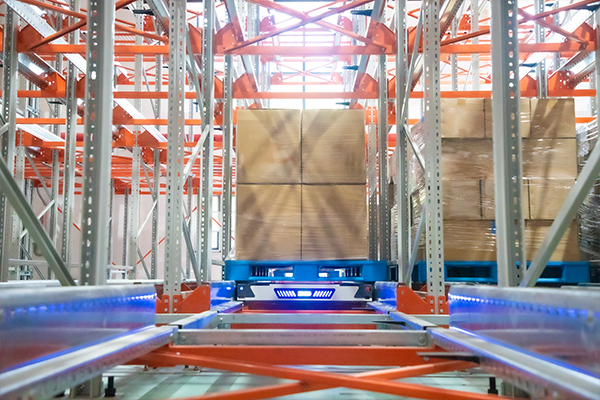
For teams planning a building upgrade around automated dense storage, <Six-Way Shuttle Unlocks the Era of True 3D Intelligent Warehousing> covers how vertical lifts plus shuttles turn a static racking block into a three-dimensional intelligent storage network.
Ready to Evaluate Cold Storage Automation?
Send the following inputs and our engineers will respond with a preliminary system configuration and density estimate:
- Building dimensions and clear internal height
- Storage temperature and humidity profile
- Pallet standard and maximum load weight
- SKU and lot count, plus daily inbound and outbound pallet targets
- Fire suppression and building code constraints
Zikoo Smart Technology Co., Ltd
Email: info@zikoo-int.com
Phone: (+86)-19941778955
Address: 4F, Building 4, No. 170-1 Software Avenue, Yuhuatai District, Nanjing, China
FAQ
Are four-way shuttle systems suitable for cold storage warehouses?
Yes, when they are engineered for it. The platform supports a cold-chain variant with a -25°C lithium battery, low-temperature charging port, and moisture-protected electronics. Suitability depends on temperature band, duty cycle, pallet standard, and throughput targets rather than cold storage in general.
What temperature range can a four-way shuttle handle?
Standard shuttle models operate down to -15°C, and cold-chain variants operate down to -25°C. The vertical lift is rated from -25°C to 45°C, so the combined shuttle-plus-lift system covers chilled, frozen, and deep-freeze environments.
How do shuttle batteries perform in sub-zero conditions?
Standard cells lose capacity in cold conditions and cannot be charged safely below freezing. Cold-chain variants use low-temperature-dedicated lithium cells with controlled charging profiles, delivering 6–8 hours of continuous operation per charge and supporting automatic in-system charging.
Can existing cold storage facilities be retrofitted?
Yes, typically in staged phases. Shuttle rails install into existing rack blocks, and lanes convert aisle by aisle while the cold store remains operational. Floor flatness and defrost water drainage are the main pre-installation checks.
How much space can cold storage automation save?
Dense shuttle layout eliminates forklift aisles and wide turning radii. Gains depend on the starting layout and throughput profile, but shuttle projects commonly target double-digit percentage increases in pallet positions within the same building envelope.
What is the typical ROI for cold storage shuttle systems?
ROI is driven by labor reduction, energy per pallet stored, recovered floor space, and reduced error-related product loss. Cold stores often reach payback faster than ambient warehouses because labor and energy costs per cubic meter are higher.
How do automated cold storage systems resist condensation damage?
Control electronics receive conformal PCBA coating and sealed enclosures, connectors are sealed and oriented to shed moisture, and structural components use corrosion-resistant materials. Charging and control cabinets are positioned to avoid frost zones.
Do shuttle systems require special maintenance in freezing environments?
Yes. Scheduled inspection of rails, batteries, drives, and racking should run on low-temperature service intervals, with alignment to rack safety inspection standards and use of low-temperature-rated lubricants throughout.
References
[1] ASHRAE, ASHRAE Handbook—Refrigeration, Atlanta, GA, USA: American Society of Heating, Refrigerating and Air-Conditioning Engineers.
[2] International Association of Refrigerated Warehouses, IARW Global Cold Storage Capacity Report, Alexandria, VA, USA: IARW.
[3] IEC 62619, Secondary cells and batteries containing alkaline or other non-acid electrolytes — Safety requirements for secondary lithium cells and batteries for use in industrial applications, Geneva, Switzerland: International Electrotechnical Commission.
[4] EN 15635, Steel static storage systems — Application and maintenance of storage equipment, Brussels, Belgium: European Committee for Standardization.
[5] ISO 22000, Food safety management systems — Requirements for any organization in the food chain, Geneva, Switzerland: International Organization for Standardization.
If you’re interested, check out these related articles:
Six-Way Shuttle Empowers 3PL Providers to Build Next-Generation Smart Logistics Hubs
Six-Way Shuttle: The Ultimate Warehousing Solution for Cost Reduction and Efficiency


