


What Is a Dark Warehouse?
A dark warehouse, sometimes called a lights-out facility, is an automated storage and retrieval environment where robots and software handle inbound, putaway, replenishment, order release, and dispatch without permanent human presence in the aisles. Lighting, heating, and ventilation can be reduced to the minimum required by safety and maintenance standards rather than set for continuous human comfort.
The concept does not mean the building is abandoned. It means daily material flow is managed by machines and orchestrated by a warehouse control layer. The practical goal is not darkness itself. It is to remove variability, waiting time, and wasted footprint. In a conventional warehouse, people are the most flexible resource but also a limiting factor: they need forklift aisles, pick face lighting, safe walking routes, shifts, breaks, and continuous supervision. In a dark warehouse, the layout can be denser, the operating window can be extended, and movement patterns can be repeated with high consistency. Industry surveys have identified workforce availability and operational resilience as key drivers of warehouse automation investment [5].
Core Enablers of Full Automation
Dense Storage Systems That Run Without People
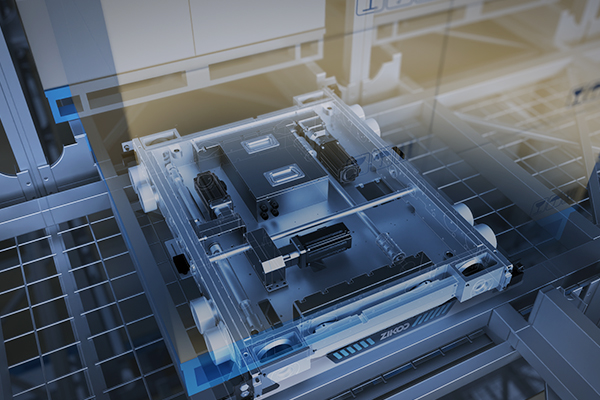
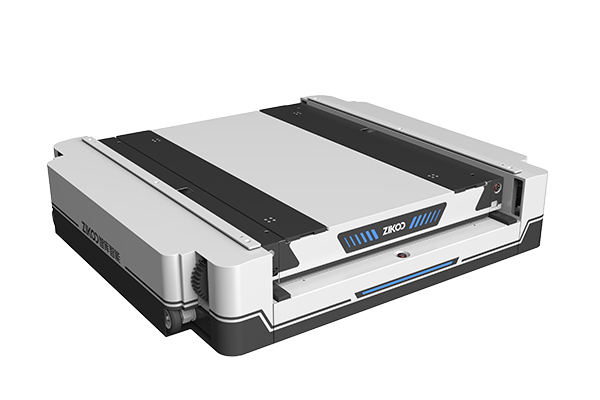
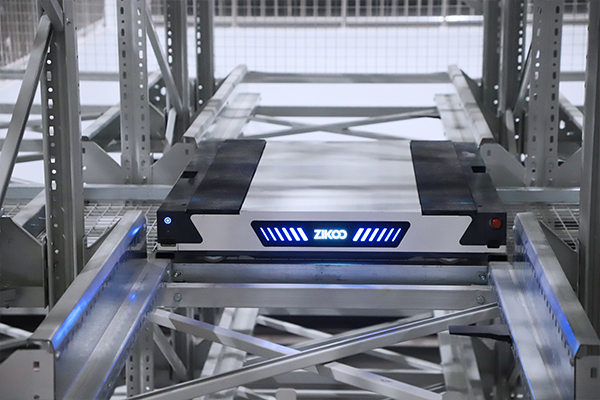
Dense storage is the physical foundation of most dark warehouse concepts. Four-way shuttle systems allow pallets to be stored in deep, high-density racking while shuttles move horizontally within lanes and lifts transfer pallets between levels. Because the shuttle body can be as thin as 125 mm, vertical space is used more efficiently than in conventional racking with wide forklift aisles.
If you are mapping dense storage options for a lights-out layout, <Smart Storage Revolution: Comprehensive Overview of Four-Way Shuttle Systems for Automatic 3D Warehouses> covers the mechanical and layout logic behind automatic 3D warehouses.
Software That Replaces Daily Decisions
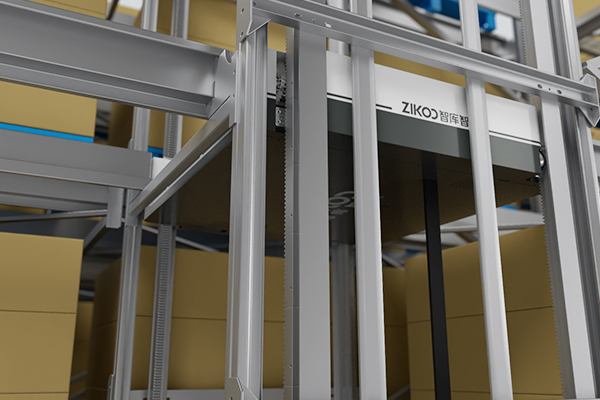
Full automation is not only motors and racking. A dark warehouse needs an execution layer that knows inventory location, equipment status, order priority, and exception rules. Warehouse management systems (WMS), warehouse execution systems (WES), warehouse control systems (WCS), and robot control systems (RCS) work together to release work orders, assign the right shuttle or lift, route pallets, and recover from simple faults. In this environment, the control layer is closer to an air traffic system than to a conventional inventory record: it continuously matches moving resources to changing order demand.
Because the control stack determines whether the hardware can run unattended, <PTP Intelligent Warehousing Platform: Building a Flexible and Smart Logistics Ecosystem> covers how WMS/WES/WCS/RCS layers connect storage equipment with daily warehouse processes.
Reliability, Safety, and Backup
A dark warehouse can only operate safely if automated equipment and software fail in predictable ways. Relevant safety standards include ISO 3691-4 and ANSI/RIA R15.08 for driverless industrial trucks and mobile robots, and EN 528 for rail dependent storage and retrieval equipment [1][2][3]. These standards require risk assessment, protective stop functions, access control, and verification of safety-related control systems. In practice, designers combine physical guarding, sensor-based detection, light curtains, lockout procedures, and defined maintenance zones so that people can enter safely when needed.
How a Dark Warehouse Moves a Pallet
A typical pallet flow in a dark warehouse can be described as inbound staging, vertical storage, internal movement, retrieval, and dispatch.
-
Inbound staging. Pallets are delivered to an induction station. The system identifies the pallet, checks dimensions and weight, and confirms load stability before storage assignment.
-
Storage assignment. Software assigns a location based on SKU velocity, batch, temperature zone, and available depth. High-turnover pallets are placed closer to pick faces or lift positions.
-
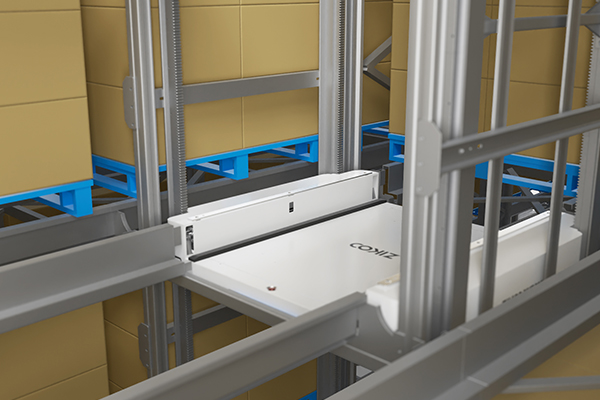
Vertical and horizontal transport. A four-way shuttle carries the pallet inside the rack lane; a vertical shuttle or lift transfers it between levels. Positioning accuracy of ±1 mm is achievable on modern lifts, which supports reliable pallet transfer without human alignment [4].
-
Order release. When an order is released, software instructs the shuttle to retrieve the pallet, route it to a pallet-to-person or robotic picking station, or dispatch it to an outbound buffer.
-
Outbound and replenishment. The system continuously replenishes pick faces and stages outbound loads in the correct sequence for trucks.
For a practical look at how shuttle speed and coordinated movement improve warehouse throughput, <Six-Way Shuttle: The Smart Warehousing Tool for Cost Reduction and Efficiency> covers the cost and efficiency logic of multi-direction shuttle operation.
What Changes When Operators Leave the Aisle
Efficiency and Density
Removing wide operator aisles allows more rack positions in the same building volume. A dense storage layout can place inventory into fewer square meters, reduce travel distance, and process movements independent of shift patterns. The efficiency gain is strongest when order lines are high, pallet movements are repeatable, and SKU velocity data is good enough to direct storage location decisions.
Safety and Consistency
Automated equipment performs the same movement repeatedly, reducing acceleration, cornering, and load handling variance. Safety systems still require controlled access zones, emergency stop devices, and documented maintenance. Full automation does not remove risk; it moves the risk profile from continuous manual traffic to controlled maintenance and intervention activities [1][2][3].
The New Role of Warehouse Staff
The workforce does not disappear in a dark warehouse. It shifts from moving pallets to managing exceptions, conducting preventive maintenance, analyzing data, and improving process rules. Operators become equipment supervisors and system controllers rather than forklift drivers. This shift changes hiring profiles and training requirements.
From Concept to Project: What to Evaluate
A successful dark warehouse project depends less on the word “dark” and more on whether the operational parameters match the automation design. Before committing to full automation, evaluate the building envelope, pallet and load consistency, throughput peaks, IT readiness, maintenance access, and phased expansion path.
Site and Throughput Requirements
Check clear height, floor flatness, column spacing, and available electrical and network capacity. A system designed for 1,200 kg pallets may not handle heavy or irregular loads without modification. Throughput must be defined by peak hour, not average day, because unattended systems need enough transport capacity when order volume spikes.
System Scalability
Full automation should support a phased rollout. Some sites start with one rack block or a single temperature zone, then expand after data and operating routines mature. The control system must support adding shuttles, lifts, and storage lanes without rewriting the core flow logic.
Service and Long-Term Support
Remote diagnostics, spare-part availability, software updates, and documented recovery procedures matter more when the building is unattended. Service agreements should specify response time, remote access, safety checks, and training.
Project planning note. If you are considering a dark warehouse pilot, send your warehouse drawings, pallet data, and peak throughput to info@zikoo-int.com. An application engineer can help determine whether a dense shuttle layout or a pallet-to-person system is the right first step.
Plan Your Dark Warehouse Roadmap
Dark warehouse projects start with an engineering conversation rather than a single piece of equipment. The goal is to connect building constraints, inventory behavior, and throughput targets to a control architecture and a phased equipment plan. Zikoo Smart Technology works on pallet-to-person robotics including four-way shuttles, vertical shuttle systems, omnidirectional stacker robots, and PTP software used in dense storage, cold chain, manufacturing, and 3PL operations.
If you are exploring whether full automation fits your operation, send the following to info@zikoo-int.com:
- Warehouse drawings or dimensions
- Pallet types, weights, and temperature range
- SKU count and storage depth requirements
- Peak inbound and outbound pallets per hour
- Desired phase-one scope and future expansion plans
An application engineer can map the site to a system concept, estimate storage positions and throughput, and identify where dark operation can start safely.
FAQ
What exactly is a dark warehouse?
A dark warehouse is an automated storage and order fulfillment environment that can run with little or no permanent operator presence in the storage and movement areas. Lighting and HVAC are optimized for equipment and maintenance rather than continuous human comfort.
Is a dark warehouse the same as lights-out operation?
They are closely related. Lights-out is often used for processes that run without direct human control. A dark warehouse applies that principle to storage, retrieval, and internal transport, while still allowing human access for maintenance, exception handling, and quality checks.
Which warehouse processes can be fully automated first?
Pallet inbound, putaway, retrieval, replenishment, and outbound staging are usually the first candidates. Piece picking is more complex because it involves unstructured item handling, but robotic picking cells and pallet-to-person stations can progressively expand the automation boundary.
Does full automation mean no people are ever in the building?
No. People are still needed for maintenance, system supervision, data review, and exception handling. Access control and safety systems are designed around the assumption that trained personnel may enter defined zones under controlled conditions [1][2][3].
Are dark warehouses only for large enterprises?
No, but the strongest early cases tend to involve high pallet counts, repeatable flows, high labor cost, or difficult working conditions such as cold storage. Small and mid-sized operations can automate a single rack block or a single temperature zone and expand later.
How do automated systems handle exceptions in a dark warehouse?
The control system detects failed transfers, load instability, communication loss, and equipment faults. It can pause a zone, redirect tasks to another shuttle, notify remote operators, or guide maintenance staff to the exact location. Recovery procedures are defined before unattended operation begins.
What safety standards apply to dark warehouse automation?
Driverless industrial trucks fall under ISO 3691-4 and ANSI/RIA R15.08, while rail dependent storage and retrieval equipment is addressed by EN 528 [1][2][3]. These standards cover risk assessment, protective stops, access control, and verification of safety-related systems.
How should a company start moving toward full automation?
Start with clean data: pallet dimensions, SKU velocity, order profile, building dimensions, and peak throughput. Then model the storage and transport capacity, define a phase-one scope, and align equipment and software around documented recovery procedures.
References
[1] ISO 3691-4:2023. Industrial trucks — Safety requirements and verification — Part 4: Driverless industrial trucks and their systems. International Organization for Standardization.
[2] EN 528:2008. Rail dependent storage and retrieval equipment — Safety requirements. European Committee for Standardization.
[3] ANSI/RIA R15.08-1-2020. Industrial Mobile Robots — Safety Requirements — Part 1: Requirements for the Industrial Mobile Robot. Robotics Industries Association.
[4] FEM 9.851:2003. Performance Data of Storage Retrieval Systems. European Materials Handling Federation.
[5] MHI. Annual Industry Report 2024. MHI.
If you’re interested, check out these related articles:
PTP Intelligent Warehousing Platform: Building a Flexible and Smart Logistics Ecosystem
Six-Way Shuttle Powers Dense Storage: Breaking Space Limitations
Reshaping Warehouse Value: Six-Way Shuttle Leads the Digital Transformation


