


E-commerce keeps turning the dial up on speed and complexity, and I’ve watched even well-run, manual warehouses hit a wall during peak season—errors creep in, travel time explodes, and scalability becomes a guessing game. The inflection point isn’t about adding more people; it’s about redesigning the system. Below, we distill how to plan and execute an automated warehouse—using advanced robotics and intelligent software—to turn conventional facilities into high-performance, data-driven operations that actually keep pace with demand.
Understanding the Challenges of Traditional Warehousing Operations
Traditional warehouses frequently encounter significant operational hurdles. These inefficiencies can impede growth and inflate costs. We will explore the primary issues that drive the need for automation.
1. Identifying common inefficiencies in manual systems
Manual operations tend to accumulate friction: picking takes longer than it should, inventory records drift from reality, and valuable cubic space goes underused. When repetitive tasks depend on people walking, lifting, and scanning, bottlenecks form quickly—especially when order volumes spike and throughput has to surge on short notice.
2. The impact of labor shortages and rising operational costs
Persistent labor shortages make it tough to staff consistently, and the reliance on temporary workers adds variability in training and performance. Layer on rising wages and benefits, and total labor spend climbs. For traditional setups, that combination pressures margins and makes scaling sustainably much harder.
3. Limitations in storage density and throughput capacity
Conventional racking often leaves vertical space idle, and manual picking limits how quickly goods can flow. The result is a ceiling on both storage density and processing speed, which constrains fulfillment capacity just when demand is growing fastest.
Strategic Planning for Your Automated Warehouse Design
Effective automation begins with thorough strategic planning. This phase defines the project’s scope, objectives, and technological roadmap. We emphasize a data-driven approach to ensure the automated system aligns with business goals.
1. Defining business objectives and key performance indicators (KPIs)
Start by locking in the outcomes that matter most—specific cost reductions, order fulfillment SLAs, inventory accuracy targets, or increased storage capacity. Translate those aims into measurable KPIs so every design choice points to the same scoreboard and progress can be tracked objectively.
2. Conducting a comprehensive warehouse assessment and data analysis
Take a hard look at how the warehouse actually runs today. Analyze order profiles, inventory velocity, picking paths, and labor utilization. Historical data will surface bottlenecks and automation opportunities, and it provides the baseline you’ll use later to validate improvements.
3. Selecting the right automation strategy for your specific needs
Match the strategy to the operation. Product characteristics, order volumes, throughput goals, and budgets will guide whether you start with targeted automation or a fully integrated system. Options range from automating discrete flows to deploying end-to-end orchestration. We recommend exploring The Future of Automated Warehousing: From ASRS Warehouse to Fully Intelligent Storage for more insights into strategic choices.
Key Technologies Driving Modern Warehouse Automation
Modern automated warehouses rely on a suite of advanced technologies working in concert. These technologies enable high efficiency, precision, and adaptability. We will highlight some of the core components.
1. Exploring advanced robotics for pallet-to-person solutions
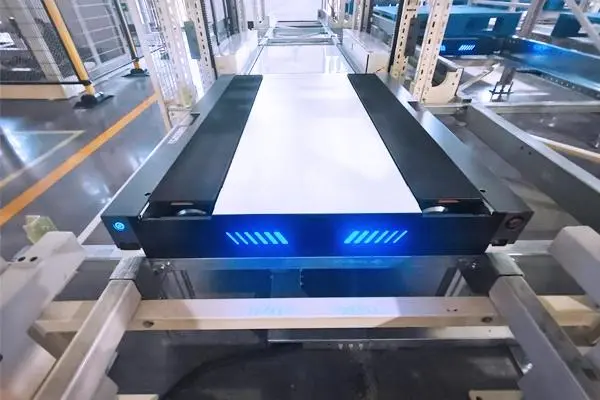
Advanced robotics often carry the load for high-impact gains. Solutions like the Four-Way Pallet Shuttle (R-bot) and Omnidirectional Stacker Robot (U-bot) enable pallet-to-person workflows by delivering goods to operators, cutting out long travel paths and reducing physical strain.
| Product Model | Rated Load (kg) | Body Dimensions (mm) | Pallet Sizes Supported (mm) | Max Speed (m/s) | Battery Life (hours) | Special Features |
|---|---|---|---|---|---|---|
| R-bot Standard (R1200B) | 1200 | L1000 × W972 × H125 | 1200 × 800–1000 | 1.2 (loaded) | 8 | Dense storage, multi-shuttle collaboration |
| R-bot Heavy-duty (R1500B) | 1500 | L1192 × W972 × H125 | 1200 | 1.2 (loaded) | 8 | High capacity, flexible movement |
| U-bot U1080 | 1000 | 2198 × 1820 × 3465 | N/A | N/A | 6–8 | 8m lifting height, narrow aisle operation |
2. Implementing intelligent warehouse management systems (WMS/WES/WCS)
Software is the conductor. A Warehouse Management System (WMS) optimizes inventory placement and fulfillment, a Warehouse Execution System (WES) orchestrates tasks and balances work across automation, and a Warehouse Control System (WCS) drives the real-time motion of robots and conveyors. Zikoo’s PTP Smart Warehouse Software brings these layers together for coordinated, end-to-end control.
3. Integrating automated storage and retrieval systems (ASRS)
Automated Storage and Retrieval Systems (ASRS) push storage density and retrieval speed well beyond manual norms. Pairing robots like the R-bot with the H-bot (Vertical Two-Way Shuttle) turns the H-bot into a vertical transport hub; together they form a six-way shuttle system with true three-dimensional movement. That synergy materially lifts throughput. For more information on ASRS, consider reading Understanding ASRS Systems for Modern Warehouse Efficiency.
A Step-by-Step Approach to Automated Warehouse Implementation
Implementing an automated warehouse is a complex undertaking requiring careful planning and execution. We follow a structured approach to ensure a successful transition.
1. Conceptualizing the layout and workflow optimization
Begin with layout and flow. Map storage, picking, inbound, and outbound so travel distances shrink and handoffs are clean. We run simulations to compare scenarios and pressure-test designs before any hardware hits the floor.
2. Selecting and integrating robotic solutions like R-bot and U-bot
Choose the right tools for the job. The R-bot Four-way Shuttle excels at dense pallet storage with flexible, high-capacity moves, while the U-bot Omnidirectional Stacking Robot handles narrow aisles and high-reaching tasks. Integration focuses on tight communication between robots and the central control stack so the fleet behaves like a single, coordinated system.
3. Developing and deploying the PTP Smart Warehouse Software ecosystem
Think of the PTP Smart Warehouse Software as the operation’s nervous system. We tailor and deploy it to manage inventory, allocate tasks intelligently, route robots efficiently, and surface real-time visibility. The outcome is smarter picking strategies and smoother flow. Further details on software integration can be found in PTP Intelligent Warehouse Software Empowers Enterprises for Smart Upgrades.
4. Ensuring seamless system integration and testing procedures
Before go-live, we test relentlessly—first in simulation, then on the floor. That includes verifying interfaces, fail-safes, communication protocols, safety logic, and recovery steps. The goal is predictable performance under normal conditions and graceful handling of exceptions.
Maximizing Efficiency and ROI with Automated Warehouse Solutions
Automated warehouse solutions deliver substantial benefits that translate into improved efficiency and a strong return on investment. We focus on key areas where automation provides the greatest impact.
1. Achieving significant improvements in operational throughput
Automation compresses cycle times across receiving, putaway, picking, and shipping. With robots running consistently, facilities process more orders faster, improving SLAs and boosting customer satisfaction.
2. Reducing labor dependency and associated costs
By shifting repetitive, physical tasks to machines, you reduce exposure to labor shortages and soften total labor costs—wages, benefits, and training included. People can then focus on exceptions, quality, and value-added work.
3. Enhancing storage density and space utilization
ASRS and shuttle systems unlock vertical capacity and increase storage density within the existing footprint. That often defers expensive expansions and lowers real estate costs per unit stored.
4. Ensuring scalability and adaptability for future growth
Automated architectures scale modularly. Add robots, extend aisles, or expand storage blocks as demand grows—without derailing current operations. That flexibility supports both seasonal spikes and long-term growth.
Unlock Your Warehouse’s Full Potential
Ready to transform your warehouse into a highly efficient, cost-effective, and scalable operation? Partner with Zikoo Smart Technology Co., Ltd. Our expertise in pallet-to-person robotics and intelligent software solutions can help you achieve your automation goals. Contact us today for a consultation and discover how our R-bot, H-bot, U-bot, and PTP Smart Warehouse Software can revolutionize your logistics.
Email: info@zikoo-int.com
Phone: (+86)-19941778955
About the Author
John Smith, Senior Engineer
John Smith, a Senior Engineer at Zikoo Smart Technology Co., Ltd., specializes in designing and implementing advanced automation solutions for warehouses and fulfillment centers. His work focuses on leveraging ASRS, Four-Way Shuttle systems, and intelligent robotic picking to maximize efficiency, reduce costs, and enhance operational scalability for clients worldwide.
FAQs
1. What are the primary benefits of automating a warehouse?
Automation lifts efficiency and accuracy, lowers labor costs, increases storage density, and accelerates throughput. It also improves inventory control—together delivering a sharper competitive edge and better customer experience.
2. How long does it typically take to implement an automated warehouse system?
Timelines depend on complexity and size. Smaller, simpler deployments often complete in 6–12 months; large, fully integrated solutions typically run 18–24 months or more. Solid planning and experienced partners keep schedules on track.
3. What types of warehouses are best suited for automation?
Sites with high throughput needs, tight space, elevated labor costs, or demanding environments (like cold storage) are strong candidates. E-commerce, manufacturing, pharmaceuticals, and 3PL operations commonly see outsized gains.
4. How can Zikoo Smart Technology’s solutions integrate into existing warehouse infrastructure?
Zikoo’s solutions are modular and flexible. Our robots and software fit into existing racking and layouts with minimal disruption. We start with a thorough assessment and deliver an integration plan that leverages your current assets while layering in advanced automation.
5. What is the role of software in an automated warehouse?
Software is the operational brain. WMS manages inventory and orders, WES allocates and sequences tasks, and WCS directs real-time machine movement. Together they coordinate workflows end-to-end and provide the real-time data leaders need to make informed decisions.


