


Planning a four-way shuttle system budget is not about arriving at a single number; it is about constructing a cost framework that reflects your facility’s real throughput, pallet dimensions, and anticipated growth. Over the past decade, I have seen too many procurement teams overpay for capacity they never use or, worse, lock themselves into a design that cannot scale without expensive retrofits. This article lays out a practical, step-by-step method for building a budget that ties every line item back to an operational requirement, so you can defend the investment and avoid the hidden costs that erode ROI.
Key Cost Drivers in a Four-Way Shuttle System
A budget that misses one major cost center can throw off an entire project. The primary components fall into hardware, software, and services.
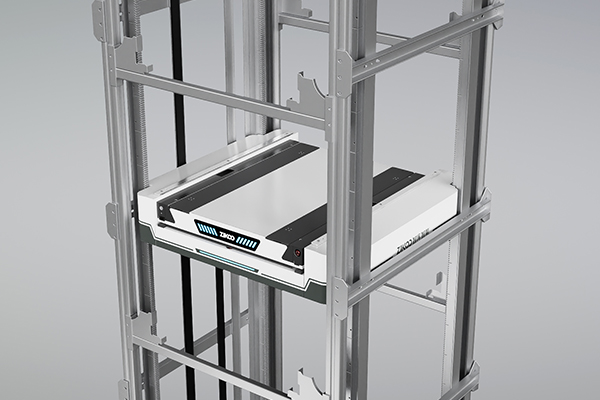
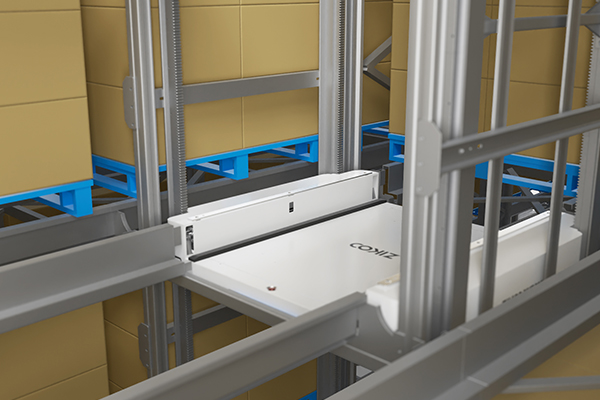
Hardware is the largest block: shuttles, elevator lifts (H-bot units), racking, conveyors, and charging stations. The model of shuttle you select matters enormously. A standard four-way shuttle for a 1200 mm pallet costs less than a heavy-duty version rated for 1500 kg or one designed for -25℃ cold storage. The table below shows how specifications drive relative cost.
| Shuttle Model | Load Capacity | Pallet Size (mm) | Top Speed (m/s) | Battery Life (hrs) | Cost Impact |
|---|---|---|---|---|---|
| Standard (R1200B) | 1200 kg | 1200×800-1000 | 1.6 empty/1.2 loaded | 8 | Baseline |
| American (R1200A) | 1200 kg | 1016×1219 | 1.6/1.2 | 8 | Moderate increase |
| Japanese (R1500J) | 1500 kg | 1100×1100 | 1.6/1.2 | 8 | Higher due to frame and motors |
| Heavy-duty (R1500B) | 1500 kg | 1200 | 1.6/1.2 | 8 | Higher, plus heavier structure |
| Heavy-duty Large Pallet (R2000B) | 2000 kg | 1400 | 1.35/1.0 | 7 | Highest; specialty application |
Software and controls (WMS, WES, WCS, RCS) add a layer that many first-time buyers underestimate. A basic system managing single-pallet moves is simpler than one coordinating mixed-load optimization, cross-docking, and real-time inventory synchronization. Integration with existing ERP systems or multi-temperature zone management increases engineering hours and license fees.
Installation and commissioning is another 15-25% of hardware and software cost, depending on site conditions. Civil work—floor flatness correction, fire suppression retrofits, electrical infrastructure—can be the wild card, particularly in older buildings. I have seen projects where floor leveling alone consumed 10% of the total budget because the original slab was out of tolerance for shuttle guidance.
What hardware components are most expensive?
Shuttles and elevators typically represent 55-65% of the hardware total, with racking at 20-30%. The number of shuttles scales with throughput: a system moving 100 pallets per hour might need four shuttles per level, while 50 pallets per hour may only need two. This is why throughput definition is the single most influential budget lever.
How does software complexity influence the budget?
Software license fees often start around 10-15% of the total project and grow with features. A turnkey system with a standard WMS/WCS package is more predictable than customizations. If your operation demands batch picking, FIFO logic, or integration with AGVs, those require additional development cycles that can add 20-30% to the software line item.
Aligning Requirements with Budget Constraints
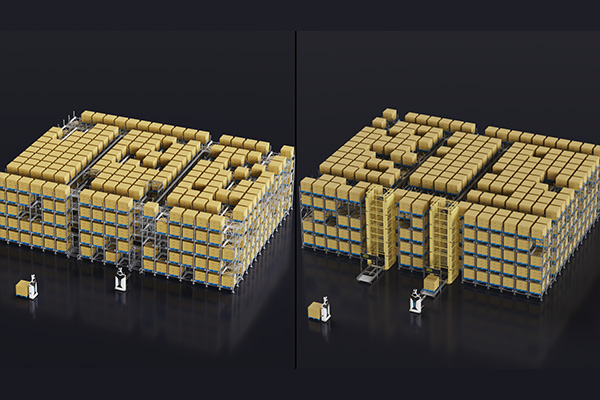
A budget built on a vague wish list will either be rejected for being too high or stripped down to a configuration that cannot meet operational needs. The antidote is a detailed requirements document that answers four questions: what pallet types will the system handle, what is the peak throughput per hour, what is the storage density target, and what are the environmental conditions.
Pallets are the baseline. A 1200×1000 mm Euro pallet is the most common and keeps costs low because shuttle frames are standard. Unusual or mixed pallet sizes force wider racking, custom shuttle carriers, and possibly retrofitted grippers. In projects where I have seen budgets balloon, it is often because the facility underestimated the variety of inbound pallet types.
Throughput governs shuttle count and elevator speed. If you need 120 pallets per hour and a single shuttle-lift pair can move 30 pallets per hour, you need at least four pairs. Adding 10% buffer for peak surges is prudent, but adding 50% because “we might grow” is how budgets detach from reality unless the racking and control architecture can accommodate incremental capacity without upfront hardware.
Temperature and hygiene requirements also multiply cost. Cold storage shuttles require lithium batteries with low-temperature coatings, special PCBA protection against condensation, and low-temperature charging ports. In a new energy battery component warehouse, structural materials must exclude copper, zinc, nickel, and lead, requiring stainless frames and rubber buffer wheels. These customizations can add 20-40% to the shuttle unit cost.
How do I choose the right shuttle model for my budget?
Start by locking down pallet dimensions and maximum load, then pick the smallest model that fits. The standard R-bot handles 1200 kg on a 1200 mm pallet; if your load rarely exceeds 1000 kg, this model avoids the cost of a heavy-duty variant. Run a throughput simulation with your supplier using actual order profiles before committing to shuttle count.
What if my operation has peak seasonal demand?
Avoid budgeting for year-round peak demand if peak is only two months. Instead, design racking and conveyors for peak volume, but purchase only the shuttle fleet needed for baseline operations. Additional shuttles can be leased or purchased later. This keeps initial capital lower while preserving the ability to ramp during peak.
A Step-by-Step Budget Planning Process
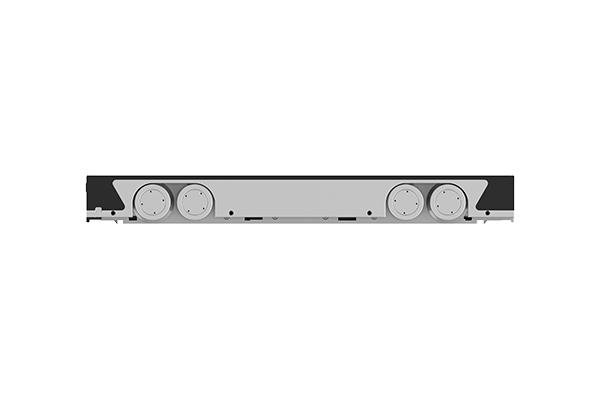
Moving from requirements to a line-item budget is a process I have refined across dozens of projects. Here is the sequence I recommend for internal budgeting before seeking formal quotes.
- Map the storage envelope. Define the number of pallet positions, lane depth, and building clear height. This determines racking cost and shuttle rail length.
- Calculate required shuttle and elevator count. Use a simple formula: required throughput divided by single unit capacity, plus one redundant unit for maintenance.
- Select the exact shuttle and elevator models. Match pallet type and load to the model variants (Standard, American, Japanese, Heavy-duty).
- Estimate software scope. List required modules (WMS, WCS, RCS) and integration touchpoints. A standard package for a single-building, single-temperature zone is straightforward; a multi-site, multi-zone deployment with ERP integration will cost more.
- Add site-specific civil and installation costs. Include floor remediation, electrical upgrades, fire sprinkler modifications, and safety barriers.
- Insert training, documentation, and after-sales support. Typically 5-8% of hardware+software.
- Apply a contingency of 10-15%. This covers unforeseen site conditions and scope changes during implementation.
A senior finance person once told me a budget is a contract with the future. The more precise your steps, the harder it is for a deviation to surprise you.
If your program involves cold storage or heavy loads, it is worth confirming shuttle battery specifications before finalizing your BOM—reach out at info@zikoo-int.com.
What contingencies should I include?
At minimum, budget line items for floor flatness correction, IT network cabling, and potential permit delays. I have seen a project where the city required additional fire suppression water storage, adding 5% to project cost. A 15% contingency is not conservative; it is realistic.
How do I account for long-term maintenance in the budget?
Separate capital expenditure from operating expenditure. Maintenance contracts typically run 3-5% of hardware cost annually, covering preventative inspections, battery replacements, and software updates. Include a battery replacement reserve, as lithium packs lose capacity after 3-5 years of heavy cycling.
How to Evaluate Supplier Quotes Objectively
Quote comparison becomes possible only when you send identical requirements to each supplier. Without a fixed specification, each vendor will interpret your needs differently, making the exercise useless. I advise creating a Request for Quotation template that asks for unit prices on each component—shuttle, elevator, racking per level, software per module—so you can spot where one quote is cheaper or more expensive.
The table below shows a simplified cost comparison matrix that I recommend using internally.
| Cost Category | Supplier A | Supplier B | Notes |
|---|---|---|---|
| Shuttle per unit | Specify model | ||
| Elevator/lift per unit | |||
| Racking per pallet position | Include steel gauge and design standard | ||
| Software license | Per module or site-wide | ||
| Installation & commissioning | Labor and travel | ||
| Civil work allowance | Based on site survey | ||
| Contingency factor | Stated percentage | ||
| After-sales & warranty | Duration and response time |
Beyond price, evaluate the supplier’s project delivery record. Visit a reference site if possible; if not, ask for a list of completed projects with similar specifications. Check whether they handle civil work, software integration, and long-term service directly or through subcontractors. A quote that seems 10% cheaper may come from a supplier that outsources installation and disappears after commissioning.
What details are often missing from low initial quotes?
Low quotes often omit spare parts packages, extended warranty, and software license renewal fees. They may also exclude load testing, safety certification, and interface development with your existing systems. Ask explicitly whether the quote covers everything needed for a turnkey handover.
How do I verify the supplier’s track record?
Request at least three references with comparable throughput and pallet types. Contact the references directly and ask about on-time delivery, budget adherence, and after-sales responsiveness. In one case, a supplier presented a polished reference list, but a quick call revealed that two of the projects had experienced six-month delays—information that helped our client adjust their schedule.
Calculating ROI and Securing Budget Approval
ROI is the language of the boardroom. I break it into three tiers: hard savings, efficiency gains, and strategic value.
Hard savings come from labor reduction, space optimization, and damage reduction. For a typical facility moving from manual forklift handling to a shuttle system, labor can drop from 20 operators per shift to 5-8, depending on automation coverage. Space savings of 40-60% are achievable by reducing aisle width and using high-density racking; this delays or eliminates the need for additional warehouse construction, which carries its own capital avoidance value. Damage reduction, while harder to quantify upfront, typically cuts product write-offs by 15-25% because shuttles eliminate fork strikes and drops.
Efficiency gains include faster order turnaround, improved inventory accuracy, and support for 24/7 operation. A shuttle system can maintain throughput outside of normal shifts without overtime costs, shrinking the order-to-ship cycle by 30-50% for many projects I have been part of.
Strategic value is the hardest to quantify but strengthens the business case. Automation removes dependency on an increasingly scarce forklift operator labor pool; it gives you the ability to scale without proportional headcount growth; and it positions your facility as a technology-forward operation that can win contracts requiring high accuracy and traceability.
A typical payback period for a four-way shuttle system falls in the 2.5-to-4-year range when considering labor and space savings alone, though this varies by local wage rates and throughput. I recommend modeling two scenarios: a conservative case with current volumes and a growth case that accounts for planned expansion, so the board can see how the investment pays off under both conditions.
How soon can I expect a return on investment?
Based on projects where customers documented actual savings, the payback period ranges from 24 to 42 months. Faster payback occurs in high-wage regions with multi-shift operations. I have seen a cold storage facility recover investment in under three years primarily by eliminating forklift labor and reducing product loss.
What non-financial benefits should I include in my business case?
Include safety improvement (zero forklift accidents), inventory accuracy above 99%, and the ability to serve e-commerce clients demanding same-day shipping. These factors often tip the scales when the financial case is borderline but the strategic need is clear.
Common Budget Planning Questions for Four-Way Shuttle Systems
What is the smallest budget I can expect for a four-way shuttle system?
There is no fixed minimum; a small system serving a single racking lane with a handful of shuttles can fall in the $100,000-$200,000 range, but costs scale quickly with storage positions and throughput. Pricing is better estimated per pallet position than per square foot. If you can share pallet count and daily moves, a supplier can give a preliminary range without formal engineering.
Can I retrofit an existing warehouse on a limited budget?
Retrofits are often more cost-effective than new construction, provided the floor is level and clear height is adequate. Older buildings, however, may require floor grinding, fire suppression upgrades, or electrical work that will push costs higher. A site survey is the only reliable way to identify these hidden costs before you commit to a budget number.
How can I justify the budget to management if we have never used automation?
Lead with measurable outcomes: the reduction in forklift operators, the increase in storage density, and the improvement in order accuracy. Space efficiency alone can be persuasive—a shuttle system often doubles pallet capacity in the same footprint, postponing expensive facility expansions. Back these claims with a conservative payback calculation and note that automated operations can run unattended during nights or weekends.
What if our throughput forecasts are uncertain? How do we avoid over-budgeting?
Design for high-density storage from the start but purchase shuttle vehicles for current throughput. Racking and conveyors are harder to expand later; shuttles are modular. The software and control architecture should be sized for maximum expected growth, because retrofitting software logic midway through a system’s life is more expensive than licensing it upfront for scalability.
Does a four-way shuttle system really save enough labor to justify the cost?
Labor savings are typically the dominant ROI driver. A facility moving from manual forklift operation to a shuttle system can often reallocate 50-70% of its material handling workforce. In high-wage markets, this translates into payback within three years, sometimes faster when combined with space savings. For a personalized projection, share your current labor costs and operating hours, and we can model the payback period using your real numbers.
Building a budget that gets approved is as much about process as it is about numbers. If you would like a technical review of your floor plan and throughput data to develop a realistic cost structure, send your specifications to info@zikoo-int.com or call (+86)-19941778955. Our engineering team will assess your requirements and provide a budget framework at no obligation.
If you’re interested, check out these related articles:
Smart Warehousing Starts Here: Cost-Effective Four-Way Shuttle Systems
Six-Way Shuttle Powers Dense Storage: Breaking Space Limitations
Stacker Crane vs Four-Way Shuttle: Which Fits Your ASRS Warehouse Best
Software-Driven Hardware: Six-Way Shuttle Maximizes Warehouse Efficiency


