


When procurement teams ask how long it takes to implement a four-way shuttle system, the vendor’s initial answer rarely reflects what happens on the ground. A quoted twelve-week installation window can stretch to six months once site conditions, customization requirements, and software integration complexities surface. Having managed system deployments across manufacturing, cold chain, and new energy sectors, I have seen projects accelerate because the upfront assessment was thorough, and others stall because a single overlooked detail compounded into weeks of delay. Breaking down the factors that genuinely determine a four-way shuttle system implementation timeline helps you plan budgets, allocate resources, and hold suppliers accountable to realistic schedules.
Factors That Shape Implementation Timelines
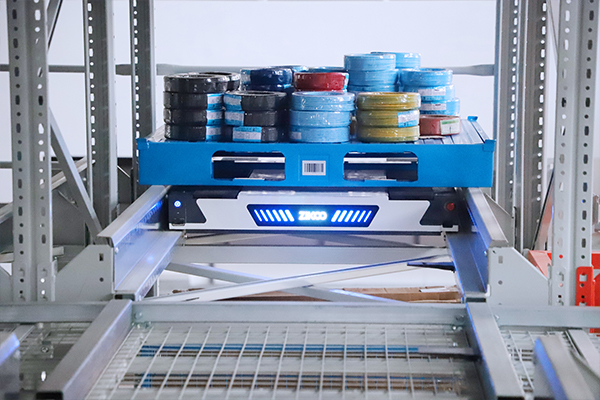
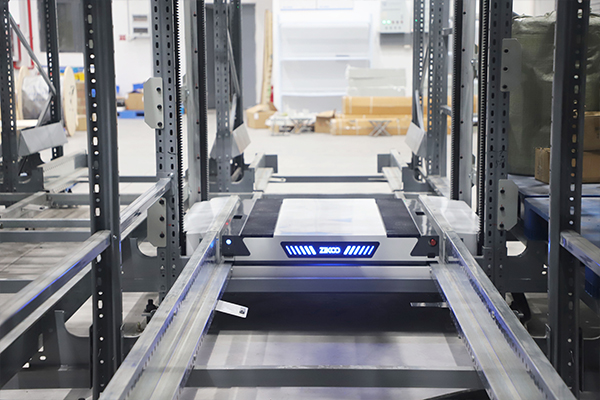
The timeline for a four-way shuttle system project does not start when equipment arrives at the dock. It begins with the warehouse itself. Floor flatness, power availability, and racking compatibility are physical constraints that can delay installation by days or weeks if not assessed early. A shuttle intended for a 1200mm pallet cannot simply adapt to a different size without engineering changes, so confirming pallet dimensions against the system’s specifications during the design phase is essential. The R-bot Four-way Shuttle comes in multiple models covering pallet sizes from 1200×800mm up to 1400mm, with a slim body thickness of 125mm that minimizes racking modifications. Matching the right model to the existing racking, or designing the racking around the shuttle, shortens the installation phase significantly.
Software integration adds another layer of time. A four-way shuttle system rarely operates in isolation; it must connect to a host WMS, WCS, or an enterprise ERP. The scope of interface development, data mapping, and testing scales with the complexity of the host environment. A greenfield warehouse with a pre-configured software stack integrates faster than a brownfield site where legacy systems must be patched together. The PTP Smart Warehouse Software platform (WMS/WES/WCS/RCS) used in our projects is designed to accelerate this step through standardized interfaces, but the timeline still depends heavily on the customer’s IT readiness. Custom reporting requirements, user training, and on-site acceptance testing add further days.
Then there is the operational environment. Cold chain and cleanroom applications demand specialized components: low-temperature lithium batteries, protective conformal coatings, and non-metallic structural elements for new energy sectors. These are not off-the-shelf modifications; they are engineered into the shuttle from the design phase. The more customization, the longer the lead time before a single shuttle leaves the factory. I cannot overstate how often a project timeline underestimates this front-end engineering work.
Phases of a Four-Way Shuttle System Deployment
Every implementation follows a sequence. Understanding each phase with its realistic duration window is the only way to build a credible project plan.
| Phase | Activities | Typical Duration |
|---|---|---|
| Site assessment and design | Warehouse survey, data collection, system layout design, software spec | 2–4 weeks |
| Equipment manufacturing and customization | Shuttle production, rack fabrication, conveyor integration, special coatings or battery configuration | 6–14 weeks (varies with customization) |
| On-site installation | Racking installation, shuttle track mounting, power and network cabling, elevator placement | 4–8 weeks |
| System commissioning and testing | Software integration, communication loop testing, motion calibration, safety checks | 2–4 weeks |
| Handover and training | Operator training, parallel run, final acceptance | 1–2 weeks |
The manufacturing phase is the widest window because it absorbs all customization requests. A standard R-bot with a pallet size common in a region ships faster than a heavy-duty variant with a custom pallet adapter and cold-temperature lithium battery. Telling your supplier exactly what you need early in the design phase compresses the manufacturing window by removing rework loops.
Preventing Hidden Timeline Delays
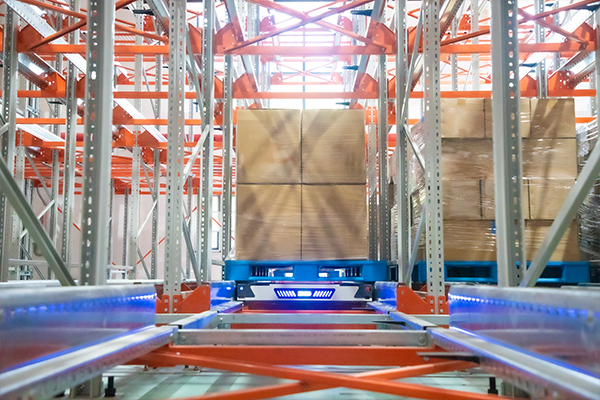
I will share a pattern I have observed repeatedly: a project sails through manufacturing, racks go up on time, and then commissioning stalls because the warehouse’s network infrastructure cannot support real-time communication between shuttles and the control system. Or the floor’s static load capacity was never verified, and concrete reinforcement adds four unforeseen weeks. A cold chain facility I recall lost three weeks because the power supply for the on-board battery charging station required a dedicated circuit that the site’s existing electrical design did not accommodate. The fix was straightforward once the gap was identified. The delay was entirely in the discovery.
What prevents these situations is a supplier that conducts a rigorous site readiness audit before manufacturing begins. Power quality, network latency, floor flatness tolerances, ambient temperature stability, and fire suppression compatibility must be checked against the system’s specifications. For Zikoo’s projects, we use a pre-installation checklist tied directly to the hardware requirements, such as verifying that the minimum aisle width for a U-bot Omnidirectional Stacker Robot is indeed 2100mm and that the power supply can handle the load of simultaneous shuttle charging. This process adds one to two weeks to the assessment phase but routinely saves four to eight weeks later. If your program involves a warehouse with uncertain floor conditions or mixed-voltage power infrastructure, it is worth confirming these parameters with your supplier before design sign-off. Reach out at info@zikoo-int.com to request a site readiness checklist tailored to your proposed system configuration.
Assessing Supplier Timeline Commitments
A supplier’s proposed timeline is only as reliable as the evidence behind it. When evaluating a timeline commitment, request project references that match your industry and warehouse profile. A timeline proven in a flat, temperate manufacturing warehouse does not automatically translate to a multi-temperature food storage facility with a -25°C freezer section. Ask for the as-built schedule versus the original proposal for at least two completed projects. Gaps of more than 20% without documented reasons signal a supplier that quotes optimistically and manages delays reactively.
The contract should separate the timeline into gates: site assessment complete, design freeze, manufacturing completion, installation start, commissioning start, final acceptance. Each gate should have a deliverable and a sign-off. This structure prevents the common situation where a supplier claims the project is “90% complete” for weeks while unresolved issues linger. Clear gating reduces overall project drift by keeping both parties accountable to measurable milestones.
Timeline Variations by Industry
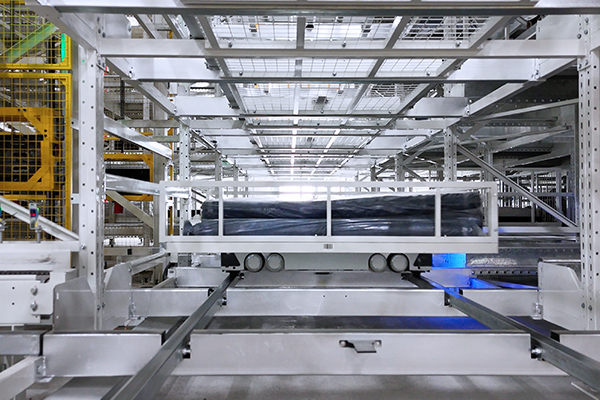
Different operating environments place different demands on equipment and therefore on implementation schedules. The table below summarizes how industry conditions typically shift timelines relative to a standard ambient manufacturing baseline.
| Industry Sector | Key Timeline Drivers | Typical Delta From Baseline |
|---|---|---|
| Cold chain storage | Low-temperature lithium batteries, conformal coating, insulated racking, defrost-aware software logic | +3 to +6 weeks |
| New energy | Non-metallic structural components, blackening treatment for stainless steel, all-rubber buffer wheels to avoid metal contamination | +2 to +4 weeks |
| E-commerce fulfillment | High throughput requirement, multi-SKU configuration, complex picking workstations | +1 to +3 weeks (software-intensive) |
| Pharmaceutical | Temperature and humidity monitoring integration, validation protocols, compliance documentation | +2 to +5 weeks |
For cold chain, the R-bot’s dedicated cold chain solution with a -25°C lithium battery and automatic low-temperature charging illustrates the depth of customization. The hardware itself is not significantly more complex to manufacture, but the integration with the building’s refrigeration envelope and the requirement to maintain temperature during installation add field time.
The new energy sector presents a different challenge. Battery production environments prohibit copper, zinc, nickel, and lead. Structural components switch to stainless steel with blackening treatment, and wheels use all-rubber designs to eliminate metal contact. These materials are not stock items; they affect manufacturing lead time and supplier sourcing. I have worked on projects where the material qualification alone consumed three weeks of the pre-production phase, but skipping it would have risked contamination of the customer’s entire production line.
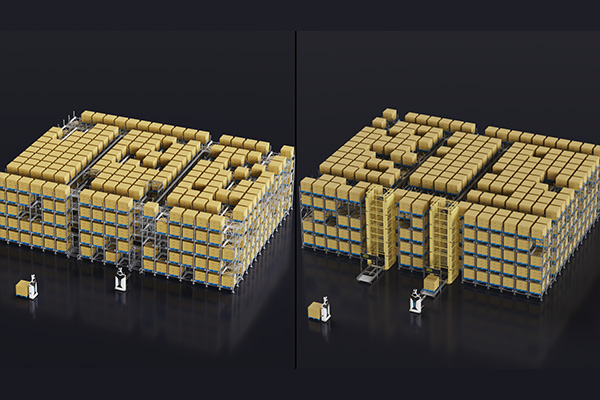
When the timeline risks in your industry are clear, planning becomes a matter of engineering rather than hope. A four-way shuttle system implementation timeline transforms from a vendor’s estimate into a project schedule you can bank on when the critical path is defined by physical and operational facts, not by sales optimism. Getting to that point starts with a supplier who treats your warehouse as an engineering problem to solve, not a delivery address to hit.
To discuss a timeline specific to your warehouse profile and industry conditions, send your part number and quantity requirements to info@zikoo-int.com or call (+86)-19941778955 for an engineering consultation. We can supply a phased schedule backed by reference projects in your sector.
Timeline Questions from Warehouse Automation Buyers
How long does on-site installation of a four-way shuttle system actually take?
On-site installation typically ranges from four to eight weeks for a mid-sized deployment with a few hundred pallet positions. The range depends on whether the racking is being installed new or the shuttles are being retrofitted into existing racking. Retrofitting almost always takes longer because the existing rack structure must be surveyed, tolerances verified, and often adjusted before shuttle tracks can be mounted. New racking with pre-engineered shuttle rails goes up faster. We generally see the shortest installations in greenfield warehouses where the racking manufacturer and shuttle supplier coordinate from the outset.
Can warehouse operations continue while the system is being implemented?
It depends heavily on the warehouse layout and the implementation strategy. In brownfield projects, a phased cutover approach is common: one storage zone is converted to automated picking while the remainder continues operating manually. This keeps the warehouse live but extends the overall timeline by two to four weeks compared to a full shutdown approach. The decision comes down to operational tolerance for disruption versus the cost of extended temporary storage or overtime. I have found that most operations teams underestimate how much staging space is needed during the transition, and that lack of space often becomes the real schedule bottleneck.
Why do the same four-way shuttle system quotes have such different implementation timelines?
Differences in quoted timelines usually trace back to how each supplier handles site assessment and customization. A shorter timeline often means the supplier is assuming ideal conditions: flat floors, adequate power, no software modifications, and standard pallet sizes. A longer timeline may reflect a supplier that has built in contingency for site unknowns or that plans a more comprehensive commissioning process. The most reliable way to compare is to ask each supplier to itemize their timeline by phase and identify the assumptions behind each phase duration.
How does cold chain storage affect the implementation schedule?
Cold chain environments extend the implementation timeline in two ways: equipment customization and field installation constraints. Shuttles need low-temperature lithium batteries rated for continuous operation in sub-zero environments, and the onboard electronics require conformal coating to prevent moisture ingress during defrost cycles. These are factory-integrated, adding two to three weeks to manufacturing. During on-site installation, work inside the cold room is limited to shorter shifts for worker safety, and material handling equipment behaves differently in freezing conditions, slowing the pace. The R-bot’s cold chain solution uses a -25°C dedicated battery designed to run 6–8 hours in a freezer, but the installation team still must coordinate with the facility’s cooling schedule to avoid thermal shock to equipment.
What should we look for in a supplier’s timeline guarantee?
A meaningful timeline guarantee specifies measurable milestones with acceptance criteria, not just a final delivery date. It should include a site readiness assessment report dated before manufacturing begins, a design freeze document signed by both parties, and a commissioning test protocol that covers full-load operation. The supplier should be able to show you the actual versus planned schedule for a project similar to yours in industry and scale. If your warehouse configuration involves non-standard pallets, low-temperature zones, or tight integration with an existing WMS, share your layout and requirements with us at info@zikoo-int.com; we can prepare a timeline analysis based on comparable completed projects rather than a generic estimate.
If you’re interested, check out these related articles:
Six-Way Shuttle Unlocks the Era of True 3D Intelligent Warehousing
Six-Way Shuttle: Empowering Industries to Embrace Smart Warehousing
Reshaping Warehouse Value: Six-Way Shuttle Leads the Digital Transformation


