


Four-way shuttle systems have rapidly become the default answer for dense pallet storage in new automated warehouses, but their limitations are consistently under-discussed during the planning stage. Over a decade of designing and delivering pallet-to-person robotics projects across power, cold chain, pharmaceutical, and manufacturing facilities has shown me that the gap between the brochure and the dock is real. The technology works, but only within a set of physical, environmental, and operational boundaries that are rarely spelled out upfront. This article examines those boundaries: the technical constraints, maintenance realities, integration dependencies, and lifecycle costs that determine whether a four-way shuttle system delivers on its throughput promise or becomes a source of ongoing frustration.
Technical Performance Limits in Four-Way Shuttle Systems
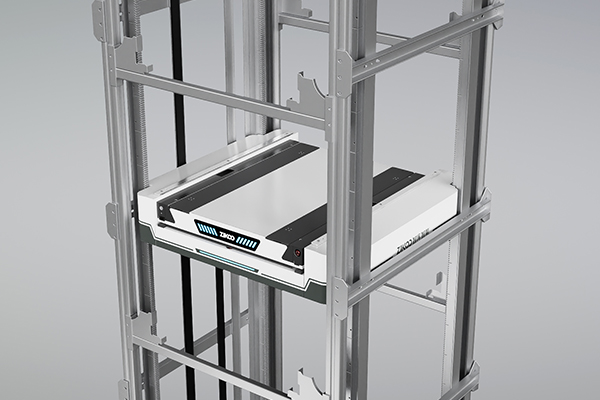
The R‑bot series from Zikoo, for example, can move empty at 1.6 m/s and at 1.2 m/s with a load, but that peak speed is not sustained across the entire shift. In practical terms, the shuttle’s average speed across hundreds of cycles drops by roughly 15 – 20 % once charge levels fall below 30 %, because the battery management controller begins to conservatively limit discharge rates. Operations teams expecting nameplate throughput across an eight‑hour shift are almost always surprised by this characteristic.
Load capacity adds another wrinkle. The standard R‑bot handles 1200 kg, the heavy‑duty variant manages 1500 kg, and a large‑pallet model lifts up to 2000 kg. That range covers the vast majority of palletized goods, but the loading profile matters. A 1.2‑ton load concentrated off‑centre on a 1200 × 1000 mm pallet can trigger tilt‑sensor warnings that slow the shuttle to a creep speed until the load is re‑cantilevered. In one consumer‑goods distribution centre where pallets arrived with unevenly stacked cases, the site saw a 12 % drop in hourly throughput in the first month until edge‑of‑pallet strapping was introduced as a mandatory loading standard. These are not software bugs, they are structural responses to physical instability, and they cannot be optimized away through code alone.
Temperature is the other rigid constraint. The standard lithium‑iron‑phosphate packs deliver 8 hours of operation at ambient room temperature. In ‑25 °C cold‑chain environments, even with the low‑temperature dedicated battery and heated charging ports, continuous operation drops to 6 – 7 hours. The in‑rack charging system must remain accessible, which limits how deep the shuttle can be parked in the coldest aisles. For pharmaceutical constant‑temperature warehouses that hold product at 2 – 8 °C, this is manageable. For frozen food distribution centres running at ‑25 °C continuously, the charge‑to‑work ratio makes it essential to plan at least 20 % more shuttles than a room‑temperature calculation would suggest.
Operational Constraints That Can Undermine Throughput
Four‑way shuttle systems are often pitched as “lights‑out” operations, but the reality is that uptime depends on a maintenance cadence that many first‑time buyers overlook. Each shuttle has a set of drive wheels, positioning sensors, and power‑transfer contacts that require cleaning and inspection. In a facility running three shifts, the recommended interval for contact cleaning is every 200 operating hours. For a fleet of 20 shuttles, that translates into roughly 12 – 15 maintenance hours per week; if the site does not budget for that, the fleet reliability curve degrades rapidly after month three.
The floor tolerance is another factor that gets missed until installation. The vehicles expect a concrete floor with a flatness of FF ≥ 50 and a levelness of FL ≥ 35 across the storage area. Variations beyond that, even small undulations that a forklift would ignore, can cause the shuttle’s laser positioning to momentarily lose lock. When that happens, the shuttle either stops and re‑acquires position, or it flags a fault that requires a technician to reset it. In a high‑bay installation with thousands of storage locations, even three or four such daily events add up to a significant penalty on effective throughput.
Personnel dependency is the final piece. Fully automated shuttles still need at least one trained operator per shift to manage exception handling at the WCS console, plus a maintenance technician for hardware faults and battery swaps. Companies that treat the system as “zero‑labour” often under‑staff the control room, resulting in outages that could have been resolved in minutes stretching to hours because no one was on site to acknowledge the alarm.
Integration and Software Dependencies in Automated Storage
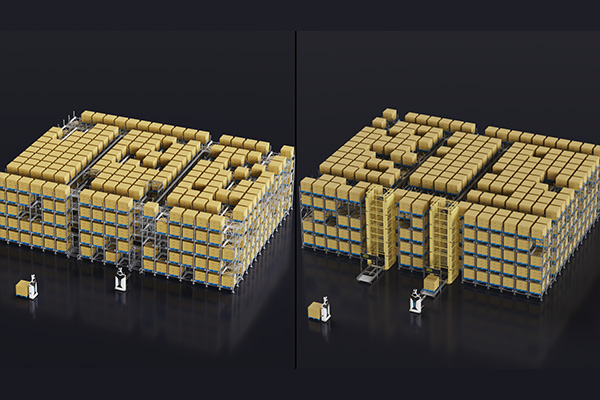
A four‑way shuttle system is not a standalone machine; it is a vertically integrated stack that includes the shuttle fleet, hoist, conveyor interface, and the software layer across WMS → WES → WCS → RCS. The advantage is tight coordination; the limitation is that a change in any layer can cascade. If the host WMS sends task‑priority formats that the WES interpreter does not recognize, the shuttle mission queue can stall even though every physical component is functional.
The software dependency also narrows the vendor lock‑in. The shuttle‑parking logic, battery‑swap scheduling, and inter‑shuttle collision‑avoidance algorithms are proprietary. If a warehouse wants to add shuttles from a second supplier three years later to take advantage of a lower price or newer model, those units will not interoperate on the same floor grid because the traffic‑management protocol is manufacturer‑specific. This limits competitive pressure over the life of the asset and makes subsequent fleet expansion entirely dependent on the original vendor’s product roadmap.
Physical integration with the building is equally rigid. The rack structure must mate precisely with the guide rails at the hoist interface, and the charging‑contact position is fixed to a 3‑mm tolerance. Existing warehouses that were not originally designed for ASRS often need structural reinforcement at the rack‑column footings, which adds 8 – 12 % to the total project cost and extends the installation timeline by several weeks; a point that many retrofit proposals gloss over.
Total Cost of Ownership: Hidden Expenses Beyond the Price Tag
The up‑front capital cost of a four‑way shuttle system is transparent enough, but the long‑term operating costs include line items that first‑time buyers rarely model correctly. Battery replacement is the largest of these. The 51.2 V/40 Ah packs typically deliver 2,500 – 3,000 cycles before their depth‑of‑discharge declines to the point where effective daily run time falls below the operational minimum. In a three‑shift operation, that translates into a pack replacement cycle of roughly 2.5 – 3 years. With packs costing several thousand dollars each and a fleet of 15 – 20 shuttles, that replacement wave creates a material capital expense that a simple payback calculation will miss.
Software licensing and annual support fees for the WMS/WES/WCS layer typically add 12 – 15 % to the annual operating budget, and those fees often escalate at renewal if the vendor includes version upgrades as mandatory rather than optional. Facilities that skip a version upgrade to save cost risk falling out of security‑compliance alignment with their IT policies, which then blocks them from connecting the shuttle system to the corporate network.
Choosing a System That Reduces Long‑Term Project Risk
Given the constraints, the most effective way to reduce risk is to structure the supplier‑qualification process around the specific physical and operational conditions of your warehouse, not around generic capability statements. I recommend requiring the vendor to provide a throughput‑simulation report that uses your actual SKU profile, pallet dimension range, and load‑weight distribution, rather than a pre‑packaged model with idealized pallets. The difference between a simulated result grounded in your data and one based on standard assumptions often exposes the gap between optimistic nameplate figures and realistic operational throughput.
Second, inspect reference sites that have been running for at least two years and ask to see the maintenance‑log summary, not just the uptime percentage. What you are looking for is the pattern of unscheduled interventions, the kind that interrupt the shuttle‑battery management and the rack‑interface troubleshooting. If the vendor cannot provide that visibility, the system’s long‑term reliability is an unknown you should price into your risk model.
Finally, insist that the proposal includes a lifecycle cost projection covering battery replacement, software updates, and a defined service‑level agreement for on‑site response. Without this, the initial price quote is incomplete. Our team at Zikoo includes these projections as a standard part of the engineering‑review package because a system that looks cost‑effective for the first three years becomes an operational liability if the maintenance costs are unbudgeted. If your current vendor proposal does not contain these three elements, ask for them before you sign.
Common Questions About Four‑Way Shuttle Limitations
Are four‑way shuttle systems suitable for high‑SKU mixed‑pallet operations?
They can be, but only when the WMS layer can dynamically assign storage locations based on velocity class. If every SKU is treated as equal and the shuttle fleet has to travel the full aisle length for a slow‑mover, the throughput per shuttle declines sharply. In practice, we recommend classifying SKUs into A/B/C tiers and limiting the shuttle fleet to managing A‑ and B‑class inventory, while C‑class items are handled by a separate slower‑moving system or remain in manual racking. Without that tiered approach, the cost per pallet‑move can quickly exceed the economic return.
What is the most overlooked maintenance cost in a four‑way shuttle installation?
It is almost always the replacement cycle of the drive‑wheel tyres. The polyurethane tread compounds used in these shuttles wear predictably, but the wear rate accelerates if the floor surface is not kept clean of dust and grit. A fleet that runs on a regularly swept floor can get 18 – 24 months of tyre life; a fleet in a dusty manufacturing environment may need replacements every 12 – 14 months. The part cost per wheel is modest, but the labour and the downtime for swapping a full fleet across 16 – 20 vehicles represent a significant recurring expense that rarely appears in the original budget.
Can a four‑way shuttle system be easily relocated to a different warehouse?
Relocation is possible but not economical for most users. The guide rails, charging plates, and hoist‑interface frames are embedded in the rack structure, which is designed for that specific building’s column grid. Disassembly, transport, and re‑certification of the rack structure for seismic or wind loading in a new location can cost 40 – 60 % of the original installation cost. In many cases, it is cheaper to specify a new rack‑and‑shuttle system for the new site and sell the used shuttles on the secondary market.
What are the key technical parameters to request from a four‑way shuttle manufacturer before comparing quotes?
At minimum, ask for the empty and loaded shuttle speed curves, the positioning accuracy under load, the ambient‑temperature operating range, the battery cycle‑life curve, and the specified floor‑flatness requirements. If a vendor cannot provide these five data points, they are likely not a manufacturer but a reseller, and you will have limited support if the system underperforms. For our projects, we include all of this in the technical datasheet before the commercial proposal is issued, because it forms the basis of the performance warranty.
How should I evaluate whether a four‑way shuttle system’s limitations make it unsuitable for my operation?
Start by mapping your three worst‑case operating days per year: the days when order volume, SKU mix, and labour availability all deviate farthest from the average. Run a simulation based on those days, not on average conditions. If the system can still achieve your required throughput without exceeding the shuttle fleet’s rated duty cycle, the limitations are manageable. If it cannot, you are buying headcount reduction on normal days and accepting service failure on the days that matter most. A supplier that offers to run that simulation before you commit is demonstrating more value than one that only shows you the average day. If your analysis suggests that throughput under peak conditions is borderline, share your SKU profile and daily order data with us at info@zikoo-int.com or reach us at (+86)-19941778955 for a detailed operational review, because the biggest limitation of any automation is selecting a system that was designed for someone else’s warehouse.
If you’re interested, check out these related articles:
Multi-Scenario Smart Adaptation: Zikoo’s Six-Way Shuttle Powers the Digital Transformation of Warehousing
Six-Way Shuttle: The Dual-Engine Solution for High-D


