


Procurement managers asking about four-way shuttle system ROI often hear promises of 18‑month paybacks from vendors, but the reality is rarely that simple. As a systems engineer who has configured these systems for cold storage, manufacturing, and e‑commerce facilities, I have seen ROI arrive in under two years, and I have seen it stretch beyond three. The difference does not come down to the equipment alone; it is how the system matches the warehouse profile, the software integration, and the operational ramp‑up. This article explains what actually determines the ROI timeline for a four‑way shuttle system, including the cost drivers, savings calculations, and the often‑overlooked variables that separate a fast return from a delayed one.
What Drives Four-Way Shuttle System ROI?
A four‑way shuttle system ROI is not a single number you pull from a brochure. It is the outcome of four interacting factors that vary significantly from one site to the next.
First, the warehouse profile. The physical dimensions, ambient temperature, pallet sizes, and SKU count all shape the system design. A dense, high‑bay cold storage facility with 1,200‑mm pallets behaves differently than a moderate‑height manufacturing warehouse handling 1,400‑mm heavy pallets. The more the system must be customized to fit the building, the more the upfront investment shifts.
Second, throughput requirements. ROI speeds up when the system can replace multiple manual shifts or multiple forklifts. If the four‑way shuttle system is only used for backup storage with low retrieval rates, the payback stretches. When it handles both inbound and outbound flows at high velocity, the labor displacement becomes immediate.
Third, software integration depth. A basic WCS that just routes shuttles to locations is fundamentally different from a full WES that dynamically re‑slots inventory, batches orders, and optimizes shuttle charging cycles. The latter can lift throughput by 20‑30% without adding hardware, compressing the ROI period. In our projects, the difference between a standard WCS deployment and a fully tuned WES often accounts for six to ten months of payback acceleration.
Fourth, operational ramp‑up. No four‑way shuttle system delivers nameplate performance from day one. Operators need training, inventory profiles need tuning, and software algorithms refine themselves with real data. A facility that plans for a three‑month ramp‑up will see ROI earlier than one that expects full output in two weeks.
Investment Costs: Where the Money Goes
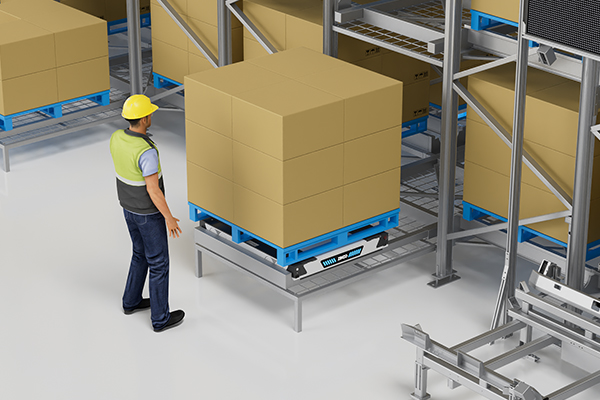
To calculate ROI, you need a clear picture of the total capital outlay, not just the shuttle price per unit. A complete four‑way shuttle system includes several cost layers that are often under‑communicated during initial quoting.
| Cost Category | Typical Share of Total Investment | Notes |
|---|---|---|
| Shuttles and elevators | 35–45% | R‑bot Four‑way Shuttles and H‑bot High‑Speed Elevators form the core handling pair. The number scales with throughput and storage depth. |
| Racking and steelwork | 20–25% | High‑density racking must match pallet tolerances and shuttle rail requirements. Cold storage environments add galvanized or stainless‑steel costs. |
| Software (WMS/WES/WCS/RCS) | 10–15% | The Zikoo PTP Smart Warehouse Software stack handles order management, execution, control, and robot coordination. Custom interface work increases this share. |
| Installation and commissioning | 10–15% | Includes on‑site labor, electrical infrastructure, networking, and safety systems. Sites with limited shutdown windows may require phased installation, adding cost. |
| Contingency and project management | 5–10% | Unforeseen structural modifications, permitting delays, and change orders. |
A mid‑size installation with 20 shuttles, 4 elevators, and 2,000 pallet positions typically falls into the $1.2M–$1.8M range, but I have seen variations of 30% just from warehouse geometry alone. If your facility requires the heavy‑duty R2000B shuttle for 1,400‑mm pallets, the per‑unit cost increases, but the load capacity often eliminates the need for a separate heavy‑duty lift truck line, offsetting part of that premium.
One overlooked cost is the electrical and network backbone. A shuttle system draws continuous power across multiple levels, and a poor Wi‑Fi or bus‑bar design can lead to latency issues that reduce throughput. In a cold storage project we delivered, investing an extra 8% in a robust low‑temperature power distribution system eliminated almost all charging‑related downtime, a decision that shortened the eventual ROI by nearly four months.
Savings That Improve ROI
The savings side of the equation is where most ROI calculations become optimistic. Real savings come from four areas, and their magnitude depends strongly on the pre‑automation baseline.
Labor is the largest line item. A site moving from three shifts of forklift operators to a single shift supervising automated operations can cut direct warehouse labor by 60–75%. At a manufacturing warehouse running 1,600 pallet movements per day, this alone can recover $250,000–$350,000 annually, depending on regional wage rates.
Space utilization is the next lever. Traditional VNA (very narrow aisle) forklift setups achieve about 35–45% floor utilization. A four‑way shuttle system with H‑bot elevators routinely reaches 70–85% because it eliminates most access aisles. For a 3,000‑m² warehouse, reclaiming 1,200 m² of storage space often avoids a facility expansion that would otherwise cost $400,000 or more.
Error reduction and product damage carry measurable savings that are easy to overlook. Manual pallet handling in high‑SKU environments produces mis‑picks and rack collisions. An automated shuttle system, working with scan‑confirmed put‑away, typically reduces picking errors to below 0.1%. In food and beverage distribution where a single mis‑pick can mean a rejected full pallet, the avoided cost often exceeds the annual software license fee.
Energy consumption is not neutral. Shuttle systems use electric drive, and in cold storage they effectively seal the storage area, reducing refrigeration load. A freezer facility running at -25°C may save 10–15% on energy once shuttles replace frequent door openings from forklifts. Those savings are modest as a percentage of total operating cost, but they flow directly to the bottom line every month and accelerate ROI.
Real-World ROI Timelines by Warehouse Profile
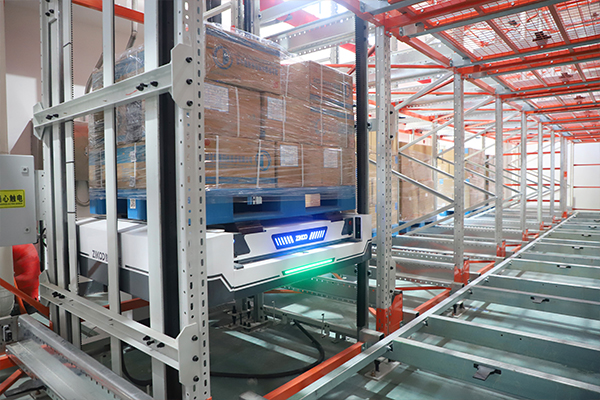
I group ROI timelines into three profiles based on what we see during system commissioning. These are not theoretical models; they reflect actual operating curves after the ramp‑up period.
| Warehouse Profile | Typical ROI Range | Key Driver |
|---|---|---|
| High‑throughput e‑commerce distribution (multi‑shift, high labor cost) | 1.5–2.5 years | Labor displacement and order accuracy. High velocity compresses payback. |
| Cold storage and temperature‑controlled warehouses | 2–3 years | Energy savings and space density. The premium for cold‑rated shuttle batteries (Zikoo’s -25°C lithium pack, for example) extends initial cost but pays back through reliability. |
| Manufacturing raw material and finished goods storage (moderate throughput) | 2.5–3.5 years | Space consolidation and production synchronization. ROI is slower because the system often runs single‑shift, but the avoidance of a new building can tip the calculation. |
These ranges assume a well‑configured WES and a competent maintenance team. Without those, add 6–12 months to each bracket. I have seen a cold storage project where the shuttle system was correctly sized, but the WCS was left at factory defaults, resulting in poor slotting logic that kept throughput 18% below target for the first year. Once the WES algorithms were tuned, the ROI trajectory shifted meaningfully.
The fastest ROI I have observed was a 19‑month payback in a high‑SKU e‑commerce facility where the four‑way shuttle system replaced a block‑stacking operation that required 24 operators. The combination of labor reduction, space reclamation, and order accuracy improvements converged quickly because the operation was already strained beyond its manual capacity.
How to Accelerate ROI on a Four-Way Shuttle System
Shortening the payback period is not about buying cheaper hardware; it is about removing the delays that suppress throughput early in the system’s life.
Phase your implementation around your highest‑pain area first. Installing shuttles in the finished goods section while leaving raw material storage for a second phase concentrates savings where they materialize fastest. The cash flow from phase one can fund phase two, effectively compressing the overall ROI calculation.
Invest in operator training before the system goes live. A week of hands‑on training with the PTP software interface, shuttle manual recovery procedures, and exception handling yields a noticeably smoother ramp‑up. In one installation, training 12 operators over two weeks before commissioning cut the ramp‑up period from an expected 12 weeks to 7 weeks, directly accelerating revenue‑generating output.
Schedule preventive maintenance from day one, not after the first failure. A shuttle that drops out of service during peak picking forces manual fallback, which erodes the daily savings. Four‑way shuttle systems are electro‑mechanical devices that benefit from regular lithium battery monitoring, rail cleaning, and sensor calibration. A half‑shift of scheduled downtime per week almost always costs less than the production loss from an unplanned shutdown.
Why Your WMS/WCS Integration Can Make or Break ROI
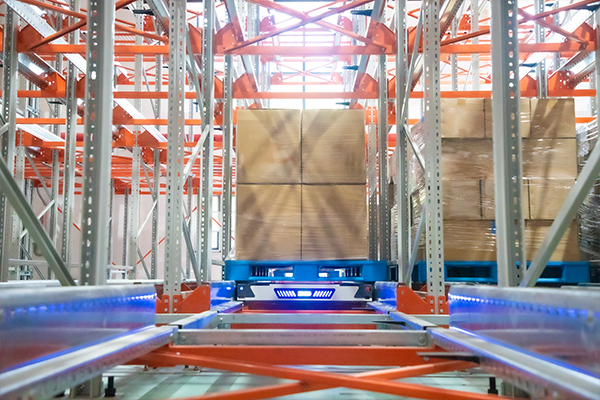
Most ROI discussions focus on hardware, but the software layer is where systems deliver or disappoint. The gap between a basic control system and an actively optimized execution platform is the difference between a shuttle that moves pallets and a system that makes warehouse decisions.
A modern WES organizes slotting dynamically, placing fast movers near drop‑off points and grouping SKUs that are often picked together. In a 3PL warehouse where the stock profile changes monthly, static slotting leaves capacity stranded. With dynamic re‑slotting driven by order history, the same shuttle fleet can capture 15–20% more throughput without adding shuttles, directly shortening the ROI timeline.
Real‑time visibility also matters. When the WCS logs every shuttle movement, every charge cycle, and every elevator transfer, you gain the data to identify bottlenecks before they become constraints. In a recent project, the software flagged a recurring four‑second delay at a specific elevator transfer point. The fix was a simple timing parameter adjustment, but without the data, that delay would have silently consumed nearly 90 minutes of throughput per week—compounding into a meaningful drag on ROI.
If your current procurement process treats software as a checkbox item, you are almost certainly stretching the ROI period further than necessary. The teams that achieve sub‑two‑year payback periods almost always run a deeply integrated software stack and dedicate a process engineer to continuous tuning during the first year.
If you are building a business case for a four‑way shuttle system and need a realistic ROI projection based on your actual warehouse dimensions, pallet types, and throughput requirements, send your project details to info@zikoo-int.com or call (+86)-19941778955. Our engineering team can provide a cost model grounded in your specific conditions, not a generic brochure.
Common Questions About Four-Way Shuttle System ROI
Does a four‑way shuttle system pay back faster than a stacker crane AS/RS?
In most high‑density applications, yes. Stacker cranes require wider aisles and limit the storage depth because each crane serves a single aisle. A four‑way shuttle system with elevators can serve multiple levels and multiple lanes from the same set of hardware, typically delivering 20–30% more storage positions per square meter. The capital cost per pallet position is often lower, and the labor savings are similar. The trade‑off is that shuttle systems benefit more from well‑tuned software; poorly managed, they lose more efficiency than a mechanically simpler stacker crane.
How long before a four‑way shuttle system becomes operationally stable?
Operational stability is not the same as ROI. A system usually reaches design throughput within 3–4 months, but the first 8–12 weeks are a learning period. During that time, operators are still developing muscle memory for exception recovery, and the WES is refining slotting rules based on live data. Planning for a 3‑month ramp‑up in your financial model prevents disappointment. Systems that are phased in section‑by‑section tend to stabilize faster because each phase brings a smaller scope of new behavior.
Can ROI be accurately predicted before installation?
A credible pre‑installation ROI model requires at least the following inputs: exact warehouse dimensions, current and projected pallet throughput, current labor cost per pallet moved, the number of shifts, and the specific pallet sizes and weights. Without these, a projection is a guess. When we evaluate a site, we model the system in simulation software using the actual SKU profile and order pattern. The resulting ROI estimate typically comes within 10–15% of the realized figure. For any warehouse considering a four‑way shuttle system investment, a simulation‑backed projection is the difference between a budget request that gets approved and one that gets challenged.
What kills ROI on an otherwise well‑designed shuttle system?
The three most common ROI killers are insufficient operator training, inadequate preventive maintenance, and software left at factory defaults. Each of these can add 12 months or more to the payback period. I have also seen projects where the shuttle fleet was sized for peak throughput but the elevator capacity was not, creating a bottleneck that capped the system output. That type of imbalance is avoidable with proper simulation during the design phase.
Is a four‑way shuttle system a safe long‑term investment given how fast warehouse technology changes?
A correctly designed four‑way shuttle system typically operates for 10–15 years with mid‑life battery replacements and software upgrades. The racking and rail infrastructure lasts even longer. The modular nature of the shuttle fleet means you can add shuttles or elevators as throughput grows, so the system scales with the business rather than becoming obsolete. The software layer, particularly a modern WES/WCS platform, receives continuous improvements that extend the useful life of the hardware. If your facility plans for expansion from the start, the long‑term ROI becomes favorable even if the initial payback period stretches slightly. Share your growth projections when you reach out, and we will help you size a system that supports the next decade, not just the next quarter.
If you’re interested, check out these related articles:
Six-Way Shuttle Powers Dense Storage: Breaking Space Limitations
Six-Way Shuttle Empowers 3PL Providers to Build Next-Generation Smart Logistics Hubs
Software-Driven Hardware: Six-Way Shuttle Maximizes Warehouse Efficiency
Stacker Crane vs Four-Way Shuttle: Which Fits Your ASRS Warehouse Best


