


Warehouses today face a squeeze from two directions: costs keep climbing while customers expect faster delivery. The gap between what traditional systems can handle and what the market demands grows wider each year. Bottlenecks appear where they shouldn’t, and inefficiencies compound. Automated storage and retrieval systems have moved from nice-to-have to necessary for operations that want to stay competitive.
How Four Way Shuttles Create Dense Storage Configurations
Four way shuttles change the fundamental math of warehouse storage. The R-bot Four-way Shuttle from Zikoo moves independently in all four directions—forward, backward, left, and right—which opens up pallet storage configurations that fixed-aisle systems simply cannot match. When retrieval equipment no longer needs dedicated travel lanes, cubic space utilization jumps dramatically. Storage density increases of up to 80% over conventional pallet racking become achievable. The R-bot body measures just 125 mm thick, which means storage lanes can run narrower without sacrificing access.
The R-bot Four-way Shuttle comes in several models to fit different pallet dimensions and weight requirements.
| Model | Rated Load (kg) | Body Dimensions (mm) | Pallet Sizes Supported (mm) |
|---|---|---|---|
| Standard Type | 1200 | L1000 × W972 × H125 | 1200 × 800–1000 |
| American Type | 1200 | L1192 × W840 × H125 | 1016 × 1219 |
| Japanese Type | 1500 | L1192 × W900 × H125 | 1100 × 1100 |
| Heavy-duty | 1500 | L1192 × W972 × H125 | 1200 |
| Heavy-duty Large Pallet | 2000 | L1250 × W1300 × H150 | 1400 |
This range of specifications means the R-bot fits across industries and goods types. The heavy-duty large pallet option extends applications even further. Better space utilization shows up directly in operational costs and throughput numbers.
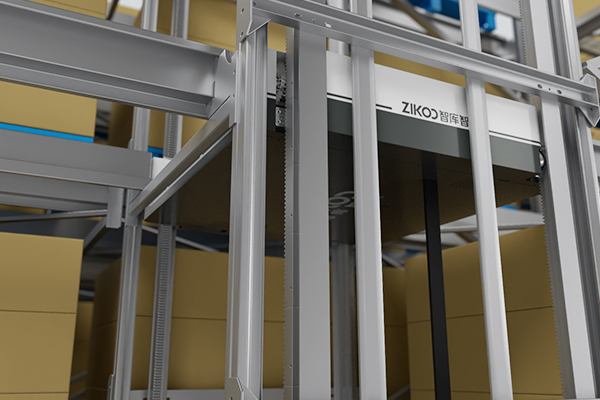
Faster Material Flow Through Independent Movement
four-way shuttle systems speed up material flow because they don’t follow fixed paths. A shuttle navigates directly to any storage location rather than waiting for crane movements or conveyor sequences. Travel time drops. Bottlenecks disappear. Cycle times for both receiving and shipping shrink noticeably. The R-bot Four-way Shuttle runs at 1.6 m/s empty and 1.2 m/s loaded on standard models.
Faster movement translates to higher order fulfillment rates, which matters most for e-commerce and distribution operations. The R-bot’s multi-shuttle collaborative operation amplifies throughput further. Multiple units work in parallel, handling tasks simultaneously. Adding the H-bot Vertical Bidirectional Shuttle creates a six-way shuttle system that handles vertical transportation too. Goods move quickly and land precisely where they need to be, which keeps delivery schedules on track.
Precise Inventory Tracking Through Automation
Automation removes the human error factor from inventory management. Each R-bot Four-way Shuttle operates within defined storage locations and generates real-time data on where inventory sits and how it moves. This level of detail keeps stock records accurate. The systems integrate with warehouse management software (WMS) and warehouse execution systems (WES) to provide full inventory visibility.
Stock levels, item locations, and rotation schedules become easier to monitor and manage. Manual counting errors and discrepancies fade away. For challenging environments like cold chain food storage or pharmaceutical warehouses, the R-bot offers specialized configurations. These include -25℃ low-temperature lithium batteries and special PCBA coatings for high-humidity conditions. Data integrity and operational reliability hold up even when conditions get difficult. Accurate inventory records reduce losses, optimize stock levels, and support better demand forecasting.
For more on warehouse software optimization, see 《PTP Intelligent Warehouse Software Empowers Enterprises for Smart Upgrades》.
Reducing Labor Costs While Improving Safety
automated material handling solutions address two persistent problems: labor costs that keep rising and workers who are harder to find. Four way shuttles take over repetitive, physically demanding work like pallet retrieval and placement. Manual labor requirements for these tasks drop significantly. Workers can shift to quality control, order verification, or customer service roles where human judgment adds more value. Productivity and job satisfaction both tend to improve.
Injury rates and turnover also decline when heavy machinery interaction decreases. The R-bot Four-way Shuttle operates autonomously, which creates a safer floor environment. The upfront automation investment gets offset by long-term savings on wages, benefits, and training. Labor shortage risks become less threatening. Four way shuttles support a workforce model that works better over time.
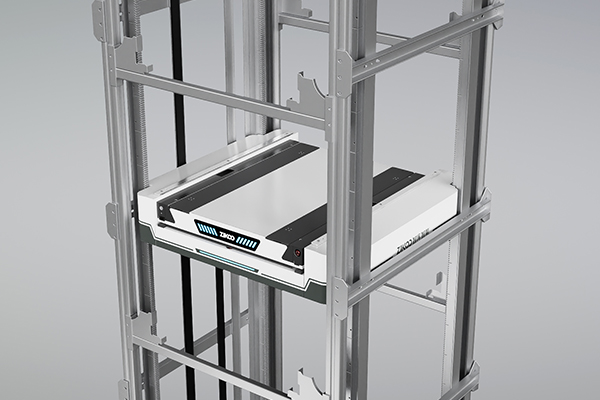
Modular Design That Grows With Demand
four way pallet shuttle systems scale without the pain of traditional fixed automation. Market demands shift. Product lines change. Adding more R-bot Four-way Shuttles or expanding racking infrastructure happens without tearing everything apart. The R-bot works collaboratively and integrates with other systems, including the H-bot Vertical Bidirectional Shuttle to form a Six-way shuttle configuration.
This flexibility protects the investment over time. Storage capacity and throughput can adjust without disrupting what’s already running. Rapid growth and seasonal demand swings both become manageable. The modular approach fits various applications: dense e-commerce storage, cold chain logistics, manufacturing operations.
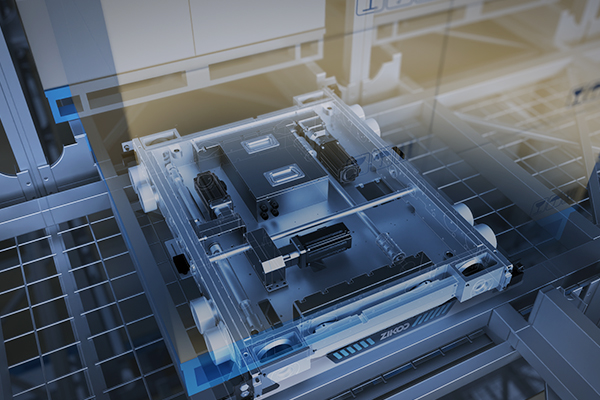
Building an Integrated Warehouse Ecosystem
Four way shuttles perform best when they fit into a coordinated warehouse ecosystem. Software orchestration makes the difference between good results and great ones. Zikoo uses PTP Smart Warehouse Software, which combines WMS (Warehouse Management System), WES (Warehouse Execution System), WCS (Warehouse Control System), and RCS (Robot Control System). This platform coordinates R-bot Four-way Shuttles and H-bot Vertical Bidirectional Shuttles together.
Real-time monitoring, task allocation, and route optimization keep all automated equipment running efficiently. Idle time drops. Throughput climbs. Support throughout the integration process helps ensure smooth transitions and strong performance. The goal is a cohesive system where every component contributes to operational results.
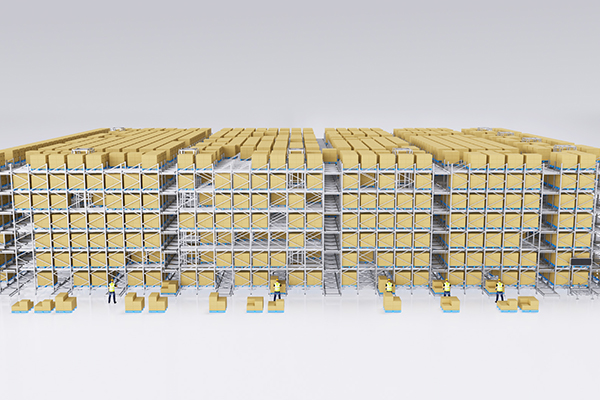
Partner with Zikoo for Advanced Warehouse Automation
Zikoo Smart Technology Co., Ltd. brings pallet-to-person robotics and integrated software solutions to warehouse operations that need improvement. Four way shuttles and intelligent storage systems get tailored to specific operational requirements. Reach out to discuss what automation could do for your facility.
Email: info@zikoo-int.com
Phone: (+86)-19941778955
Frequently Asked Questions About Four Way Shuttles
What are the key benefits of implementing a four way shuttle system in a modern warehouse?
A four-way shuttle system delivers several measurable advantages. Space utilization improves, with storage density gains reaching up to 80%. Throughput accelerates and cycle times shrink, which boosts order fulfillment capacity. Inventory accuracy improves through real-time tracking. Labor costs drop as automation handles repetitive tasks, freeing workers for activities that benefit from human judgment.
How does a four way shuttle compare to other automated storage solutions?
Four way shuttles offer more flexibility and higher storage density than traditional AS/RS cranes or conventional pallet racking. Cranes operate on fixed axes while shuttles move in multiple directions and access any storage location directly. This modularity makes scaling easier and adapts better to changing warehouse layouts. High-density, high-throughput environments where space costs matter see the strongest results.
What factors should be considered when integrating a four way shuttle into an existing warehouse infrastructure?
Integration planning needs to address several areas. Facility layout analysis identifies potential modifications. Inventory profiles and throughput requirements shape system sizing. Software integration with WMS/WES/WCS/RCS systems requires attention. Scalability for future growth and compatibility with other automated equipment both affect long-term success.


