


Warehouses that still rely on fixed aisles and single-axis retrieval systems are leaving capacity on the table. Four-way shuttle technology changes that equation entirely, giving operations the flexibility to access any storage location without the constraints of traditional ASRS layouts. The practical impact shows up in tighter storage configurations, faster picking cycles, and systems that can scale without rebuilding from scratch.
How Four Way Shuttle Technology Actually Works
Four-way shuttles are compact robots that travel both horizontally and perpendicularly across racking structures. That multi-directional movement is what sets them apart from conventional automated storage and retrieval systems, which typically run on a single plane and require dedicated aisles or transfer points to reach different locations.
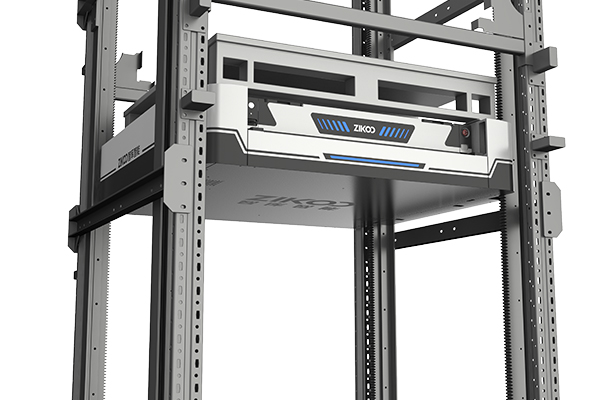
The operational logic centers on goods-to-person delivery. Instead of workers walking to inventory, the shuttle brings pallets or loads directly to picking stations. Zikoo’s R-bot Four-Way Shuttle illustrates what current hardware can do: a 125mm slim body, load capacity up to 1.5 tons, and full four-way movement with autonomous handling. Pair it with an H-bot vertical bidirectional shuttle and the system gains six-way functionality, adapting to varied palletized storage and picking requirements.
Storage Density Gains That Actually Matter
The real value of four-way shuttles shows up in how much usable space they recover. Traditional aisle requirements shrink dramatically when shuttles can approach racks from multiple directions. That translates to tighter configurations and more vertical storage within the same footprint.
In optimized layouts, storage capacity increases often exceed 30%. For operations paying premium rates per square meter, that density improvement directly reduces real estate costs while boosting what the facility can handle.
Throughput Improvements and Faster Order Cycles
Independent shuttle movement accelerates the entire fulfillment sequence. Items reach picking stations faster because shuttles take direct paths rather than waiting for single-axis systems to cycle through queued requests.
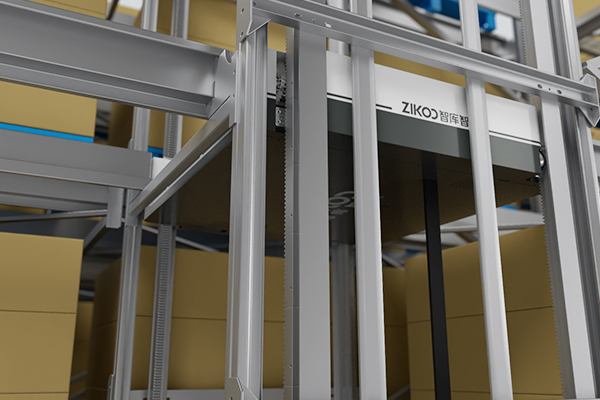
Integration with warehouse execution systems, management systems, and control systems keeps everything synchronized. Zikoo’s PTP Smart Warehouse Software handles the coordination layer, optimizing material flow so shuttles, conveyors, and workstations operate as a unified system rather than isolated components.
What Benefits Should Operations Expect
Four-way shuttle systems deliver measurable improvements across several metrics. Throughput increases because shuttles handle high volumes with precision and minimal idle time. Labor costs drop as automation takes over storage and retrieval tasks that previously required manual intervention. Inventory accuracy improves through precise location tracking for every item movement. Fewer errors, more reliable operations.
Integration With Existing Infrastructure
These systems work with what most warehouses already have. Shuttles connect to different racking configurations, conveyor lines, and other automated handling equipment. The PTP Smart Warehouse Software provides the control layer that coordinates communication across all automated components.
That compatibility matters for phased implementations. Operations can add shuttle capacity incrementally without shutting down existing workflows or committing to a complete infrastructure replacement upfront.
Scaling Without Starting Over
The modular design of four-way shuttle systems makes expansion straightforward. Adding shuttles or extending racking structures increases capacity without requiring new building footprints or major structural changes.
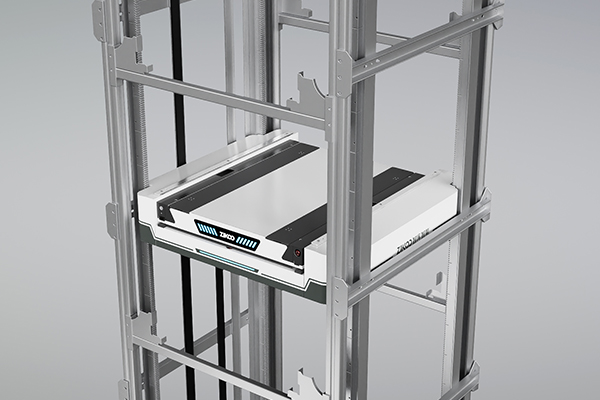
This flexibility proves valuable during seasonal peaks or when inventory profiles shift. Resources can be reallocated dynamically rather than sitting idle during slower periods or creating bottlenecks during surges.
For a deeper look at how these systems fit into broader warehouse automation strategies, 《Smart Storage Revolution: Comprehensive Overview of Four-Way Shuttle Systems for Automatic 3D Warehouses》 covers the technical foundations in more detail.
Calculating the Financial Case
ROI for shuttle implementations depends on several factors working together. Labor savings from automation typically represent the largest component, followed by throughput gains that let existing facilities handle more volume. Reduced inventory errors cut costs that often go untracked in manual operations. Space optimization contributes through lower real estate expenses or deferred expansion.
Payback periods generally fall between 18 and 36 months, varying with operational scale and specific warehouse conditions. A typical e-commerce operation might see labor costs drop 25% while storage capacity increases 50%.
| Feature | Manual Warehousing | Four-Way Shuttle System |
|---|---|---|
| Storage Density | Low | High |
| Throughput | Moderate | High |
| Labor Costs | High | Low |
| Inventory Accuracy | Moderate | High |
| Scalability | Limited | High |
| Error Rate | Higher | Lower |
Frequently Asked Questions About Four Way Shuttle Systems
How do four-way shuttles differ from traditional automated storage and retrieval systems?
The core difference is movement flexibility. Four-way shuttles access any rack location directly through multi-directional travel. Traditional ASRS typically operates on a single axis, requiring more complex transfer mechanisms or dedicated aisles to reach different storage positions. That flexibility improves both goods-to-person efficiency and achievable storage density.
What types of goods work best with four-way shuttle automation?
These systems suit warehouses handling high SKU counts with varying product dimensions and significant throughput demands. Cartons, totes, and trays are ideal load types. E-commerce fulfillment centers, retail distribution operations, and manufacturing logistics all fit the profile well.
Can four-way shuttles operate autonomously within a warehouse environment?
Advanced shuttles like Zikoo’s R-bot run autonomously under software guidance. Warehouse management, execution, and control systems coordinate storage, retrieval, and replenishment tasks with minimal human involvement. The automation handles routine operations while workers focus on exceptions and higher-value tasks.
Revolutionize Your Warehouse Operations with Zikoo Smart Technology
Discover how Zikoo Smart Technology’s R-bot Four-Way Shuttle, integrated with our PTP Smart Warehouse Software, can transform your intralogistics. Optimize space, accelerate fulfillment, and achieve unparalleled efficiency. Contact Zikoo Smart Technology Co., Ltd. today for a personalized consultation and explore our comprehensive suite of pallet-to-person robotics solutions. Visit us at 4F, Building 4, No. 170-1 Software Avenue, Yuhuatai District, Nanjing, China, email info@zikoo-int.com, or call (+86)-19941778955.


