


Supply chains keep getting harder to manage, and the pressure to automate isn’t letting up. Warehouse operations that worked five years ago now struggle to keep pace with demand. The question isn’t whether to automate anymore—it’s how to do it without wasting capital on systems that don’t fit your actual workflow. Four-way shuttle technology has emerged as one of the more practical answers, particularly for operations dealing with palletized goods and tight space constraints.
Space Utilization That Actually Makes a Difference
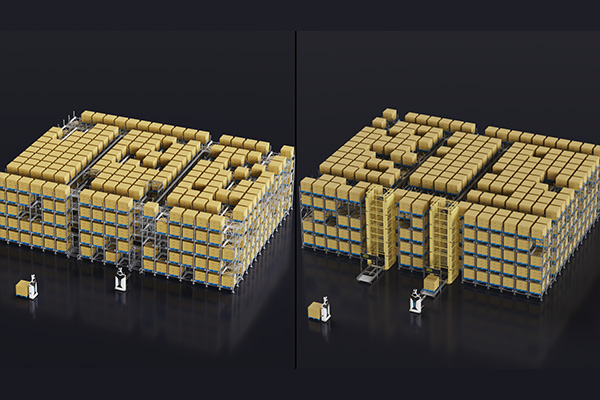
Four-way shuttle systems change how warehouses think about storage density. The omnidirectional movement capability allows shuttles to access deep lane storage configurations that traditional systems simply can’t reach efficiently. In practice, this translates to space savings that often exceed 30% in high-density applications—not a theoretical number, but what operations actually achieve when the layout is designed properly.
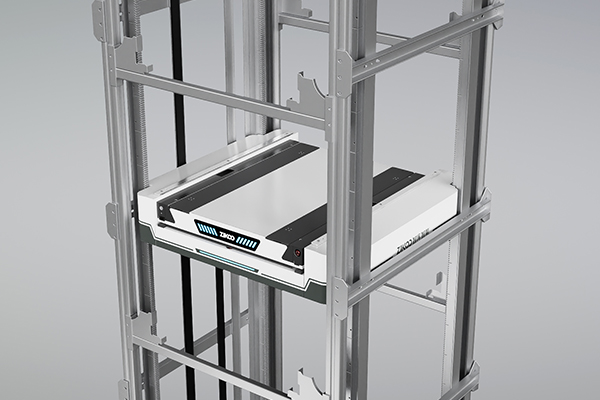
The R-bot Four-way Shuttle handles Dense storage scenarios by working both vertical and horizontal space simultaneously. Deep lane access means fewer aisles, which means more room for actual storage. The math is straightforward, but the execution requires understanding how your specific inventory moves.
What are the core benefits of integrating a four way shuttle system?
The benefits stack up across multiple operational areas. Throughput increases because shuttles don’t take breaks and don’t slow down during peak periods. Labor costs drop because you need fewer people doing repetitive retrieval tasks. Inventory accuracy improves because automated systems track every movement without the errors that come from manual data entry.
Safety improvements matter too. Automated systems keep people away from heavy machinery and reduce the forklift traffic that causes most warehouse injuries. The R-bot Four-way Shuttle provides flexible four-way movement combined with intelligent autonomous handling, which addresses all these concerns in a single platform.
Throughput Gains That Show Up in Order Fulfillment
Four-way shuttles accelerate throughput by fundamentally changing how items reach picking stations. Goods-to-person workflows eliminate the walking that eats up most of a picker’s time. Instead of sending people into the racks, the racks come to the people. Parallel processing capabilities mean multiple orders move through the system simultaneously, cutting fulfillment cycles significantly.
The speed improvements are substantial. Operations that switch from manual picking often see their rates double or better. The numbers vary based on product mix and warehouse layout, but the direction is consistent.
| System Type | Picking Speed (items/hour) | Labor Requirement | Error Rate |
|---|---|---|---|
| Manual Picking | 50-100 | High | Moderate |
| Four-Way Shuttle | 200-400 | Low | Low |
| Automated Picking | 300-600 | Very Low | Very Low |
Inventory Visibility That Prevents Problems
Knowing exactly what you have and where it sits makes everything else easier. Four-way shuttle systems provide real-time inventory tracking that eliminates the guesswork. Stockouts become rare because the system flags low inventory before it becomes a problem. Errors drop because every movement gets recorded automatically.
The integration piece matters here. These systems need to talk to your Warehouse Management Systems, Warehouse Execution Systems, and Warehouse Control Systems without creating data conflicts. The PTP Smart Warehouse Software handles this integration, keeping everything synchronized across platforms. When the data flows cleanly, the operational benefits follow.
Building for Growth Without Starting Over
Modular design means you don’t have to predict your future perfectly. Four-way shuttle systems scale by adding shuttles or expanding rack configurations. Your initial investment doesn’t become obsolete when demand increases. The system grows alongside the business rather than forcing expensive replacement projects.
This flexibility protects long-term return on investment. Operations change, product mixes shift, and seasonal demands fluctuate. A system that adapts to these changes delivers value for years instead of becoming a constraint.
For more on getting started with this technology, check 《Smart Warehousing Starts Here: Cost-Effective Four-Way Shuttle Systems》.
How does a four way shuttle compare to other warehouse automation solutions?
four-way shuttle systems occupy a specific niche that other automation approaches don’t fill as well. Traditional ASRS systems work in fixed aisles, which limits flexibility and creates single points of failure. AGVs handle floor-level transport effectively but struggle with high-density storage because they can’t access racks directly. Forklifts remain useful for certain tasks but can’t match shuttle speed, accuracy, or safety in dense storage environments.
The choice depends on what your operation actually needs. Zikoo’s robot lineup includes the R-bot and H-bot, each designed for different operational requirements. The right solution matches your specific workflow rather than forcing your workflow to match the technology.
| Feature | Four-Way Shuttle System | Traditional ASRS | AGVs | Manual Forklifts |
|---|---|---|---|---|
| Space Utilization | High | High | Moderate | Low |
| Flexibility | High | Moderate | High | High |
| Throughput | High | High | Moderate | Low |
| Scalability | High | Moderate | High | Low |
| Initial Investment | Moderate-High | High | Moderate | Low |
| Operational Cost | Low | Moderate | Moderate | High |
Getting Implementation Right the First Time
Deployment success depends on preparation more than technology. A thorough assessment of your existing warehouse layout reveals constraints that affect system design. Understanding how your current workflows actually function—not how they’re supposed to function—prevents expensive adjustments after installation.
Integration with existing IT infrastructure requires attention early in the process. WMS, WES, and WCS systems need to communicate with the shuttle system cleanly. The PTP Smart Warehouse Software provides an integrated platform for managing these connections, but the planning work happens before any equipment arrives. Getting this right from the start avoids the operational disruptions that plague poorly planned implementations.
What factors should be considered when implementing a four way shuttle system?
Start with facility assessment. Structural limitations, ceiling heights, floor conditions, and existing equipment all affect what’s possible. Data analysis comes next—understanding your actual throughput requirements, storage configurations, and order patterns determines system sizing.
Software compatibility deserves serious attention. Seamless integration with existing systems prevents the data silos that undermine automation benefits. Working with a vendor that handles the full scope from design through deployment reduces the coordination problems that arise when multiple parties share responsibility. The holistic approach ensures that all the pieces work together rather than creating new problems while solving old ones.
Frequently Asked Questions About Four Way Shuttles
How do four way shuttles enhance picking accuracy and speed?
four-way shuttle systems improve accuracy through precise positioning that eliminates the location errors common in manual operations. Real-time inventory data means pickers always know exactly what they’re handling. Speed improvements come from goods-to-person workflows that eliminate travel time. The combination of accurate positioning and reduced human handling cuts errors while accelerating fulfillment.
What kind of return on investment can be expected from a four way shuttle system?
ROI comes from multiple sources: lower labor costs, better space utilization, reduced error rates, and higher throughput. Most operations see payback periods between 2-4 years, though this varies based on scale, labor costs in your region, and how much improvement your current operations need. The larger the gap between current performance and what automation enables, the faster the payback.
Are four way shuttles suitable for all types of warehouse operations?
These systems work best for high-density storage with palletized goods and operations that need high throughput. E-commerce fulfillment, manufacturing supply chains, and cold chain logistics all benefit significantly. Smaller operations with limited SKU counts or very low throughput requirements might find simpler solutions more cost-effective. The fit depends on your specific warehouse dimensions, product characteristics, and operational demands.
Optimize Your Warehouse with Zikoo Robotics
Unlock the full potential of your warehouse operations with Zikoo’s advanced pallet-to-person robotics and intelligent software solutions. Our team is ready to design a tailored automation strategy that meets your specific efficiency goals. Contact us today to discuss your needs.
Email: info@zikoo-int.com
Phone: (+86)-19941778955


