


High-SKU warehouses run into problems that standard storage methods cannot solve efficiently. When product lines grow into thousands of distinct items, each with different dimensions, turnover rates, and handling requirements, the operational math changes. Four-way shuttle systems address this directly by combining storage density with retrieval flexibility in ways that fixed-aisle automation cannot match.
Why High-SKU Warehouses Break Conventional Storage Logic
A warehouse with 500 SKUs and a warehouse with 5,000 SKUs are not the same operation scaled up. The complexity multiplies non-linearly. Each additional product type introduces slotting decisions, picking path calculations, and inventory accuracy risks that compound across the facility.
The core issues show up in predictable places. Inventory accuracy degrades because tracking systems designed for lower complexity cannot maintain precision across thousands of locations. Mispicks increase, and the cost of each error extends beyond the immediate correction into customer relationship damage and return processing overhead. Space constraints tighten as product catalogs expand faster than facilities can accommodate them. Manual picking becomes progressively less viable because travel distances grow and the cognitive load on pickers increases with every new SKU added to their routes.
What makes this particularly difficult is that high-SKU environments rarely have uniform demand patterns. Some products move daily, others sit for months, and the ratio shifts seasonally. Static slotting strategies that work in January fail by March. The warehouse needs a storage system that can adapt to these shifts without requiring constant manual reorganization.
How Four-Way Movement Changes the Storage Equation
Traditional shuttle systems move in two directions within fixed aisles. Four-way shuttles eliminate that constraint by navigating both horizontally and vertically across the racking structure, moving between aisles at any level rather than being locked into a single lane.
This capability matters because it enables dynamic storage allocation. Any shuttle can reach any location, which means products do not need to be pre-assigned to specific zones based on which shuttle serves that area. The system can place incoming inventory wherever space exists and retrieve it based on real-time demand, not static slotting rules.
The practical effect is that storage density increases while retrieval times decrease. Deep lane storage becomes viable for slow-moving SKUs without creating accessibility problems, because the same shuttles that handle fast-moving items can reach deep positions when needed. The system adapts to demand patterns rather than forcing the operation to work around fixed infrastructure limitations.
I have seen this play out in facilities where the shift to four-way shuttle systems produced measurable results within months. One e-commerce operation facing severe space constraints and picking error rates implemented a high-density automated solution and achieved a 40% increase in storage capacity within the existing footprint. Picking errors dropped 25% in the first six months. The flexibility to handle diverse, fast-moving inventory without constant manual intervention was the determining factor.
Density and Throughput Gains in Practice
The space utilization advantage of four-way shuttle systems comes from their ability to operate in configurations that would be impractical for manual handling or simpler automation. Multi-level operation with deep lane storage condenses inventory into a smaller footprint, which delays or eliminates facility expansion costs.
Throughput improvements follow from the coordination capabilities. Multiple shuttles operating simultaneously within the same racking structure can be orchestrated to minimize congestion and ensure goods arrive at picking stations precisely when needed. Idle time at workstations drops because the system anticipates demand rather than reacting to it.
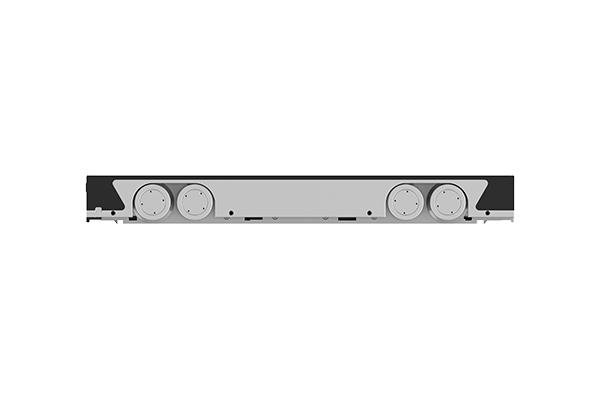
The R-bot Four-Way Shuttle from Zikoo Smart Technology demonstrates these principles in its specifications. With a body thickness of only 125 mm and load capacity up to 1.5 tons, it fits into dense racking configurations while handling substantial pallet weights. The system supports multi-shuttle collaborative operation, and when integrated with vertical bidirectional shuttles like the H-bot, it achieves six-way movement capability across the storage structure.
Here is a comparison of key R-bot Four-Way Shuttle models:
| Model | Rated Load | Pallet Size (mm) | Empty Speed (m/s) | Loaded Speed (m/s) |
|---|---|---|---|---|
| R1200B | 1200 kg | 1200 × 800–1000 | 1.6 | 1.2 |
| R1200A | 1200 kg | 1016 × 1219 | 1.6 | 1.2 |
| R1500J | 1500 kg | 1100 × 1100 | 1.6 | 1.2 |
| R2000B | 2000 kg | 1400 | 1.35 | 1.0 |
The speed differential between empty and loaded operation reflects the system’s optimization for real-world conditions. Shuttles move faster when repositioning empty, which reduces cycle times during periods of high retrieval activity.
Integration Without Infrastructure Overhaul
A common concern with warehouse automation is the disruption required to implement it. Four-way shuttle systems address this through modular design that allows phased deployment. The racking structure can be installed in sections, shuttles added incrementally, and integration with existing warehouse management systems completed through standard interfaces.
This matters for facilities that cannot afford extended downtime or that need to prove ROI before committing to full-scale implementation. A phased approach allows the operation to continue running while automation expands into additional zones. The learning curve for operations staff also becomes more manageable when changes happen incrementally rather than all at once.
Zikoo’s PTP Smart Warehouse Software suite handles the coordination layer, managing shuttle movements, inventory positioning, and order fulfillment optimization. The software integrates with existing WMS and WES platforms, which means the automation layer can slot into current operational workflows rather than requiring a complete system replacement.
If your facility is evaluating automation options but concerned about integration complexity, it is worth discussing the specific interface requirements and phasing options before committing to a timeline.
Where Four-Way Shuttles Fit in the Broader Automation Picture
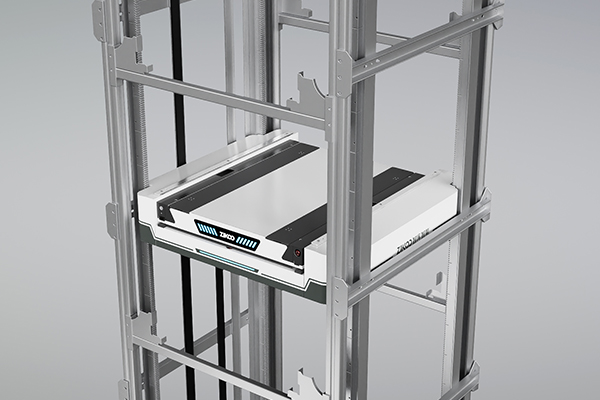
Four-way shuttle systems work best as part of a coordinated automation strategy rather than as standalone solutions. The vertical movement capability of the H-bot shuttle complements the horizontal flexibility of the R-bot, creating a six-way spatial network that maximizes dense storage utilization. The U-bot Omnidirectional Stacking Robot extends the system’s reach into narrow aisle scenarios, with lifting heights up to 8 meters and maneuverability that fixed-path equipment cannot match.
The strategic advantage comes from matching automation capabilities to specific operational requirements. Cold storage facilities, for example, benefit from shuttle systems engineered with components rated for sub-zero operation. E-commerce fulfillment centers with high order velocity need the throughput optimization that multi-shuttle coordination provides. The same underlying technology adapts to different environments through configuration rather than custom engineering.
The labor cost reduction is measurable, but the service level improvement often matters more for competitive positioning. Faster, more accurate order fulfillment translates into customer retention and the ability to compete on delivery speed without proportional cost increases.
Frequently Asked Questions
Are four-way shuttle systems only for new warehouse builds?
No. The modular design allows installation into existing facilities without complete infrastructure replacement. Phased implementation is standard practice, with automation expanding into additional zones as the operation validates results and budget allows. Many implementations start with a single high-priority area and scale from there.
What is the typical ROI for implementing a four-way shuttle system?
Payback periods generally fall in the 2-4 year range, driven by labor cost reduction, storage density gains, and throughput improvements. The specific timeline depends on current operational costs, facility constraints, and order volume. Operations with high labor costs or severe space limitations tend to see faster returns.
Can four-way shuttles handle different product sizes and weights effectively?
Yes. The systems accommodate a range of pallet sizes and weights, as shown in the R-bot model specifications. The flexibility to handle varied SKUs within the same racking structure is one of the primary advantages over fixed-configuration automation. Products from small cartons to heavy pallets can share the same storage system.
How do four-way shuttles perform in extreme environments like cold storage?
Specialized models are engineered for sub-zero operation, with components and materials rated for the temperature ranges found in cold chain facilities. Performance remains consistent because the design accounts for the environmental conditions rather than adapting standard equipment after the fact. To discuss specific cold storage requirements, contact Zikoo at info@zikoo-int.com or (+86)-19941778955.
If you’re interested, check out these related articles:
Six-Way Shuttle: Empowering Industries to Embrace Smart Warehousing
Six-Way Shuttle System Leads the Shift from Machines to Robots in Dense Storage Automation


