


Deciding between a four-way shuttle system and an AGV warehouse system is one of the most consequential choices in warehouse automation. The four-way shuttle vs AGV comparison goes beyond simple speed and cost — the right path depends on your storage density requirements, throughput needs, and the building’s physical constraints. From our work with pallet-to-person systems, we find that integrating four-way shuttles with vertical lifts creates a six-way shuttle network that often outperforms traditional AGV fleets in dense, high-throughput pallet storage, provided the software stack can orchestrate operations in real time.
Architectural Differences Between Shuttles and AGVs
Four-way shuttle systems ride on embedded rails within pallet racking. Each shuttle can move laterally and longitudinally across the storage grid, while a dedicated vertical lift — like the H-bot vertical bidirectional shuttle — handles floor-to-floor pallet transfers. Together, they form a six-way shuttle network that treats the entire rack structure as a single coordinated system. In contrast, AGVs navigate autonomously across open floor space using laser SLAM or magnetic guidance. This eliminates the need for fixed rails but limits how closely pallets can be stored, because every AGV needs clearance for turning and collision avoidance.
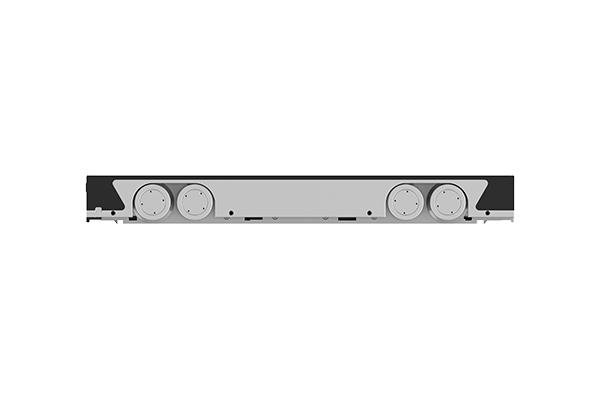
The R-bot four-way shuttle illustrates the engineering priorities: at just 125 mm thin and capable of carrying up to 2,000 kg, it maximizes vertical cube utilization while maintaining travel speeds of 1.6 m/s empty and 1.2 m/s loaded. Positioning accuracy for rack docking is ±1 mm — a precision that AGVs rarely achieve while moving freely. The trade-off is flexibility: an AGV can be rerouted on the fly, but a shuttle is constrained to the rack infrastructure. If your operation requires frequent changes to storage topology, that matters. For dense pallet storage with stable SKU profiles, the shuttle’s structural integration is a strength.
Performance Metrics: Throughput, Density, and Scalability
Storage density and throughput ultimately determine which system delivers the required return. The table below compares typical performance ranges based on our experience with R-bot installations and common AGV fleet configurations.
| Metric | Four-Way Shuttle + H-bot | AGV Fleet |
|---|---|---|
| Pallet positions per 1,000 m² | Up to 1,600 (dense racking) | 800–1,100 |
| Throughput (pallets/hour) | 50–80 (with six-way coordination) | 40–60 |
| Minimum aisle width | 2.1 m (U-bot stacker access) | 3.5 m |
| Vertical expansion | Easy: add rack levels and lifts | Requires floor reinforcement and more vehicles |
| Battery endurance | 8 hrs continuous (lithium 51.2V/40Ah) | 6–8 hrs typical |
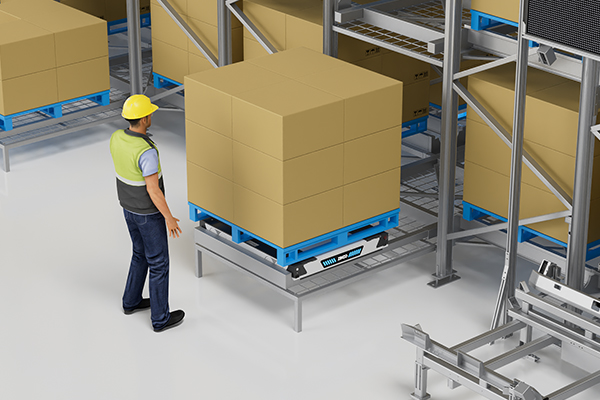
Software is the multiplier. Zikoo’s PTP Smart Warehouse platform — combining WMS, WES, WCS, and RCS — coordinates shuttle assignments in real time, dynamically adjusting to order waves and maintenance events. A well-orchestrated six-way shuttle system can sustain high throughput even when a shuttle is taken offline for charging, because the fleet controller redistributes tasks instantly. AGV fleet management software performs similar functions but must also resolve cross-traffic conflicts, which increases latency as the fleet size grows.
If your project involves high-bay storage above 10 meters or SKU counts above 2,000, the system architecture becomes the deciding factor. Our team can run a simulation based on your product dimensions and throughput targets — share your data and we will map the optimal configuration.
Cost Breakdown for Four-Way Shuttle and AGV Systems
The total cost of ownership (TCO) is rarely captured by sticker price alone. With shuttle systems, a significant portion of upfront investment goes into precision racking and vertical lifts. That infrastructure, however, doubles as the storage medium. AGV deployments require less initial structural work but introduce ongoing costs from battery replacements, fleet software licensing, and, in many facilities, floor surface upgrades to handle repeated wheel loads.
Operationally, shuttle systems offer lower energy consumption per pallet move. The R-bot uses a 51.2V/40Ah lithium battery that runs for a full shift; automatic charging at a dedicated dock reduces manual intervention. AGV fleets often carry larger batteries to support longer travel distances, which raises both energy costs and battery replacement frequency. Maintenance complexity also shifts: shuttle wheels and motors are accessed from the rack, while AGV drive units sit on the floor where debris and dampness are more common. Neither system is maintenance-free, but the failure modes differ — shuttle faults tend to isolate to one lane, whereas a single AGV failure can bottleneck a narrow aisle.
For a typical greenfield project, we see shuttle systems reach positive ROI in 2.5–4 years, with the fastest returns in high-throughput environments where labor reduction is the primary goal. AGV fleets in lower-density layouts may take 4–5 years to pay back. The most accurate comparison requires modeling your specific pallet profiles and order patterns.
Industry-Specific Applications and Environmental Constraints
Certain operating environments tilt the scales toward one technology. In cold storage warehouses operating at -25°C, the dedicated lithium battery in Zikoo’s cold chain shuttle maintains 6–8 hours of runtime, and the PCBA coating protects electronics from condensation. AGV providers offer cold-temperature variants too, but the shuttle’s lower profile and enclosed rail system reduce the volume of refrigerated space that needs conditioning. For new energy material handling — where metal contamination must be avoided — the R-bot’s stainless steel frame with blackening treatment and all-rubber buffer wheels eliminate copper, zinc, nickel, and lead exposure, meeting strict cleanroom-like requirements that many AGV designs struggle with.
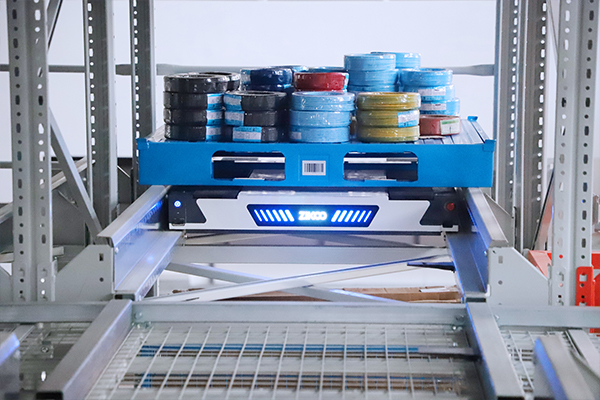
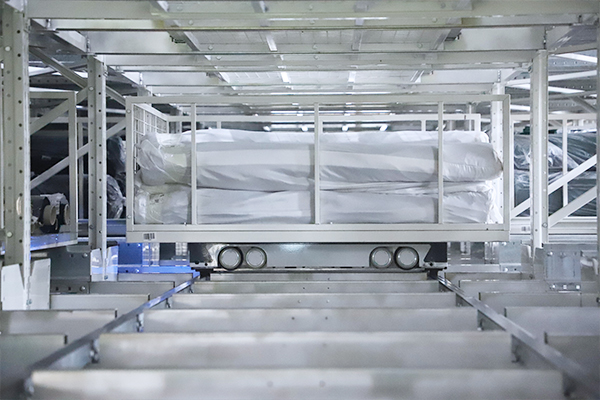
In pharmaceutical and e-commerce warehouses handling high SKU variety, the choice often depends on picking method. A shuttle system feeding pallets to a goods-to-person station can deliver consistent cycle times, while AGVs excel when picking stations are dispersed across a larger footprint. Textile storage, with its soft, irregular loads, also benefits from shuttle predictability because the pallet does not shift during transport.
Selecting a Reliable Warehouse Automation Partner
Beyond the technology itself, the supplier’s software integration capability and project delivery track record are what turn a concept into a working system. A four-way shuttle system is only as effective as the WCS and RCS layers that control it — if those cannot integrate with your existing ERP, you inherit a rigid island of automation rather than a flexible platform. At Zikoo, we provide a unified PTP software suite that has been tested across multiple industries, including third-party logistics, cold chain, and manufacturing.
Project references matter. Ask potential suppliers to walk you through a completed project of similar scale, not a generic case study. Look for evidence that they supported the ramp-up phase and resolved inevitable teething issues without impacting go-live dates. Global buyers should confirm the supplier’s experience with cross-border logistics, certifications, and after-sales service in their region.
When evaluating four-way shuttle vs AGV partners, remember that the system you install today must accommodate the SKU growth, order volume, and automation maturity you will have in five years. A supplier that can start with a shuttle core and expand into a fully integrated six-way shuttle network — while maintaining the same software architecture — reduces migration risk. Request a technical consultation to evaluate your warehouse layout and receive a specific system design.
Next Steps for Your Warehouse Automation Project
Choosing between these systems can feel overwhelming when every vendor presents different numbers. A structured evaluation that factors in your actual SKU profiles, building constraints, and growth plans removes the guesswork.
Send your warehouse CAD file and monthly throughput data to info@zikoo-int.com or call (+86)-19941778955. We will deliver a preliminary system layout and throughput simulation within five business days. No commitment — just a clear technical assessment of what a four-way shuttle or AGV system would look like in your facility.
Common Questions About Four-Way Shuttle vs AGV Decisions
Which system handles higher throughput in dense storage?
For pallet storage at multiple rack levels, a four-way shuttle network with vertical lifts consistently achieves higher throughput — typically 50 to 80 pallets per hour — because each shuttle serves a dedicated lane while lifts move independently. AGV fleets can match those numbers in large open-floor layouts, but as density increases and aisles narrow, traffic management overhead reduces effective throughput.
Can a four-way shuttle system work with mixed pallet sizes?
Yes. Shuttle models like the R-bot support several pallet dimensions, from 1100×1100 mm (Japanese standard) to 1400×1400 mm heavy-duty large pallets. The racking can be configured with adjustable beam heights to handle mixed loads. We recommend grouping similar pallet sizes in dedicated zones to maximize storage density, but the software can route any pallet to any location if the rack dimensions allow.
Is retrofitting a four-way shuttle into an existing warehouse practical?
It depends on the clear height and floor condition. Warehouses with at least 8–10 meters of clear height and a level floor (flatness tolerance ±5 mm over 10 m) are good candidates. The racking structure replaces existing pallet racks, and the lift shafts require some building penetration for upper level access. AGVs can be introduced with less structural change, but they may not recover the same vertical cube utilization that shuttles can.
What maintenance differences should I plan for?
Shuttle maintenance focuses on wheel assemblies, drive motors, and battery replacement every 3–5 years, and is performed at the shuttle dock while the rack lanes remain operational. AGVs require floor-level maintenance that can interfere with traffic. Both systems benefit from remote diagnostics; Zikoo’s RCS includes real-time health monitoring that triggers work orders before a shuttle fails.
How quickly can we expect ROI after installation?
Most projects recover their investment in 2.5–4 years, with labor reduction accounting for the largest share of savings. Warehouses operating two or three shifts see faster returns because the shuttle system runs continuously without overtime. If your operation has specific cost-saving targets or seasonal throughput spikes, share those numbers to receive a customized payback analysis. Send your requirements to info@zikoo-int.com or call (+86)-19941778955 — we will map the labor and space savings against your current operation.
If you’re interested, check out these related articles:
Six-Way Shuttle: Pioneering the Future of Smart Warehousing
Smart Cold Chain Era: Six-Way Shuttle System Redefines Storage Efficiency with Maximum Density
Six-Way Shuttle: The Dual-Engine Solution for High-D


