


What “Fully Automated” Actually Means in a Pallet Warehouse
Fully automated warehouses do not simply replace forklifts with robots. They combine dense pallet storage, autonomous pallet-to-person flow, and software coordination so inventory moves from receiving to dispatch without routine manual intervention. The goal is not automation for its own sake. The goal is to make pallets, people, and orders meet at the right workstation at the right time.
In a pallet-to-person system, workers stay at picking stations while robots or shuttles bring pallets, cases, and orders to them. The warehouse becomes a layered system: rack, rail, shuttle, lift, workstation, and software. A four-way shuttle handles horizontal movement, a vertical lift handles level changes, and software routes every task. Together they form a dense, scalable storage network that can run around the clock.
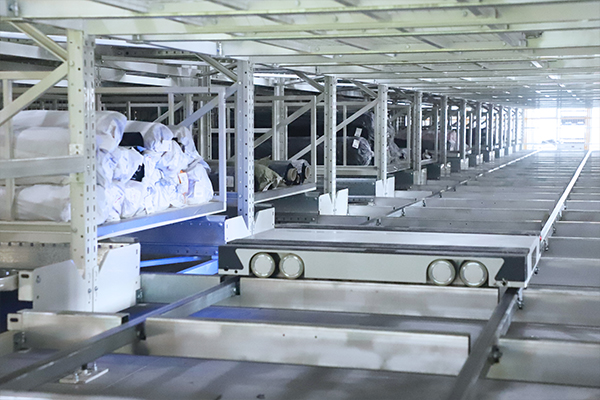
This approach is most valuable when storage density, throughput stability, and picking accuracy matter more than occasional flexibility. It works less well when pallet dimensions vary unpredictably or order profiles change every week. A fully automated warehouse is therefore not a single product; it is an engineered system that must be configured around SKU range, pallet type, throughput peaks, building height, and operating temperature.
The Core Robotics Stack: Four-Way Shuttles, Vertical Lifts, and Smart Software
A practical fully automated warehouse usually rests on three components: a horizontal shuttle fleet, a vertical transfer mechanism, and a software layer that coordinates both.
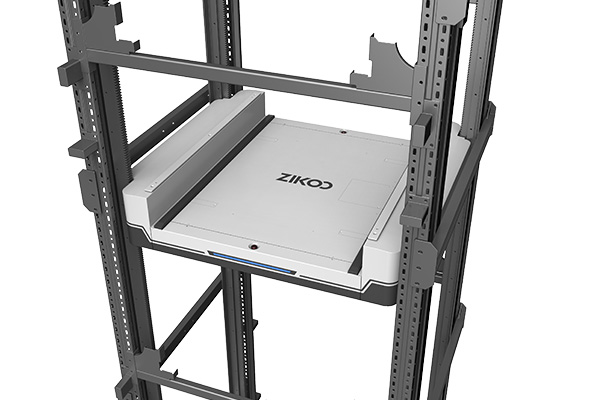
Four-way shuttles move forward, backward, left, and right across rack lanes, so they can change aisles without leaving the storage grid. When paired with a vertical bidirectional shuttle or elevator, the combined system can move pallets in six directions. That configuration is commonly called a six-way shuttle system. It is especially useful for dense pallet storage because the horizontal shuttle can reach multiple rack positions while the vertical lift covers multiple levels.
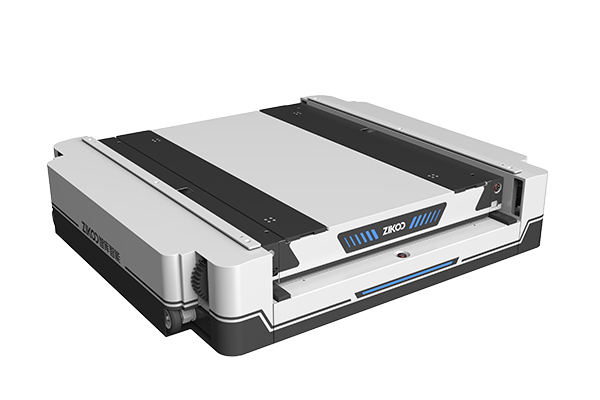
One example is Zikoo’s R-bot Four-way Shuttle: a 125 mm-thin vehicle rated for 1,200–2,000 kg depending on model, with loaded travel speed around 1.0–1.2 m/s and lithium battery operation in temperatures down to -15°C. When integrated with the H-bot vertical lift, the system gains precise vertical pallet transfer. H-bot positioning accuracy is ±1 mm, which supports reliable handoff between shuttle and lift.
Software is what turns fast hardware into a predictable system. A warehouse control system plans pallet moves, prevents congestion, tracks battery states, and reorders tasks when a workstation becomes idle. In high-SKU environments, the scheduling logic matters as much as speed. Poor task sequencing can make even fast shuttles wait. Good sequencing keeps pallet flow steady and reduces empty travel.
For teams planning a broader shift from manual storage to automated pallet handling, <Six-Way Shuttle: The Smart Warehousing Tool for Cost Reduction and Efficiency> covers how six-way shuttle networks reduce cost and improve throughput.
Where Fully Automated Pallet Storage Fits — and Where It Does Not
Fully automated pallet storage is a strong fit in several warehouse profiles. High-SKU operations benefit because shuttles retrieve precise pallet locations quickly. Cold storage and pharmaceutical warehouses benefit because automation reduces operator exposure to low-temperature or controlled environments. Manufacturing raw material and finished goods stores benefit because shuttle systems support consistent inbound and outbound pallet flow. E-commerce and 3PL operations benefit when order volume is high enough to justify dense storage and continuous throughput.
The fit is weaker in warehouses with very low pallet volume, constantly changing pallet sizes, frequent building changes, or capital constraints that cannot absorb automation costs. Retrofitting is possible, but it depends on floor flatness, column spacing, clear height, and available power. In general, existing warehouses above a certain height with regular pallet dimensions are better retrofitting candidates than small facilities with irregular racking.
| Warehouse profile | Typical automation fit | Main reason |
|---|---|---|
| High-SKU pallet storage | Strong | Accurate location retrieval |
| Cold chain or pharmaceutical | Strong | Reduces manual exposure |
| Manufacturing raw materials | Strong | Stable pallet flow |
| E-commerce / 3PL | Strong to moderate | High throughput and density |
| Low-volume, irregular pallets | Weak | Config cost outweighs benefit |
This kind of analysis should happen before equipment selection. The most expensive mistake is not choosing the wrong robot; it is automating a process that was not ready for standardization.
Cost, Labor Savings, and ROI Planning
The cost of a fully automated warehouse is not a simple per-shuttle number. It includes racking, rails, shuttles, lifts, conveyors or workstations, software licenses, controls integration, installation, testing, training, and spare parts. That is why quotes from different suppliers can vary significantly even when the robot list looks similar.
A useful starting point is to compare fully loaded annual operating cost rather than equipment price alone. Manual warehousing costs include wages, overtime, forklift maintenance, damage, and the cost of mispicks. An automated system replaces much of that labor cost with capital expense, energy, software support, and periodic mechanical maintenance.
A simple ROI view is:
Annual net savings = labor saved + space saved value + damage reduction − automation maintenance and software fees.
Payback period = total project investment ÷ annual net savings.
Payback often falls in the three-to-six-year range for dense pallet systems, but that range is approximate. It depends on labor rates, building costs, operational hours, and whether the system enables second or third shifts without proportional staffing increases. A system that runs 24/7 usually reaches payback faster than one used only during day shifts.
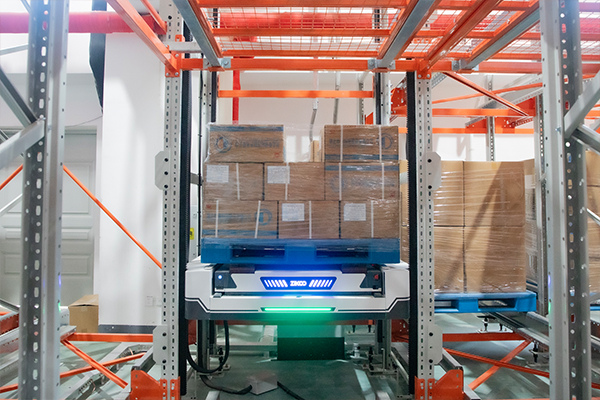
For teams operating tight capital budgets, <Smart Warehousing Starts Here: Cost-Effective Four-Way Shuttle Systems> covers the stepwise path from manual pallet racking to cost-effective shuttle storage.
How to Evaluate a Warehouse Automation Partner
Supplier evaluation should focus on system capability, not only equipment specifications. Ask for documented project references in a similar industry, preferably with pallet dimensions, SKU counts, throughput, and temperature conditions that resemble your operation. If a supplier cannot provide relevant references, the risk is higher.
Review the full delivery model. A turnkey supplier should be responsible for mechanical installation, electrical integration, software configuration, testing, and after-sales response. If these responsibilities are split across vendors, clarify who owns system-level performance when something fails between shuttle, lift, and software.
Technical capability should also be examined at the software level. Ask how the supplier handles shuttle reallocation, battery charging windows, emergency recovery, and WMS/WCS integration. The hardware may be reliable, but a weak software handshake can disrupt the entire operation.
For a baseline quality check, ISO 9001:2015 certification is a useful reference for process consistency [5]. For storage and retrieval equipment safety, suppliers can be benchmarked against structured risk-assessment practices. A credible supplier will be able to explain how its engineering process aligns with recognized machinery safety standards rather than relying on generic marketing claims.
In practice, automation value depends on software coordination as much as hardware, <Software-Driven Hardware: Six-Way Shuttle Maximizes Warehouse Efficiency> covers how WMS/WES/WCS integration turns shuttle fleets into predictable warehouse systems.
Implementation, Safety, and Risk Management
Implementation should be planned as an engineering project, not a product installation. Before sign-off, the supplier should freeze pallet dimensions, load weights, racking tolerances, SKU profiles, and throughput targets. These data define shuttle lane width, lift capacity, and software routing logic.
Safety review belongs in the design phase. Automated storage and retrieval equipment should follow a structured risk assessment aligned with ISO 12100 [1]. Rail-dependent storage and retrieval equipment should meet or exceed the applicable requirements in EN 528 [2]. Robot-related work cells often reference ANSI/RIA R15.06 [3]. Software that controls storage and lifting functions is often assessed under functional safety frameworks such as IEC 61508 [4].
Downtime risk is best reduced through redundancy and response time. A shuttle fleet with spare capacity allows the system to continue operating while one shuttle is serviced. A hotline response plan with local spare parts reduces recovery time after an unexpected failure. Network failure procedures, manual bypass methods, and battery charging redundancy should also be documented before go-live.
For teams evaluating dense storage expansion under space constraints, <Six-Way Shuttle Powers Dense Storage: Breaking Space Limitations> covers how six-way shuttle configurations unlock storage capacity inside existing buildings.
Ready to Define Your Fully Automated Warehouse?
Your project begins with a practical feasibility check: pallet profile, SKU range, throughput targets, building dimensions, and temperature requirements. Zikoo Smart Technology Co., Ltd. engineers can review these inputs and recommend a pallet-to-person configuration using four-way shuttle, vertical lift, and smart warehouse software.
Contact Zikoo at info@zikoo-int.com or (+86)-19941778955 to request a technical consultation and project reference review.
Frequently Asked Questions
Are fully automated warehouses only suitable for large companies?
No. Small and medium-sized businesses can use pallet-to-person automation when pallet flow is stable and enough operational hours justify the investment. Shuttle systems can start with a limited rack block and expand later. However, the warehouse must have suitable floor flatness, clear height, and pallet standardization.
How long does a four-way shuttle AS/RS take to implement?
Implementation time depends on project size, building readiness, software integration scope, and testing requirements. A well-scoped shuttle system can often move from final design to go-live within several months, but larger fully automated warehouses with multiple levels and WMS integration may take longer. The site survey and data freeze usually determine the critical path.
Can an existing warehouse be upgraded without halting operations?
In many cases, yes. Retrofit projects are usually phased by rack block or zone, allowing existing manual operations to continue in other areas. However, the supplier must confirm floor flatness, column spacing, and racking interface conditions before promising a phased cutover. Temporary safety barriers and controlled access zones are normally required during installation.
What are the main cost risks in a fully automated warehouse project?
The main cost risks are unclear pallet dimensions, changing SKU profiles after design freeze, incomplete WMS integration, weak facility data, and unrealistic throughput targets. Each of these can expand integration hours and delay go-live. A fixed data baseline and defined acceptance test reduce these risks.
How should a company benchmark a shuttle manufacturer’s reliability?
Review documented references in a similar industry, inspect the installed base if possible, and ask for service response data and spare parts coverage. Evaluate software stability, battery management, and escalation procedures as closely as hardware speed. ISO 9001:2015 certification and structured machinery safety compliance provide a useful baseline.
References
[1] ISO 12100:2010, Safety of machinery — General principles for design — Risk assessment and risk reduction. International Organization for Standardization.
[2] EN 528:2008, Rail dependent storage and retrieval equipment — Safety requirements. European Committee for Standardization.
[3] ANSI/RIA R15.06-2012, Industrial Robots and Robot Systems — Safety Requirements. Robotic Industries Association.
[4] IEC 61508:2010, Functional safety of electrical/electronic/programmable electronic safety-related systems. International Electrotechnical Commission.
[5] ISO 9001:2015, Quality management systems — Requirements. International Organization for Standardization.
If you’re interested, check out these related articles:
PTP Intelligent Warehouse Software Empowers Enterprises for Smart Upgrades
Revolutionizing Cold Chain Logistics: Zikoo Robotics Six-Way Shuttle Powers High-Density, High-Efficiency Warehousing
Multi-Scenario Smart Adaptation: Zikoo’s Six-Way Shuttle Powers the Digital Transformation of Warehousing
Looking for Reliable Four-Way Shuttle Manufacturers? Choose Zikoo Robotics
Six-Way Shuttle: Pioneering the Future of Smart Warehousing


