


Picking errors cost warehouses more than most operators realise. A single wrong pallet picked for an outbound order cascades into customer returns, wasted labour reworking the shipment, and inventory discrepancies that widen with every cycle count. After ten years of designing and deploying pallet-to-person robotic systems across industries, I have found that automated storage and retrieval systems reduce picking errors not primarily by being faster, but by removing the decision points where human mistakes originate. The hardware precision and software logic each eliminate entire classes of errors that manual picking processes simply cannot escape.
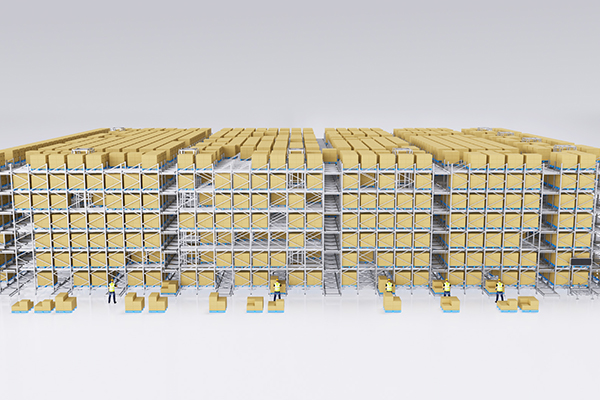
How Manual Picking Processes Create Errors
Walk through any conventional warehouse and the error sources become visible. Forklift operators working across wide aisles must read pick lists, locate pallets from memory or signage, confirm the right quantity, and sometimes handle partial pallet builds. Each step introduces a potential failure point: a label printed badly gets misread, a pallet placed in the wrong bay after putaway gets picked by appearance rather than location, a quantity typed incorrectly on a handheld terminal goes unnoticed until the shipment reaches the customer. In high-throughput operations where cycle times are measured in seconds, even disciplined operators will occasionally transpose a digit or skip a location when fatigue sets in.
Picking errors in manual environments are not primarily about careless workers, they are about processes that rely on fallible human checks with no automated verification. When the system has no way of knowing whether the correct pallet was retrieved other than trusting the operator’s scan or keystroke, errors are inevitable at scale.
Hardware Locking: How AS/RS Mechanics Eliminate Selection Mistakes
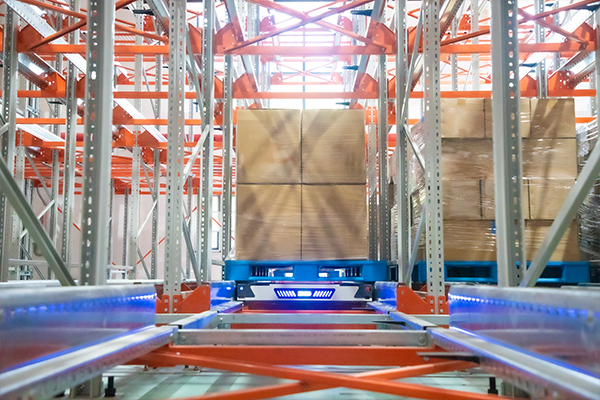
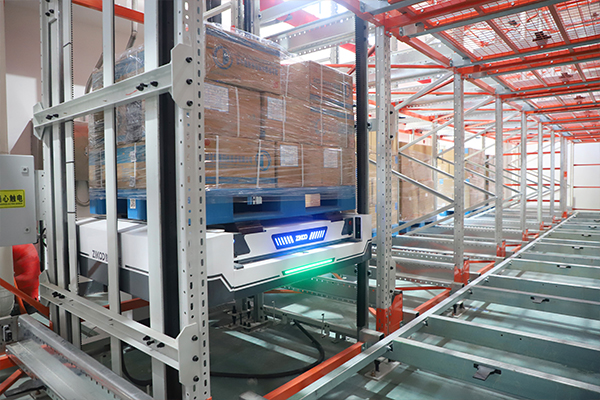
The first error reduction layer in an AS/RS comes from the physical retrieval mechanism itself. When a four-way shuttle or stacker crane moves to a storage location, there is no manual decision about which pallet to pick. The control system directs the machine to a precise coordinate, and the shuttle retrieves exactly the pallet occupying that slot. If the pallet was stored correctly during putaway, the system will always deliver the right item because there is no human choosing between adjacent bays.
The retrieval mechanism itself plays a large role in ongoing accuracy, and system architecture determines how much stress repeated cycles place on positioning components. <Stacker Crane vs Four-Way Shuttle: Which Fits Your [ASRS Warehouse](https://www.zikooint.com/asrs-automated-storage-and-retrieval-system-solutions) Best> covers why the decoupled nature of four-way shuttle systems reduces single-point mechanical degradation compared to stacker crane setups, which directly impacts how long the system maintains sub-inch positioning precision.
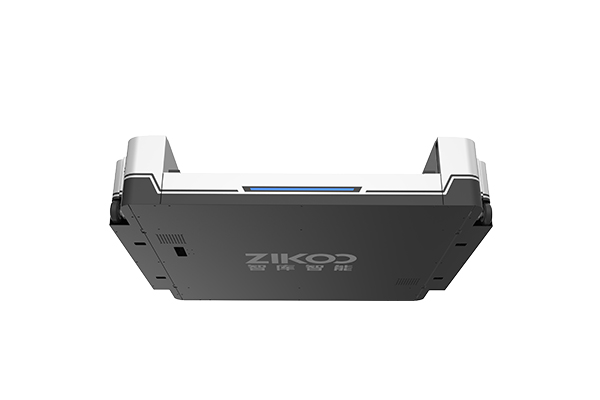
The R‑bot four‑way shuttle we deploy uses a positioning accuracy of ±1 mm in the vertical axis when paired with the H‑bot elevator. That tolerance means the machine does not drift toward the edge of a pallet over hundreds of cycles and risk partial engagement or collision. Positioning errors that could lead to dropped pallets are eliminated by the closed‑loop servo control rather than by operator vigilance. In a manual warehouse, a forklift driver might nudge an adjacent pallet while extracting another; in a well‑designed AS/RS, each storage position is isolated by the racking and the machine’s motion envelope, so even adjacent loads are never disturbed.
Software-Driven Picking Logic That Catches Errors Before They Leave
Hardware retrieval solves the selection problem, but software addresses the higher-level risk: picking the wrong SKU for an order. A properly integrated WMS and WCS layer does not simply tell the shuttle where to go; it verifies that the pallet at that destination matches the order requirement before instructing retrieval.
This happens in several stages. At putaway, the system records the exact storage location of every pallet against its SKU, batch, and lot data. When a pick order is released, the WMS queries inventory records and generates a pick list tied to specific storage positions, not to general zones. The WCS then translates those positions into shuttle movements. No human reads a pick list and chooses a bay. The moment the shuttle arrives and lifts the pallet, the system updates inventory to prevent double‑picking from the same location. If a pallet has been relocated by a consolidation task while the order was being generated, the software re‑routes the pick without human intervention.
This closed‑loop logic is where I have seen the most dramatic drop in mis‑picks during project commissioning. In one high‑SKU manufacturing installation, we eliminated virtually all picking errors within the first month of go‑live because the WMS/WCS layer prevented any order from being fulfilled unless the retrieved pallet’s recorded identity matched the pick instruction. Operators on the floor interact only with the outbound staging area, not with individual storage locations, so there is no path for a mis‑pick to occur between retrieval and shipment. Warehouse execution software from Zikoo, with its direct integration between the R‑bot shuttle fleet and the PTP platform, makes the transaction layer the single source of truth rather than relying on post‑pick scans to catch mistakes.
Verification Steps That Make the Process Error-Proof
Even with software-driven retrieval, a gap can remain: what if the wrong pallet was put away initially? The system might correctly retrieve that pallet, but it would still be the wrong item for the order if the putaway transaction was entered incorrectly. This is where integrated verification closes the loop.
In the AS/RS designs I work on, putaway verification typically uses a combination of barcode scanning and dimensional check at the inbound conveyor or shuttle entry point. A pallet arriving from production or receiving passes a scan tunnel that reads its label. The WMS confirms the SKU matches the expected item for that purchase order or production batch. If the label is unreadable or the data mismatches, the pallet is diverted to an exception lane before it ever enters storage. This single check, which adds perhaps two seconds to the putaway cycle, prevents an entire class of errors that in a manual warehouse would be discovered only days later during an audit. For temperature‑controlled operations handling food or pharmaceutical materials, this inbound verification also ensures that pallets with incorrect temperature logging never enter the same storage aisle as compliant product, a requirement that manual checking cannot consistently meet at high throughput.
Real‑World Accuracy Improvements from Integrated Systems
Quantifying error reduction is sometimes difficult because well‑designed AS/RS installations often report zero picking errors over sustained periods, making a percentage improvement abstract. What I can share from our project experience is that clients who previously tracked error rates in the range of one to three per thousand picks in their manual operations saw those numbers drop below one per ten thousand after full system integration, effectively meeting six‑sigma accuracy thresholds. This level of reliability is not achieved by any single component but by layering hardware precision, software transaction logic, and inbound verification into a process that refuses to complete a pick unless all conditions match.
Sustaining that level of reliability long‑term depends heavily on the manufacturing quality of the shuttle hardware and the software platform stability. <Looking for Reliable Four-Way Shuttle Manufacturers? Choose Zikoo Robotics> details the specific production testing protocols and component sourcing approaches that separate suppliers whose shuttles maintain positioning accuracy through millions of cycles from those that start degrading within the first thousand hours, so if you are evaluating long‑term accuracy guarantees, those engineering differences matter.
Questions Procurement Teams Should Ask When Specifying for Error Reduction
If you are planning an AS/RS project and accuracy is a primary concern, your technical specifications need to go deeper than simply stating a picking accuracy target. I recommend asking potential integrators these questions during vendor evaluation:
- How does the system verify pallet identity at putaway, and what happens when a mismatch is detected?
- What is the positioning repeatability of the shuttle or crane over its maintenance cycle, and how is drift compensated?
- How does the software handle inventory discrepancies if a location is found empty during a pick task?
- What failure mode logic exists if a pallet label is damaged or missing?
- Can the system log every pick transaction with timestamp and SKU for audit purposes, independent of the WMS inventory record?
Vendors who can answer these with specific design features, rather than general assurances, are the ones whose systems will deliver the sustained accuracy your operation requires.
Common Questions About AS/RS Picking Accuracy
How much can an AS/RS realistically reduce picking errors compared to a well-managed manual warehouse?
In a disciplined manual environment with full barcode scanning and diligent operators, picking accuracy can reach around 99.5%. That still leaves five errors per thousand picks. An integrated AS/RS with inbound verification and software-driven retrieval typically pushes accuracy beyond 99.99%, eliminating the tail of errors that scanning alone cannot catch. The improvement comes not from replacing workers but from removing the decision points where even attentive people make mistakes.
If the software logic is what catches errors, can a manual warehouse just implement a better WMS?
A better WMS will reduce errors by directing workers more precisely, but it cannot eliminate the manual selection act. A warehouse management system tells an operator which location to visit and what SKU to pick, but it still trusts the operator to physically take the correct pallet and scan the correct barcode. In an AS/RS, the WMS directly commands the retrieval machine, and the transaction is not marked complete until the machine confirms the lift. That closed-loop action—where the software executes the pick, not a person—is the difference.
What maintenance or calibration factors can degrade picking accuracy over time, and how are they addressed?
Positioning sensors and encoders on shuttles and elevators can drift gradually if not checked. Most systems include auto‑homing routines that recalibrate the machine’s reference point at the start of each shift or after a specified number of cycles. For four‑way shuttle systems, we also monitor motor current profiles: a shuttle that draws higher current when positioning on one side of an aisle may have a mechanical alignment issue that needs correction before it begins to affect pick accuracy. These diagnostics are built into the software layer, so they require no manual inspection to trigger a service call.
Are picking errors in AS/RS systems usually caused by hardware failure or software bugs?
In my experience, the vast majority of errors that occur after commissioning are caused by data integrity issues upstream, such as incorrect master data being loaded into the WMS, rather than hardware failure or software bugs. A shuttle retrieving a pallet from the right slot that contains the wrong SKU because the putaway record was entered incorrectly is not a retrieval error in the traditional sense, but it still produces the wrong item at the dock. That is why inbound verification at the point of entry to storage is the single most impactful design feature for eliminating the root cause of apparent picking mistakes.
How should I factor error reduction into the ROI calculation for an AS/RS?
Calculate the annual cost of one picking error by including reverse logistics, labour for rework, customer penalties or lost goodwill, and inventory audit time. Multiply by your historical error rate. For many operations with throughput above 500 pallets per day, the annual cost of errors alone often covers a significant portion of the lease or depreciation expense of the AS/RS. On top of that, the reduction in inventory shrinkage from cycle count discrepancies, which often correlates with picking errors, adds a second cost line that pure efficiency calculations miss. If your operation handles high-value SKUs or regulated materials, the compliance and traceability benefits of error‑proof picking may be the deciding factor. For a specific project layout and financial analysis, share your throughput and order profile with our engineering team at info@zikoo-int.com or call (+86)-19941778955 to start a detailed evaluation.
If you’re interested, check out these related articles:
Reshaping Warehouse Value: Six-Way Shuttle Leads the Digital Transformation
Six-Way Shuttle: The Ultimate Warehousing Solution for Cost Reduction and Efficiency
Looking for Reliable Four-Way Shuttle Manufacturers? Choose Zikoo Robotics
Six-Way Shuttle: Empowering Industries to Embrace Smart Warehousing
Six-Way Shuttle: Pioneering the Future of Smart Warehousing


