


Robotics enhances warehouse picking operations most when pallet movement and picking logic change together. In a pallet-to-person system, a shuttle or robot brings the right pallet to a fixed station, so the operator stops walking long aisles and spends more time assembling orders. A four-way shuttle can move dense pallet storage to that station while software decides which order gets priority. The gain concentrates in two places: fewer mis-picks and more picks per labor hour. Whether that gain holds depends on how the robot, shuttle, and warehouse software are sequenced as one system.
The Picking Bottlenecks Robotics Can Remove
Warehouse picking loses more time in travel and search than in the pick itself. In manual pallet operations, an operator walks to a location, identifies the right pallet by sight, and then retraces the same path to the staging lane. The pick itself takes seconds. The movement around it takes minutes. Robotics changes that ratio by moving the storage to the person.
In warehouse projects we review, the biggest repeatable losses are not slow pickers. They are searching, walking, and incorrect pallet selection. A robot that delivers the correct pallet removes the first two losses. It does not remove bad inventory data. If the WMS points to the wrong pallet, the robot delivers the wrong pallet faster. That is why the first test in a picking review is whether the pallet identity, quantity, and location are accurate before the robot layer starts moving.
The Robot and Shuttle Architecture Behind Faster Picking
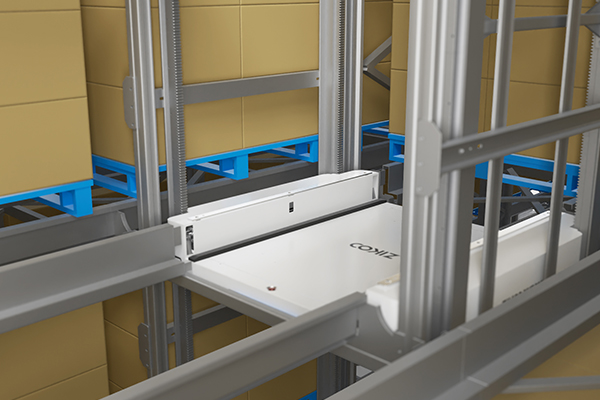
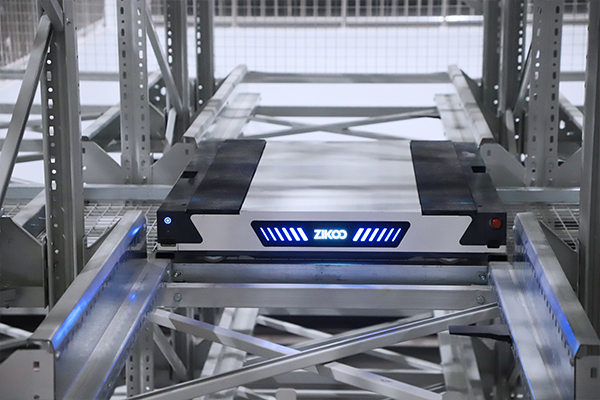
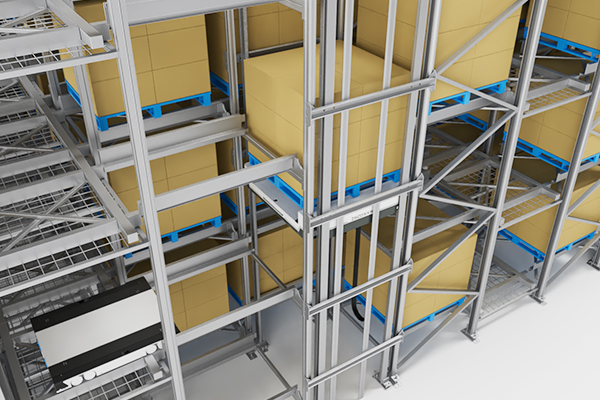
Pallet-to-person robotics splits picking movement into horizontal, vertical, and station-level tasks. A four-way shuttle such as the R-bot Four-Way Shuttle moves pallets on the storage level in four directions. Its body sits 125 mm high, so it can work under racking levels and carry 1200 kg to 2000 kg depending on the model. When pallets need to change floors, the H-bot Vertical Bidirectional Shuttle takes over and positions the pallet with ±1 mm accuracy. At the picking station, the operator receives one pallet, completes the order lines, and sends the pallet back without walking.
Where aisles are narrow, an omnidirectional stacking robot is the better counterpart. The U-bot Omnidirectional Stacking Robot works in aisles as narrow as 2100 mm and lifts up to 8 meters, which suits existing rack blocks where a wide-aisle shuttle would not fit. For mixed pallet and split-case picking, the U-bot plus AMR setup combines upper storage access with lower AMR picking and can handle up to 10,000 SKUs.
| System | Main picking role | Measured capability |
|---|---|---|
| R-bot Four-Way Shuttle | Dense pallet retrieval to picking station | 1200 kg to 2000 kg load, 1.6 m/s empty speed on standard models |
| H-bot Vertical Bidirectional Shuttle | Floor-to-floor pallet transfer | 1800 kg rated load, ±1 mm positioning |
| U-bot Omnidirectional Stacking Robot | Narrow-aisle pallet access | 1000 kg load, 0 to 8 m lift, 2100 mm aisle |
| U-bot + AMR Narrow Aisle Picking System | Pallet and split-case picking together | 300 or more picks per hour, 80 or more pallets per hour |
One configuration mistake is to size the robot by total pallet count alone. The more precise inputs are peak picks per hour, pallet dimensions, floor height, and the mix between full pallet shipping and split-case lines. A site with a large finished goods stock but few picks per hour has very different robot requirements from a 3PL handling a heavy split-case wave.
Dense pallet-to-person layouts require the horizontal and vertical shuttles to stay coordinated under one control layer. <Six-Way Shuttle: The Ultimate Warehousing Solution for Cost Reduction and Efficiency> covers how four-way shuttle movement and vertical transfer squeeze more storage positions into the same footprint without slowing the pick path.
The Software Layer That Keeps Robotic Picking Accurate
The mechanical layer fails if the software layer sends it the wrong task. In pallet-to-person picking, the WMS holds order and inventory state. The WES decides how to group and release orders. The WCS handles equipment-level commands, and the RCS dispatches individual robots. Zikoo’s PTP Smart Warehouse Software combines those layers so the robot, elevator, and picking station do not drift into separate clocks.
From a project delivery view, pick accuracy improves when the software closes the loop between scan, move, and station confirmation. If an operator scans a pallet at the station and the inventory record updates immediately, the next order release uses the corrected quantity. If the scan only happens at the end of the shift, the robot will waste moves on stock that the system has not yet deducted. That gap, not robot speed, is often why two similar installations produce different picking rates.
Picking accuracy depends on dispatch logic and inventory state staying synchronized. <PTP Intelligent Warehouse Software Empowers Enterprises for Smart Upgrades> covers how the software stack assigns pallet moves and picking tasks without generating deadhead trips that eat into cycle time.
If your picking program involves mixed pallet sizes, temperature-controlled storage, or peak wave lengths above one shift, it is worth confirming the shuttle model, battery runtime, and pallet dimensional limits before you finalize the layout. Send your pallet dimensions and daily pick lines to info@zikoo-int.com.
The Operational Fit Questions for Robotic Picking
Not every warehouse should automate picking all at once. The clearest fit is an operation with stable pallet profiles, repeatable order lines, and enough daily picks to return the fixed cost of the shuttle and control layer. A warehouse with severely mixed pallet quality, constantly changing SKU counts, or no identifiable pick wave may spend more time correcting data than running robots. The failure mode is specific: automation exposes pallet data problems that manual operations can hide by walking to a second location.
The second fit question is handling peak demand. Robotics can increase picks per hour, but the real value appears in peak-wave design. A four-way shuttle system can keep pallets moving through a dense rack without operators covering long identical distances. In projects where peak order windows are short, we first map the 90-minute wave and count how many pallets must reach the station before the truck cut-off. The robot count follows that calculation, not the reverse.
For cold and pharmaceutical settings, the pallet-to-person design also reduces the time doors stay open and staff stay in chilled aisles. That changes both picking accuracy and product handling risk.
The Closest Step to a Reliable Robotic Picking Design
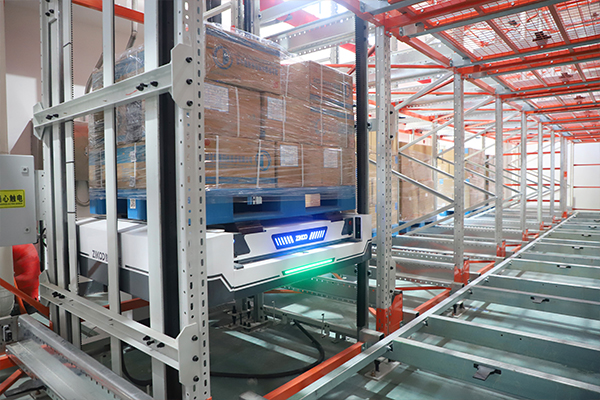
Selecting a robotic picking system feels like a large commitment, especially when rack changes, software integration, and peak throughput all sit on the same project plan. The useful next step is not a high-level proposal. It is a pallet-level check. Send your pallet dimensions, daily order lines, peak picks per hour, facility height, and temperature range to info@zikoo-int.com or call (+86) 19941778955. We will confirm which robot and shuttle combination matches your aisle width and load, and where software integration needs attention before you spend on construction or equipment.
Common Questions About Robotics in Warehouse Picking
How long does a robotic picking system take to commission?
Most pallet-to-person picking systems reach production in three to six months after site acceptance begins. Rack installation and software integration usually take more time than the robot delivery itself. The variance comes from building condition, pallet dimensional data, and how early the operator team begins testing standard order waves. If the WMS data is clean and the rack layout is confirmed before installation, the schedule is far more predictable than when teams correct data while robots are already staging pallets.
Can a robotic picking system work in an existing warehouse?
It depends on clear heights and aisle widths. A high-bay shuttle system may need rack strengthening or re-layout to create vertical transfer positions. A U-bot Omnidirectional Stacking Robot fits aisles as narrow as 2100 mm and can be the less invasive choice for an existing rack block with limited width. In practical terms, we compare the building column grid, floor flatness, and available top clearance before deciding whether to modify the rack or choose a narrower robot profile.
What happens if the WMS data is not clean before the robots start?
A common assumption is that robots fix inventory errors. They do not. Robots deliver the wrong pallet faster when the location record, pallet identity, or quantity is wrong. The cleaner sequence is to correct inventory data first, then automate the movement. In project reviews, we have seen installations lose more time reconciling phantom stock than any robot cycle saves. The robot is only as accurate as the scan message behind it.
How do I choose between a four-way shuttle and a narrow-aisle stacker robot?
In project reviews, we start with pallet dimensions, aisle width, and building height. A four-way shuttle handles dense, deep lane storage and works best when pallet movement is heavy and repetitive. A narrow-aisle stacker robot such as the U-bot is better when existing rack bays must stay in place and access needs to stay flexible. The decision follows the physical geometry more than a preference for one robot type. Share your pallet dimensions, aisle width, and daily pick lines with info@zikoo-int.com and we will confirm the closer fit before you finalize building changes.
If you’re interested, check out these related articles:
Six-Way Shuttle: The Dual-Engine Solution for High-D
Six-Way Shuttle System Leads the Shift from Machines to Robots in Dense Storage Automation
Looking for Reliable Four-Way Shuttle Manufacturers? Choose Zikoo Robotics


