


Choosing between an automated storage and retrieval system (AS/RS) and a narrow aisle warehouse is not about finding the “better” technology—it is about identifying which one aligns with your specific throughput, density, and operational flexibility needs. I have spent over a decade designing and deploying pallet-to-person robotics in industries ranging from cold chain to manufacturing, and the most common mistake I see is prioritizing racking density without accounting for daily workflow constraints. An AS/RS built around four-way shuttles or stacker cranes can deliver unparalleled space utilization, while a narrow aisle configuration with omnidirectional stacker robots maintains flexibility at a lower entry threshold. This article breaks down the performance, cost, and scalability factors that determine which solution will actually perform in your operation, year after year.
What Differentiates an AS/RS from a Narrow Aisle Warehouse
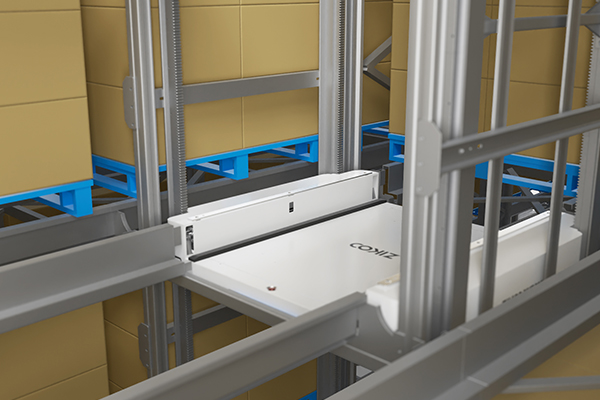
An AS/RS is a fully automated system where goods are stored in high-density racks and retrieved by machines—stacker cranes, shuttle systems, or vertical lifts—that move without human intervention. Storage and retrieval are managed by warehouse control software, enabling precise inventory tracking and high throughput. A narrow aisle warehouse, by contrast, uses very narrow aisles (typically 2.1–2.5 meters) served by specialized trucks or robotic stackers to maximize cubic storage while still allowing vehicle-based access to every pallet position.
The key distinction lies in how the system handles simultaneous workflows. In an AS/RS, multiple shuttles or cranes can operate concurrently on separate aisles, and the software coordinates sequencing so that a retrieval request never waits for the machine to physically return. Six-way shuttle configurations, such as those combining R-bot four-way shuttles with H-bot elevators, extend this by moving pallets both horizontally and vertically within the same control loop. A narrow aisle solution, even when guided by omnidirectional robots like our U-bot series, typically processes one machine movement per picking task. If your operation requires 80 pallets per hour or more inbound/outbound, an AS/RS is almost always the correct starting point.
Throughput, Density, and Space: Which Numbers Actually Matter
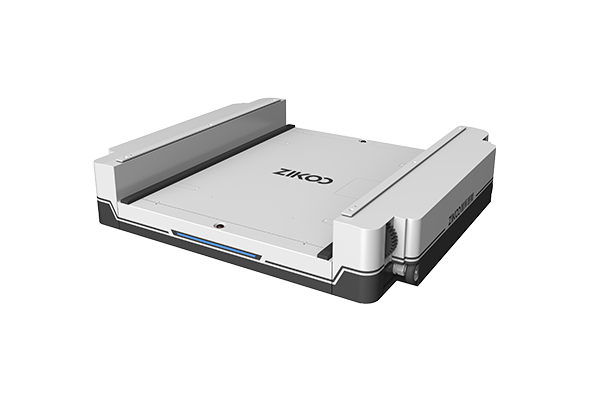
When I review a warehouse design, I look at three metrics before anything else: net inbound/outbound moves per hour, number of active SKUs, and the building’s usable height. An AS/RS configured with four-way shuttle racking can achieve storage density improvements of over 30% compared to a narrow aisle layout occupying the same footprint, because the aisles can be narrower and the racking deeper. In one pharmaceutical project, we deployed an R-bot shuttle system on a floor plan of 60m × 20m × 10m, fitting 1,616 pallet positions while maintaining an inbound/outbound efficiency of 80 pallets per hour. A narrow aisle automated setup with U-bot stackers in a building of the same dimensions would typically be limited to approximately 1,100 positions due to wider aisle requirements and would operate at a lower simultaneous movement ceiling.
But if your throughput requirement never exceeds 25 pallets per hour per shift, the density advantage of a full AS/RS may not justify the complexity. A narrow aisle design using U-bot omnidirectional stackers with a 2.1-meter aisle width and a lift height up to 8 meters gives you high selectivity and the ability to reconfigure SKU placement seasonally without revalidation of the racking structure. For e-commerce fulfillment centers handling 10,000-plus SKUs with unpredictable demand spikes, this flexibility often outweighs the raw storage density an AS/RS provides.
| Feature | AS/RS (Four-way Shuttle) | Narrow Aisle (U-bot Stacker) |
|---|---|---|
| Aisle width | 1.0–1.2 m | 2.1–2.5 m |
| Max pallet positions (1,200 m²) | ~1,600 | ~1,100 |
| Concurrent pallet moves | Up to 80/hour | 20–30/hour per robot |
| SKU resequencing | Requires software reconfiguration | Physical restack faster |
| Building height exploitation | Up to 25 m | Typically up to 8 m |
Operational Flexibility vs. System Rigidity
An AS/RS delivers its throughput numbers when the operational profile is stable. If your pallet dimensions, weights, and retrieval patterns are predictable from day one, the system can be optimized to hit performance targets consistently. But when a facility must handle random mixed-SKU retrieval for kitting, or when pallet quality varies across suppliers, the rigidity of a fixed shuttle grid becomes a problem. I have seen sites where oversized or damaged pallets forced a full aisle shutdown because the shuttle’s positioning tolerance (±10 mm for our U-bot, for instance) could not compensate for the deviation.
Narrow aisle automation with U-bot and its 3D depth camera operates differently. The vision system models pallet positions in three dimensions and automatically compensates for up to ±50 mm of lateral misalignment, so a strapped pallet from an inconsistent supplier does not require intervention. Moreover, if you anticipate integrating autonomous mobile robots (AMRs) for horizontal transport or robotic arms for depalletizing, a narrow aisle architecture is easier to decouple and phase in. With an AS/RS, any major process change usually means retuning the entire warehouse execution software layer.
Cost Breakdown Beyond the Capital Quote
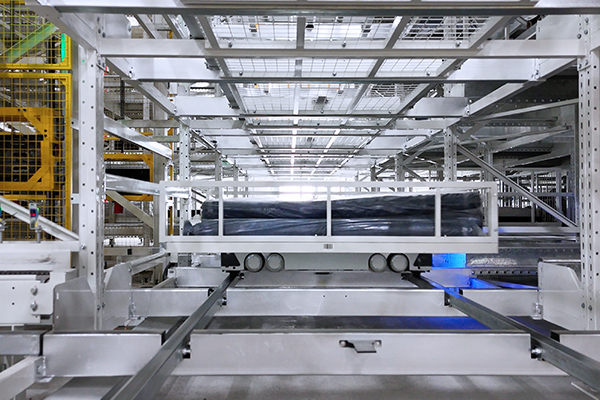
Procurement teams often fixate on the racking and machinery line items, but the real cost divergence between an AS/RS and a narrow aisle warehouse appears in the building modifications and software integration. An AS/RS, especially one using high-rise shuttle systems, requires a flat floor with a surface tolerance of ±3 mm per meter, as well as fire suppression routing that does not conflict with the shuttle rails. The racking itself is often a non-standard seismic design, adding 15–30% to structural steel costs compared to a standard selective pallet rack. Software costs likewise scale with complexity; a full AS/RS with WMS, WES, and RCS modules requires more integration engineering hours than a simpler narrow aisle system managed by WMS and a robot control server.
That said, the operating cost per pallet move in an AS/RS typically runs 60–70% lower over five years than a narrow aisle automated setup, because the shuttle system eliminates multiple machine movements per retrieval. If your facility runs three shifts, that difference compounds quickly. For operations with a single shift, the labor savings from a narrow aisle automated solution may still be sufficient to meet payback targets without the upfront AS/RS premium.
Matching the System to Your Industry and Growth Trajectory
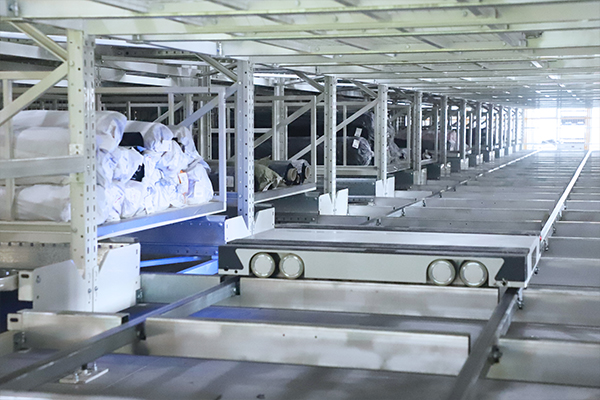
Different industries create different stress points for storage systems. Cold chain operations require lithium batteries rated for continuous operation at -25°C, and a shuttle system like the R-bot with its low-temperature dedicated battery and automatic charging port is purpose-built for that environment. Narrow aisle robots can also be specified with cold chain packages, but the wider aisles mean a larger volume of air to condition, increasing energy costs over time. In manufacturing, where raw material and finished goods pallets often move along lengthy conveyor routes, the vertical integration of an H-bot elevator with R-bot shuttles eliminates the need for separate vertical lift stations—a space and capital saving that multiplies across a multi-level facility.
For a company projecting 30% annual warehouse volume growth over five years, an AS/RS provides a more natural expansion path: you can add shuttles and elevators to the existing grid without changing the aisle layout. A narrow aisle system, by contrast, requires you to either widen aisles for higher-capacity robots or accept more machines running at lower individual utilization, which increases congestion. I tell clients that if your five-year plan suggests moving from 50 to 80 pallets per hour, build the AS/RS from the start; retrofitting a narrow aisle layout into a shuttle grid mid-contract is disruptive and rarely cost-effective.
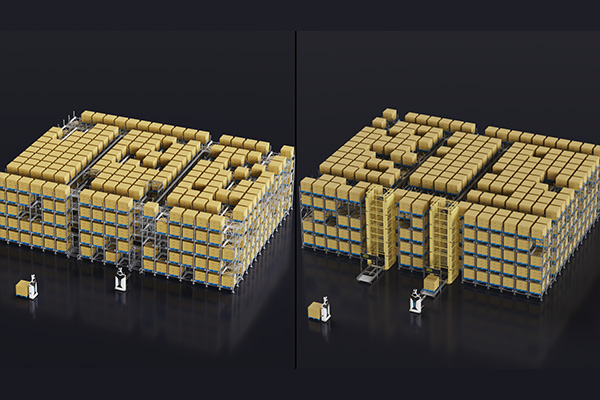
How to Make the Final Decision Without an Engineer On Staff
If you do not have an in-house automation engineer, you can still make a well-grounded choice by working through four concrete questions. First, is your facility’s clear height above 12 meters? Heights below 12 meters favor a narrow aisle robotic solution because a shuttle AS/RS cannot amortize the vertical travel hardware cost. Second, is your inbound quality consistent? If more than 5% of pallets arrive with damage or non-standard dimensions, a vision-guided narrow aisle robot will keep operations running while an AS/RS will cause daily stoppages. Third, do you need to incorporate piece picking at the storage face? The U-bot + AMR system supports “upper storage, lower picking” operations with up to 10,000 SKUs and 300 pieces per hour, which a pure shuttle-based AS/RS handles less efficiently without custom workstation integration. Fourth, are you planning to integrate with third-party logistics clients? Multi-tenant WMS separation is easier to implement on a narrow aisle automated base because inventory ownership in a shared aisle grid creates legal complexity.
If your answers indicate high throughput, consistent pallets, and a tall building, the AS/RS route using four-way shuttle and elevator combinations will deliver the best long-term return. If flexibility, mixed SKU picking, or gradual rollout is more important, a narrow aisle omnidirectional stacker solution keeps more options open.
Common Questions About AS/RS and Narrow Aisle Warehousing
How reliable are four-way shuttle AS/RS systems?
In practice, individual R-bot shuttles achieve over 99% uptime when maintained according to the manufacturer’s schedule, and the system is designed so that a single shuttle failure does not block the entire aisle. The battery runs 8 hours on a full charge and can be swapped or automatically recharged at an end-of-aisle station. The bigger operational risk is software-related—communication drops between the WCS and the shuttle fleet—so it is worth testing your warehouse network redundancy before commissioning.
Can I start with a narrow aisle system and later convert to a full AS/RS?
Technically yes, but the cost often exceeds the original saving. The racking structure used for a narrow aisle omnidirectional robot is typically not compatible with shuttle guide rails, and the floor flatness tolerance required for shuttles is much tighter. If your throughput growth is certain within two to three years, we recommend building the AS/RS foundation now even if you defer some shuttle purchases.
Does a narrow aisle warehouse really need automation, or can I just use reach trucks?
For fewer than 15 moves per hour per aisle, a reach truck operation remains cost-effective. But once you need 20 moves per hour or more, the cumulative labor cost and damage rate justify automation. U-bot stacker robots, with a positioning accuracy of ±10 mm and fallback safety rated for narrow operation, reduce pallet damage by roughly 40% compared to manual truck operation in the same aisle width.
What maintenance support is required for an AS/RS shuttle system?
A typical six-way shuttle installation of 20–30 shuttles requires one part-time technician trained on battery replacements and sensor cleaning. Major firmware updates and mechanical overhauls are handled remotely by the supplier’s support team. The biggest hidden maintenance item is the shuttle’s polyurethane drive wheel replacement, which occurs every 12–18 months under heavy usage. We advise budgeting 1.5% of system cost annually for maintenance and carrying two spare shuttles as a cold standby.
How soon can I see ROI on an AS/RS compared to a narrow aisle automated warehouse?
For a high-throughput facility moving 80 pallets per hour, a shuttle-based AS/RS typically achieves payback in 3–4 years, compared to 4–6 years for a narrow aisle automated solution, because the shuttle system’s lower operating cost per move scales across three shifts. Send your projected daily moves and facility dimensions to info@zikoo-int.com, and I will provide a customized cash flow projection that accounts for your specific labor rates and energy costs.
If you are still weighing the trade-off for your specific building and throughput profile, we can run a simulation model that compares the two designs side by side using your real data. Reach out to me directly at info@zikoo-int.com or call (+86)-19941778955 with your facility dimensions, daily move targets, and any special pallet or environmental requirements—our team will deliver a comparison layout and capital estimate within a week.
If you’re interested, check out these related articles:
Six-Way Shuttle: The Smart Warehousing Tool for Cost Reduction and Efficiency 2
Six-Way Shuttle: The Smart Warehousing Tool for Cost Reduction and Efficiency
PTP Intelligent Warehouse Software Empowers Enterprises for Smart Upgrades


