


AS/RS downtime is a concern that comes up in nearly every automation project discussion, and for good reason: an unexpected stop in an 자동 창고 시스템 can ripple through an entire supply chain. But in our experience, the real question isn’t whether AS/RS systems are prone to downtime, it’s what design and maintenance approach you use to keep them running. At Zikoo Smart Technology, we’ve deployed pallet-to-person robotics across cold chain, manufacturing, and 3PL environments. The pattern is consistent: downtime tracks directly with how thoroughly you address known failure points during system design and how rigorously you maintain the equipment afterward.
Where AS/RS Downtime Comes From
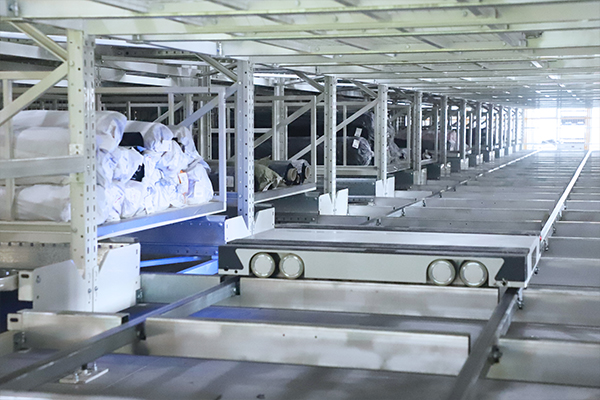
Most downtime events aren’t mysterious. They fall into a handful of predictable categories that we see across installations, regardless of industry. Mechanical wear is the most common root cause. Shuttle wheels, lift chains, and guide rails all degrade over time under continuous load cycles, particularly in high-throughput facilities where shuttles run 20 hours a day. In a 3PL warehouse we supported, we found that wheel debris buildup on the rail surfaces caused position drift after just three months, triggering periodic safety stops until the cleaning protocol was tightened.
Sensor drift is another persistent failure mode. Laser positioning sensors, proximity switches, and barcode readers operate within fairly tight tolerance bands. In environments with heavy dust, condensation, or temperature swings, calibration can shift. I’ve observed this acutely in cold storage projects where the H-bot elevator moves between -25°C frozen aisles and ambient staging zones. The rapid temperature change creates condensation on sensor lenses, causing temporary position loss until we added heated lens covers and set narrower recalibration intervals. Communication faults between the shuttle’s onboard controller and the WCS are less frequent but harder to diagnose, often manifesting as intermittent timeouts that require protocol-level tracing.
Battery degradation is a systematic issue if not managed proactively. A lithium battery rated for 8-hour continuous operation won’t deliver that after 2,000 charge cycles if deep-discharged regularly. We’ve learned to program the fleet management software to rotate shuttles and throttle charge rates when battery health indicators start to decline, avoiding sudden voltage drops that cause mid-operation stops.
Designing for Uptime: Engineering Choices That Prevent Downtime
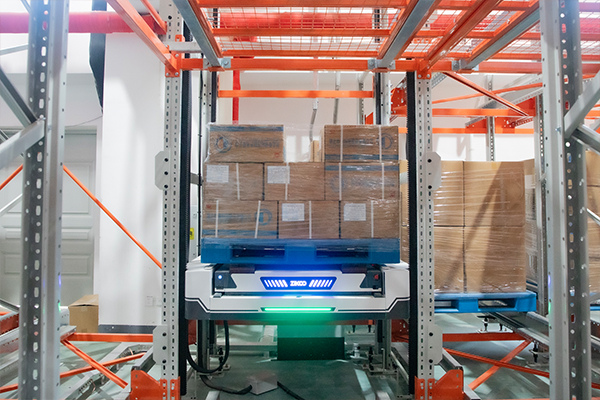
What you design into the system upfront has more impact on long-term uptime than any maintenance program you’ll run later. Redundancy at the component level is a non-negotiable for critical operations. That means dual communication paths, backup power capacitors on shuttle controllers, and redundant positioning sensors that can cross-validate each other’s readings. At Zikoo, our R-bot 4방향 셔틀 includes multiple independent wheel encoders so that a single encoder failure does not stop the shuttle; it degrades to a lower-resolution mode and alerts the WMS for service.
Component selection for the environment matters more than many buyers realize. A shuttle operating in a -15°C cold chain facility needs a different battery chemistry and protective coating than one in a dry ambient warehouse. Our cold chain solution uses a dedicated -25°C lithium battery with special PCBA coating for humidity resistance, and we spec sealed connectors throughout the shuttle housing. Without those choices, condensation ingress will corrode contacts within months. Similarly, in heavy-duty pallet handling, the shuttle frame needs to withstand repeated 1.5-ton loads without micro-deformation that eventually throws off wheel alignment. The R-bot heavy-duty model uses a reinforced stainless-steel frame for exactly that reason.
System architecture decisions also influence how a failure propagates. In a 6방향 셔틀 setup combining R-bot horizontal shuttles and H-bot vertical lifts, if one H-bot goes offline, the WCS can reroute pallets through an alternate lift and maintain partial throughput. Without that spatial redundancy, a single lift failure can halt an entire aisle. When we design 고밀도 스토리지 grids, we build in lift-path redundancy as a standard feature for facilities where downtime costs exceed $5,000 per hour.
Preventive Maintenance Practices That Reduce AS/RS Downtime
Good design buys you a lower failure rate, but effective maintenance buys you the uptime you actually achieve. The shift from reactive repair to predictive maintenance is where I’ve seen the biggest gains in project performance. Modern AS/RS generate a continuous stream of sensor data: motor current, vibration amplitude, temperature, cycle counts. When we integrate the WMS with a condition-monitoring module, the system can flag a shuttle whose drive motor current has increased by 15% over a baseline, indicating bearing wear before it causes a failure. In a manufacturing warehouse we instrumented, that single change cut unplanned downtime by 40% in the first year.
Standardizing maintenance windows is equally important. Most facilities can afford 4-6 hours of planned downtime per month if it prevents 20 hours of random interruptions. We advise customers to schedule sensor recalibration, rail cleaning, and battery health checks monthly, with a more comprehensive mechanical inspection quarterly. The quarterly inspection needs to include checking bolt torque on critical mounts, testing emergency brakes, and measuring wheel wear with a go/no-go gauge. These are not complex procedures, but they become easy to skip when the system “feels like it’s running fine.”
The table below compares the outcomes of two different maintenance approaches on a mid-sized four-way shuttle installation with 12 shuttles and 4 lifts.
| Maintenance Approach | Annual Unplanned Downtime | Average Repair Cost per Event | System Uptime |
|---|---|---|---|
| Reactive only (run to failure) | 45-60 hours | $2,800 | 97.2% |
| Preventive (monthly checks, no condition monitoring) | 20-30 hours | $2,100 | 98.6% |
| Predictive (condition monitoring + monthly checks) | 8-12 hours | $1,500 | 99.5% |
If your facility’s temperature or humidity profile is outside a standard ambient range, it is worth confirming the maintenance schedule your equipment can realistically support before finalizing your shuttle selection. Our engineering team can provide a maintenance feasibility assessment based on your site data. Reach us at info@zikoo-int.com for a technical consultation.
How to Evaluate a Supplier’s Downtime Track Record
When you’re comparing vendors, the reliability claims in a brochure are nearly useless without context. A valid downtime track record needs to be broken down by environment, load profile, and maintenance regime. I always ask suppliers for MTBF data specific to the shuttle model and lift type, not a system-wide average that bundles every component. For a four-way shuttle handling 1.2-ton pallets at 16 hours per day in an ambient warehouse, a realistic MTBF target is 1,500–2,000 operating hours between unscheduled interruptions, based on the data we track across our installed base.
Reference sites matter, but only if the operating conditions match yours. A shuttle that achieves 99.6% uptime in a clean pharmaceutical warehouse with climate control tells you nothing about how it will perform in a cement manufacturing plant with fine dust. Ask to speak with a reference that has similar throughput, load weights, and environmental conditions, and press for details on the most recent three downtime events and what was done to resolve them.
Remote diagnostics capability is the single biggest factor in recovery speed after a failure. When a shuttle loses communication at 2 a.m., a system that pushes an alarm to a cloud-based monitoring platform with remote access to the shuttle’s diagnostic logs can often be resolved by a technician within 30 minutes, without an on-site visit. We build this remote access into every Zikoo PTP 스마트 웨어하우스 소프트웨어 deployment. Confirm whether your supplier offers remote diagnostics with guaranteed response times or only on-site service contracts.
Building a Long-Term Reliability Strategy
Reliability isn’t a one-time achievement; it erodes unless you manage it intentionally over the system’s lifecycle. The most effective operators we work with maintain a living reliability plan that evolves with their throughput and SKU profile. That plan includes an annual design review where you analyze downtime logs, identify the top three failure causes, and decide whether to add redundant components, adjust maintenance intervals, or upgrade software. After a cold chain site we supported identified that shuttle battery performance dropped in the third year, we updated their battery management software to limit peak discharge currents, extending service life by an estimated 18 months without replacing the entire battery bank.
Software upgrades play an underappreciated role. Control algorithms that optimize shuttle routing based on real-time load sharing can reduce mechanical stress on individual shuttles, distributing wear more evenly and lowering overall failure probability. We release quarterly firmware updates that incorporate the failure pattern data we collect across all deployed fleets. A customer on an older version might be running a routing algorithm that overuses the shuttle closest to the inbound dock, accelerating its wheel wear. The fix is often less than an hour of system downtime to deploy.
Spare parts strategy is the other lever. For critical components like shuttle drive motors, lift brakes, and communication modules, we recommend maintaining one spare per 10 active units on site. That lets you replace a failed module in under two hours without waiting for a courier. For installations in remote locations or countries with challenging import logistics, we help customers build a larger initial spares package and provide remote guidance for local technicians to perform swaps.
No automation system is immune to downtime, but the difference between a system that costs you a few hours per year and one that costs you days per month is almost entirely a function of how you engineer and maintain it. If you’re planning an AS/RS project or need to improve uptime in an existing installation, our engineering team can give you a reliability analysis grounded in real-world data from similar facilities. Send your site parameters, load profiles, and throughput targets to info@zikoo-int.com or call (+86)-19941778955. We’ll return a detailed assessment of expected uptime, recommended redundancy levels, and a maintenance roadmap for your specific operation.
Common Questions About AS/RS Reliability
What’s a realistic uptime percentage for a modern pallet shuttle AS/RS? cURL Too many subrequests by single Worker invocation. To configure this limit, refer to https://developers.cloudflare.com/workers/wrangler/configuration/#limits
cURL Too many subrequests by single Worker invocation. To configure this limit, refer to https://developers.cloudflare.com/workers/wrangler/configuration/#limits cURL Too many subrequests by single Worker invocation. To configure this limit, refer to https://developers.cloudflare.com/workers/wrangler/configuration/#limits
cURL Too many subrequests by single Worker invocation. To configure this limit, refer to https://developers.cloudflare.com/workers/wrangler/configuration/#limits cURL Too many subrequests by single Worker invocation. To configure this limit, refer to https://developers.cloudflare.com/workers/wrangler/configuration/#limits
관심이 있다면, 관련 기사들을 확인하세요:
신뢰할 수 있는 사방 셔틀 제조사를 찾고 계신가요? Zikoo Robotics를 선택하세요
스태커 크레인 vs. 사방 셔틀: 어떤 것이 귀하의 ASRS 창고에 가장 적합합니까?
육방 셔틀: 비용 절감과 효율성을 위한 스마트 물류 도구 2
Six-Way Shuttle System은 고밀도 스토리지 자동화에서 기계에서 로봇으로의 전환을 주도합니다.
창고 가치 재구성: 육방 셔틀이 디지털 전환을 선도하다


