


Manufacturing warehouses present a distinct set of operational demands that separate them from distribution centers or retail fulfillment facilities. Raw material staging, work-in-process buffer storage, finished goods holding, and production line feeding all happen within the same four walls, often simultaneously. The question of whether 4방향 셔틀 시스템s suit this environment requires examining how these systems interact with manufacturing-specific workflows rather than relying on generic automation benefits.
I have worked on pallet storage projects across automotive component plants, battery cell manufacturing facilities, and precision machinery operations. The pattern I observe repeatedly is that manufacturing warehouses succeed with 4방향 셔틀 systems when the implementation addresses production rhythm alignment, not just storage density. A shuttle system that maximizes cube utilization but cannot respond to unplanned production pulls creates more problems than it solves.
Why Manufacturing Warehouses Differ from Distribution Centers
Distribution centers optimize for throughput velocity. Goods arrive, get sorted, and leave within hours or days. Manufacturing warehouses operate on a fundamentally different logic. Materials may sit for weeks awaiting production scheduling, then suddenly require rapid sequential delivery to multiple production lines within a single shift.
This creates what I call “burst demand with long dwell” conditions. A 4방향 셔틀 시스템 must handle both states effectively. During dwell periods, the system manages inventory accuracy and space optimization. During burst periods, the system must deliver pallets to staging areas faster than forklift operators can physically transport them to line-side positions.
The R-bot Four-Way Shuttle addresses this through its 1.2 m/s loaded travel speed and multi-shuttle collaborative operation capability. In a recent automotive parts warehouse project, we deployed 12 shuttles across a 6-level racking system. During normal operations, 4 shuttles handled routine put-away and retrieval. When production scheduling triggered a batch changeover requiring 80 pallets within 45 minutes, all 12 shuttles activated automatically through the WCS layer, achieving the required throughput without manual intervention.
| Warehouse Type | Primary Optimization Goal | Demand Pattern | Four-Way Shuttle Fit |
|---|---|---|---|
| E-commerce Fulfillment | Order cycle time | Continuous, predictable | 높음 |
| Cold Chain Distribution | Temperature compliance | Scheduled waves | 높음 |
| Manufacturing Raw Materials | Production line feeding | Burst with long dwell | Conditional |
| Manufacturing WIP Buffer | Sequence accuracy | Real-time, variable | 중간에서 높음 |
| Manufacturing Finished Goods | Shipment consolidation | Batch-driven | 높음 |
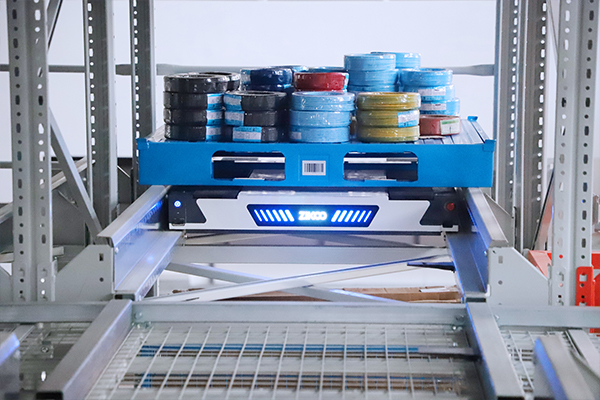
Production Line Integration Creates the Real Complexity
The technical specifications of a four-way shuttle system tell only part of the story. What determines success in manufacturing environments is how the 창고 셔틀 시스템은 integrates with production planning systems.
Manufacturing Execution Systems (MES) generate material requirements based on production schedules. These requirements must translate into warehouse retrieval commands with minimal latency. If your MES issues a material call and the warehouse management system takes 15 minutes to process and execute the retrieval, you have created a bottleneck that no amount of shuttle speed can overcome.
그것은 PTP 스마트 웨어하우스 소프트웨어 cURL Too many subrequests by single Worker invocation. To configure this limit, refer to https://developers.cloudflare.com/workers/wrangler/configuration/#limits
cURL Too many subrequests by single Worker invocation. To configure this limit, refer to https://developers.cloudflare.com/workers/wrangler/configuration/#limits
cURL Too many subrequests by single Worker invocation. To configure this limit, refer to https://developers.cloudflare.com/workers/wrangler/configuration/#limits
cURL Too many subrequests by single Worker invocation. To configure this limit, refer to https://developers.cloudflare.com/workers/wrangler/configuration/#limits
cURL Too many subrequests by single Worker invocation. To configure this limit, refer to https://developers.cloudflare.com/workers/wrangler/configuration/#limits cURL Too many subrequests by single Worker invocation. To configure this limit, refer to https://developers.cloudflare.com/workers/wrangler/configuration/#limits
cURL Too many subrequests by single Worker invocation. To configure this limit, refer to https://developers.cloudflare.com/workers/wrangler/configuration/#limits cURL Too many subrequests by single Worker invocation. To configure this limit, refer to https://developers.cloudflare.com/workers/wrangler/configuration/#limits
cURL Too many subrequests by single Worker invocation. To configure this limit, refer to https://developers.cloudflare.com/workers/wrangler/configuration/#limits cURL Too many subrequests by single Worker invocation. To configure this limit, refer to https://developers.cloudflare.com/workers/wrangler/configuration/#limits 육방향 셔틀 시스템 cURL Too many subrequests by single Worker invocation. To configure this limit, refer to https://developers.cloudflare.com/workers/wrangler/configuration/#limits
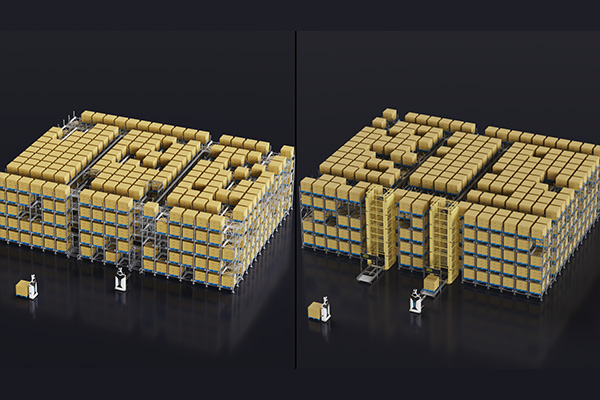
cURL Too many subrequests by single Worker invocation. To configure this limit, refer to https://developers.cloudflare.com/workers/wrangler/configuration/#limits cURL Too many subrequests by single Worker invocation. To configure this limit, refer to https://developers.cloudflare.com/workers/wrangler/configuration/#limits
cURL Too many subrequests by single Worker invocation. To configure this limit, refer to https://developers.cloudflare.com/workers/wrangler/configuration/#limits
cURL Too many subrequests by single Worker invocation. To configure this limit, refer to https://developers.cloudflare.com/workers/wrangler/configuration/#limits
cURL Too many subrequests by single Worker invocation. To configure this limit, refer to https://developers.cloudflare.com/workers/wrangler/configuration/#limits cURL Too many subrequests by single Worker invocation. To configure this limit, refer to https://developers.cloudflare.com/workers/wrangler/configuration/#limits
cURL Too many subrequests by single Worker invocation. To configure this limit, refer to https://developers.cloudflare.com/workers/wrangler/configuration/#limits cURL Too many subrequests by single Worker invocation. To configure this limit, refer to https://developers.cloudflare.com/workers/wrangler/configuration/#limits cURL Too many subrequests by single Worker invocation. To configure this limit, refer to https://developers.cloudflare.com/workers/wrangler/configuration/#limits cURL Too many subrequests by single Worker invocation. To configure this limit, refer to https://developers.cloudflare.com/workers/wrangler/configuration/#limits
cURL Too many subrequests by single Worker invocation. To configure this limit, refer to https://developers.cloudflare.com/workers/wrangler/configuration/#limits cURL Too many subrequests by single Worker invocation. To configure this limit, refer to https://developers.cloudflare.com/workers/wrangler/configuration/#limits
cURL Too many subrequests by single Worker invocation. To configure this limit, refer to https://developers.cloudflare.com/workers/wrangler/configuration/#limits cURL Too many subrequests by single Worker invocation. To configure this limit, refer to https://developers.cloudflare.com/workers/wrangler/configuration/#limits
cURL Too many subrequests by single Worker invocation. To configure this limit, refer to https://developers.cloudflare.com/workers/wrangler/configuration/#limits
cURL Too many subrequests by single Worker invocation. To configure this limit, refer to https://developers.cloudflare.com/workers/wrangler/configuration/#limits
cURL Too many subrequests by single Worker invocation. To configure this limit, refer to https://developers.cloudflare.com/workers/wrangler/configuration/#limits cURL Too many subrequests by single Worker invocation. To configure this limit, refer to https://developers.cloudflare.com/workers/wrangler/configuration/#limits
cURL Too many subrequests by single Worker invocation. To configure this limit, refer to https://developers.cloudflare.com/workers/wrangler/configuration/#limits cURL Too many subrequests by single Worker invocation. To configure this limit, refer to https://developers.cloudflare.com/workers/wrangler/configuration/#limits
cURL Too many subrequests by single Worker invocation. To configure this limit, refer to https://developers.cloudflare.com/workers/wrangler/configuration/#limits cURL Too many subrequests by single Worker invocation. To configure this limit, refer to https://developers.cloudflare.com/workers/wrangler/configuration/#limits
cURL Too many subrequests by single Worker invocation. To configure this limit, refer to https://developers.cloudflare.com/workers/wrangler/configuration/#limits
cURL Too many subrequests by single Worker invocation. To configure this limit, refer to https://developers.cloudflare.com/workers/wrangler/configuration/#limits
cURL Too many subrequests by single Worker invocation. To configure this limit, refer to https://developers.cloudflare.com/workers/wrangler/configuration/#limits
| cURL Too many subrequests by single Worker invocation. To configure this limit, refer to https://developers.cloudflare.com/workers/wrangler/configuration/#limits | cURL Too many subrequests by single Worker invocation. To configure this limit, refer to https://developers.cloudflare.com/workers/wrangler/configuration/#limits | 처리 용량 | cURL Too many subrequests by single Worker invocation. To configure this limit, refer to https://developers.cloudflare.com/workers/wrangler/configuration/#limits | 유연성 |
|---|---|---|---|---|
| 네 방향 셔틀 | cURL Too many subrequests by single Worker invocation. To configure this limit, refer to https://developers.cloudflare.com/workers/wrangler/configuration/#limits | cURL Too many subrequests by single Worker invocation. To configure this limit, refer to https://developers.cloudflare.com/workers/wrangler/configuration/#limits | 매우 높음 | 높음 |
| cURL Too many subrequests by single Worker invocation. To configure this limit, refer to https://developers.cloudflare.com/workers/wrangler/configuration/#limits | cURL Too many subrequests by single Worker invocation. To configure this limit, refer to https://developers.cloudflare.com/workers/wrangler/configuration/#limits | cURL Too many subrequests by single Worker invocation. To configure this limit, refer to https://developers.cloudflare.com/workers/wrangler/configuration/#limits | 매우 높음 | 낮음 |
| cURL Too many subrequests by single Worker invocation. To configure this limit, refer to https://developers.cloudflare.com/workers/wrangler/configuration/#limits | Flexible routing, lower density | 20-40 pallets/hour | 중간 | 매우 높음 |
| VNA Forklift | Lower capital, moderate density | 25-40 pallets/hour | 높음 | 중간 |
| Conventional Forklift | Lowest capital, maximum flexibility | 15-25 pallets/hour | 낮음 | 매우 높음 |
Stacker crane ASRS systems achieve higher peak throughput but sacrifice flexibility. A crane failure stops an entire aisle. Four-way shuttle systems distribute risk across multiple independent shuttles. For manufacturing operations where unplanned downtime carries severe production consequences, this redundancy often justifies the technology choice even when throughput requirements alone might favor cranes.
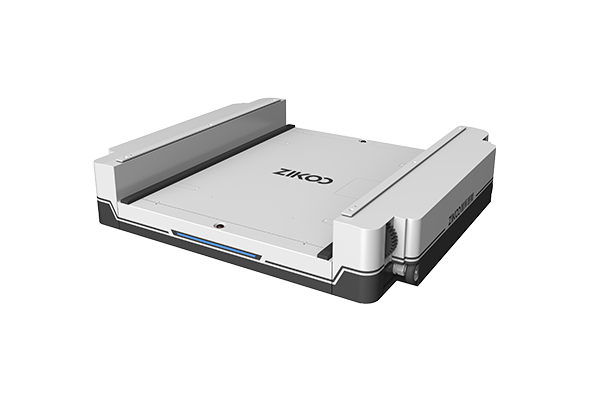
AGV and AMR systems offer routing flexibility that shuttles cannot match, but their storage density limitations make them better suited for transport between zones rather than primary storage applications. Many manufacturing implementations combine technologies: shuttles for dense storage, AMRs for line-side delivery, and the U-bot 전방향 스태커 로봇 for narrow-aisle picking operations.
Making the Investment Decision
The financial case for four-way shuttle systems in manufacturing warehouses rests on several quantifiable factors and some that resist easy measurement.
Labor cost reduction provides the most straightforward calculation. Count current warehouse headcount, multiply by fully loaded labor cost, and compare against projected staffing with automation. Most implementations I have supported achieve 60-70% labor reduction in storage and retrieval operations. The remaining staff shift to value-added activities: quality inspection, kitting, production staging.
Space cost avoidance matters when facility expansion is the alternative. If your current warehouse cannot support planned production growth, compare the cost of building or leasing additional space against the cost of densifying existing space with automation. Four-way shuttle systems typically achieve 80-100% storage density improvement over conventional selective racking.
Inventory accuracy improvement affects production efficiency indirectly but significantly. Every minute a production line waits for materials that cannot be located represents lost output. If your current operations experience material search delays, quantify that lost production time and include it in the ROI model.
Damage reduction from eliminating forklift handling errors contributes to savings that often surprise teams during post-implementation reviews. Forklift impacts damage product, racking, and facility infrastructure. Shuttle systems operate on fixed rails with controlled movements, virtually eliminating handling damage.
For manufacturing operations planning capacity expansion or facing labor availability challenges, the suitability assessment involves factors specific to your production workflows. Share your current throughput requirements and growth projections with our team at info@zikoo-int.com or call (+86)-19941778955, and we can model expected performance against your operational parameters.
Common Questions About Four-Way Shuttles in Manufacturing
Can four-way shuttle systems handle the weight of heavy manufacturing components?
The R-bot Heavy-duty Type supports rated loads up to 1,500 kg, and the Heavy-duty Large Pallet Type handles 2,000 kg. These capacities cover most palletized manufacturing components including metal castings, machined parts, and assembled subassemblies. For loads exceeding 2,000 kg, custom configurations are available. The load capacity specification applies to the shuttle itself; racking design must also account for total bay loads when storing heavy materials across multiple levels.
How do shuttle systems maintain operation during production schedule changes?
The WES layer in PTP 스마트 웨어하우스 소프트웨어 maintains bidirectional integration with manufacturing execution systems. When production schedules change, the warehouse system receives updated material requirements and automatically reprioritizes retrieval sequences. Pre-staged materials for cancelled production runs return to storage, while newly required materials move to staging. This happens without manual intervention, though operators can override automatic decisions when circumstances require.
What happens if a shuttle fails during a critical production period?
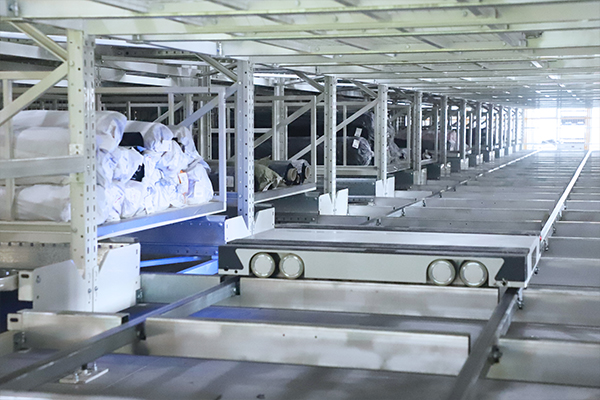
Four-way shuttle systems are designed with inherent redundancy. Multiple shuttles operate within the same racking system, and the RCS layer automatically redistributes tasks when a shuttle goes offline. A single shuttle failure typically reduces system throughput by 10-15% rather than stopping operations entirely. For manufacturing operations where any throughput reduction is unacceptable, we recommend maintaining one or two spare shuttles that can be deployed within minutes. If your production criticality requires specific uptime guarantees, discuss redundancy requirements during system specification.
Do four-way shuttles work in facilities with existing racking infrastructure?
Retrofit installations are possible but require careful assessment. Four-way shuttle systems need specific rail profiles, beam spacing, and floor flatness tolerances. Some existing racking can be modified; other installations require replacement. The cost difference between retrofit and new installation varies significantly based on current racking condition and configuration. A site survey determines feasibility and provides accurate cost comparison between approaches.
How long does implementation typically take for a manufacturing warehouse?
Timeline depends on system scale and site conditions. A mid-sized installation covering 3,000-5,000 pallet positions typically requires 4-6 months from contract to go-live, including racking installation, shuttle commissioning, software integration, and operator training. Larger systems or those requiring extensive building modifications extend accordingly. Manufacturing operations often phase implementations to maintain continuous operations, installing and commissioning sections sequentially rather than converting the entire warehouse simultaneously. Share your timeline constraints and we can outline a phased approach that minimizes production disruption.
Industry Standards and Data Sources Cited
MHI — Automatic Identification and Data Capture Overview, 2024
LogisticsIQ — Warehouse Automation Market Report, 2024
관심이 있다면, 관련 기사들을 확인하세요:
육방 셔틀, 산업이 스마트 물류를 수용하도록 지원
스마트 냉장 유통 시대: 육방향 셔틀 시스템이 최대 밀도로 저장 효율성을 재정의하다
스마트 스토리지 혁명: 자동 3D 창고용 4방향 셔틀 시스템에 대한 포괄적인 개요》를 확인하십시오.


