


Modern logistics runs on precision, and we keep seeing how legacy warehouse practices clog throughput and drive up costs. An automated warehouse changes that when it’s planned with care, backed by the right robotics and software, and rolled out in stages. Our method starts with assessment and goal setting, moves into layout and technology design, and finishes with implementation, testing, and ongoing optimization. Zikoo’s pallet-to-person robotics and PTP Smart Warehouse Software sit at the core, helping deliver a smooth transition and strong ROI.
Understanding the Imperative for Automated Warehousing in Modern Logistics
An automated warehouse brings together advanced technologies to streamline storage, retrieval, and material handling. By reducing manual steps, it improves speed, accuracy, and overall operational efficiency. Companies are adopting automation to counter labor shortages, rising operational costs, and tighter fulfillment timelines. Zikoo’s pallet-to-person robotics and PTP Smart Warehouse Software provide robust answers to these modern warehousing demands.
Phase 1: Comprehensive Needs Assessment and Strategic Goal Setting for Automation Success
Before looking at technology, evaluate current operations, surface bottlenecks, and set clear, measurable objectives for automation. This phase relies on data collection, process mapping, and a strategic roadmap that aligns with business goals and prepares for a smooth transition.
Analyzing Current Operations and Identifying Key Pain Points
We run a detailed audit of existing warehouse processes, including inventory management, labor utilization, and operational costs. The aim is to pinpoint inefficiencies and highlight areas suited for automation, guided by data-driven insights.
Defining Clear Objectives and Key Performance Indicators (KPIs)
We set specific, measurable, achievable, relevant, and time-bound (SMART) goals for the automated warehouse. Typical targets include lowering labor costs, improving order fulfillment rates, and increasing storage density.
Phase 2: Designing the Optimal Automated Warehouse Layout and Technology Ecosystem
Here we translate strategic goals into a practical design through layout optimization and technology selection. We show how Zikoo’s pallet-to-person robotics, including the U-bot, R-bot, and H-bot, fit different warehouse configurations to maximize space and efficiency. Software integration remains central to the outcome.
Conceptualizing the Warehouse Layout and Flow
We create a detailed floor plan that optimizes storage, retrieval, and material flow, accounting for product types, throughput requirements, and room for future expansion. 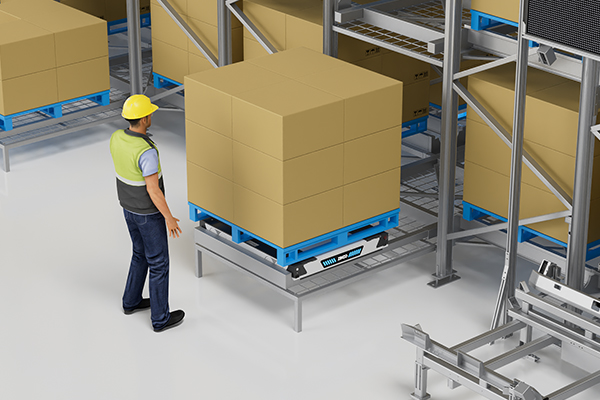
Selecting Core Automation Technologies: Robotics and Material Handling
We assess automated storage and retrieval systems (AS/RS), conveyors, and robotic options. We emphasize Zikoo’s pallet-to-person robotics for high-density, efficient operations. For instance, our R-bot Four-way Shuttle is designed as a core handling solution for dense storage. It is an intelligent warehouse robot optimized for pallet-to-person dense storage scenarios. With a slim body thickness of only 125 mm and a load capacity of up to 1.5 tons, it offers flexible four-way movement. It also provides intelligent autonomous handling and multi-shuttle collaborative operation. When integrated with equipment such as the H-bot vertical bidirectional shuttle, it can achieve Six-way shuttle system functionality. This makes it adaptable to a wide range of palletized goods storage and picking scenarios across various industries. To learn more about optimizing your warehouse, consider reading 《Six-Way Shuttle Powers Dense Storage: Breaking Space Limitations》.
| Model Options | Weight (kg) | Rated Load (kg) | Dimensions (L×W×H mm) | Pallet Sizes Supported (mm) | Empty Speed (m/s) | Loaded Speed (m/s) |
|---|---|---|---|---|---|---|
| Standard (R1200B) | 270 | 1200 | 1000 × 972 × 125 | 1200 × 800–1000 | 1.6 | 1.2 |
| American (R1200A) | 265 | 1200 | 1192 × 840 × 125 | 1016 × 1219 | 1.6 | 1.2 |
| Japanese (R1500J) | 270 | 1500 | 1192 × 900 × 125 | 1100 × 1100 | 1.6 | 1.2 |
| Heavy-duty (R1500B) | 275 | 1500 | 1192 × 972 × 125 | 1200 | 1.6 | 1.2 |
| Heavy-duty Large Pallet (R2000B) | 400 | 2000 | 1250 × 1300 × 150 | 1400 | 1.35 | 1.0 |
The H-bot Vertical Bidirectional Shuttle serves as the “vertical transportation hub” in intelligent warehousing systems. It is specifically designed for pallet-to-person dense storage and storage-picking scenarios. With a compact layout that occupies only a single storage location, it collaborates smoothly with the 4 way pallet shuttle to create a three-dimensional warehousing network spanning six spatial directions. This integration significantly enhances the overall operational efficiency of the warehousing system. 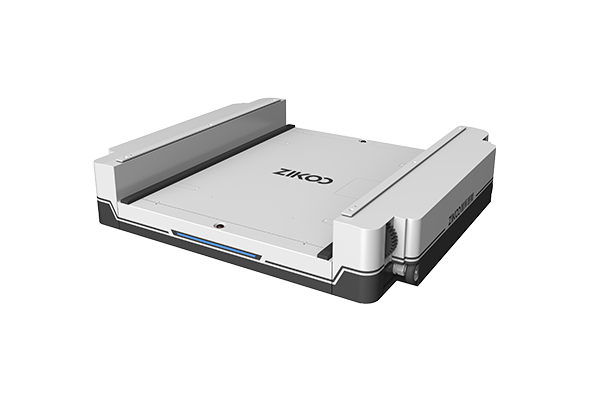
| Model Options | Body Weight (kg) | Dimensions (L×W×H mm) | Rated Load (kg) | Pallet Sizes Supported (mm) | Empty Speed (m/s) | Loaded Speed (m/s) |
|---|---|---|---|---|---|---|
| Standard (H1800B) | 345 | 1300 × 1464 × 288 | 1800 | 1200 × 800–1200 | 1 | 0.5 |
| American (H1800A) | 325 | 1300 × 1332 × 288 | 1800 | 1016 × 1219 | 1 | 0.5 |
| Japanese (H1800J) | 335 | 1300 × 1392 × 288 | 1800 | 1100 × 1100 | 1 | 0.5 |
| Heavy-duty Large Pallet (Custom) | Customized | Customized | 1800 | Customized | Customized | Customized |
The U-bot Omnidirectional Stacking Robot is an intelligent warehouse robot designed for pallet-to-person narrow aisle storage scenarios. It requires a minimum aisle width of only 2100 mm. Its unique U-shaped body design, combined with a minimum turning radius of 1370 mm, provides exceptional maneuverability in tight spaces. The robot features a lifting height of 0–8 meters and a rated load capacity of 1000 kg. It can operate collaboratively with automated equipment such as AMRs and robotic arms. 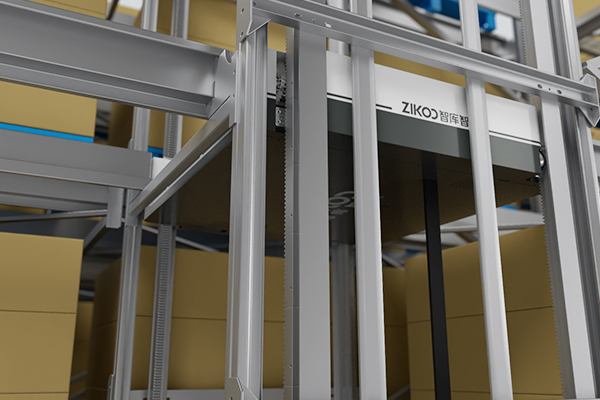
| Model Options | Dimensions (mm) | Rated Load (kg) | Self-weight (kg) | Lifting Height (mm) | Min. Aisle Width (mm) | Continuous Operation (hours) |
|---|---|---|---|---|---|---|
| U1045 | 2198×1784×2100 | 1000 | 3000 | 4500 | 2100 | 6–8 |
| U1060 | 2198×1820×2685 | 1000 | 3300 | 6000 | 2140 | 6–8 |
| U1080 | 2198×1820×3465 | 1000 | 3500 | 8000 | 2140 | 6–8 |
Integrating the Smart Warehouse Software (WMS/WES/WCS/RCS)
We explain how Zikoo’s PTP Smart Warehouse Software orchestrates all automated processes. The software manages everything from inventory to robot control, enabling cohesive operation and clear data visibility.
Phase 3: Implementation, Testing, and Continuous Optimization for Peak Performance
This phase covers the practical rollout. It spans vendor selection and installation through rigorous testing and ongoing performance monitoring. We stress a phased approach, thorough training, and a steady commitment to continuous improvement to secure long-term success and ROI from your automation investment. 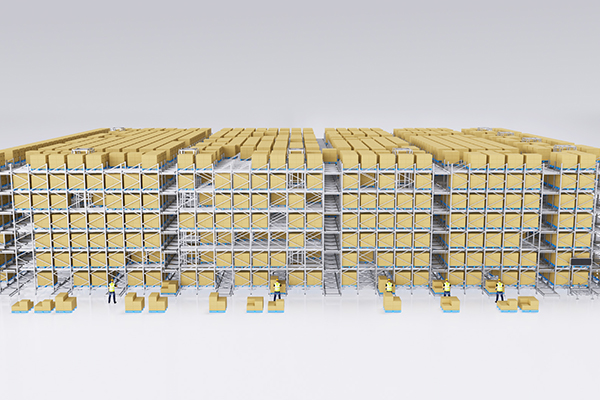
Vendor Selection, Project Management, and Installation
We partner with experienced automation providers like Zikoo. We set clear project timelines and manage the physical installation and integration of all hardware and software components.
System Testing, Commissioning, and Staff Training
We perform thorough testing of all automated systems to confirm they meet performance specifications. We also provide thorough training for staff on new processes and technologies. 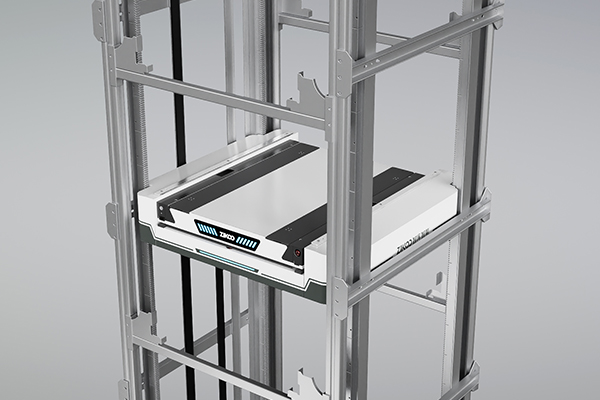
Performance Monitoring and Post-Implementation Optimization
We implement robust tracking mechanisms to monitor KPIs and identify opportunities for further optimization. We leverage data from Zikoo’s PTP Smart Warehouse Software for continuous improvement. For insights into advanced warehouse solutions, refer to 《Six-Way Shuttle Unlocks the Era of True 3D Intelligent Warehousing》.
Ready to Elevate Your Warehouse Efficiency?
Ready to transform your warehouse operations with intelligent automation? Contact Zikoo Smart Technology Co., Ltd. today for a personalized consultation. Discover how our pallet-to-person robotics and PTP Smart Warehouse Software can streamline your logistics, reduce costs, and enhance efficiency. Visit our website or email us at info@zikoo-int.com to begin your automation journey. You can also reach us by phone at (+86)-19941778955.
FAQs
What is the typical ROI for an automated warehouse system?
Most automated warehouse systems deliver an ROI in 1 to 3 years, driven by lower labor costs, higher storage density, improved inventory accuracy, and better throughput. The exact timeframe depends on factors such as initial investment, operational savings, and system complexity.
How does Zikoo’s PTP Smart Warehouse Software integrate with existing ERP systems?
Zikoo’s PTP Smart Warehouse Software (WMS/WES/WCS/RCS) supports flexible integration with a range of Enterprise Resource Planning (ERP) systems via standard APIs and customizable interfaces. This enables reliable data exchange for inventory, order, and shipping information, creating a unified operational ecosystem.
What are the key considerations when choosing between different types of warehouse robots?
Key considerations include the type of goods handled (e.g., pallets, cartons, individual items), required throughput, storage density needs, available facility space, and scalability for future growth. Zikoo’s U-bot, R-bot, and H-bot offer diverse capabilities tailored for pallet-to-person automation, addressing various operational demands.
How long does it typically take to plan and implement an automated warehouse?
Timelines vary with scope and complexity. A small-scale automation project might take 6–12 months, while a large, highly integrated system could run 18–36 months from initial assessment to full operation. Careful planning, like the steps outlined here, helps keep the process on track.


