


Omni shuttle, pallet shuttle, and four-way shuttle are not three completely separate machines. Pallet shuttle is the broad category. A four-way shuttle is a pallet shuttle that can change lanes and travel across the racking face, while an omnidirectional shuttle or stacker robot usually describes a free-ranging vehicle that can move sideways and diagonally on the floor and lift pallets at different heights. The right choice follows the rack interface, the movement pattern, the pallet profile, and the throughput target. This article compares the three by motion, load handling, software, and operating conditions.
Understand the Movement Logic First
The clearest separation is not how smart a vehicle sounds. It is where the vehicle moves. A conventional pallet shuttle travels along rails inside a storage lane, typically in one tunnel. It puts pallets into deep positions and retrieves them, but it cannot move by itself from one lane to another. A four-way shuttle also runs on rails, but it can change direction within the rack structure and enter different lanes. An omnidirectional stacker robot does not rely on rack rails. It travels across the floor using omnidirectional drive, can rotate in place, and uses a lifting mechanism to handle pallets. These differences decide whether the system needs more shuttles, more lifts, or wider aisles.
| Vehicle class | Movement surface | Pallet action | Typical system role |
|---|---|---|---|
| Lane-based pallet shuttle | Rails inside a storage lane | Moves pallets forward and back in one channel | Deep-lane putaway and retrieval |
| Four-way shuttle | Orthogonal rails inside the rack | Moves within lanes and across rack faces | High-density multi-lane automation |
| Omnidirectional stacker robot | Free floor movement | Lifts and carries pallets at multiple heights | Narrow-aisle storage and pallet-to-person work |
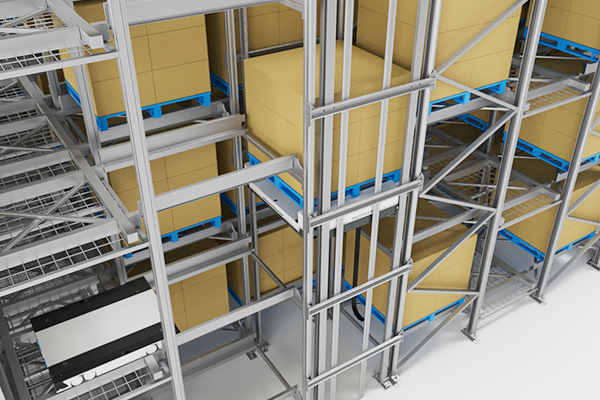
Where an Omnidirectional Stacker Robot Fits
An omnidirectional stacker robot suits facilities where pallets must come from floor-level receiving or storage locations and move to narrow-aisle racks or workstations. The Zikoo U-bot Omnidirectional Stacking Robot, for example, has a rated load of 1000 kg and lift heights of 4.5, 6, or 8 m depending on the model. Its minimum aisle width is 2100 mm for the U1045 and 2140 mm for the higher-reach models. It uses dual laser SLAM hybrid navigation with a 3D depth camera to correct pallet position deviations. These specifications matter because the vehicle can both travel and lift, so floor flatness, pallet stability, and aisle width become part of the layout decision.
The strongest case is a pallet-to-person or mixed storage and picking environment with full pallets entering and split-case picking leaving. The machine can operate with AMRs and robotic arms, but it is not a high-velocity substitute for a four-way shuttle on rails over long horizontal transfers. If every pallet only needs to move into a deep lane, a rail shuttle is simpler and can be less costly.
Where a Lane-Based Pallet Shuttle Still Wins
Use a conventional pallet shuttle when dense storage is the goal and the lane is more important than cross-aisle movement. A deep-lane rack stores pallets many positions deep in one channel. The shuttle enters the lane, carries a pallet to the next open position, and returns. If most pallets are the same SKU or can stay in the lane until the lane is depleted, this design gives high space efficiency with fewer vehicle types. The main limitation is lane change. A shuttle cannot switch lanes by itself, so the system either uses a forklift to move it between lanes or adds a transfer mechanism. That support activity becomes the bottleneck in high-throughput or high-SKU operations.
Where a Four-Way Shuttle Delivers More
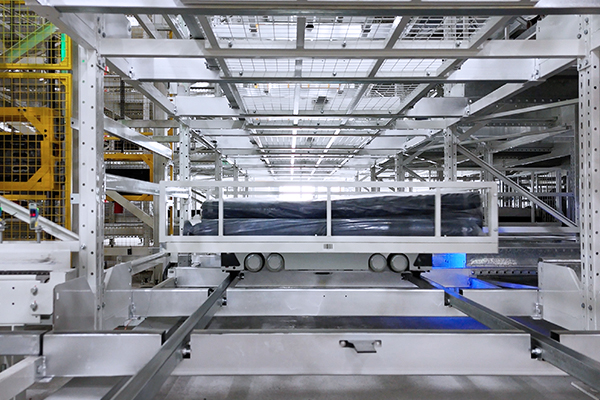
The four-way shuttle is selected when the warehouse needs deep-lane density and flexible horizontal access. It travels inside the rack on orthogonal rails, changes lanes without a forklift, and can be dispatched to any column from WCS decisions. With multiple shuttles in one rack, retrieval jobs are distributed across vehicles, so a single point of movement is less limiting than a crane aisle. This is why the R-bot Four-Way Shuttle is built around dense storage. Standard models accept 1200 kg to 1500 kg, while the heavy-duty large pallet type accepts 2000 kg. The body height is 125 mm for most models, which reduces vertical space lost to the shuttle itself.
Four-way shuttles are also the core of a six-way shuttle network. When paired with a vertical bidirectional shuttle or elevator, horizontal movement is combined with vertical transfer at designated lift points. That allows pallets to move between levels without a stacker crane and keeps the rack face free for shuttle lanes.
Stacker cranes travel to every load, while four-way shuttle systems distribute horizontal travel across many shuttles. <Stacker Crane vs Four-Way Shuttle: Which Fits Your ASRS Warehouse Best> covers the architecture trade-off.
What to Compare Before You Choose
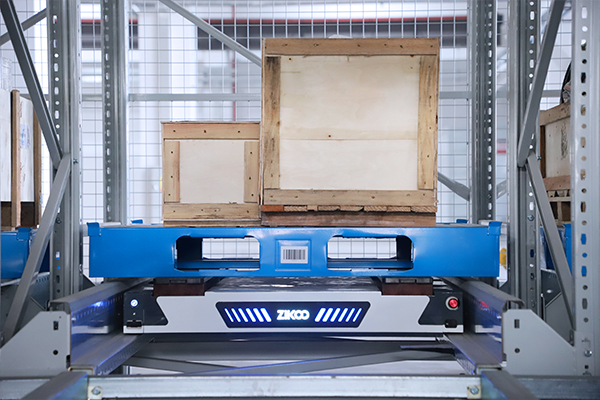
Start with the pallet. All three systems are pallet-handling vehicles, but they differ in how much consistency they expect. Four-way shuttles rely on a pallet supporting rails across the lane, and their travel is smoother when pallet dimensions and condition are repeatable. An omnidirectional stacker robot can compensate for some pallet offset through its vision and fork correction, but it still needs a stable base and enough floor clearance. Before choosing, confirm the dominant pallet footprint, bottom board orientation, load weight, and whether pallets are pooled, one-way, or mixed in poor condition.
| Decision factor | What to request | How it affects the choice |
|---|---|---|
| Pallet profile | Dimensions, bottom boards, weight, condition | Rail systems need repeatable pallets; omnidirectional robots can correct some offset |
| SKU depth | Pallets per SKU and lane | Many pallets per SKU suit deep-lane pallet shuttle |
| Throughput | Inbound and outbound pallets per hour, including peaks | Shuttle fleet scales horizontal jobs; lane-change activity becomes the limit |
| Building | Clear height, aisle width, floor flatness, columns | Determines rail layout, lift positions, and whether a floor robot can operate |
| Temperature | Ambient and cold-chain operating range | Battery and drive components must be rated for the environment |
| Software | WMS, WCS, WES interfaces and current automation | Multi-vehicle systems need mission orchestration and traffic control |
Cost comparisons should include not only vehicle count, but also rail, lift, software, spare parts, and implementation time. A specification sheet comparison misses the cost of the infrastructure that each vehicle requires.
Cost comparisons should include not only vehicle count, but also rail, lift, software, spare parts, and implementation time. <Smart Warehousing Starts Here: Cost-Effective Four-Way Shuttle Systems> covers how four-way shuttle systems can be specified for cost-conscious operations.
Software, Cold Chain, and Expansion Risks
The vehicles are only the moving part. A system needs software that assigns jobs, routes shuttles, avoids collisions, and coordinates lifts, conveyors, and workstations. PTP Smart Warehouse Software combines warehouse management, execution, and control functions so a four-way shuttle, a vertical lift, and an omnidirectional robot can operate under one task flow. When the software layer is treated as an integration bolt-on, the bottleneck often appears at task handover rather than at vehicle speed. Ask how the WCS handles battery charging, exception recovery, deadlock prevention, and order priority, not only how many pallets per hour a single demo can move.
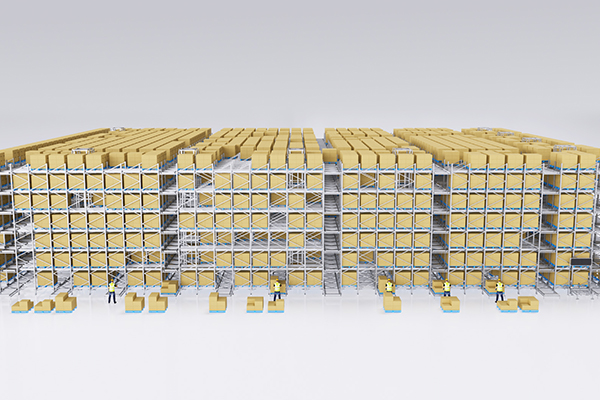
Cold chain and clean environments add another filter. A shuttle that works in an ambient distribution center may not be suitable for -25 ℃ operation. The R-bot cold chain solution uses a low-temperature lithium battery, low-temperature charging port design, and protective coating for humid or high-condensation areas. The U-bot uses lithium iron phosphate batteries with continuous operation of six to eight hours depending on the model. These runtime figures are product specifications, not guaranteed throughput, because charging strategy, travel distance, lift frequency, and temperature all change what the vehicle produces in a live warehouse.
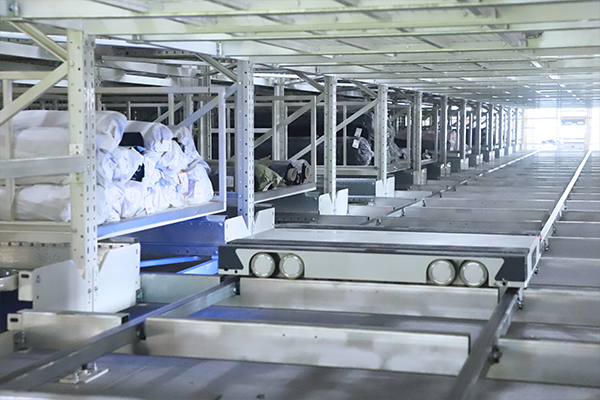
Expansion risk comes from committing to a movement pattern before the operating profile is stable. A lane-based pallet shuttle can be very efficient in the original SKU profile and then lose efficiency as the operation moves toward many small batches. A four-way shuttle preserves more flexibility because lanes can be reallocated by software. An omnidirectional robot preserves flexibility in floor operations but does not replace a rail system when the building can support high-rise racking. The better decision is to compare how each choice reacts to an increase in SKUs, a new pallet size, or a second shift.
Adding vertical transfer to a four-way shuttle system changes it from simple lane storage into a three-dimensional network. <Six-Way Shuttle Unlocks the Era of True 3D Intelligent Warehousing> covers how horizontal and vertical shuttles combine into a six-way storage path.
Request a Vehicle-Level Engineering Review
Send the pallet footprint, maximum load, clear height, lane depth, SKU depth, target inbound and outbound pallets per hour, floor condition, operating temperature, and whether the facility is new or existing. Those fields are enough to compare a lane-based pallet shuttle, a four-way shuttle system, and an omnidirectional stacking robot without committing to a layout prematurely.
Contact Zhang Wei at Zikoo Smart Technology Co., Ltd. Email: info@zikoo-int.com Phone: (+86)-19941778955.
FAQ
Is a four-way shuttle just a more advanced pallet shuttle?
Yes. The term pallet shuttle covers several rail-guided carts. A four-way shuttle is a pallet shuttle that can move in four directions inside the rack, while a simpler pallet shuttle usually travels along a single lane and requires external transfer between lanes. The important difference is whether lane changes happen inside the rack or at an outside station.
Which option needs the least floor space?
Lane-based pallet shuttles and four-way shuttles can both use deep racking and consume less floor space per pallet position than drive-in or block storage. An omnidirectional stacker robot needs wider aisle space, but it can work in narrow aisle racks down to 2100 mm and can also serve irregular floor areas. The densest cubic layout is usually a fixed rail system.
Can an omnidirectional robot replace a four-way shuttle?
It can replace it in some workflows, but not across every rack. An omnidirectional robot is a good fit when pallets must move from floor positions, conveyors, or low to medium height racks with narrow aisles. A four-way shuttle remains better for high-density, high-bay racking with repetitive pallet moves through many lanes and levels.
Do these systems require different software?
They require different mission logic, but they can share the same higher-level software platform. The WMS releases the work; WCS and RCS decide which vehicle to send, which lift to use, and which route to take. The supplier should show how the software handles deadlocks, charging, exceptions, and priority changes, not just the steady-state demo.
What is the first question to ask a supplier?
Ask for the vehicle performance under the pallet and temperature profile you will actually run. A speed figure without pallet condition, lift height, ambient temperature, and duty cycle does not tell you the achievable throughput. Then ask for a layout calculation and a project reference under similar conditions.
If you’re interested, check out these related articles:
Six-Way Shuttle System Leads the Shift from Machines to Robots in Dense Storage Automation
Six-Way Shuttle: The Ultimate Warehousing Solution for Cost Reduction and Efficiency
PTP Intelligent Warehouse Software Empowers Enterprises for Smart Upgrades


