


When evaluating pallet automated storage systems, energy consumption often surfaces as a concern—will the robots and shuttles send the electricity bill soaring? As a robotics engineer with over a decade in pallet-to-person automation, I’ve found that this question is rarely answered with the precision it deserves. The real energy use depends far less on the technology itself and far more on how the system is designed, the battery technology chosen, and the operational patterns of the facility. Modern pallet shuttle systems are not energy hogs; they are typically more efficient than the legacy equipment they replace when you account for the inefficiencies they eliminate. This article breaks down exactly what drives energy consumption in four-way shuttle and AS/RS installations, using real component data to show how a well-engineered system can keep electricity cost to a surprisingly small fraction of total operational savings.
What Drives Energy Use in a Pallet Automated Storage System?
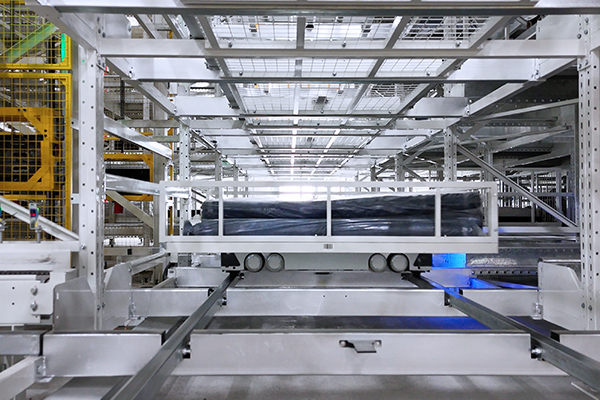
A pallet automated storage system isn’t a single energy consumer; it’s a network of coordinated components, each with its own power profile. The primary load comes from the handling robots—typically four-way shuttles—moving goods horizontally within the racks, and vertical lifts or elevators that transfer pallets between levels. Conveyors at pick stations and charging infrastructure add a smaller, more constant draw.
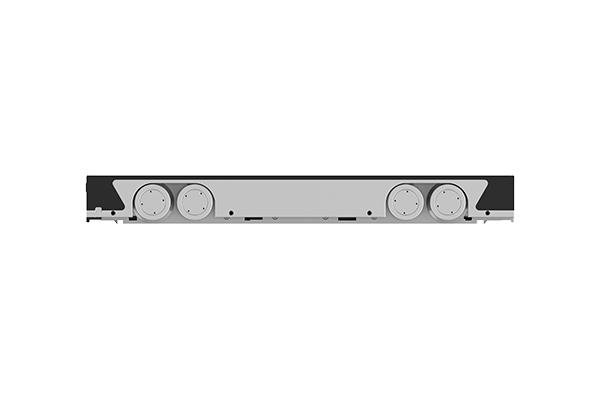
The R‑bot four-way shuttle, for instance, uses a 51.2V lithium battery pack of 40Ah or 30Ah capacity. On a full charge, the standard R1200B model runs continuously for 8 hours, which translates to an average power draw of roughly 250 W. That’s less than a commercial refrigerator. Most of the time, shuttles are in an idle or standby state between assignments, and the system software parks them in low-power mode, further reducing consumption. The H‑bot vertical shuttle alternates between lifting cycles and standby; its short, intensive acceleration phases drive most of its draw. Across dozens of project deployments, I’ve seen that the real-world load on the electrical infrastructure comes more from the charging cabinets than from the robots themselves, and those cabinets can be time-scheduled to pull power during off-peak hours.
Energy consumption isn’t uniform across the system. The table below compares approximate power demands per active cycle for the main components in a typical Zikoo R‑bot plus H‑bot configuration.
| Component | Peak Power (W) | Average Cycle Energy (Wh) | Notes |
|---|---|---|---|
| R‑bot four-way shuttle (loaded travel) | 1800 | 15 – 25 | Depends on acceleration and pallet weight; most routes under 0.5 kWh per day per shuttle |
| H‑bot vertical elevator (lifting 1.5t) | 2500 | 8 – 12 | Lifting height and load determine energy; decent power factor from VFD drives |
| Charging cabinet (48 V/100 A per channel) | 4800 | N/A | Charging can be staggered to flatten peak; smart charging reduces grid spike |
| Conveyor / pick station (per zone) | 400 – 800 | 0.5 – 2 per pallet | Usually a constant small base load plus cyclic motor starts |
These figures show that the total energy cost per pallet move, when averaged over a shift, falls well under 0.02 kWh. In a facility moving 500 pallets per day, that’s around 10 kWh, or about one dollar’s worth of electricity in most industrial electricity rate regions. Hardly a budget-breaking figure.
Four-Way Shuttle Power Consumption: How Efficient Are Modern Batteries?
Battery technology is the single most underestimated factor in an automated storage system’s energy profile. The R‑bot uses lithium iron phosphate (LFP) chemistry, which provides a flat discharge curve and high round-trip efficiency. Virtually all the energy drawn from the battery goes into motion, with very little wasted as heat. In our cold‑storage custom solution, the same battery pack operates at -25 °C and still delivers 6–8 hours of continuous runtime, thanks to low-temperature cell selection and integrated heating control.
What surprises many facility managers is that charging efficiency and pattern matter more than the robot’s nominal consumption. If you allow shuttles to charge opportunistically during natural idle windows, the system rarely needs a dedicated charging shift. Our PTP warehouse control software looks at upcoming orders and redirects low-battery shuttles to charge only when their absence won’t affect throughput. That kind of predictive scheduling avoids the common mistake of charging all robots at shift change, which creates an artificial peak on the electrical infrastructure.
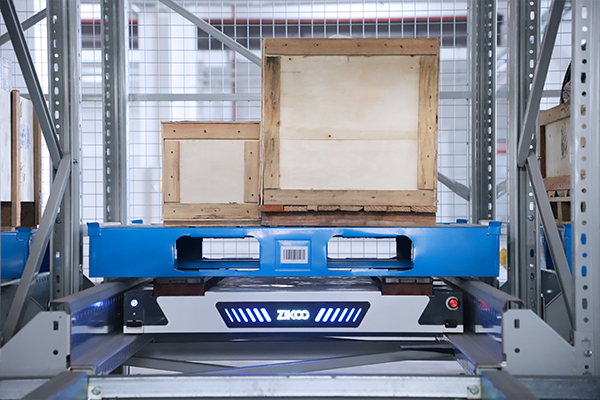
The onboard battery management system also feeds data back to the maintenance team, so we can track actual amp-hours consumed over time. In a recent system we commissioned, the shuttles averaged 18 kWh per day across a fleet of 8 units, or roughly 2.25 kWh per shuttle. That’s for a system handling around 600 pallet moves daily. Per pallet move, the shuttle portion is well under 0.05 kWh. The real-world numbers consistently beat the conservative engineering estimates.
System Design Choices That Cut Energy Costs
Energy consumption in pallet automated storage isn’t fixed by the hardware spec sheet; it’s shaped by how you design the flow, the rack layout, and the control algorithms. Three design decisions have an outsized impact.
First, the travel path. A deep-lane four-way shuttle system running in a high-density layout reduces per-move distance compared to a single-deep layout with multiple aisles. Shorter moves mean less acceleration and deceleration, which is where most energy is spent. We’ve seen that compact layouts with cross-aisle transfers can yield a 15–20% reduction in shuttle energy per pallet compared to sprawling, single-deep rack designs.
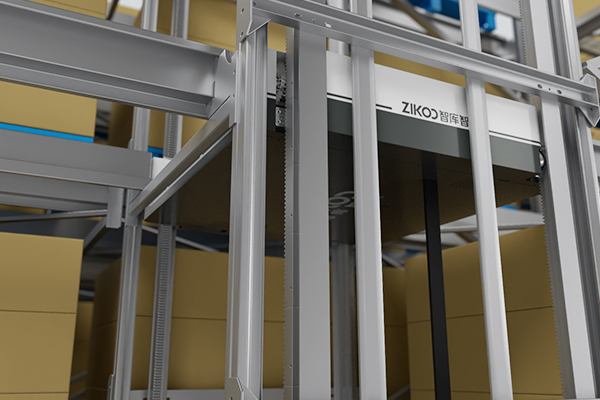
Second, the lift assignment strategy. An H‑bot elevator serving multiple levels draws the same power whether it travels two meters or eight, but the longer lift consumes more energy per cycle. Grouping storage locations by velocity and dedicating certain elevators to high-rotation racks reduces the number of long lifts. In one cold storage project we designed, this strategy alone trimmed the elevator energy consumption by nearly 30%, simply because 80% of the pallets were handled by the two lifts closest to the loading docks.
Third, software-driven idle policies. A shuttle sitting idle on a charged battery still draws a small standby current, but more importantly, if it keeps its controller fully awake, that can consume 30–50 W. Our control software puts idle shuttles into a deep sleep that cuts standby power to under 5 W and wakes them on a few milliseconds’ notice. Over a fleet of 20 shuttles, that saves around 10 kWh per day in wasted standby power.
Comparing Automated Storage Energy Costs vs. Manual Operations
The comparison that matters isn’t “automation versus no movement of goods”—it’s the full cost of moving a pallet from receiving to a pick station. In a traditional manual warehouse, pallets are moved by forklifts burning LPG or diesel, or by lead‑acid battery electric forklifts. A typical electric counterbalance forklift consumes around 5 kWh per hour of operation and might handle 20 pallets per hour, giving roughly 0.25 kWh per pallet move. Add battery charging losses, battery water maintenance, and the energy cost of ventilation for internal combustion trucks, and the per‑pallet energy bill in a busy manual warehouse often exceeds 0.3 kWh.
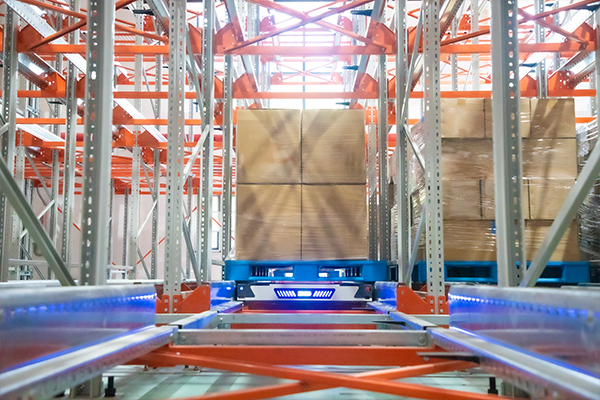
When you replace that with a four-way shuttle system, the shuttle’s share of the move is under 0.05 kWh per pallet, and even with elevator energy included, the total remains below 0.1 kWh per move for a well-designed system. The gap is even larger if the manual warehouse runs multiple shifts, because automated systems don’t need lighting in the rack aisles (a dark‑warehouse configuration is standard) and the building’s HVAC load drops since fewer people and no combustion engines are present. In one large manufacturing warehouse we retrofitted, the overall facility electrical bill actually decreased by 8% after automation, despite adding over 30 shuttles and 4 elevators. The savings came from eliminating forklift charging stations and reducing lighting in the dense storage zones.
If your current operation already uses electric forklifts and you are evaluating a shuttle‑based AS/RS, the energy comparison isn’t a dramatic cost swing either way—it’s a small net positive on the automation side, with the bigger wins coming from labor savings, space utilization, and accuracy. This means energy should not be a go/no‑go criterion unless your project is in a region with extremely high electricity rates or you are planning a very large fleet.
Questions Buyers Should Ask About Energy Efficiency
Most system integrators will present a total power estimate, but that number alone is meaningless unless you know the assumptions. I advise buyers to ask four specific questions before trusting an energy consumption figure.
-
What is the assumed daily throughput and duty cycle? A system spec’d for 24/7 peak use will have a different energy profile than one running a single shift. Ask for the per‑pallet energy estimate, not just total installed power.
-
Does the charging strategy create a peak demand spike? If the design relies on fast‑charging all shuttles at shift change, even though the total daily kilowatt‑hours are modest, the peak demand charge can increase your facility’s electrical bill by 15–25%. Intelligent, staggered charging is non‑negotiable in a high‑volume installation.
-
What battery chemistry and capacity are proposed, and how does that affect replacement cost and runtime? A lithium‑ion pack with a 6–8 hour runtime that can be opportunity charged lasts longer and wastes less energy than an older lead‑acid setup with 4‑hour runtime.
-
Can the software adjust shuttle speed and acceleration profiles? In many operations, cutting top speed by 10% reduces energy consumption by 15–20% with negligible impact on throughput. We implement variable speed profiles that adapt to order urgency.
These questions force the supplier to move beyond a datasheet number and into an operational plan. I’ve noticed that the projects where clients push for this detail almost always end up with a lower electricity bill than the original forecast.
How to Plan Your Budget Around Energy and Operational Costs
If you are moving from a forklift-based operation to a pallet automated storage system, I’d recommend including a line item for a power quality study during the site preparation phase. The incremental energy cost of the automation itself is small, but connecting charging cabinets and drive panels can reveal weaknesses in your existing electrical distribution—voltage drops, harmonics, or insufficient capacity for a concentrated load. Fixing these issues early prevents commissioning delays.
For a mid‑sized system with 15–20 four‑way shuttles and 3–4 elevators, the total electrical load for the automation (including conveyors and controls) typically falls in the range of 80–120 kVA. That’s comparable to a single large CNC machine. The difference is that an automated storage system can spread that load across 24 hours, so the peak demand is much softer. In many of our installations, we install sub‑metering on the automation panel so the operations team can directly see the energy consumption and allocate cost. The monthly energy bill for the automation hardware rarely exceeds 1–2% of the labor savings the system generates.
If your program involves a multi‑shift, high‑throughput operation and you are evaluating different shuttle systems, the energy consumption figures on paper are only part of the story—the charging strategy, idle policy, and path optimization algorithms will ultimately determine your meter reading. Send your part number, throughput requirements, and current electrical single‑line to info@zikoo-int.com or call (+86)-19941778955, and we can run a power simulation against your layout to give you a site‑specific estimate rather than a generic datasheet number.
Common Questions About Pallet Automated Storage Energy Efficiency
How does a four‑way shuttle’s energy use vary with load weight?
It depends on acceleration frequency more than steady‑state weight. A shuttle moving a 1.5‑ton pallet at constant speed draws only slightly more current than when empty. The real difference is during acceleration—the energy to bring a heavier load up to speed is linearly higher. Over a full shift, mixed loads average out, and the difference between a light and heavy pallet mix is typically under 10% in daily energy consumption. In our R‑bot fleet monitoring, shuttles handling a 1.2‑ton average pallet use about 2.1 kWh per day, while those with 0.8‑ton averages use around 1.9 kWh.
Does cold storage operation dramatically raise energy consumption?
The shuttle’s own energy consumption increases only slightly in cold storage—the battery temperature management draws a small additional current. The larger energy impact is on the building’s cooling system, which must reject the heat generated by the robots and drives inside the freezer. However, because automated systems eliminate forklift heat, combustion exhaust, and frequent door openings, the net refrigeration load is often lower than in a manual cold store. Our cold‑chain solution for -25 °C facilities shows that the shuttle fleet adds roughly 3 kW of continuous heat load, which is negligible compared to the envelope losses.
What should I look at on a supplier’s energy estimate?
First, demand the per‑pallet energy consumption, not just the total installed power. A proposal listing 100 kW of connected load might only average 15 kW in real operation. Second, ask them to separate the energy consumption by subsystem: shuttle, elevator, conveyor, controls, and charging. That breakdown reveals whether the estimate is based on real duty cycles or just a safety factor applied to nameplate ratings. Third, request a daily load profile graph that shows how consumption varies over 24 hours—if it’s a flat line, the supplier hasn’t modeled realistic idle behavior.
Can older warehouses be retrofitted without a big jump in electricity cost?
Yes, and often the electrical infrastructure requires less upgrade than plant managers fear. Most AS/RS components run on standard 380 V or 480 V three‑phase power, the same as existing conveyor or forklift charging systems. We have retrofitted buildings where the total automation load fit within the existing spare capacity, because the shuttle charging was scheduled at night when the building’s other loads were low. A power quality survey upfront avoids surprises. If you are retrofitting, share your existing single‑line diagram and load history—we’ll confirm if your supply can accommodate the system before you commit.
If you’re interested, check out these related articles:
Looking for Reliable Four-Way Shuttle Manufacturers? Choose Zikoo Robotics
Software-Driven Hardware: Six-Way Shuttle Maximizes Warehouse Efficiency
Six-Way Shuttle Powers Dense Storage: Breaking Space Limitations
Six-Way Shuttle System Leads the Shift from Machines to Robots in Dense Storage Automation


