


Pallet automated storage systems can dramatically increase warehouse density and throughput, but they are not a one-size-fits-all solution. In my years designing pallet-to-person robotics systems for cold chain logistics, manufacturing, and e-commerce, I have seen deployments that cut labor costs by half and others that struggled to break even. The dividing line is rarely the technology itself; it is how well the system matches the facility’s physical constraints, inventory profile, and growth path. This article walks through the specific thresholds and scenarios that determine whether a four-way shuttle, omnidirectional stacker, or high-bay AS/RS will strengthen your operation or introduce more cost than value.
What Factors Determine Pallet Automated Storage Suitability?
Pallet automation suitability hinges on a matrix of operational and facility-level variables. Overlooking any single factor can turn a promising project into a stranded asset. The table below summarizes the key dimensions we evaluate during initial feasibility studies.
| Factor | Favorable Condition | Risk Factor |
|---|---|---|
| Throughput | More than 100 pallet movements per day | Low volumes extend payback |
| SKU variety | Dedicated storage with moderate SKU count | High SKU mix demands advanced WMS capabilities |
| Inventory turnover | Medium to high | Slow-moving stock ties up capital without throughput benefit |
| Ceiling height | At least 6 meters clear for shuttle systems | Less than 5 meters reduces density advantage |
| Floor flatness | ±15 mm over 3 m per DIN 18202 | Uneven floors slow shuttle travel or require grinding |
| Pallet uniformity | Standard sizes (1200×1000 mm, 1100×1100 mm, etc.) | Non-standard or mixed pallet sizes complicate shuttle handling |
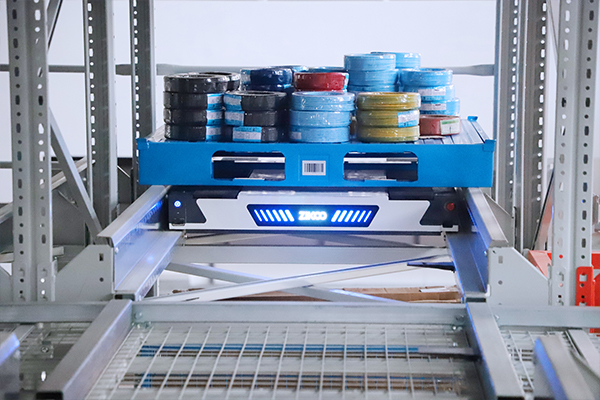
Beyond these static metrics, we also look at labor availability and cost. In regions where skilled forklift operators are scarce or expensive, automation tilts the balance even for smaller facilities. A distribution center we supported in Australia replaced a manual receiving area with a four-way shuttle system and eliminated reliance on multiple shifts of temporary staff during peak season, achieving a payback of less than three years.
Which Industries Benefit Most from Pallet Shuttle Systems?
Pallet shuttle technology adapts well across sectors, but a few verticals consistently see the strongest returns.
Cold chain warehousing is one. Frozen goods storage at -25℃ is physically demanding, and labor turnover is high. A four-way shuttle with cold-rated lithium batteries, like Zikoo’s R-bot, can operate continuously for 8 hours in sub-zero conditions without the fatigue or safety risks of human operators. The low-temperature charging port and humidity-resistant PCBA coating further reduce maintenance events in condensation-prone environments.
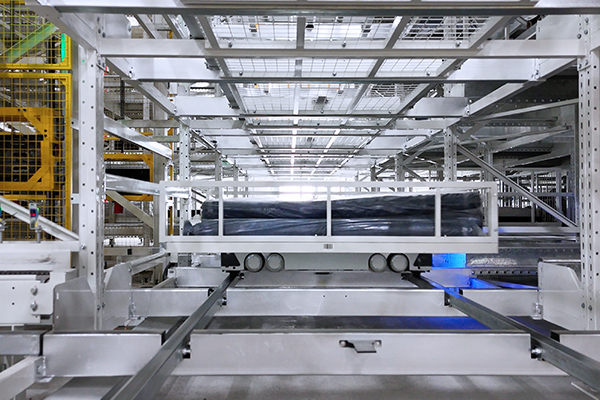
Manufacturing plants and automotive parts warehouses benefit from dense raw material and finished goods buffering. When production lines demand just-in-time delivery of palletized components, a combination of R-bot four-way shuttles and H-bot vertical shuttles creates a six-way handling network that can feed multiple assembly stations simultaneously. We have seen factories reclaim 30% to 50% of floor space by converting wide-aisle racking to shuttle-driven high-density storage.
E-commerce fulfillment centers with thousands of SKUs and split-case picking requirements often pair pallet shuttles with robotic picking arms or AMRs. The U-bot omnidirectional stacker, which needs only 2,140 mm of aisle width, retrieves full pallets while autonomous mobile robots handle piece picks from flow racks, combining large-volume storage with fast small-order fulfillment.
If your facility handles temperature-sensitive pharmaceutical products, hazardous materials, or materials requiring strict lot tracking, a pallet shuttle system with integrated WMS/WCS can enforce first-expiry-first-out logic and maintain chain-of-custody records automatically. This level of digital control is nearly impossible to replicate with manual processes at scale.
If your operation involves temperature-controlled storage or multi-SKU split-case picking and you are unsure whether the storage density improvement justifies the investment in your specific layout, send your floor plan and throughput data to info@zikoo-int.com. Our engineering team can model the expected storage utilization and labor savings for your building.
When Automated Storage Doesn’t Make Financial Sense
Not every warehouse should automate. The most common disqualifier we encounter is a mismatch between storage volume and system cost. A facility handling fewer than 300 pallet positions with irregular movement patterns and a short lease term will likely find that the capital outlay for shuttles, elevators, rack reinforcement, and software integration exceeds any labor savings within a reasonable horizon. In such cases, narrow-aisle racking with conventional reach trucks may yield better unit economics.
Another red flag is extremely varied pallet dimensions and weights. While the R-bot series handles four standard pallet footprints (from 1,200×800 mm up to 1,400 mm) and loads up to 2,000 kg, a warehouse handling a chaotic mix of custom crates, oversized items, and non-palletized loads would need so many customizations that the system loses its cost advantage. I have seen a project proposal stall because the client required the shuttle to carry both heavy steel coils and lightweight cardboard pallets on the same lane; the variable center of gravity made safe travel speeds hard to guarantee without expensive engineering.
Third, very low turnover storage, such as document archives or long-term inventory buffers, rarely benefits from rapid pallet handling. If pallets sit for months without movement, the speed and throughput capabilities of a shuttle system are underused, which erodes ROI. In these environments, a simpler high-density racking solution with occasional manual retrieval often makes more sense.
How to Calculate ROI for Pallet Automation
A pallet automation project’s financial case is built on three pillars: capital costs, operating savings, and capacity gains.
Capital costs include the shuttles themselves (quantity depends on throughput), rack structure (often heavier-duty than manual rack), vertical shuttles or elevators, conveyor interfaces, and the software suite. For a typical four-way shuttle installation, the shuttle fleet cost may represent roughly one-third of the total equipment spend, with the racking system and civil works making up the remainder. Installation, commissioning, and training add another 10% to 15%.
Operating savings are more straightforward to quantify. Labor is the largest line item: a manual operation handling 200 pallets per day might need six to eight operators per shift, while an automated system requires only one or two technicians for monitoring and exception handling. Electricity consumption for shuttles is relatively low; the lithium batteries in Zikoo’s R-bot and H-bot last a full shift on a single charge and recharge during idle periods. Maintenance costs are predictable, as shuttle components have well-defined service intervals.
Capacity gains are the hidden accelerator. By stacking pallets higher and eliminating wide aisles, a shuttle system can often double the number of pallet positions within the same footprint. For a warehouse paying ongoing rent or a company planning to avoid a new building expansion, this space liberation can deliver tens of thousands of dollars in annual savings. We advise clients to calculate the “cost per pallet position” over a five-year horizon to compare proposals on an apples-to-apples basis.
A rough threshold we use in early-stage discussions: if the combination of labor reduction and space reclamation exceeds 20% of annual operating cost, a pallet shuttle system generally clears the investment hurdle. This number shifts with regional labor rates and energy prices, but it provides a practical starting point.
What Makes a Pallet Shuttle System Scalable for Growth?
The most compelling argument for pallet shuttles over fixed automation like stacker cranes is scalability. You do not need to commit to a full-scale installation on day one.
A four-way shuttle system begins with a few shuttles serving a limited number of aisles and can grow incrementally. Add a second or third shuttle to the same level to increase throughput, or deploy an H-bot vertical shuttle to link additional tiers without disrupting existing operations. The same rack structure can accommodate this expansion, so the initial capital outlay scales linearly with additional robotics.
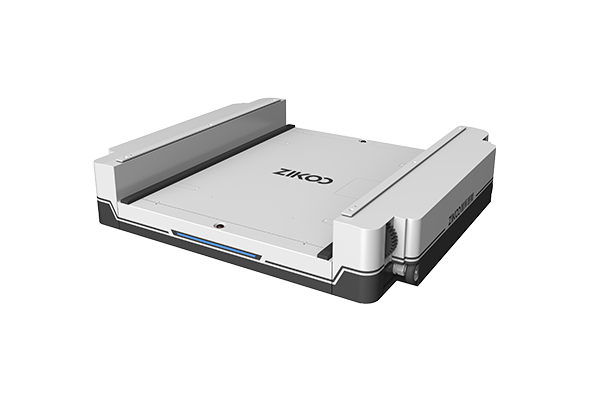
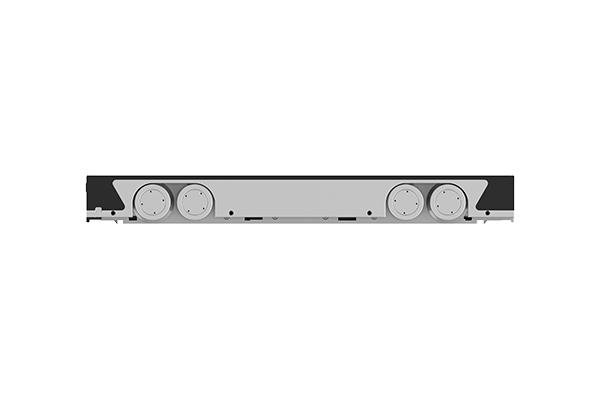
Zikoo’s product range illustrates this modularity. The R-bot four-way shuttle comes in five load variants from 1,200 kg to 2,000 kg and supports different pallet footprints; the H-bot vertical shuttle lifts up to 1,800 kg with ±1 mm positioning accuracy; and the U-bot omnidirectional stacker operates in aisles as narrow as 2,140 mm, making it suitable for retrofit or auxiliary storage zones. All three robot types connect through a common PTP software platform that unifies warehouse management (WMS), execution (WES), control (WCS), and robot coordination (RCS), so adding hardware does not require rebuilding the software layer.
This architecture means a small manufacturer can start with a single U-bot handling a 4.5‑meter‑high rack and, as production grows, add R-bots and an H-bot to convert the same area into a multi-level dense storage system. I have seen a pharmaceutical distributor progress from a proof-of-concept deployment with three shuttles to a fully automated facility with 40 shuttles over two years, without ever disrupting their daily fulfillment.
Can Existing Warehouses Be Retrofitted with Pallet Automation?
Retrofit viability depends heavily on the building’s structural characteristics. A floor slab that cannot support the point loads of loaded pallet racks, a ceiling height below 5 meters, or a column grid that interferes with shuttle rail alignment can make the cost of retrofitting exceed the benefit. However, many mid-century industrial buildings possess sufficient headroom and column spacing to accommodate a shuttle system with only modest modifications.
The U-bot omnidirectional stacker is particularly well‑suited for retrofits because it needs no rail infrastructure in the aisle; it navigates via dual laser SLAM and operates in aisles as narrow as 2,140 mm. This means an existing warehouse with standard narrow‑aisle layout can often be re-racked in phases, with the U-bot taking over one aisle at a time while the rest of the facility continues running. In one project, a manufacturing plant replaced two manned forklifts in a 6-meter-high raw material store with a single U-bot and 3D depth camera pallet positioning, doubling utilization of the same floor area in under eight weeks.
For greenfield construction, the design freedom is greater, but even there we advocate for a phased approach: install racking to the maximum possible height but populate shuttles incrementally. This preserves the option to defer capital while locking in the long-term density benefit.
Evaluating Your Facility for Pallet Automation
Every warehouse operator faces a squeeze between rising storage demands and limited floor space. The right pallet automation system turns that constraint into a productivity opportunity, but only if the system fits the specific material flow and building geometry. A standard checklist cannot capture the nuance of your inventory mix, seasonal peaks, or building quirks.
We recommend beginning with a structured feasibility review. Send your current warehouse layout (CAD preferred), daily pallet movement data, SKU characteristics, and any special handling requirements to info@zikoo-int.com. You can also call (+86)-19941778955 to schedule a discussion with our engineering team. We will analyze your data against our project experience and return a preliminary suitability assessment at no cost and with no obligation.
Common Questions About Pallet Automated Storage Suitability
Is pallet automated storage only for large enterprises?
No. Modular pallet shuttle systems are designed to scale from as few as two shuttles and a single elevator. A small pharmaceutical distributor with 1,000 pallet positions and moderate throughput can install an entry-level R-bot configuration that reduces reliance on forklift operators and improves inventory accuracy through integrated WMS. The system can expand later with additional shuttles or vertical tiers as the business grows, keeping the initial investment within reach of small and medium enterprises.
What is the minimum ceiling height for a pallet shuttle system?
For dense four-way shuttle storage, we typically recommend a clear ceiling height of at least 6 meters to achieve enough vertical stacking to justify the shuttle investment. The U-bot omnidirectional stacker can operate with a lifting height of 4,500 mm, however, making it viable for buildings with lower ceilings. The real question is how many pallet layers you can stack and whether the incremental storage gain covers the system cost, which requires a site measurement.
Can I automate only part of my warehouse, or does it have to be the entire facility?
Phased or partial automation is common and often advisable. Many operations automate a high-volume storage zone, such as finished goods or raw material buffering, while keeping slow-moving or non-palletized items in a manual area. The shuttle system can later be extended to additional aisles or zones. Starting with a partial footprint also lets your team learn the technology and refine processes before scaling.
How long does a pallet automation project take to implement?
A typical four-way shuttle installation, including rack erection, shuttle commissioning, and software integration, can be completed in three to six months depending on warehouse size and the level of custom software interfacing. Retrofitting an existing rack structure may shorten the timeline to around eight to twelve weeks for a single aisle. We always provide a detailed project schedule after a site assessment so that you can plan around peak seasons.
What data do I need to share for a preliminary suitability check?
Compile a few critical data points: your facility CAD drawing, daily inbound and outbound pallet volumes, typical storage duration by SKU category, pallet dimensions and maximum weight, and any special handling needs such as temperature or hazardous classification. Send these files to info@zikoo-int.com, and our engineering team will conduct a complimentary review. Within a few business days, you will receive a high-level assessment of whether pallet shuttle automation aligns with your operational requirements and warehouse constraints.
If you’re interested, check out these related articles:
Six-Way Shuttle: The Ultimate Warehousing Solution for Cost Reduction and Efficiency
PTP Intelligent Warehouse Software Empowers Enterprises for Smart Upgrades
Looking for Reliable Four-Way Shuttle Manufacturers? Choose Zikoo Robotics
Software-Driven Hardware: Six-Way Shuttle Maximizes Warehouse Efficiency
Revolutionizing Cold Chain Logistics: Zikoo Robotics Six-Way Shuttle Powers High-Density, High-Efficiency Warehousing


