


A pallet logistics system is not one machine. It is an operating system made of racking, pallet-handling robots, vertical lifts, conveyors, scanning points, and the software that coordinates every movement. Buyers who choose on shuttle price alone tend to miss the factors that decide uptime, throughput, and total cost over the system’s life.
This guide breaks the purchase into five layers: operational requirements, storage architecture, software capability, safety and lifecycle cost, and supplier delivery risk. Work through them in order, and the final quotation becomes far easier to compare.
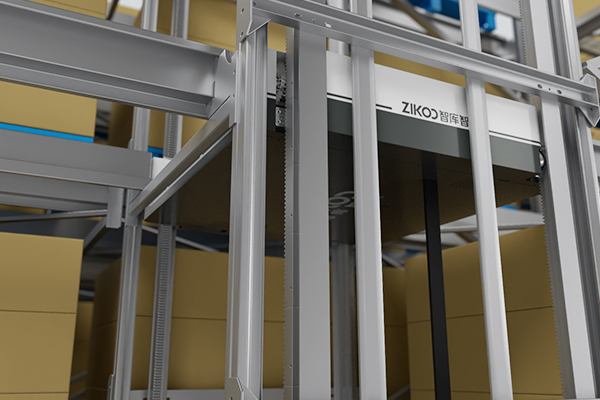
Layer 1: Define Throughput, Pallet Spec, and Operating Rhythm
Before comparing automation types, quantify how the system must perform under normal and peak conditions. Five inputs should be recorded before a vendor meeting.
- Pallet footprint and maximum gross weight
- Inbound and outbound pallet rate in pallets per hour
- Active SKU count and required storage depth
- Temperature, humidity, dust, or cleanroom constraints
- Building clear height, column grid, and floor flatness
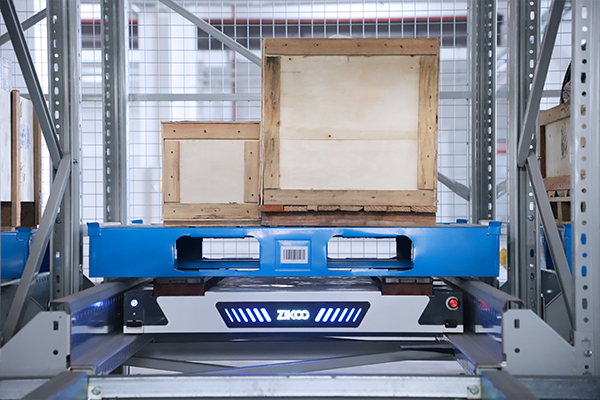
These variables determine whether a four-way shuttle, a stacker crane, or a mixed architecture fits the site. For example, a four-way shuttle rated for 1,200 kg is not a safe choice for a facility handling 1,400 kg loads. The R-bot four-way shuttle family illustrates why model selection matters: standard models support 1,200 kg, Japanese and heavy-duty models support 1,500 kg, and the large-pallet model supports 2,000 kg. Body height also varies from 125 mm to 150 mm, which changes rack beam clearance and usable storage height.
Throughput is not simply travel speed. It is the full cycle from inbound pallet identification to storage confirmation, plus the system’s ability to absorb a peak wave without starving outbound picking. A layout that works at 60 pallets per hour may fail at 90 pallets per hour if vertical transport or workstation buffering becomes the bottleneck.
Before comparing shuttle models, buyers need a clear throughput and pallet profile. <Smart Storage Revolution: Comprehensive Overview of Four-Way Shuttle Systems for Automatic 3D Warehouses> covers the system-level design choices that define storage density and daily throughput.
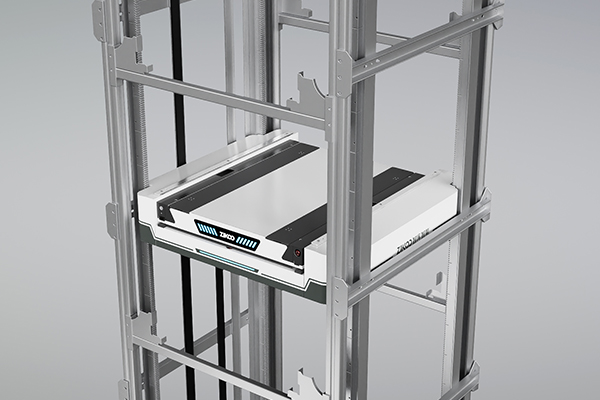
Layer 2: Match the Storage Architecture to the SKU Profile
The next layer is architecture selection. High-SKU warehouses do not behave like low-SKU raw-material stores. A configuration that maximizes density may reduce access flexibility, and a highly flexible configuration may sacrifice capacity.
| Architecture | Best Fit | Key Trade-Off |
|---|---|---|
| Block stacking | Low SKU, slow-moving, budget-constrained | Low cubic utilization and limited access |
| Drive-in rack | Homogeneous SKUs with first-in-last-out flow | Deep lanes limit picking selectivity |
| Semi-automated pallet shuttle system | Deep-lane storage with medium throughput | Lane change still requires forklift support |
| ASRS stacker crane | High-rise, fixed-aisle, high-throughput | High vertical use but lower routing flexibility |
| Four-way shuttle | Medium-to-high SKU, multi-depth, variable routes | Requires stronger software orchestration |
The decision normally follows from order lines, SKU depth per day, and building geometry. If most pallets move as full-pallet in and full-pallet out, dense lane storage works well. If the operation needs mixed-case access or frequent partial-pallet retrieval, a more flexible shuttle or U-bot narrow-aisle configuration may be justified.
Architecture choice is not only about density. <Stacker Crane vs Four-Way Shuttle: Which Fits Your ASRS Warehouse Best> covers the throughput, height, and flexibility trade-offs behind the decision.
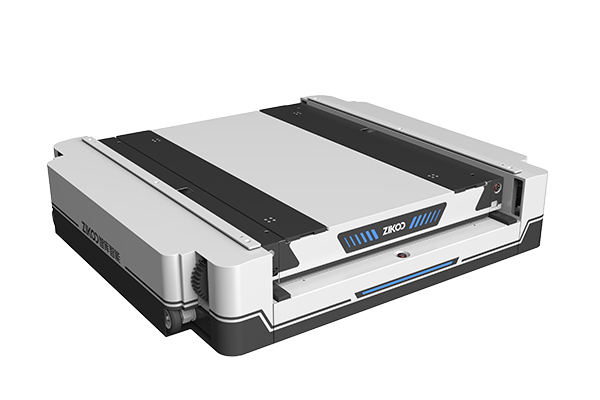
Layer 3: Audit the Software Layer Before Signing
Hardware capacity means little if the software cannot orchestrate shuttle, lift, conveyor, and workstation tasks. Buyers should ask how the supplier handles mission allocation, traffic control, deadlock prevention, and exception recovery when a shuttle is taken offline.
A complete platform should include warehouse management, warehouse execution, warehouse control, and robot control functions. PTP Smart Warehouse Software covers WMS, WES, WCS, and RCS in one system, which avoids the integration gap between a third-party WMS and a separate robot controller. From a buyer’s perspective, the critical questions are practical:
- Which ERP or host WMS interfaces are already tested?
- How are shuttle-to-lift handoffs and route conflicts resolved?
- What happens to outstanding missions when one shuttle faults?
- Is simulation or emulation available before installation?
Without clear answers, the project may pass factory acceptance but fail under real order profiles. The software layer is where most throughput losses and go-live delays appear, even when the mechanical equipment is sound.
Shuttle hardware only performs if the software layer orchestrates it. <PTP Intelligent Warehouse Software Empowers Enterprises for Smart Upgrades> covers the WMS/WES/WCS/RCS functions that turn storage capacity into reliable order fulfillment.
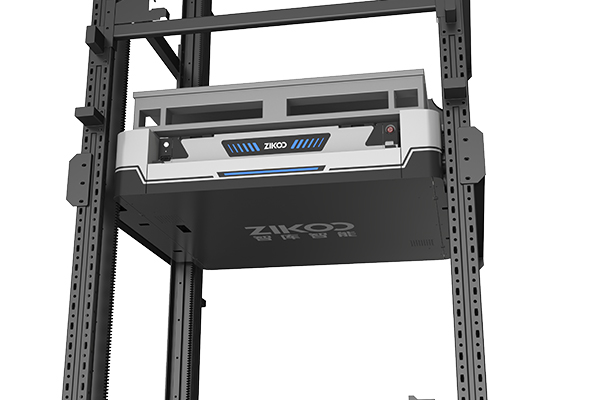
Layer 4: Verify Safety, Compliance, and Lifecycle Costs
Pallet logistics systems move heavy loads in occupied buildings, so safety should be verified against recognized standards. Driverless pallet equipment can be evaluated against ISO 3691-4:2020 for driverless industrial trucks and their systems [1]. Rail-dependent storage and retrieval equipment is addressed by EN 528, which covers braking, emergency stop, and safety-related control principles [2]. Compliance does not guarantee project success, but it creates a testable baseline.
Environmental conditions are equally important. A cold-store installation requires more than a standard shuttle. The R-bot cold-chain solution uses a −25°C lithium battery, a low-temperature charging port, and protective PCBA coating for high-humidity operation. Buyers should verify these details in writing, not assume a room-temperature specification transfers to frozen storage.
Lifecycle cost should be calculated across civil works, racking, software licensing, spare parts, scheduled maintenance, energy, floor wear, and operator training. The lowest initial price often shifts cost into maintenance, integration, or future software change requests.
Layer 5: Vet Suppliers on Delivery Capability, Not Just Price
The final layer is supplier verification. An OEM, an integrator, and a trading company are not equivalent. An OEM can modify product design, software, and control logic; an integrator assembles third-party equipment; a trading company may deliver hardware but may not support long-term R&D or aftersales engineering.
Request material evidence before signing:
- Project references in the same industry and temperature class
- Site visit or factory audit opportunity
- Functional design specification and acceptance test criteria
- After-sales response time and spare-parts availability
- Software versioning and upgrade policy
A credible supplier should be able to explain exactly which team will manage installation, commissioning, WMS integration, and post-go-live support. If the answer is vague during sales, it will not improve after payment.
Plan Your Pallet Logistics System With Zikoo
Every practical pallet automation project starts with data, not drawings. To compare configurations against your actual pallet profile and throughput window, send the following details to info@zikoo-int.com or call (+86)-19941778955:
- Pallet sizes and maximum gross weight
- Inbound and outbound pallets per hour
- Active SKU count and required storage depth
- Clear height, column grid, and temperature range
- Existing WMS, ERP, or host system
- Project site and target go-live window
The engineering team can develop a concept layout, throughput simulation, and phased investment scenario before you commit to procurement.
Frequently Asked Questions
What is included in a pallet logistics system?
A complete system includes storage racking, pallet-handling robots such as four-way shuttles or stacker cranes, vertical lifts, conveyors, scanning stations, and the software that manages storage, retrieval, and order fulfillment.
How many decision layers should a buyer evaluate?
Five layers: operational requirements, storage architecture, software capability, safety and lifecycle cost, and supplier delivery risk. Skipping any one layer usually transfers risk into the go-live phase.
Which is better: a four-way shuttle or a stacker crane ASRS?
Neither is universally better. A four-way shuttle offers routing flexibility and dense storage with medium-to-high throughput. A stacker crane offers strong vertical use and high throughput in fixed aisle configurations. The choice depends on building height, SKU profile, and required route flexibility.
Can pallet logistics systems operate in cold storage?
Yes. Cold-store automation requires low-temperature batteries, protected electronics, and components rated for condensation and rapid temperature changes. Buyers should confirm the supplier’s cold-chain configuration in writing.
How should quotations from different suppliers be compared?
Compare scope, not headline price. Normalize quotations by racking layout, shuttle count, lift count, software modules, safety compliance, civil work assumptions, training, spare parts, and post-installation service.
References
- ISO 3691-4:2020, Industrial trucks — Safety requirements and verification — Part 4: Driverless industrial trucks and their systems.
- EN 528:2008, Rail dependent storage and retrieval equipment — Safety requirements.
If you’re interested, check out these related articles:
PTP Intelligent Warehouse Software Empowers Enterprises for Smart Upgrades
Six-Way Shuttle Drives Warehouse Upgrades: Building an Intelligent Automatic 3D Warehouse


