


Pallet shuttle logistics systems suit fast-moving consumer goods (FMCG) and third-party logistics (3PL) operations when dense pallet storage, frequent replenishment and reliable inventory control matter more than unrestricted forklift access. They reduce the number of forklift aisles inside the storage block and use shuttle vehicles to move pallets to a lift, conveyor or buffer. The gain is not automatic. FMCG warehouses usually plan around known product families, date-coded stock and promotion peaks. 3PL operations must absorb multiple clients, mixed pallet quality, contract-specific segregation and changing inbound patterns. The design question is not whether a shuttle looks fast on a specification sheet. It is whether the storage layout, lift capacity, software rules and acceptance tests match the pallet flow the operation actually needs.
What Pallet Shuttle Logistics Systems Change in FMCG and 3PL Warehousing
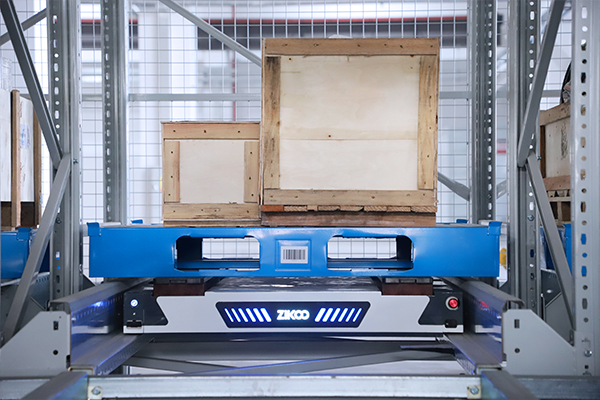
A pallet shuttle system is not a single machine. It combines dense racking, one or more shuttle vehicles, transfer positions, vertical lifts when storage rises above a single level, conveyors or staging lanes, and a control layer that sequences work. The shuttle travels inside the rack, lifts the pallet and carries it to a transfer point. The pallet may then move to a lift, a conveyor, a pick face or an outbound buffer. Each transfer adds a constraint that the vehicle alone does not solve.
The main change is spatial. Conventional wide-aisle racking reserves floor area for forklift travel and turning. A shuttle layout places pallets in deeper lanes and uses the vehicle to reach them. That can increase the number of pallet positions within the same building footprint and reduce traffic in the storage zone. The benefit is strongest when the building is constrained, land is expensive or the operation needs more buffer capacity without extending the site.
The second change is operational. Storage becomes a queue that software can sequence. A pallet can be held in reserve, released to a pick face, routed to a quality hold or sent to dispatch without a forklift entering every lane. That is useful in FMCG when replenishment must follow date codes, and in 3PL when a client’s stock must remain separate from another client’s inventory. The control layer, not the shuttle alone, decides whether those rules are followed.
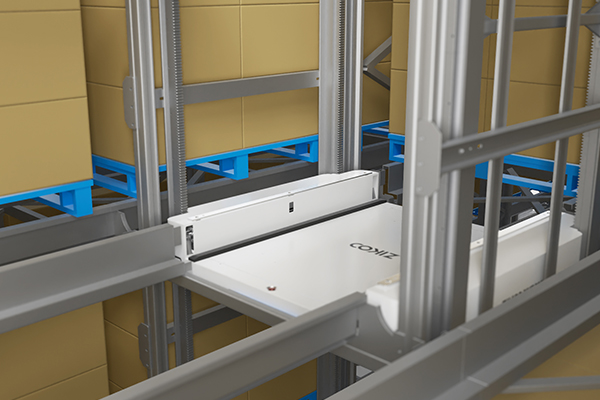
The storage medium is only one part of the architecture. <Smart Storage Revolution: Comprehensive Overview of Four-Way Shuttle Systems for Automatic 3D Warehouses> covers how four-way shuttle systems fit automatic 3D warehouses.
A shuttle project also changes the labor profile. Fewer workers may travel into the storage block, but the operation still needs people at receiving, quality checks, pick faces, consolidation and dispatch. The system shifts work from forklift driving to task sequencing, exception handling and inventory control. If those downstream areas cannot absorb the new pallet flow, dense storage simply moves the bottleneck.
Where FMCG and 3PL Requirements Diverge
FMCG and 3PL warehouses can use similar shuttle hardware for different reasons. FMCG operations often deal with a defined product range, planned promotions and strict date-code rotation. 3PL operations often deal with many inventory owners, variable contract terms and pallet quality that arrives from different suppliers. A design that works for one may fail for the other if the software and operating rules are copied without change.
| Requirement | FMCG pattern | 3PL pattern | Design consequence |
|---|---|---|---|
| Demand shape | Often a stable base demand with promotion peaks and seasonal categories | Client wins, contract starts and campaign peaks can shift volume at short notice | Size buffers and lift capacity for short-interval peaks, not annual averages |
| Inventory ownership | One owner or a small group with internal stock rules | Many clients with separate visibility, release and billing rules | The WMS must carry owner, status and billing data, not only SKU and quantity |
| Pallet quality | Usually controlled by the manufacturer or retailer | Mixed pallet sources, repairs and condition levels | Set a pallet envelope and a rejection test before the shuttle enters service |
| Traceability | Batch, lot and date code drive first-expired-first-out and recall checks | Client-specific traceability and reporting requirements vary | Store lot, expiry and owner at pallet level and preserve the audit trail |
| Order profile | Pallet and mixed-case replenishment to stores, depots or production | Pallet storage plus client-specific value-added services | Separate dense reserve storage from pick-face and staging capacity |
| Change frequency | Category resets and promotions are usually planned in advance | New clients and new SKU sets can arrive with little notice | Keep lane allocation and software rules configurable |
The FMCG side of the table points to rotation discipline. A pallet that is stored in the wrong sequence can create a date-code problem that only appears at dispatch. The 3PL side points to separation. Two pallets can look identical and still belong to different clients, with different release rules. The system must identify both the physical pallet and its commercial owner.
Pallet quality deserves separate attention. A four-way shuttle needs a stable load, a consistent pallet footprint and enough clearance at the lane mouth. Damaged boards, protruding fixings, crushed corners, leaning loads or loose stretch wrap can interfere with sensors, forks or lane entry. A 3PL that receives pallets from many suppliers should treat pallet inspection as part of the inbound process, not as an exception discovered during commissioning.
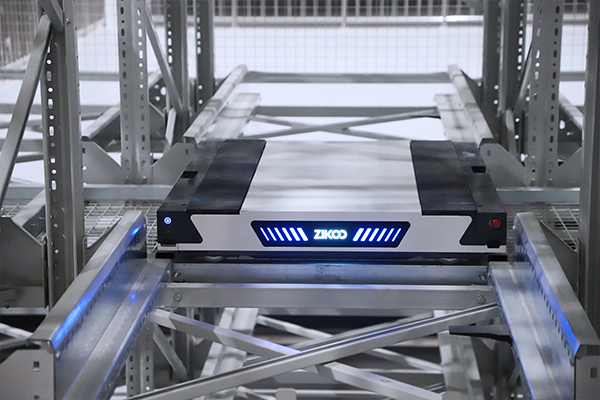
The same hardware can serve both sectors only when the operating rules are explicit. FMCG may need tighter date-code control and promotion staging. 3PL may need stronger client segregation, billing events and variable pallet handling. Those differences belong in the functional specification before the rack layout is fixed.
Designing the Dense Storage Zone Around Real Pallet Profiles
The pallet is the unit that the entire system must handle, so the design should begin with measured samples, not a nominal size. Record length, width, height, loaded weight, load distribution, overhang, bottom-board condition and the presence of any wrap or strapping. Check the lightest and heaviest pallet in the range, not only the average. A shuttle that handles a clean demonstration pallet may still fail on a damaged pallet from a supplier.
The vehicle envelope must be compared with the rack and pallet envelope. Zikoo’s R-bot R1500B, for example, lists a 125 mm body thickness and a 1,500 kg rated load. Those figures describe the vehicle, not the whole application. The rack beam levels, lane clearances, pallet condition and transfer height still need to be checked. A vehicle rated for a load does not make every pallet of that weight suitable for dense storage.
Lane depth is a trade-off between density and selectivity. Deeper lanes hold more pallets per square meter, but they also reduce access to individual pallets. FMCG fast movers can often support deeper lanes because the same SKU leaves in predictable quantities. Slow movers and 3PL client stock with low turnover may need shorter lanes, more access points or a mixed layout. If deep lanes are filled with slow-moving inventory, the operation can lose the density advantage through honeycombing and unnecessary replenishment moves.
The storage zone should also separate replenishment stock from active pick faces. A shuttle system can deliver pallets to a buffer, but the pick face still needs enough capacity to cover the interval between replenishments. If the pick face is too small, the shuttle will be called too often and the lift or conveyor will become congested. If the pick face is too large, it consumes floor space that could have been used for dense reserve storage.
Vertical movement is often the practical limit. A four-way shuttle handles horizontal movement within a level; a lift or vertical transfer unit adds the third dimension. The combination is sometimes described as a six-way shuttle network because pallets can move in three axes. That architecture can improve access to high racking, but it also creates a shared resource. One lift serving several levels can become the bottleneck if the traffic pattern is not balanced.
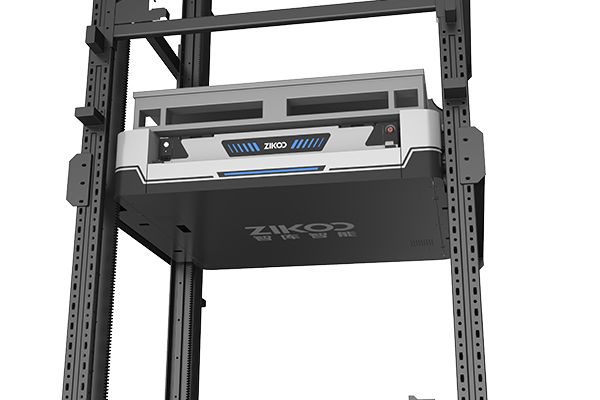
The design should identify every shared resource: lift, conveyor junction, transfer station, pick-face replenishment point and operator loading position. A shuttle fleet can look underused while one lift is saturated. Throughput belongs to the integrated system, not to the vehicle alone.
How Lifts, Buffers and Software Set Real Throughput
Throughput is usually quoted as pallets per hour, but that figure means little without the mix. A system may move many single pallets from adjacent lanes and far fewer pallets from distant levels, mixed with replenishment and dispatch tasks. The design should use the actual task profile: inbound putaway, replenishment, outbound retrieval, returns, quality holds and client transfers. Average throughput can hide the short-interval peak that determines whether the operation meets its cut-off.
The first constraint is often the lift or transfer point. The second is the conveyor or staging lane. The third may be the pick face or the person loading and unloading. The shuttle vehicle is only one part of the cycle. If a pallet must wait for a lift, wait for a conveyor position or wait for a WMS transaction to complete, faster vehicle travel does not recover the lost time.
Buffers reduce coupling between those resources. An inbound buffer lets receiving continue while the shuttle works through a queue. An outbound buffer lets retrieval run ahead of dispatch loading. A replenishment buffer lets the system stage pallets before the pick face needs them. The buffer size should follow the variability of the operation, not a fixed number copied from another project. A 3PL with unpredictable client inbound may need more staging than an FMCG warehouse with scheduled production.
The control layer converts orders into tasks. A warehouse management system owns inventory, orders and business rules. A warehouse control system or robot control system translates those tasks into vehicle, lift and conveyor commands. The execution layer assigns destinations, manages traffic, handles battery or charging states, reports exceptions and confirms completion. If the boundary between the two systems is unclear, inventory can be correct in the WMS while the physical pallet is in the wrong lane.
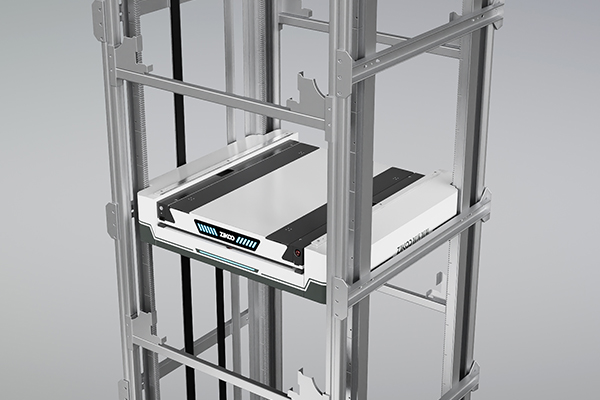
Vehicle speed is only one input to the execution layer. <Software-Driven Hardware: Six-Way Shuttle Maximizes Warehouse Efficiency> covers the relationship between software control and six-way shuttle efficiency.
Peak planning should include the inbound side as well as the outbound side. A promotion may increase dispatch, but it also increases replenishment and staging. A new 3PL client may bring a batch of pallets that must be received, checked and put away before the client’s first order. The system needs enough queue capacity to absorb that work without blocking another client’s flow.
WMS and WCS Rules for Batch, Lot and Client Separation
Inventory control is where FMCG and 3PL requirements become concrete. The WMS should hold the pallet identity, SKU, quantity, owner, lot or batch, expiry or best-before date, quality status, temperature zone and location. For 3PL, it should also hold the client contract reference and the rules that determine what can be released. For FMCG, it should support first-expired-first-out picking and a clear recall trail. These are not reporting extras. They determine which pallet the system is allowed to move.
A common design error is to let the WCS become the inventory master. The WCS knows where a pallet is and whether a vehicle has completed a move. It does not necessarily know why the pallet is on hold, which client owns it or whether its date code makes it eligible for release. The WMS should remain the source of truth for inventory and business rules. The WCS should execute the resulting tasks and report physical confirmation.
| Data element | Why the control layer needs it | Failure when missing |
|---|---|---|
| Pallet ID and measured envelope | Confirms destination and vehicle clearance | Wrong-lane putaway or a jam at the lane mouth |
| Owner or client code | Applies segregation and billing rules | Mixed client stock or disputed charges |
| Lot, batch and expiry | Supports first-expired-first-out and hold rules | Expired or recalled stock released |
| Inventory status | Blocks quarantine, quality hold or damage | Unusable pallet sent to a pick face |
| Temperature zone | Routes the pallet to the correct environment | Product exposed to the wrong condition |
| Priority and cut-off time | Sequences work against outbound deadlines | Late orders and avoidable peak congestion |
Client separation in 3PL does not always require a physically dedicated aisle. It can be enforced through WMS rules, owner codes and controlled release, provided the physical design does not create confusion at shared transfer points. Some clients may require dedicated lanes or a segregated zone for contractual or product-safety reasons. That requirement should be settled before the layout is frozen, because retrofitting separation into a dense rack can be expensive.
A flexible logistics platform still needs firm data rules. <PTP Intelligent Warehousing Platform: Building a Flexible and Smart Logistics Ecosystem> covers the platform view of a flexible warehousing ecosystem.
Exception handling deserves a written rule. What happens when a pallet is damaged at the lane mouth, a lift fails, a client places a hold after the task is released, or a manual move is required during maintenance? The system should record who authorized the move, which inventory status applied and how the WMS was reconciled. Without that trail, a 3PL cannot defend client stock accuracy, and an FMCG operation cannot defend its batch record.
Commissioning and Acceptance Checks Before Production Release
Commissioning should test the integrated flow, not only the shuttle. A vehicle that runs empty around a demonstration lane proves very little. The acceptance plan should use real pallet samples, the actual task mix, the live WMS interface and the people who will operate the system. Criteria should be agreed before the contract, because a vague promise to “meet throughput” is difficult to test.
A practical sequence is:
- Verify the WMS to WCS interface with putaway, retrieval, hold, release and cancellation messages. Reconcile the inventory after each test.
- Run a single vehicle in a single lane with the lightest, heaviest and worst-condition pallet in the approved range. Record every rejection and manual intervention.
- Test a full zone with mixed SKUs, mixed owners and mixed task priorities. Confirm that the WCS respects the WMS rules and that exceptions are visible to the operator.
- Run an integrated peak profile that includes inbound, replenishment and outbound work. Measure the shared resources, not only the shuttle cycle.
- Test failure modes: emergency stop, power loss, network loss, lift fault, blocked lane, damaged pallet, fire alarm and manual override. Confirm safe recovery and inventory reconciliation.
- For a 3PL, add client-specific acceptance. Confirm that one client’s stock cannot be released to another client, that billing events are recorded and that a new client can be added without breaking the existing rules.
The acceptance test should also check the human process. Can an operator see why a pallet is on hold? Can a supervisor release a lane after a fault? Is the manual move recorded? A system that works only when the software is clean and every pallet is perfect is not ready for production.
In a brownfield 3PL, phased release is often safer than a single cutover. One zone, one client or one product family can move first while the remaining operation stays on the existing process. The phasing plan should protect client cut-offs and keep a manual fallback available. It should also define how stock is counted at the boundary between the old and new areas.
Common Failure Points in FMCG and 3PL Shuttle Projects
-
Commissioning with perfect pallets. Demonstration pallets are usually clean, square and stable. Production pallets may be repaired, overhanging or poorly wrapped. The acceptance test should include the real condition range and a defined rejection rule.
-
Designing for average throughput. A system can meet an annual average and still fail every morning peak. The design should use the short-interval peak, the task mix and the inbound pattern. FMCG promotions and 3PL client launches both create peaks that an average hides.
-
Treating software as an add-on. The shuttle is a physical device, but the value comes from correct task release, owner separation, date-code control and exception handling. A weak WMS interface can make a good vehicle fleet look unreliable.
-
Assuming one client rule fits all. 3PL contracts can differ on segregation, reporting, release authority and billing. The WMS should support those differences without creating a new manual process for every client.
-
Underestimating the lift or pick face. Dense storage can feed pallets faster than the downstream area can absorb them. The lift, conveyor, pick face and dispatch dock should be sized together with the storage zone.
-
Leaving failure recovery to the end. Power loss, network loss, a blocked lane or a damaged pallet will happen. The operator needs a safe recovery path, and the WMS needs a reconciliation step. A system that cannot explain its last known state is difficult to trust.
These failures are not arguments against pallet shuttle logistics systems. They are reasons to define the operating envelope before the equipment is fixed. FMCG operations tend to benefit when date-code discipline and promotion peaks are designed into the storage and software rules. 3PL operations tend to benefit when client separation, pallet variety and variable inbound are treated as normal design inputs rather than exceptions.
Plan a Pallet Shuttle Review With Actual Operating Data
A useful review starts with the pallet envelope, load weights, temperature zones, SKU count, peak pallet moves per hour, client separation rules and a site drawing. Send those inputs to info@zikoo-int.com or call (+86)-19941778955. Zikoo can review the storage and control scope against the operation and identify what still needs a site check. The aim is not a generic quote. It is a clear view of whether dense shuttle storage, a lift-based six-way layout or a simpler racking arrangement deserves the next stage of engineering.
FAQ
Are pallet shuttle logistics systems suitable for both FMCG and 3PL warehouses?
They can be suitable for both, but not with the same operating rules. FMCG warehouses usually need strong date-code rotation, promotion staging and stable pallet standards. 3PL warehouses usually need multi-client separation, variable pallet handling and configurable release rules. The decision should follow the actual pallet envelope, peak task profile, inventory status model and site constraints. A system that fits one client’s fast-moving product range may still need changes before it can serve a multi-client operation.
What is the biggest throughput mistake in a shuttle project?
Designing around vehicle speed or annual average throughput is the common mistake. The real limit is often the lift, conveyor junction, pick face or WMS transaction. A shuttle can complete a vehicle cycle while pallets wait for a shared resource. The design should use the short-interval peak, the inbound and outbound mix, and the time needed for holds, replenishment and dispatch. That gives a more useful capacity picture than a single pallets-per-hour figure.
Can one system handle ambient and cold-chain pallets?
Only with zone design and equipment rated for the intended conditions. A cold store affects batteries, charging, condensation, lubricants, sensors and maintenance access. The WMS also needs temperature-zone rules so a pallet is not routed to the wrong environment. A vehicle rating alone does not make the whole system cold-chain ready. The charging strategy, fire plan, door control and operator procedures need review as one system.
How should a 3PL enforce client separation in a shuttle warehouse?
Start with the WMS data model. Each pallet should carry an owner code, status, lot or batch, location and release rule. Separation can then be enforced through dedicated zones, dedicated lanes or controlled shared storage, depending on the contract. The WCS should execute destinations, but it should not decide client eligibility. Test a mixed-client release scenario during acceptance. If the system cannot explain why a pallet is blocked, the separation rule is not strong enough.
What should be included in acceptance tests?
Acceptance should use real pallet samples, the actual task mix and the live WMS interface. Include putaway, retrieval, replenishment, hold, release, cancellation, damaged pallet rejection, emergency stop, power loss, network loss, fire alarm and manual override. Reconcile inventory after each failure test. For 3PL, add client separation, billing events and new-client onboarding. Agree the criteria before the contract so the test measures the operating requirement rather than a demonstration sequence.
If you’re interested, check out these related articles:
Multi-Scenario Smart Adaptation: Zikoo’s Six-Way Shuttle Powers the Digital Transformation of Warehousing
Smart Warehousing Starts Here: Cost-Effective Four-Way Shuttle Systems


