


Pallet shuttle warehouse design for high-density storage is not mainly about making lanes as deep as possible. The better layout treats storage depth, vertical transfer, picking faces, and replenishment as one balanced flow. A four-way shuttle can move in four directions inside a rack, but its productivity depends on lane depth, lift placement, charging positions, and how pallets enter and leave the system. This article explains the layout principles that keep a shuttle system dense, safe, and able to handle real operating peaks.
Start With the Operational Pattern Before the Rack
The layout should begin with a simple material-flow map: where pallets arrive, how they are recorded, where they wait, how many need to enter per hour, and which ones must leave during the same peak. A warehouse that receives full pallets at the dock and ships full pallets has a different grid than one that feeds a pallet-to-person picking operation.
That distinction changes more than the number of aisles. It changes whether the deep-lane storage face should sit close to receiving, close to dispatch, or between the two. For a pallet-to-person system, the rack is not only a storage buffer. It is also a supply engine for workstations that consume pallets at uneven rates.
A practical first step is to draw the pallet path from intake to storage to retrieval. If the path crosses itself, or if inbound and outbound pallets share the same transfer point without a buffer, the design will slow down whenever both flows peak at once.
Lane Depth and Pallet Footprint Set the Grid
Pallet footprint, pallet weight, and building column spacing determine the shuttle model and the lane geometry. The table below shows the R-bot four-way shuttle range and the pallet sizes each model supports.
| Pallet footprint | R-bot model | Rated load | Body height |
|---|---|---|---|
| 1200 × 800 to 1000 mm | R1200B | 1200 kg | 125 mm |
| 1016 × 1219 mm | R1200A | 1200 kg | 125 mm |
| 1100 × 1100 mm | R1500J | 1500 kg | 125 mm |
| 1200 mm | R1500B | 1500 kg | 125 mm |
| 1400 mm | R2000B | 2000 kg | 150 mm |
The shuttle body height matters because it determines the vertical pitch between beam levels. A 125 mm body supports a dense rack, but the beam level must still allow clearance for pallet deflection, rack tolerance, and safe transfer. The layout cannot use the shuttle height alone as the full vertical gap.
Lane depth is also not a single ideal number. A deeper lane stores more pallets per aisle, but every pallet in that lane must pass through the same face. That arrangement works well for low-turnover stock, single-SKU lanes, or full-lane retrieval. It creates more travel and more waiting for fast-moving or mixed-SKU pallets.
For high-turnover stock, shorter lanes and more faces usually beat maximum depth. The reader should therefore size lane depth by SKU quantity per lane, replenishment pattern, and how often a whole lane is consumed. Maximum density is only useful when it does not starve the outbound face.
Rack height changes the same logic vertically. A taller building adds storage positions without adding floor area, but it also increases dependence on lifts and makes every vertical move more expensive in time. The layout should be planned in three dimensions from the start.
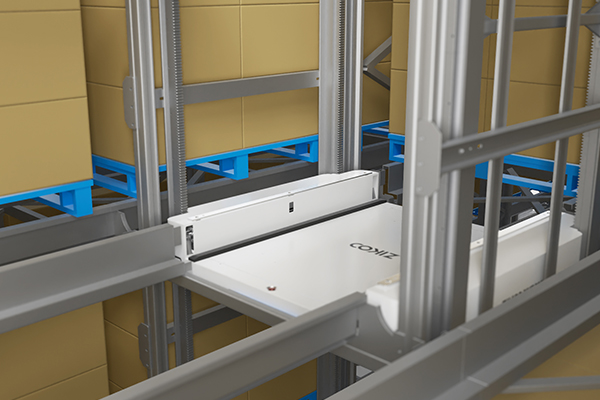
In a multi-shuttle system, lane depth also interacts with shuttle count and dispatch logic. A cluster of R-bot shuttles can serve adjacent lanes, but the transfer points must allow a shuttle to exit without trapping the one behind it.
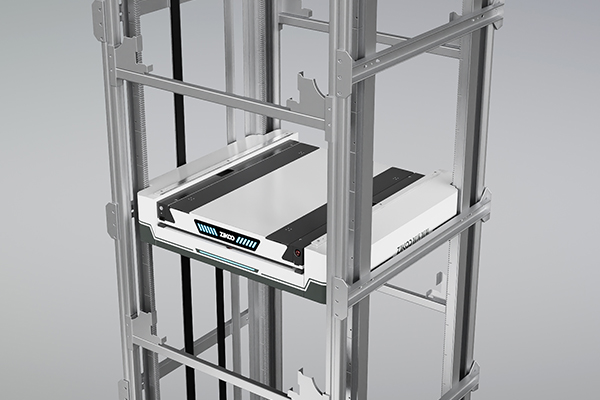
Dense storage is only effective when the rack, shuttle movements and control logic are designed together. <Smart Storage Revolution: Comprehensive Overview of Four-Way Shuttle Systems for Automatic 3D Warehouses> covers four-way shuttle systems for automated 3D warehouses.
Put Vertical Transfer Where It Does Not Starve the Lanes
In a high-rise pallet shuttle warehouse, vertical transfer is often the bottleneck. Each pallet that moves between floor levels requires a lift cycle, and the lift capacity must cover inbound storage, outbound retrieval, replenishment, and any pallet relocation. A layout that maximizes storage positions but gives every level access through one narrow lift will stall at the lift door.
One practical approach is to place vertical movement close to the outbound face and keep at least one buffer position between the lift and each main lane. That buffer absorbs the difference between shuttle arrival and lift availability. If the lift is placed far from the picking face, every pallet travels further horizontally, and a single lift failure becomes more disruptive.
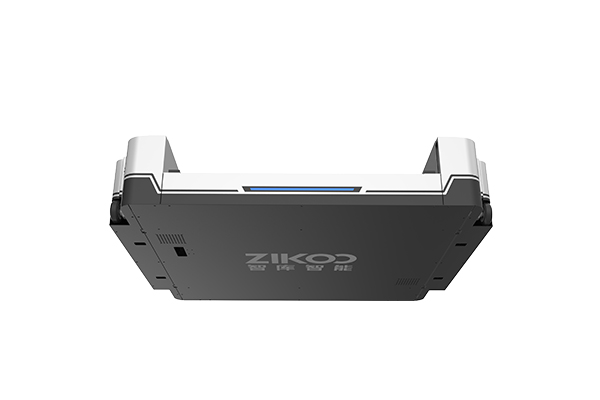
When R-bot shuttles work with an H-bot vertical bidirectional shuttle, the two devices create a six-way movement network: four horizontal directions plus up and down. The H-bot can occupy a single storage location in the rack, which reduces the floor space taken by vertical transport. Its positioning accuracy is specified at ±1 mm, which matters when pallets are transferred automatically at height.
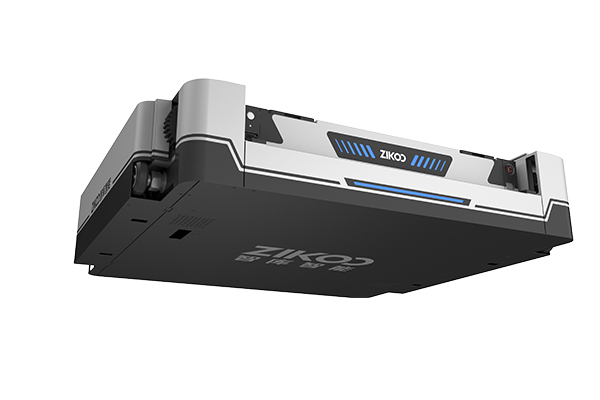
The lift is not only a transport point. It is also a scheduling constraint. If the control system cannot reserve a lift landing before a shuttle arrives, the shuttle waits, and that waiting time propagates back into the lane. The layout should therefore include landing buffers and make the lift position readable from the shuttle route network.
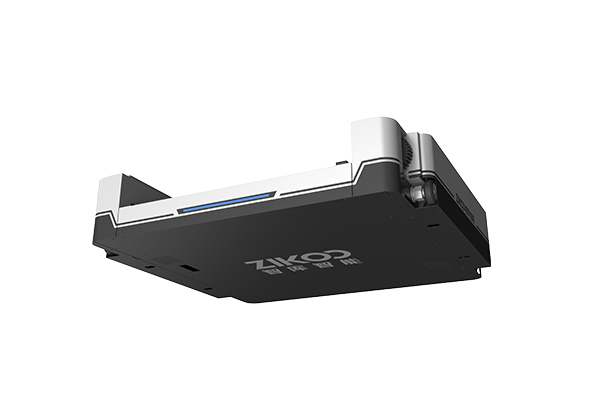
Vertical transfer is often the bottleneck in a deep-lane shuttle system, so lift count, placement and landing buffers matter more than adding extra shuttles. <Software-Driven Hardware: Six-Way Shuttle Maximizes Warehouse Efficiency> covers how software and hardware coordination improve warehouse efficiency.
Design the Picking Face and Buffer Around Peak Flow
The picking face is where the storage system meets conveyors, forklifts, or operator workstations. It should be laid out as a transfer zone, not as an afterthought at the end of the rack. Pallet exchange points need enough space for a pallet to wait without blocking the shuttle, the lift, or the conveyor.
Inbound and outbound flows should be separated where possible. If the same transfer station handles both, a burst of inbound pallets can delay outbound pallets during the same hour. That conflict becomes worse in pallet-to-person systems because the workstation depends on stable supply.
Battery charging is part of the same layout decision. The R-bot shuttle uses lithium batteries, and the layout needs charging positions that do not block lanes or lift landings. In cold storage, charging position placement is even more important because low-temperature operation and charging have different constraints.
The buffer rule is simple: design for peak flow, not average flow. A conveyor that works at average speed may be unable to drain a lift during a morning dispatch peak. The layout should provide enough accumulation before and after the lift so short surges do not force the entire system to wait.
Turn Fire Safety and Maintenance Access Into Layout Constraints
Deep-lane shuttle racking creates long, enclosed storage channels. Fire protection, smoke control, and emergency access must be designed together with the rack layout. Local fire requirements may limit lane depth, rack height, aisle count, or the distance a pallet can be stored from an accessible face.
Maintenance access needs the same early attention. A shuttle or lift will eventually need repair or replacement. The layout must allow a shuttle to be removed from a lane without emptying the entire rack, and the lift machinery needs a service position that does not require shutting down every level.
Floor flatness, expansion joints, and building columns also become layout constraints. A column placed in the middle of a planned deep-lane block can break the grid and force the system into irregular lane lengths. Those irregularities create more transfer points and more control exceptions.
The design should also consider emergency stop procedures. In a dense automated area, an operator may need to approach a stalled shuttle. That access path must be part of the rack and aisle plan, not added after installation.
Validate the Layout Through Simulation and Acceptance Checks
A high-density layout should not be approved from static drawings alone. Simulation can test the same plan against real order profiles, SKU velocity, pallet dimensions, lift cycle times, and charging schedules. The simulation should show what happens during peak inbound, peak outbound, and the combined period when both occur.
The following checks are useful before the racking order is fixed.
| Check | What to test | Layout consequence |
|---|---|---|
| Lift starvation | Peak pallets per hour by level | One lift may be insufficient even if average volume is low |
| Lane access | Fast movers placed in deep lanes | High-turnover stock may need shorter lanes or more faces |
| Transfer deadlock | Shuttle, lift and conveyor bottlenecks | Buffers may need to move or increase |
| Maintenance access | Service path for shuttle and lift | Column or rack position may block removal |
| Peak battery demand | Charging position count and shift pattern | Shuttle availability can fall below required fleet size |
The validation should also test failure cases: one lift offline, one shuttle charging, or a conveyor stoppage during dispatch. If the layout only works when every device is available, it is not robust enough for continuous operation.
Dense storage automation is shifting from fixed machine paths to coordinated shuttle fleets, which changes how layouts are evaluated. A layout that works for a fixed machine may be too rigid for a fleet of shuttles that can be reassigned from lane to lane.
A dense storage layout should assume that shuttle assignments and routes can change during operation. <Six-Way Shuttle System Leads the Shift from Machines to Robots in Dense Storage Automation> covers the shift from fixed machines to coordinated robots in dense storage automation.
Request a Layout Check for Your Pallet Shuttle Warehouse
The most cost-effective time to correct a pallet shuttle layout is before racking is manufactured. Send your available floor plan, ceiling height, pallet footprint, target pallet positions, inbound and outbound rates, and temperature range to Zikoo at info@zikoo-int.com or (+86)-19941778955. We can review whether a four-way shuttle or an R-bot and H-bot combined layout fits your building, your pallet profile, and your peak operating pattern.
FAQ
How deep should a pallet shuttle lane be?
There is no universal depth. Low-turnover stock and full-pallet storage can justify deep lanes, while fast-moving or mixed-SKU stock usually performs better in shorter lanes with more access faces. Depth should be set by SKU quantity per lane, pallet turnover, and the number of full-lane retrievals.
Does every pallet shuttle layout need vertical lifts?
No. A single-level or low-rise four-way shuttle system can move pallets horizontally without an H-bot lift. When the rack has multiple levels, a vertical lift is needed to transfer pallets between levels. The number and position of lifts should match peak vertical pallet flow, not only the total number of pallets stored.
Can a four-way shuttle layout be retrofitted into an existing warehouse?
Often yes, but the building constraints must be checked early. Column spacing, floor flatness, ceiling height, fire protection, and available charging positions can limit lane depth and rack height. A retrofit usually works better when the shuttle grid, transfers, and buffers are designed around the existing structure rather than copied from a new-build plan.
What information is needed to validate a layout?
The most useful inputs are a floor plan, pallet footprint and weight, required pallet positions, inbound and outbound rates by hour, SKU velocity, temperature range, and the number of shifts. With that data, the layout can be tested for lift capacity, lane access, buffer behavior, and peak throughput before the racking order is confirmed.
If you’re interested, check out these related articles:
Six-Way Shuttle Unlocks the Era of True 3D Intelligent Warehousing
Stacker Crane vs Four-Way Shuttle: Which Fits Your ASRS Warehouse Best


