


Pallet storage systems are usually compared on density alone, and that is where many layouts go wrong. Block stacking, drive-in racking, pallet shuttle lanes and pallet flow racking differ on three points that decide the outcome: how freely a truck or a machine can reach any single pallet, how many pallets one SKU must supply before a deep lane makes sense, and whether a forklift or a machine enters the lane at all. Density follows from those three. Get them wrong and a high-density design sits half empty for most of the year, or a selective design runs out of capacity two years after commissioning.
How the Four Systems Compare at a Glance
The four systems sit on a spectrum defined by how a pallet travels from the aisle to its resting position. In block stacking the pallet rests on another pallet. In drive-in racking a forklift carries it into a rail-supported lane. In a shuttle system a machine does the carrying. In pallet flow the lane itself moves the pallet by gravity. Cost, throughput, selectivity and maintenance all follow from that single difference.
| System | Access order | Selectivity | Relative density | Who moves the pallet | Main constraint |
|---|---|---|---|---|---|
| Block stacking | LIFO per stack | Very low | High per square metre of floor | Counterbalance or reach truck, from the top | Stack height, floor loading, load crushability |
| Drive-in and drive-through | LIFO, or FIFO in a drive-through lane | Low | High | Forklift enters the lane | Truck reach, lane fill rate, rack damage |
| Pallet shuttle | LIFO per lane, FIFO when lanes are paired | Low to medium | High, and deeper than a truck can serve | Shuttle on rails, forklift at the face | Shuttle to lane ratio, capital, software |
| Pallet flow | FIFO per lane | Low to medium | High | Gravity on rollers, loaded at the rear, picked at the face | Roller pitch, incline, pallet condition |
Read the density column as a potential rather than a result. A deep lane running at half fill is usually worse than conventional adjustable racking running near full, because the empty half of the lane is floor space and rack steel producing nothing. Most of the comparison that follows is about which conditions allow each system to keep its lanes full.
Block Stacking and Where the Space Actually Goes
Block stacking places pallets on the floor and on each other in deep blocks served by an aisle. There is no rack steel, so the load becomes the structure. The practical stack height is set by the crush resistance of the lowest carton, the stability of the stack, the condition of the pallets and the safe working height of the truck. Building clear height rarely limits block stacking. The product does.
The hidden cost is honeycombing. When a block is partly consumed, the space left above and beside the removed pallets cannot be reused until the stack is rebuilt. A block that runs at sixty percent fill for most of the year has already given back the density it appeared to offer on the drawing. This is the most common reason a block storage concept underperforms its own calculation.
Block stacking earns its place with few SKUs, a high pallet count per SKU, full-pallet movement and products that tolerate stacking: bagged materials, drums on pallets, uniform cartons. It also suits seasonal buffers, where floor space can be added for six weeks without buying steel.
Two inferences to avoid. First, no rack cost does not make block stacking cheap. Slab capacity, honeycombing, product damage and slower retrieval are real costs even when no invoice arrives for them. Second, the theoretical stack height is not the permitted one. Where a fire protection scheme or an insurer sets limits on pile height or clearance, part of that height is simply unavailable.
Drive-In Racking and the Cost of Entering the Lane
Drive-in racking supports pallets on rails at each level, and the forklift drives into the lane underneath the rails above it. It lifts the pallet onto the rails and reverses out. Because the truck enters the structure, lane depth is bounded by how far a driver can reach with a stable load and by the stiffness of the rails, so depth is a design variable rather than a free choice.
A single-entry lane is strictly last in, first out. The drive-through variant opens both ends, which allows loading at one end and retrieval at the other, giving FIFO at the price of a second access aisle or a second face. That second face consumes much of the space the deep lane was meant to save, which is why drive-through is chosen for stock control rather than for density.
Throughput per lane is low by construction. Only one truck can work a lane at a time, and while it is inside, the lane is closed. An installation with a high pick rate per SKU turns into a queue of trucks waiting for access, and that queue never appears in a storage capacity calculation.
The fill-rate requirement is severe. Drive-in pays only when lanes stay nearly full, so it suits deep reserves of a small number of SKUs. It is also less forgiving of pallet quality than adjustable racking: a leaning or overhanging pallet misloads inside the lane where nobody can see it, and impacts accumulate on the uprights and rails at the entry, which is exactly where the truck is least accurate.
Pallet Shuttle Systems and Dense Storage Without Truck Entry
A pallet shuttle is a rail-mounted vehicle that carries the pallet from the aisle face into the lane, so the forklift stays in the aisle. Removing the truck from the lane removes the reach limit and most of the entry damage mechanism, which allows deeper lanes and more levels within the same building envelope.
Semi-automatic and fully automatic versions differ in who makes the decisions. In a semi-automatic installation an operator commands the shuttle from the face with a handheld unit or a panel and often relocates it between lanes with the forklift. In a fully automatic installation the shuttle works under the warehouse control system, with lifts or conveyors at the lane ends, and the operator handles exceptions instead of routine moves.
Shuttles cost money, so designs share a small number of them across many lanes. That is efficient at average demand and uncomfortable at peak, because a lane waiting for its shuttle cannot be served by anything else. Ask for the retrieval cycle time at peak with the proposed shuttle count, not the average cycle time from a brochure.
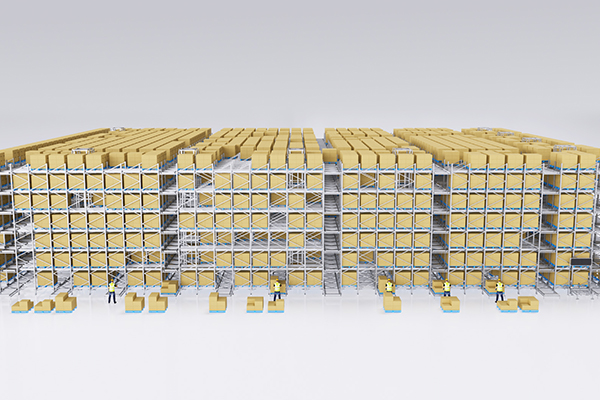
A four-way shuttle changes the architecture rather than just the speed. Instead of a vehicle bound to one lane’s rails, it travels on a grid in two horizontal directions and can move between lanes and aisles, with a vertical lift at the end of a rack block to change level. Four horizontal directions plus vertical transfer is what the industry calls a six-way system. The consequence that matters commercially is redundancy: any vehicle can reach any position, so a single fault does not close a lane group, and capacity can grow by adding vehicles instead of steel.
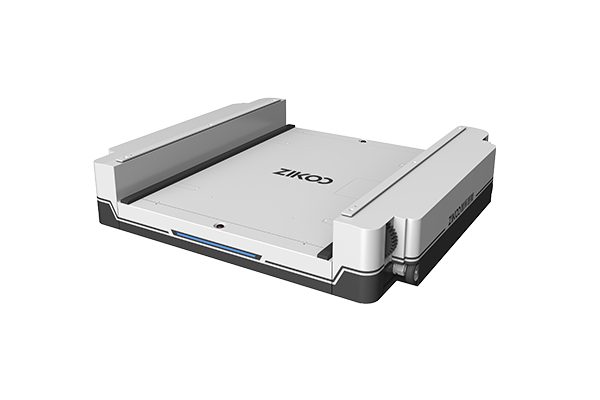
Depth and selectivity pull in opposite directions here, and the trade is easier to judge once you see how a shuttle network is planned around lane groups rather than single aisles. <Six-Way Shuttle: The Dual-Engine Solution for High-Density and High-Throughput> covers how the design reconciles dense storage with throughput demand.
An example of how vehicle geometry feeds back into rack design: the Zikoo R-bot four-way shuttle runs with a body height of 125 mm on its standard models and rated loads of 1.2 to 1.5 t. That body height is what leaves usable clear height in each level for the pallet, so the level pitch is driven by the vehicle as much as by the load.
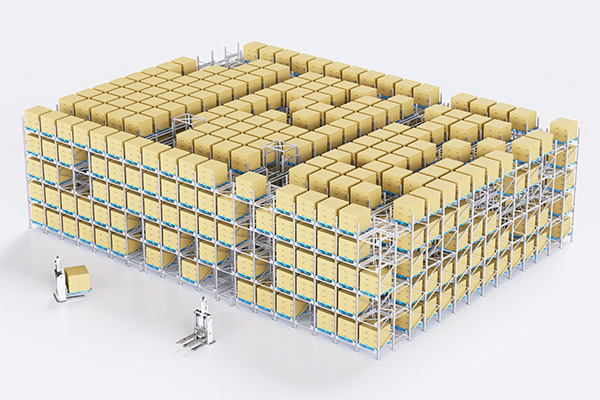
What a shuttle does not fix is selectivity. A lane still holds one SKU and still delivers last in, first out unless lanes are paired or a transfer car serves several faces. Nor does it remove the fill-rate requirement: a deep lane holding too little stock is dead space whether a truck or a robot is doing the carrying. What it does change is labour per move, damage rate and the maximum practical lane depth.
Automated shuttle systems also depend on software decisions that a driver used to make: which lane a pallet goes to, which lane is blocked, what happens when a vehicle faults mid-lane. That logic lives in the WCS and WMS layer, and it is where automated projects fail quietly rather than loudly. A useful question in any vendor review is who owns lane assignment logic and what the system does with a blocked lane at two in the morning.
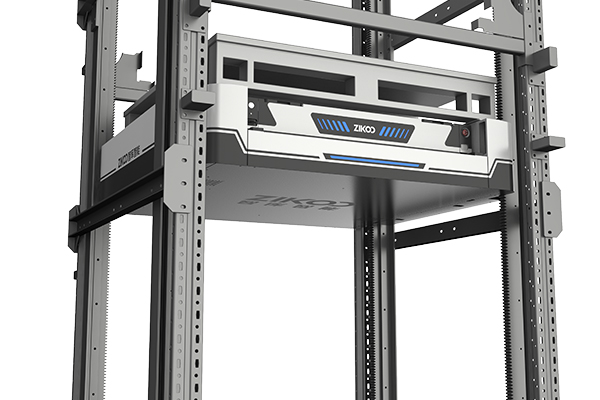
For a wider view of how these vehicles are deployed across building types, <Smart Storage Revolution: Comprehensive Overview of Four-Way Shuttle Systems for Automatic 3D Warehouses> covers the system architecture behind four-way shuttle installations.
Pallet Flow Racking and Gravity FIFO
Pallet flow racking uses lanes of rollers set at a slight decline from the loading end to the picking end. Pallets are loaded at the rear, roll forward under gravity and are held at the face by a separator. Picking removes the front pallet and the rest advance, so each lane delivers FIFO without a truck entering it.
That behaviour makes flow the natural choice where dates matter. Shelf-life control, lot traceability, batch rotation in food and pharmaceutical storage, and cold chain dispatch all benefit from a lane that cannot deliver stock out of sequence. Flow also separates replenishment traffic at the rear from picking at the face, which keeps two conflicting movements out of the same aisle.
The constraints are physical rather than commercial. Incline has to suit the load: too shallow and heavy pallets stall, too steep and they arrive at the face with force that brake rollers and separators then have to absorb. Pallet condition matters more than in almost any other system, because a broken board or a protruding fastener digs into a roller and stops the lane, sometimes taking the whole lane out of service until it is cleared. Freezer installations add ice and frost on the roller bed to that list. Lane depth is limited by how much accumulation can be kept under control.
Cost per pallet position is higher than drive-in because every lane carries rollers, brakes and separators, and those parts need inspection. Justify flow with the value of FIFO and the labour it saves at the face, not with a density claim it cannot win.
Matching Each System to Your Stock and Order Profile
The first question is not which system is densest but how many pallets a single SKU supplies. A deep lane is a bet that one product will fill it. If a lane holds ten pallets and your median SKU peaks at four, most lanes run half empty and the capital has bought air. Sorting SKUs by peak pallet count tells you immediately how much of the range can support deep-lane storage at all.
The second question is access order. Where FIFO is a contractual, regulatory or quality requirement rather than a preference, block stacking and single-entry drive-in are excluded at the start. Drive-through, pallet flow, or a shuttle layout with paired lanes and system-controlled lane assignment remain on the table, and each of them spends space or capital to achieve the same rotation rule.
The third is throughput and who pays for the movement. Drive-in and shuttle both move whole pallets, and both can be dense; the difference is who carries the pallet, how many positions can be served in parallel, and how often the equipment is idle. At high movement rates the constraint moves away from storage geometry and towards the aisle, the truck fleet or the vehicle count.
| System | Fits when | Avoid when |
|---|---|---|
| Block stacking | Few SKUs with high pallets per SKU, stackable loads, full-pallet movement, short-term or seasonal peaks | Many SKUs, crushable or mixed loads, FIFO required, slab capacity or pile-height limits apply |
| Drive-in | Deep reserve of a few SKUs, low pick rate per lane, truck access to a single aisle face | High pick rate, FIFO required, poor pallet quality, high labour cost of repeated truck entry |
| Pallet shuttle | Deep lanes and multi-level storage with scarce aisle space, medium to high throughput, maintenance capability in place | SKU count high with few pallets per SKU, heavy shuttle sharing across many lanes at peak, no in-house maintenance |
| Pallet flow | FIFO is mandatory, date-coded stock, medium SKU count with steady replenishment | Slow movers, damaged or non-uniform pallets, freezer lanes without ice control |
Cost per pallet position is the metric everyone asks for and the one that misleads most often. It ignores truck entry time, damaged stock and rack, honeycombing and the value of the building volume the design did not use. Compare options on cost per pallet move across a full year at your own fill rate, then check whether the cheaper number still holds when the peak week arrives.
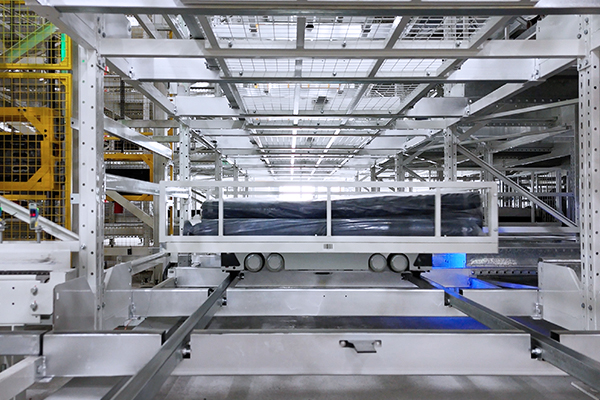
<Smart Warehousing Starts Here: Cost-Effective Four-Way Shuttle Systems> covers how the cost structure of automated shuttle storage is built up.
The Checks That Decide Between Two Close Options
Once two systems survive the profile test, the decision usually turns on data rather than on principle. These checks are worth running before a quote is signed, because each of them can move the answer.
- Build a pallet count histogram per SKU from twelve months of data. Count how many SKUs can fill a lane to a workable level. If that count is small, deep-lane systems will underperform regardless of brand or price.
- Size the lanes at a fill level you will hold in a normal week, then check what the peak week does to overflow. Peak-only sizing creates positions that earn nothing for most of the year.
- Audit pallet condition by sampling, not by memory. Overhang, squareness, broken boards and protruding fasteners decide whether flow racking and deep shuttle lanes will run reliably.
- Collect building data before the concept: clear height, slab load capacity, floor tolerance, column grid and any pile-height or clearance restrictions. Ask the rack designer which floor tolerance the proposed system needs, then measure to it.
- Ask every vendor for cycle time at peak, with the proposed vehicle or truck count, alongside the retrieval time on a quiet shift. The difference between the two is the queue your operation will actually experience.
- Test the software story. Who assigns lanes, how FIFO is enforced, what a lane block does to the queue, and how a manual override is logged. For automated storage this separates a working installation from a demonstration.
A lane calculation makes the fill-rate trade-off concrete. Suppose your largest SKU peaks at 120 pallets, averages 45 across the year, and the proposed lane holds eight. Sizing at peak gives fifteen lanes; the average year needs six. Nine lanes therefore run partly empty for most of the year, and the density you paid for exists for a few weeks. Sizing at the average instead means finding overflow space at peak. Neither answer is wrong. The point is that the real decision is how you plan to survive the peak, not which system looks denser on a drawing.
Where a comparable installation exists, walk it at shift change rather than at midday. Traffic conflict, lane blocking and manual overrides show up when the warehouse is busy, and they tell you more about a design than a capacity table.
Send Your Pallet Data for a Layout Review
The right choice between block, drive-in, shuttle and flow comes from your own inventory profile, not from a generic ranking. Send the SKU level pallet counts with peak and average inventory, the building clear height and slab capacity, whether FIFO is a contractual or regulatory requirement, a pallet condition sample and the current layout drawing. With those inputs Zikoo can size the lane and level counts and test them against a four-way shuttle or narrow aisle configuration before any steel is ordered. Email info@zikoo-int.com or call (+86)-19941778955 to start that review.
FAQ
Which pallet storage system gives the highest density?
On paper, block stacking does, because it needs no aisle beyond truck access, and a fully automatic shuttle system is the densest option once racking is required. In practice density depends on fill. A lane or block that stays partly empty gives back the density it was designed for, so a system running at ninety percent fill beats a denser geometry running at sixty percent. Measure density as pallet positions actually occupied per cubic metre across a full year, not as the theoretical maximum on a layout drawing.
Can drive-in racking handle FIFO stock?
Only in its drive-through form, where pallets are loaded at one end of a lane and retrieved from the other. That requires access to two aisle faces, which uses space the deep lane was meant to save. A standard single-entry drive-in lane is last in, first out, so stock placed first can only leave after the pallets in front of it are gone. If FIFO is a contractual or regulatory requirement for the product, plan for drive-through, pallet flow, or a shuttle layout with paired lanes and system-controlled lane assignment.
When is a pallet shuttle worth the extra capital over drive-in racking?
When lane depth and throughput both matter. A shuttle removes the forklift from the lane, so lanes can run deeper, a truck is not blocked while a position is served, and the rack damage caused by repeated truck entry drops sharply. It earns its capital where a small number of SKUs justify deep lanes, where aisle space is scarce, or where labour cost per move is high. It does not pay when SKU counts are high and pallets per SKU are low, because the depth simply cannot be filled.
Is pallet flow racking only for cold storage?
No. Cold stores use it because FIFO and date control matter there, but the same logic applies to food, beverage, pharmaceutical and any product with lot traceability requirements. Flow also separates replenishment traffic at the rear from picking at the face, which helps in busy dispatch areas. The deciding factors are whether FIFO is required and whether pallet quality can be held consistent, because a broken board or a protruding fastener will stop a roller lane.
What data should I collect before choosing a pallet storage system?
Four sets. A pallet count per SKU from twelve months of data, showing both peak and average. Pallet condition, sampled rather than assumed, including overhang, squareness and board damage. Building data, meaning clear height, slab capacity, floor tolerance and column grid. And movement data, meaning pallet moves in and out per hour at peak plus the number of SKUs picked per day. Those four sets decide lane depth, fill rate, rack type and throughput requirement more reliably than a comparison of headline density figures.
If you’re interested, check out these related articles:
Six-Way Shuttle Drives Warehouse Upgrades: Building an Intelligent Automatic 3D Warehouse
Revolutionizing Cold Chain Logistics: Zikoo Robotics Six-Way Shuttle Powers High-Density, High-Efficiency Warehousing


