


Robotic picking in food and beverage warehouses creates value only when the system is specified for sanitation, temperature, and pack structure from the first layout review. A robot that handles dry grocery cartons will not survive a meat or dairy washdown, and the wrong end effector turns mixed beverage cases into a downstream bottleneck. This guide sets out the evaluation sequence we use with food and beverage teams: start with food safety and zone conditions, then match robot and storage architecture to SKU profiles, then test the cost case against labor, spoilage, and throughput data.
Why Does Food Grade Robotic Picking Start With Sanitation?
Food and beverage sites differ from general merchandise warehouses because organic residue, water, and cleaning chemicals enter the work zone on every shift. A picking robot installed in a dry grocery aisle faces far less risk than one near protein processing, dairy staging, or syrup lines. We treat sanitation as the first specification gate, before speed or pallet counts, because a machine that cannot handle washdown and humidity will fail in ways that no throughput figure can offset.
We review the sanitation procedure before finalizing the robot model. That sequence has kept charging room location and guarding material from being changed after racking drawings were issued. Washdown-rated guarding, sealed connectors, and stainless or coated surfaces matter more than gripper cycle time. Operators need to clean under and around the robot without pushing moisture into battery compartments or motor housings. In humid lines, condensation is as damaging as direct spray, so charging stations are positioned away from wet zones and battery contacts are protected.
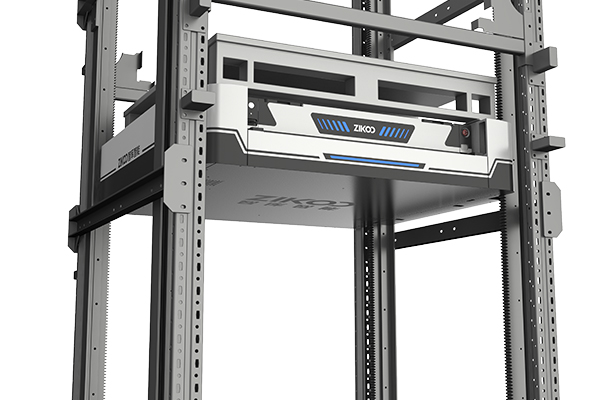
Those details do not show up in a top-line automation quote, but they determine whether a frozen meat or chilled dairy operation stays on line. The R-bot four-way shuttle’s cold chain custom solution includes a special PCBA coating for high-humidity environments and a low-temperature charging port design, which is what we check when a facility runs sanitation crews through the storage block.
How Do Cold Storage and Ambient Robotic Picking Differ?
Ambient beverage and dry food warehouses can use standard lithium batteries and standard sensors, but cold storage changes the design. The R-bot four-way shuttle normally operates down to -15°C. For frozen food environments, Zikoo supplies a -25°C low-temperature dedicated lithium battery and a low-temperature charging port. That difference is not incremental; a standard battery in a frozen chamber loses runtime and may refuse charging.
| Zone condition | Robot requirement | Product fit |
|---|---|---|
| Ambient dry goods | Standard battery and sensors; focus on pick throughput and SKU mix | R-bot standard and U-bot + AMR |
| Chilled 0 to 4°C | Sealed connectors and humidity protection | R-bot cold chain package |
| Frozen -18 to -25°C | -25°C battery, low-temperature charging port, PCBA coating | R-bot cold chain custom solution |
| Washdown and humid lines | Corrosion-resistant guarding and sealed battery compartments | R-bot high-humidity package with H-bot vertical shuttle |
The H-bot vertical shuttle runs from -25°C to 45°C, so the vertical transfer step does not become the weak point when ambient docks feed a frozen high-rack block. We separate the picking workstation from the frozen storage block when possible and use the shuttle system to bring pallets to a temperature-controlled pick tunnel.
For food and beverage cold storage, the equipment package matters as much as the picking robot. <Smart Cold Chain Era: [Six-Way Shuttle System](https://www.zikooint.com/solution/r-bot-h-bot-six-way-shuttle-dense-storage-system) Redefines Storage Efficiency with Maximum Density> covers how six-way shuttle systems handle high-density pallet storage in cold chain environments.
Which Robots Match Food and Beverage Picking Workflows?
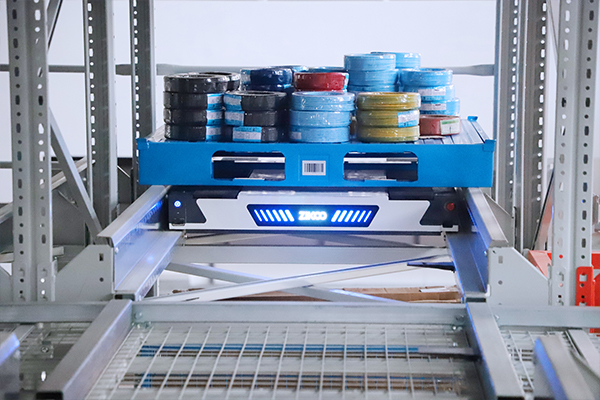
Food and beverage order profiles usually mix full pallet, case pick, and eaches. A pallet shuttle alone does not solve split-case picking, and a robotic arm alone does not create dense storage. We specify the U-bot + AMR narrow aisle picking system when a site has both pallet-out and case-out demand in the same building. The system is designed for up to 10,000 SKUs, picks at least 300 pieces per hour, and moves inbound and outbound volumes of at least 80 pallets per hour with positioning accuracy of ±10 mm.
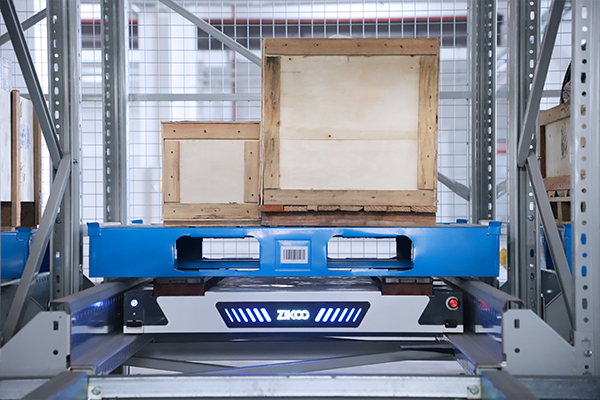
For beverage distributors with many palletized SKUs and fewer eaches, the R-bot four-way shuttle and H-bot vertical shuttle may be a better fit because they form a six-way shuttle network that keeps pallets moving without wider aisles. The U-bot omnidirectional stacker robot offers 1000 kg lifting capacity, lifting heights from 4.5 to 8 meters, and operates in aisles as narrow as 2100 mm, which matters in existing food warehouses with limited column spacing.
If the same warehouse is also comparing storage automation options, robot pick speed should not decide the platform alone. <Stacker Crane vs Four-Way Shuttle: Which Fits Your [ASRS Warehouse](https://www.zikooint.com/asrs-automated-storage-and-retrieval-system-solutions) Best> covers the throughput and density trade-offs that change when picking workstations are added to an ASRS.
If your facility mixes ambient and chilled lines, or has more than 3,000 active SKUs, confirm the picking workstation flow and shuttle battery configuration before locking the layout. Send your zone map and target cases per hour to info@zikoo-int.com and we can check the configuration against your order profile.
How Do You Build a Realistic Cost Case for Food and Beverage Robotics?
The quoted robot price is only part of the investment. Food and beverage projects carry added cost in sanitation-grade guarding, cold storage battery packages, software integration, and the access space needed for cleaning and battery exchange.
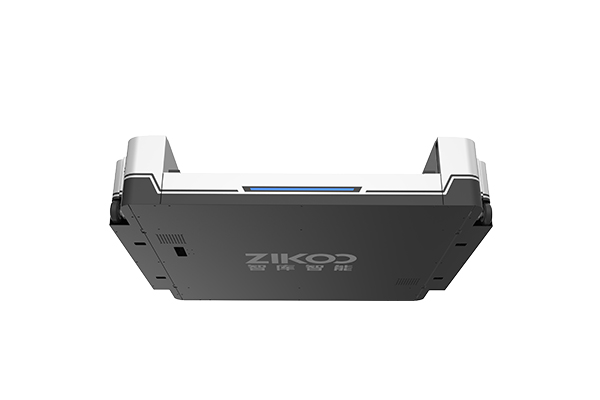
Our business case work starts with three numbers: labor hours removed from manual case picking, spoilage and damage avoided after tightening expiry management, and order accuracy improvement that cuts rework and returns. For pallet storage, the U-bot + AMR system delivers more than 30% storage density improvement, which can delay a building expansion or release space for value-added processing.
Software control is where many projects underdeliver. The picking robot, shuttle, lift, and workstation must work from one order release path across WMS, WES, WCS, and RCS. If a supplier stitches together interfaces that stop at batch handoff, operators end up resolving inventory mismatches manually. Zikoo’s PTP Smart Warehouse Software is designed for that four-layer control from warehouse management through robot scheduling.
For teams trying to limit initial capital, storage architecture often drives the largest line item. <Smart Warehousing Starts Here: Cost-Effective [Four-Way Shuttle System](https://www.zikooint.com/6-way-pallet-shuttle)s> covers the configuration choices that reduce cost before picking robots are introduced.
When Should You Bring a Supplier Into Your Layout Review?
Food and beverage automation decisions frequently stall because layout, temperature zones, sanitation procedure, order cutoff times, and WMS data are evaluated in separate conversations. That delay becomes expensive when the layout is already frozen around the wrong aisle width or when the pick tunnel is too small for the cleaning crew.
Bring a supplier in before the civil and racking drawings are finalized. At Zikoo we review the zone map, SKU dimensions, case-per-hour target, sanitation schedule, and order cutoff times as one package because those variables control robot selection, battery package, workstation count, and software integration.
Send your current layout, SKU list, temperature zones, and target cases per hour to info@zikoo-int.com or call (+86)-19941778955. We will confirm the equipment configuration and the interfaces your project needs before you commit to a building or racking design.
What Else Do Food and Beverage Teams Ask About Robotic Picking?
Does robotic picking handle mixed temperature loads in the same shift?
Yes, but only when the system is divided by temperature zone and the robot assignments respect those boundaries. A single shuttle or picking robot can move between ambient and chilled zones if dwell time and condensation are controlled, but we usually keep frozen equipment inside the frozen block and run separate workstations for chilled and ambient picking. This avoids condensation on sensors and grippers and keeps cleaning procedures simpler.
How do washdown procedures affect robot battery life?
The real issue is not water on the robot body; it is water entering the charging path. A washdown robot can deliver full battery life if the charging contacts stay dry and the battery compartment is sealed. In humid or bleach-cleaned zones, condensation can corrode contacts over time, so the charger should be located outside the direct washdown path and the battery pack should use an anti-corrosion coating.
Can a food warehouse start with case picking and add pallet picking later?
It depends on the order profile and the racking layout. If the initial SKU range is narrow and full pallet movement is small, starting with an AMR-assisted case picking work cell can work, but the rack structure should still use standard pallet locations compatible with a future shuttle system. If the facility already has a high percentage of pallet-out orders, beginning with pallet-to-person shuttles is usually the better path because retrofitting dense storage later costs more.
What software integration do food and beverage picking systems need?
The short answer is one order release path that covers WMS, WES, WCS, and RCS functions. In food and beverage operations, shelf-life and lot control add another layer, because the software must reserve the correct lot and direct it to the workstation before the order is picked. We look for systems that move lot data with the task rather than requiring operators to re-enter it. Share your lot control rules and order cutoff times, and we can confirm which software and robot interfaces fit your operation.
If you’re interested, check out these related articles:
Six-Way Shuttle Empowers 3PL Providers to Build Next-Generation Smart Logistics Hubs
Smart Warehousing Starts Here: Cost-Effective Four-Way Shuttle Systems
Reshaping Warehouse Value: Six-Way Shuttle Leads the Digital Transformation
Six-Way Shuttle: Pioneering the Future of Smart Warehousing
Six-Way Shuttle: The Ultimate Warehousing Solution for Cost Reduction and Efficiency


