


Robotic picking system selection goes wrong when buyers compare robot speed and brand before they have mapped pallet flow. After ten years engineering pallet storage systems, I put pallet dimensions, pallet weight, and pallet positions per hour ahead of aisle width, robot count, and travel speed. A four-way shuttle that cannot accept a 1016 × 1219 mm pallet, or a stacker robot that cannot reach the top beam, will underperform no matter how fast the spec sheet says it moves. This article sets out the selection sequence we use when a warehouse team asks whether an R-bot, U-bot, or combined pallet-to-person layout is the right robotic picking system.
Start With Pallet Flow Before Comparing Robotic Picking Systems
Pallet flow means three numbers: inbound pallets per day, storage positions at peak, and outbound pallets per hour. Those numbers decide whether a single-level shuttle system is enough or whether a vertical transfer robot is needed to move pallets between rack levels. Before we quote a layout, I ask the warehouse team to run a two-week log of movements by SKU velocity. That log usually shows whether the real constraint is picking labor, lift capacity, or staging space. Without it, buyers tend to over-spec robot speed and under-spec vertical transport.
Dense storage changes how picking stations receive work. <Six-Way Shuttle Drives Warehouse Upgrades: Building an Intelligent Automatic 3D Warehouse> covers how vertical transfer and four-way shuttle movements turn rack positions into sequenced work queues.
I also separate storage positions from pick positions. A warehouse with 2,000 pallet positions but only 12 pick lanes may need a vertical lift before it needs more shuttle robots. Buyers who skip this distinction often find the bottleneck at the workstation, not in the rack.
Match a Robotic Picking System to Pallet Type, Load, and Temperature
Pallet dimensions are the first gate. A 1200 × 1000 mm pallet and a 1016 × 1219 mm pallet use different body widths and load center assumptions. If a warehouse receives both on the same dock, the automated system has to accept the widest pallet that will enter the aisle, or the facility needs a pallet standardization program before automation. I have seen mixed pallet sizes delay a shuttle project more than rack geometry.
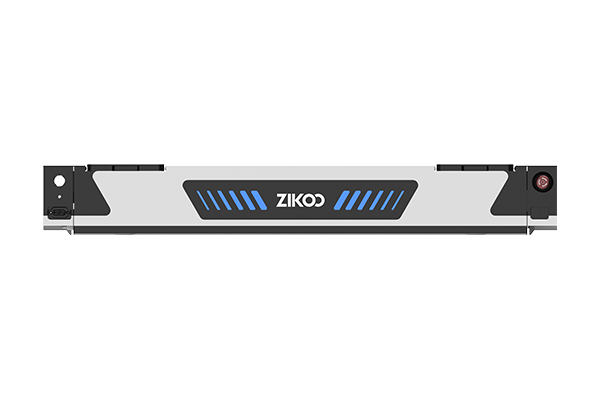
| R-bot Model | Rated Load | Body Width | Pallet Size |
|---|---|---|---|
| R1200B Standard | 1200 kg | 972 mm | 1200 × 800 to 1000 mm |
| R1200A American | 1200 kg | 840 mm | 1016 × 1219 mm |
| R1500J Japanese | 1500 kg | 900 mm | 1100 × 1100 mm |
| R2000B Heavy-duty Large Pallet | 2000 kg | 1300 mm | 1400 mm |
Load capacity determines not only the robot model but also acceleration and travel speed. The R2000B, for example, runs at 1.0 m/s under load, slower than the 1.2 m/s loaded speed of the smaller R1200B, and it runs for about 7 hours on a full charge rather than 8. A buyer should not compare listed speed numbers without confirming they are loaded speeds.
Temperature is next. All R-bot models operate down to -15℃. Cold chain versions use a -25℃ low-temperature lithium battery and special PCBA coating for high-humidity environments. If the application is frozen food storage, specify this before the body and battery order is locked.
Compare Four-Way Shuttle, Stacker Robot, and Combined Pallet-to-Person Layouts
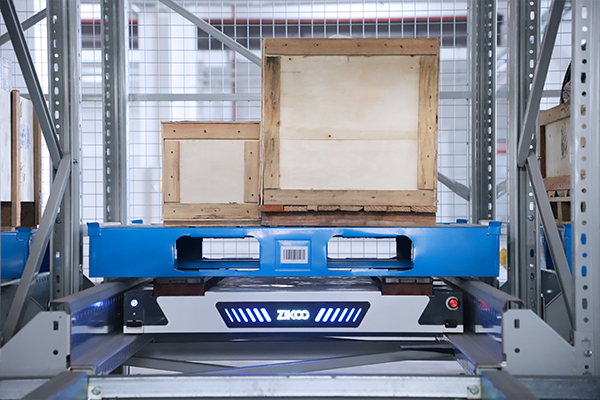
The right architecture follows the aisle profile and storage depth. An R-bot four-way shuttle travels in four directions along rack rails, so it handles deep lanes and dense storage with fewer aisles. Its body is 125 mm high for the R1200B, which leaves vertical space in the rack. When the warehouse has several levels, an H-bot vertical bidirectional shuttle works as the vertical transport hub. The H-bot occupies one storage position and positions to ±1 mm, so pallets hand off cleanly between the shuttle and the lift.
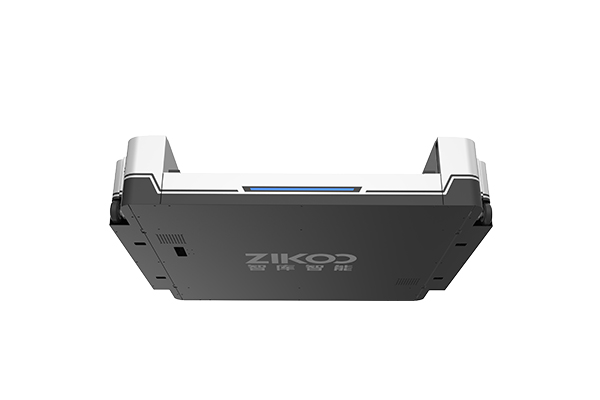
An U-bot omnidirectional stacker robot is different. It needs a minimum aisle width of 2100 mm and can reach 8,000 mm lifting height with a 1000 kg load. That makes it practical for a narrow-aisle warehouse where rebuilding the rack to shuttle-rail tolerances is not possible. In existing buildings, we compare U-bot layouts against R-bot and H-bot combinations, because floor flatness and rack runout decide which option is less disruptive.
Warehouse height changes the architecture decision more than robot speed does. <Multi-Scenario Smart Adaptation: Zikoo’s [Six-Way Shuttle](https://www.zikooint.com/solution/r-bot-h-bot-six-way-shuttle-dense-storage-system) Powers the Digital Transformation of Warehousing> explains how the same shuttle platform adapts across cold chain, manufacturing, and e-commerce layouts.
Not every warehouse needs a six-way shuttle system. When the operation is mostly pallet in and pallet out, a four-way shuttle at one level may be enough. When the order profile also includes split-case picking, a combined U-bot and AMR layout may be the better choice. The architecture should follow the pick method, not the product catalog.
Audit Software and Scalability During Robotic Picking System Selection
Software decides whether a robotic picking system stays productive when the order mix changes. I look at WMS, WES, WCS, and RCS as one chain rather than four separate modules before I compare robot hardware. The WMS owns orders and inventory. The WES sequences work. The WCS controls equipment. The RCS handles robot routing and traffic. If the supplier only demonstrates rack movement and not order release logic, the quotation is not yet comparable.
One practical test is to ask how the system waves orders at peak. A shuttle can be fast in isolation and still wait if the WCS releases a full wave of slow movers at the wrong time. The software has to balance work across vertical lifts, shuttle lanes, and workstations. Suppliers that cannot show this logic usually rely on manual override during commissioning.
Task release logic matters more than top travel speed. <Software-Driven Hardware: Six-Way Shuttle Maximizes Warehouse Efficiency> covers how WCS and RCS routing decisions change shuttle utilization in a live system.
If your operation mixes cold chain and ambient zones in one warehouse, I would confirm WCS rules for temperature-zone handoff before finalizing the equipment BOM. Send the zone map and order profile to info@zikoo-int.com, and we can check the logic against similar pallet flow models.
Send Pallet Data to a Robotic Picking System Supplier
After pallet type, architecture, and software are clear, the fastest way to test a supplier is to send six facts: building net dimensions, pallet type, pallet weight, storage positions, inbound and outbound pallets per hour, and temperature range. A supplier that returns only a price list is not answering the right question. A supplier that returns a layout drawing and sequencing logic is showing that the team understood the flow.
Supplier screening becomes easier when you know which facts matter. <Looking for Reliable Four-Way Shuttle Manufacturers? Choose Zikoo Robotics> outlines the documentation and project evidence to request before a factory visit.
For a specific layout check, send your pallet dimensions, load weight, storage positions, inbound and outbound pallets per hour, and temperature range to info@zikoo-int.com, or call (+86)-19941778955. We will return a first-pass layout and the matching R-bot or U-bot model.
Questions Warehouse Teams Ask Before Committing to a Robotic Picking System
How do we know whether our warehouse is too small for a four-way shuttle system?
Floor area is not the real test; rack geometry is. A four-way shuttle fits a warehouse when there is a continuous rack block and a clear transfer aisle. If the existing rack breaks into small isolated bays, a shuttle may still run but the efficiency benefit shrinks because the robot spends time moving between disconnected lanes. We usually ask for a CAD layout first. From that we can see whether the shuttle will operate in one connected grid or in separate pockets. That single check should come before any price discussion.
Which option creates less disruption in an existing building, a four-way shuttle or a stacker robot?
Many buyers assume the four-way shuttle is the least disruptive option. That assumption is not reliable when the building has narrow aisles or uneven floors. A four-way shuttle depends on rack rails and floor flatness across the grid. An U-bot stacker robot can work from existing aisles as narrow as 2100 mm and does not require the same rail alignment. In a building with existing high racks, the U-bot is sometimes the cleaner retrofit. In a new high-density layout, the R-bot four-way shuttle is often less expensive to scale because it does not need an aisle for every storage face.
Is a robotic picking system still worth selecting if our order profile changes seasonally?
It depends on how far the peak-to-average throughput changes. If the ratio is below roughly 3 to 1 and the base system covers the average load, additional shuttle robots and shift hours can usually absorb the peak. If the ratio is above that, the layout and the software wave logic need to be designed around the peak from day one. Seasonal operations should also confirm whether the supplier can add robots in the existing rack grid without a new control network. A system that requires a shutdown to add capacity is less useful for a seasonal warehouse.
What should we ask a supplier before we accept a robotic picking system quotation?
In projects we have supported, the most useful questions are not about travel speed. We ask for a layout drawing with rack positions, a pallet flow diagram, and a written description of how WCS and RCS will release work during peak. We also ask which pallet sizes were used in the supplier’s reference projects. That matters because a reference warehouse with one pallet type does not prove the supplier can handle mixed pallets. These documents show the difference between a robot sale and a system design. Send your pallet dimensions and target throughput to info@zikoo-int.com, and we will confirm which R-bot model fits your aisle block.
If you’re interested, check out these related articles:
Six-Way Shuttle: Pioneering the Future of Smart Warehousing
Smart Cold Chain Era: Six-Way Shuttle System Redefines Storage Efficiency with Maximum Density
Six-Way Shuttle: Empowering Industries to Embrace Smart Warehousing


