


Parcel sorting failures rarely begin at the gripper. They begin when pallets arrive at the picking station faster than the software can release work, or slower than the storage system can supply cases. Robotic picking systems for parcel sorting perform well only when storage density, shuttle feed, and WCS task release are designed as one system. Most articles focus on camera speed and grasp success rate. The design decisions that determine uptime are upstream: pallet profiles, rack depth, vertical transfer capacity, and recovery behavior after a mispick. We see this pattern across e-commerce, 3PL, and manufacturing projects where the robot itself is rarely the weak point.
Robotic Picking Systems Work Best When You Define the Sorting Flow First
The first specification meeting should not start with robot reach or pick rate. It should start with inbound volume, SKU count, order lines per hour, and the physical pallet base. A robotic picking system that handles 800 picks per hour at one station will not hit that number if the upstream storage system delivers the wrong pallet or if the WCS cannot match a shuttle to an open pick slot. In our system design work, we map the sorting flow as five blocks: receiving, pallet storage, case release, robotic pick, and order buffer. Each block has a throughput target and a recovery path.
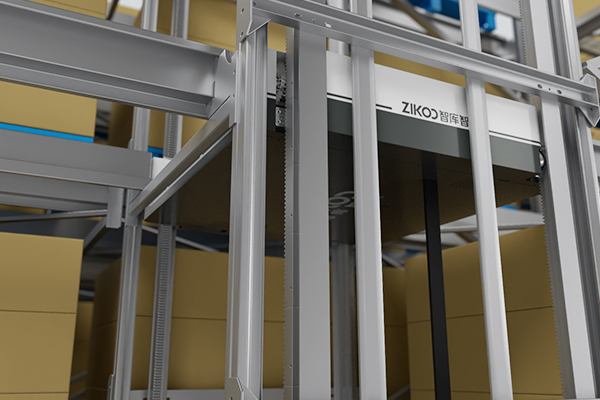
Parcel sorting projects in e-commerce usually need split-case picking mixed with full pallet movement. That changes the storage decision. A high-SKU parcel sorting operation with 8,000 to 10,000 active SKUs cannot be served well by wide aisle rack or manual case replenishment. The storage subsystem must present the right pallet to the picking station within the robot’s work window. The U-bot + AMR narrow aisle picking system supports up to 10,000 SKUs and works with aisles as narrow as 2,100 mm, while maintaining picking efficiency of at least 300 pieces per hour at a workstation. That combination works when the storage and picking layers are planned together, not when the robot is added after the rack is installed.
Dense Storage and Robotic Picking Systems Need One Control Layer
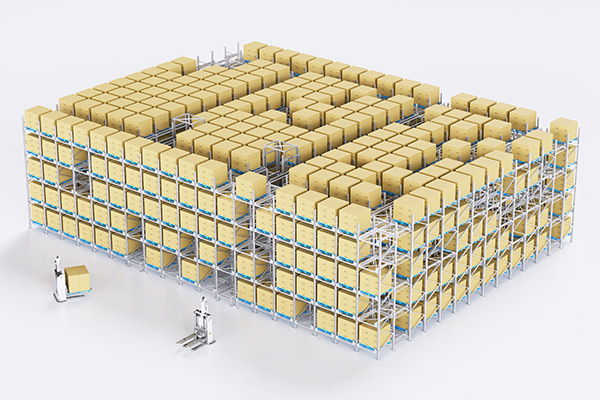
Robotic picking systems depend on dense storage for parcel sorting throughput, but dense storage introduces constraints that a standalone robot cell does not see. Deep lane storage, multiple shuttle levels, and vertical transfer points create queues. Those queues are managed by software, not hardware. The PTP Smart Warehouse Software from Zikoo covers WMS, WES, WCS, and RCS in one control layer, which matters because the WCS must decide which shuttle moves to which pick station and when. If the picking cell has no visibility into shuttle status, robots wait.
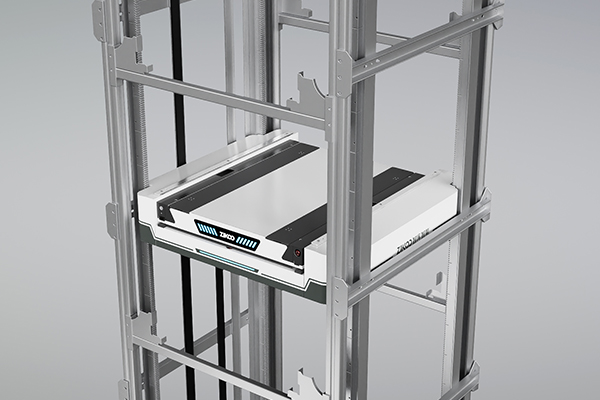
One control layer also prevents storage from being planned at one density and picking at another. The R-bot Four-way Shuttle has a body height of 125 mm and carries up to 1,500 kg on standard models, which allows pallet storage in much denser lanes than conventional rack. But density without task release logic creates congestion at the vertical hoist, where the H-bot moves pallets between levels. In parcel sorting, the H-bot vertical bidirectional shuttle positions within ±1 mm and runs at 0.5 m/s loaded, so it is precise but not infinitely fast. The WCS must sequence vertical moves to match pick station consumption instead of reacting to buffer alarms.
Software-controlled release logic matters more than robot arm specs in this part of the system. <Software-Driven Hardware: [Six-Way Shuttle](https://www.zikooint.com/solution/r-bot-h-bot-six-way-shuttle-dense-storage-system) Maximizes Warehouse Efficiency> covers how WCS-level task sequencing prevents pick stations from waiting on shuttles and shuttles from queuing behind poorly timed release.
A Six-Way Shuttle System Feeds Parcel Picking Stations at the Right Rate
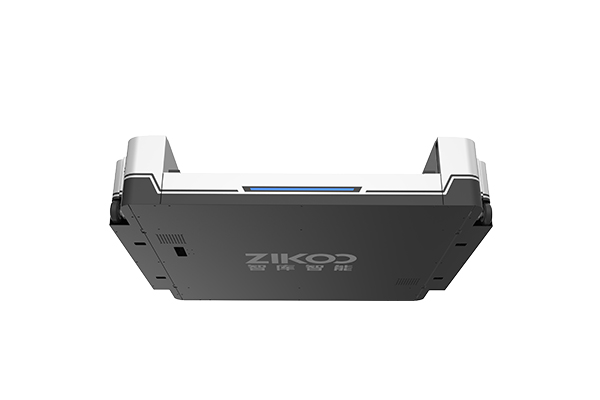
A common design error is sizing the pick robots for peak parcel volume while treating the shuttle system as a fixed constraint. The better method is to model the storage layer as the feed system and size the picking stations from the feed output. The R-bot Four-way Shuttle moves at 1.6 m/s empty and 1.2 m/s loaded on standard models. When paired with the H-bot vertical bidirectional shuttle, pallets can move across rack aisles and between storage levels without leaving the automated network. That six-way shuttle system turns storage into a controllable feed line for the picking station.
| R-bot Model | Rated Load | Body Height | Empty/Loaded Speed |
|---|---|---|---|
| Standard R1200B | 1,200 kg | 125 mm | 1.6 / 1.2 m/s |
| American R1200A | 1,200 kg | 125 mm | 1.6 / 1.2 m/s |
| Japanese R1500J | 1,500 kg | 125 mm | 1.6 / 1.2 m/s |
| Heavy-duty R1500B | 1,500 kg | 125 mm | 1.6 / 1.2 m/s |
| Heavy-duty large pallet R2000B | 2,000 kg | 150 mm | 1.35 / 1.0 m/s |
The table matters because parcel sorting operations do not all use the same pallet standard. A US operation using 1016 mm × 1219 mm pallets cannot run the same shuttle configuration as a Japanese 1100 mm × 1100 mm operation. Choosing the pallet-matched shuttle model avoids pallet overhang, misalignment at the hoist, and extra sensor correction at the picking station. In parcel sorting, pallet overhang is a quiet throughput kill because it adds seconds of correction at every interface.
Dense storage only returns value when the vertical transfer layer can keep up with pick stations. <Six-Way Shuttle Powers Dense Storage: Breaking Space Limitations> covers how six-way shuttle networks recover floor space in facilities where rack depth would otherwise cap storage density.
For operations that mix pallet sizes or run strong same-day peaks, the feed rate calculation is not something to resolve after equipment selection. If your parcel profile includes split-case picking and overnight wave spikes, confirm the shuttle task release logic and pick station buffer size before finalizing your layout. Send your pallet dimensions, SKU count, and hourly parcel target to info@zikoo-int.com and we can check whether the feed system supports your peak.
The Specification That Matters Most Is Interface Stability, Not Grip Speed
Most request for quotation documents rank payload, reach, and picks per hour first. Those numbers are easy to compare, but they do not predict whether a robotic picking system will stay productive across shifts. In parcel sorting, the more useful specification is interface stability: how the robot behaves when a pallet is 30 mm off center, when a shuttle arrives late, or when a barcode is damaged. The U-bot uses a 3D depth camera to model pallet positions and compensate for ±50 mm of deviation. That capability reduces the number of manual resets when parcel pallets are not perfectly aligned.
Another interface point is the transition between full-pallet movement and split-case picking. A robot cell that does only case picking has different tooling from one that also sorts returns or mixed SKU trays. We avoid specifying a fixed gripper at the start. Instead, we define the parcel dimensions, weight spread, and packaging type first. Flexible vacuum plus mechanical assist may handle boxes, mailers, and polybags, while heavy or open-top items need a different end effector. The robot should not be forced to process items outside its stable grasp envelope.
The robot only knows what the control layer tells it about the incoming pallet. <PTP Intelligent Warehouse Software Empowers Enterprises for Smart Upgrades> covers how WMS and WCS share master data, order priority, and exception flags that robotic picking cells need for stable operation across SKU changes.
Maintenance teams often prepare for mechanical wear on rails and drive wheels, but parcel sorting operations lose more time to interface drift. Camera calibration, tool-change verification, and pallet sensor alignment should be on a weekly checklist. We plan these checks into the WCS task flow: after every shift change, the system can run a short station self-test before releasing the first wave of parcels.
After-Sales Support Decides Whether Robotic Picking Systems Stay Productive
Robotic picking systems are not a one-time installation. The first year of operation reveals which assumptions about parcel mix, pallet quality, and peak patterns were wrong. A supplier that only delivers hardware will leave the site team to fix those mismatches alone. We track after-sales readiness by four items: remote access to the control system, local spares for the shuttle fleet, documented recovery procedures, and software update discipline. Those four items decide whether a 20-minute exception turns into a full-shift bottleneck.
During commissioning, the most important handover is not the acceptance test. It is the system documentation that tells the warehouse team what to do when a shuttle cannot reach a pick station, when a parcel is dropped at the robot, or when a barcode reads differently from the WMS master. We have seen facilities where a single misaligned pallet stop generated repeated picking exceptions because operators did not have a clear reset sequence. The fix was not a faster robot. It was a recovery procedure and an alarm filter in the WCS.
If your parcel sorting project includes high SKU counts, split-case picking, or a storage layer built on dense shuttle technology, the specification work before supplier selection will determine whether the system stays productive. Send your parcel dimensions, hourly volume, and pallet standard to info@zikoo-int.com or call (+86)-19941778955. We can review your sorting flow and confirm which shuttle, picking, and software interface decisions need to be fixed before you lock the layout.
Buyers Often Ask These Robotic Picking Questions Before Committing
Do robotic picking systems work for high-SKU parcel sorting?
Yes, but only when the storage system and WCS are selected around the SKU count, not the robot alone. A picking cell that handles mixed parcel orders quickly cannot recover from an upstream storage design that presents the wrong pallet by default. The planning target should include active SKUs, order lines per wave, and pallet replenishment frequency. A system like the U-bot + AMR setup supports up to 10,000 SKUs in narrow aisles, but the value depends on how task release and replenishment are configured.
Are robotic picking systems only for large e-commerce warehouses?
There is a common assumption that robotic picking systems are only for large e-commerce buildings. That misses how mid-size operations use the same hardware with a smaller storage block and fewer picking stations. A site with 3,000 to 5,000 active SKUs can still justify dense storage and robotic picking if split-case orders are growing and labor hours are unpredictable. The decision should follow order structure and facility height, not company size.
What causes robotic parcel sorting failures most often?
In project reviews we have completed, the most frequent cause of parcel sorting downtime is not robot hardware. It is a mismatch between pallet arrival quality and the picking station interface. A pallet that is slightly out of position, a damaged barcode, or a shuttle release issued too early creates exceptions that operators must clear. The robot may recover in seconds, but repeated exceptions consume the shift. Interface alignment and recovery scripting matter more than pick cycle time.
How long does it take to integrate robotic picking with an existing WMS?
The time depends on the WMS version and whether the system already handles conveyor or shuttle task messages. A standard API integration can take weeks. A custom legacy WMS with hard-coded order types and no task-level handshake can take months, because master data and exception flags must be mapped before the WCS can release work safely. If your WMS has custom order types or batch release rules, send your interface specification to info@zikoo-int.com and we will confirm whether the RCS can consume your task data.
If you’re interested, check out these related articles:
Revolutionizing Cold Chain Logistics: Zikoo Robotics Six-Way Shuttle Powers High-Density, High-Efficiency Warehousing
Looking for Reliable Four-Way Shuttle Manufacturers? Choose Zikoo Robotics


