


Most package distribution hubs lose throughput in the gap between pallet storage and the picking station, not at the picking station itself. Smart picking systems for package distribution only deliver their promised rate when the upstream shuttle layer can present the right pallet, case, or split-case buffer at the right moment. In the e-commerce and 3PL parcel operations I have supported, the fastest sorters still wait when storage feeding is uneven. That is why the evaluation needs to start with flow: inbound profile, order structure, storage density, and the number of touches before dispatch.
Why Do Intelligent Picking Systems Stall in Package Distribution?
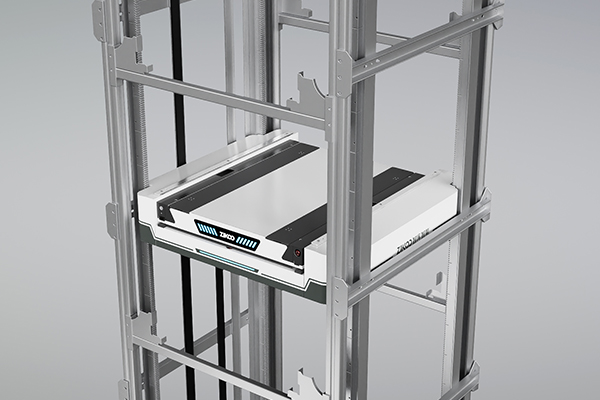
Most proposals start from the robot count, the picking rate, and the aisle width. The real failure point sits upstream. A picking workstation cannot run at 300 pieces per hour when the pallet it needs is still twelve lanes away, waiting behind four other pallets in a deep rack. Smart picking systems for package distribution are therefore not a picker upgrade. They are a storage-to-sortation design problem.
In hubs where inbound cartons arrive in waves and outbound trailers have fixed cut-off times, the shuttle fleet has to perform two jobs at once. First, it has to build sequence buffers ahead of the picking stations. Second, it has to handle inbound putaway without blocking retrieval paths. When those two duties share the same aisle, travel time becomes the ceiling. I have seen packages sit at the induction line while the sorter is not starved, simply because the shuttle had no empty return path. The picking robot was never the issue.
That is why I avoid quoting a picking rate until the storage model is fixed. The same robotic picking cell can deliver very different output depending on whether it is fed by a six-way shuttle network or by manual pallet drops.
What Storage Design Decisions Shape Picking Throughput?
Dense storage in a package distribution building has a hidden cost: retrieval depth. Every extra pallet position between the aisle face and the package’s destination adds shuttle travel time. For high-turn parcel inventory, the rack should be shallower and the buffer shorter. For slow-turn items, deeper storage still works because those pallets are retrieved less often. The picking system does not care. It only cares about whether the next required pallet reaches the workstation before the previous order is complete.
Dense storage design for parcel hubs changes shuttle travel time, which directly affects picking starvation. <Six-Way Shuttle Powers Dense Storage: Breaking Space Limitations> covers how deeper racks and multi-direction shuttle movement reduce the average retrieval cycle in high-bay hubs.
Another decision that gets locked too early is whether the system should present pallets, cases, or split-case totes to the picker. A package distribution operation with high e-commerce volume often needs all three during the same shift. The storage grid has to be able to hold pallets for full-carton orders and release totes for split-case workstations without contaminating either flow. This is why the shuttle lane layout and the picking workstation location should be designed together, not treated as separate supplier scopes.
Pallet Density Versus Presentation Speed
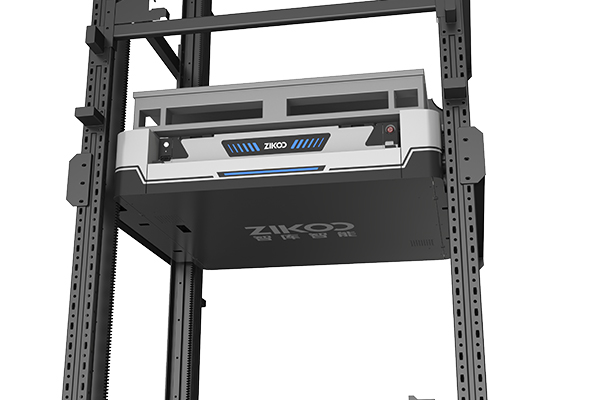
A warehouse can add storage density by making racks deeper, but that puts more pallets behind the first pallet. Six-way shuttle combinations can reduce this penalty because the R-bot moves horizontally in four directions and the H-bot handles vertical transfer within the same lane. The result is a system that keeps good storage density without turning every retrieval into a six-minute dig. In parcel hubs, that distinction matters more than the number of storage positions.
Sizing the Buffer
The buffer is the small stock of ready pallets or totes staged near the picking station. If it is too small, the picker starves. If it is too large, floor space is wasted and pallets sit too long. The correct buffer size depends on shuttle cycle time, order variability, and wave release patterns. Buyers should ask the supplier to simulate the buffer drawdown with actual peak-hour order data, not a smooth average.
Which Robotic Picking Combination Fits High-Volume Parcel Hubs?
There is no single robot for package distribution. Each layer has a different task, and the most common mistake is to compare one robot against another without stating which layer is being compared. In high-volume parcel hubs, three configurations cover most requirements.
| System | Load and role | Package distribution fit |
|---|---|---|
| R-bot Four-Way Shuttle | Rated load 1,200 to 2,000 kg; dense pallet storage and sequenced retrieval | High-density pallet buffer feeding full-carton outbound and case picking |
| R-bot plus H-bot Six-Way Shuttle | R-bot horizontal movement with H-bot vertical transfer, ±1 mm positioning | Multi-level parcel storage with fast retrieval to picking levels |
| U-bot plus AMR Narrow Aisle Picking | 1,000 kg stacker robot with AMR handling; up to 10,000 SKUs | Split-case picking, mixed SKU orders, e-commerce workstation feeding |
For parcel hubs that run full-carton and split-case outbound from the same building, the U-bot plus AMR configuration is useful because it can combine upper storage and lower picking without widening the aisles beyond 2,100 mm. The R-bot plus H-bot layout works better for dense pallet buffers and high-bay storage, especially when the distribution center has limited floor space and taller clear heights.
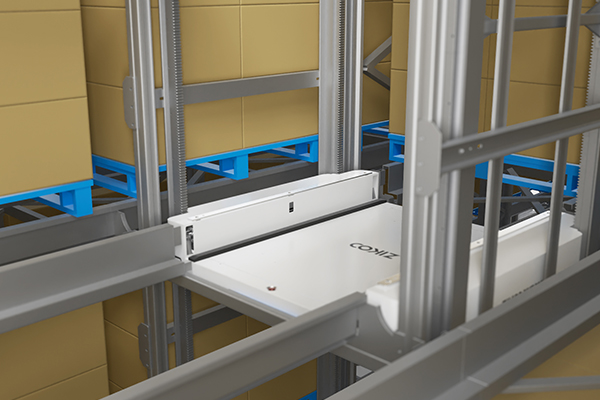
The U-bot plus AMR system has published throughput of at least 300 pieces per hour for picking, with inbound and outbound at 80 pallets per hour or more, and storage density improvement over 30 percent. Those numbers are useful only when they are tied to a specific SKU profile. High-SKU e-commerce work with many small lines behaves differently from homogeneous parcel hubs moving three standard carton sizes.
One decision that regularly gets locked too early is whether the shuttle buffer should serve conveyor sortation, split-case workstations, or both. If your building has mezzanine constraints, narrow aisles, or mixed order profiles, and you have not yet fixed the rack depth, send the parcel dimensions, hourly outbound target, and mezzanine height to info@zikoo-int.com. The shuttle model and workstation type should be confirmed together before the building layout is frozen.
Where Do Peak-Day Bottlenecks Actually Appear?
Peak-day bottlenecks in package distribution rarely sit at the sorter itself. They sit in the release logic. A WMS may release orders in large waves to maximize pick density, but that creates a sudden demand spike at the buffer. A WCS then has to translate those waves into shuttle moves, and if the buffering rule is too simple, the shuttles all try to serve the same picking zone at once.
When a parcel hub runs a high-density storage and sortation loop, four-way shuttle systems present multiple pallets in parallel while a stacker crane moves one load per aisle. <Stacker Crane vs Four-Way Shuttle: Which Fits Your [ASRS Warehouse](https://www.zikooint.com/asrs-automated-storage-and-retrieval-system-solutions) Best> explains why parallel pallet presentation matters as outbound rates climb and several workstations need simultaneous pallet feeds.
The second bottleneck is empty pallet return. A dense shuttle aisle can become a one-way channel during peak periods because pallets go out to picking but empty pallets cannot get back without interrupting the flow. The system design has to reserve return paths or sequence the return trips outside the picking wave. This is the kind of detail that does not appear in a brochure, but it determines whether the hub can hold its cut-off during the last three hours before trailer departure.
Software Release Rules
The RCS layer matters more than the robot model at this point. If the software releases too many orders at once, the buffer overflows and picking accuracy drops because totes queue at the station. If it releases too few, the sorter runs below capacity. The best commissioning process I have worked on starts with a small controlled wave, measures the buffer drawdown, then opens the release rate until the sorter is fed just above its starvation threshold.
Handling Returns and Mixed Flow
Package distribution hubs often process returns during the same shift as outbound. Returns arrive as loose parcels with damaged labels and variable dimensions. Smart picking systems for package distribution have to accommodate that flow without blocking the forward pick path. Dedicated return aisles or time-windowed returns are usually more practical than trying to force returns through the same high-speed buffer.
How Should Buyers Compare Package Distribution Automation Suppliers?
Ask for the simulation before the equipment list. A supplier that can simulate the actual order profile, peak-hour wave, and trailer cut-off has a credible view of system behavior. A supplier that only quotes rack positions and robot count is presenting hardware without the control logic.
The second comparison point is pallet presentation. How many pallets can be presented to the picking station during a fifteen-minute peak window? That number should be measured, not calculated from average throughput. Package distribution is a peak-driven business. Average throughput hides the failure point.
Third, verify the backend software. The R-bot, H-bot, and U-bot hardware only matters if the WMS, WES, WCS, and RCS layers can execute the order-release strategy. Ask how the supplier handles priority orders being inserted into an existing wave. That is a common parcel hub scenario.
Fourth, check whether the supplier can deliver the storage, shuttle, picking station, software, and commissioning as one scope. Splitting these scopes across several vendors can leave the buffer design or interface logic unowned. That is where integration projects drift.
Too many parcel automation projects are quoted on rack and robots before the supplier has stress-tested the WMS/WCS release rules that govern peak-day flow. Ask for a simulation that includes your actual order profile, hourly peaks, and trailer cut-off times before comparing the robot count. Then send the lane width, building height, parcel profile, and target throughput to info@zikoo-int.com or call (+86)-19941778955. That information is enough to confirm whether a shuttle-fed picking system can meet the cut-off, or whether a stacker crane or narrow-aisle design is more suitable.
What Else Should Buyers Ask About Package Distribution Picking?
How much storage density can be added without hurting picking speed?
It depends on rack depth and retrieval frequency. A shallow rack with more shuttle aisles keeps picking speed high but uses more floor space for aisles. A deep rack saves space but increases retrieval time. In the parcel hubs I have worked on, fast-moving cartons go in shallow lanes and slow movers go deeper. The system should be able to mix both within the same building, because the R-bot four-way shuttle can move across lanes and the H-bot can handle vertical transfer at ±1 mm positioning. That mixed-depth layout is usually the answer.
Are split-case and full-carton outbound handled in the same system?
They can be, but only if the workstation types and buffer are separated clearly. The U-bot plus AMR arrangement is designed for split-case work and can manage up to 10,000 SKUs. Full-carton outbound is better fed from R-bot dense storage with a sequenced pallet buffer. A single building can run both flows when the WCS directs each order type to the correct workstation. The main risk is not the mixed inventory. It is allowing split-case and full-carton traffic to share the same narrow aisle without reserved return paths.
What proof should we demand before acceptance?
Ask for a peak-hour test that runs at the real order profile, not a steady average. The test should include wave release, priority order insertion, empty pallet return, and a simulated trailer cut-off. If the system can hold throughput for that peak window without manual intervention, acceptance is meaningful. If the supplier only demonstrates a smooth demo profile, the test has not proven anything. We usually recommend a pilot wave with actual parcel data before finalizing the pallet buffer and picking workstation count.
How long does integration with existing sortation control software take?
In a well-scoped project, the interface definitions take longer than the physical installation. The WMS/WCS/RCS handoff has to be agreed early: which orders are released, how buffered pallets are ordered, and how the sorter confirms a carton has been picked. In the parcel hubs I have supported, this integration work runs two to four weeks of focused testing after mechanical commissioning. The shortest path is to fix the interface data model before the first shuttle arrives. Share your peak-hour order profile and current sortation layout; we can confirm which pallet buffer configuration can meet cut-off without overbuilding.
If you’re interested, check out these related articles:
Six-Way Shuttle: The Ultimate Warehousing Solution for Cost Reduction and Efficiency
Six-Way Shuttle Empowers 3PL Providers to Build Next-Generation Smart Logistics Hubs
Six-Way Shuttle Drives Warehouse Upgrades: Building an Intelligent Automatic 3D Warehouse
Six-Way Shuttle: The Smart Warehousing Tool for Cost Reduction and Efficiency


