


High-volume sorting creates a difficult contradiction in warehouse design: the operation must hold enough inventory for many SKU segments while still releasing thousands of mixed lines into order consolidation and dispatch within tight windows. In this environment, a warehouse is not just a storage asset. It is a flow system in which storage density, retrieval speed, software decision latency, and workstation productivity all determine whether peak orders are shipped on time.
A practical smart warehouse solution for high-volume sorting therefore treats the following layers as one integrated stack: dense pallet storage, fast pallet-to-person delivery, case and each picking, sortation, and software orchestration. When these layers are planned together, the system can handle order peaks without multiplying walking distance or adding uncontrolled labour.
Why High-Volume Sorting Breaks Traditional Warehouse Logic
Traditional picking environments often rely on wide aisles, manual travel, and fixed storage locations. That model becomes expensive when order profiles contain many small lines, rapid order-cutoff times, and high SKU counts. The bottleneck shifts from storage capacity to movement. More inventory does not help if workers or forklifts cannot reach the right pallet in time.
High-volume sorting also exposes a second constraint: storage density and access speed are usually in tension. A very deep rack lane can store more pallets, but retrieving the oldest pallet may require moving several others first. A well-designed automated system resolves this tension by combining a highly dense storage structure with multiple fast-moving robots that can reposition pallets without continuous operator intervention.
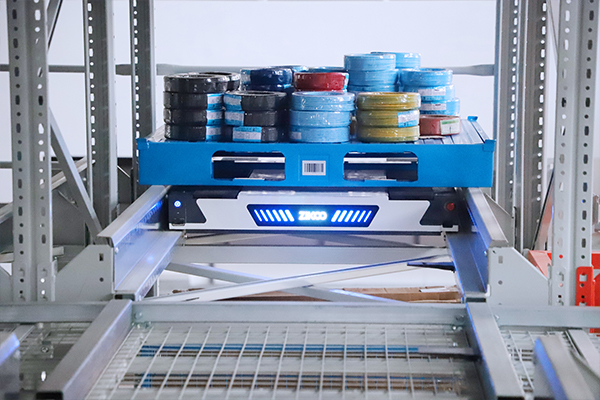
That is why pallet-to-person workflows have become central to high-volume order fulfilment. Instead of sending people into the racks, the system brings pallets to ergonomic picking stations. The result is a shorter travel path, more consistent pick rates, and a clearer connection between storage activity and order-release rules.
The Core Automation Stack for High-Volume Sorting
For most high-throughput facilities, the physical system has four layers: dense storage, horizontal pallet movement, vertical transfer, and picking or sortation workstations. The storage layer is often built around an automated storage and retrieval system, which can include a four-way shuttle, rack structure, lifts, and control software.
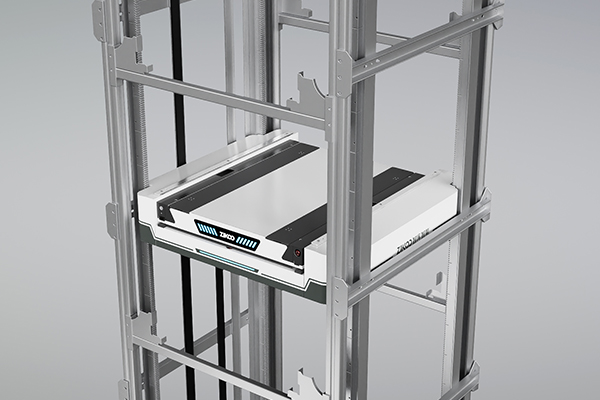
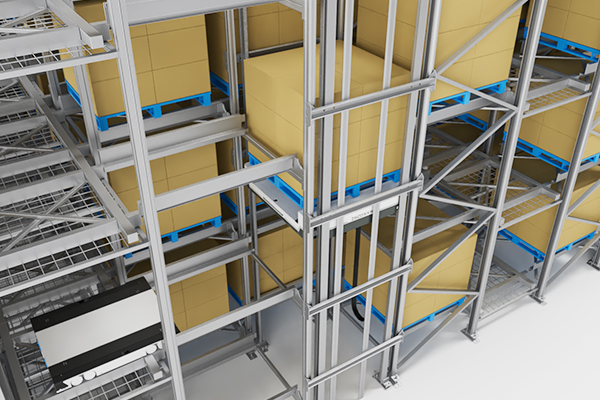
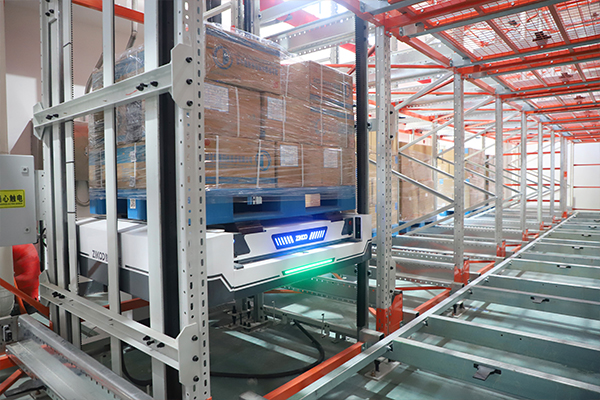
The six-way shuttle system is a practical example of this layered approach. Shuttles move forward, backward, and laterally within the rack lanes, while a vertical bidirectional shuttle carries pallets between levels. This combination creates a three-dimensional transport network that connects storage positions to picking stations without requiring a fixed conveyor for every location.
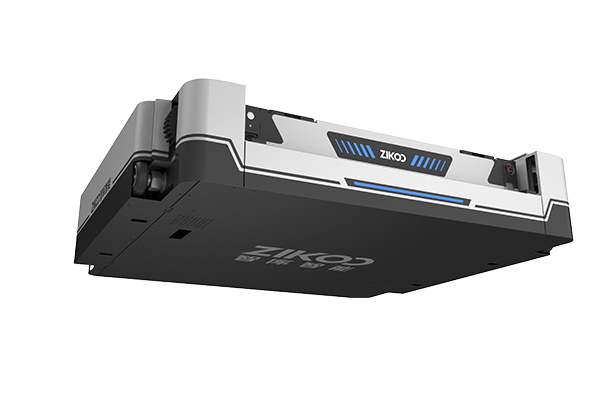
Dense pallet storage becomes more productive when the horizontal shuttle layer and the vertical transfer layer are designed as a single network. <Six-Way Shuttle Unlocks the Era of True 3D Intelligent Warehousing> covers the six-directional architecture that links rack lanes, lifts and workstations.
In narrower aisles or existing buildings, an omnidirectional stacker robot can serve as a flexible buffer between dense storage and workstations. It is especially useful when a project needs to stage pallets, feed multiple stations, or operate in an aisle width that conventional equipment cannot enter efficiently.
For dense pallet storage, a compact shuttle design matters. Zikoo’s R-bot Four-Way Shuttle has a body thickness of 125 mm and supports loads up to 1.5 t. Its slim profile reduces the vertical space required per pallet position, which can increase the number of usable storage levels in a given building height. Multiple R-bot units can work together in the same rack system, so throughput can scale by adding shuttles rather than by adding fixed machinery.
Metrics That Matter When Comparing High-Volume Systems
One of the most common mistakes in high-volume sorting projects is comparing equipment specifications without comparing system-level throughput. Travel speed is important, but it is not the same as order completion speed. The more useful question is whether the full combination of storage, transport, picking, and software can meet the required peak flow.
| Planning metric | What it reveals | Acceptance consideration |
|---|---|---|
| Pallet throughput | Storage and retrieval capacity | Confirm peak pallets/hour against order profile |
| Order lines per workstation | Picking capacity | Validate line/hour target with SKU mix |
| Storage density | Space efficiency | Compare pallets/m² without weakening access |
| Shuttle travel speed | Cycle time | Use loaded and empty speed, not peak speed |
| Vertical transfer capacity | Six-way balance | Model lift transactions/hour |
| Positioning accuracy | Damage and reliability | Confirm tolerances at rack interface |
| Demand variability headroom | Surge capability | Define headroom based on demand profile, not average flow |
| Battery runtime | Duty cycle | Match shift pattern and charging windows |
| WMS/WCS latency | Software ceiling | Measure order release to equipment response |
| Maintenance response | Uptime | Define on-site, remote, and spare parts support |
Cycle time should be measured with a consistent method, such as the approach described in VDI 3561 [1], rather than by comparing isolated travel speeds. A shuttle that moves quickly on an empty path may still create a slow total cycle if the vertical lift is saturated or if the software releases work inefficiently.
Checkpoint Before You Compare Quotations
If you are preparing an RFQ, send the following inputs to an engineering team before comparing quotations: annual order lines, daily peak hours, SKU count and ABC curve, pallet dimensions, freezer or humidity conditions where relevant, and available building height. For a high-volume sorting application, the team should review these inputs against shuttle speed, workstation count, vertical transfer capacity, and software logic to estimate whether the proposed configuration can meet the required peak. You can direct that technical review to info@zikoo-int.com.
Software Is the Sorting Brain
Even the fastest shuttle fleet cannot compensate for weak order-release logic. In high-volume operations, software determines which pallet moves, when it moves, and which order is merged at the workstation. The control hierarchy is often described as WMS, WES, WCS, and RCS.
The WMS manages inventory, orders, and operational rules. The WES coordinates waves, labour, and equipment prioritisation. The WCS translates order decisions into equipment commands. The RCS then manages robot-level positioning, path planning, and exception handling. When these layers are separated, the operation gains flexibility. When they are tightly integrated, the operation gains speed.
Software decisions usually determine whether a high-throughput system meets its peak promise, because order release rules and exception handling drive every robot movement. <PTP Intelligent Warehouse Software Empowers Enterprises for Smart Upgrades> covers the WMS/WES/WCS/RCS layers that connect pallet automation to daily order execution.
A strong software platform supports dynamic slotting, meaning fast-moving SKUs can be placed closer to workstations while slow movers move into deeper reserve positions. It should also support order batching, so multiple orders with shared SKUs are picked together. This reduces shuttle trips and improves workstation output without increasing storage equipment.
For integration-heavy projects, a system such as PTP Smart Warehouse Software provides a practical reference model because it combines WMS, WES, WCS, and RCS functions in one environment. The goal is not to add software for its own sake but to shorten the gap between an order entering the system and the first meaningful movement being executed.
Layout, Order Profiles, and Peak Demand Planning
High-volume sorting projects succeed when layout planning starts with the order profile rather than with the rack drawing. A useful sequence is to first segment SKUs by velocity, then define how many fast, medium, and slow movers must be accessible during the peak window, and only then shape the storage and workstation zones.
For a facility with seasonal demand, the layout should separate base capacity from surge capacity. Base storage can be planned for average throughput, while surge capacity can use additional shuttle units or more active pick stations during promotional periods. This avoids building the entire system for a peak that occurs only a few weeks per year.
Peak performance also depends on inbound timing. If inbound pallets arrive late, even a fast system will wait. Therefore, the receiving schedule, the reserve storage plan, and the outbound sortation window must be modelled together. Tools such as dynamic slotting and wave-based release become especially valuable when SKU mix changes daily or weekly.
Temperature-controlled environments add another planning dimension. Cold storage cannot tolerate long manual travel times or frequent door openings. A dense shuttle system with pallet-to-person picking can reduce the number of personnel working in freezer zones while still supporting accurate order assembly. Battery runtime, condensation resistance, and low-temperature charging behaviour should be confirmed during design review.
For food and beverage operations, dense storage also supports raw material and finished goods buffering in the same facility. The system should distinguish between production-feed pallets and customer-order pallets, because their daily demand patterns are different. A well-designed configuration can manage both flows without forcing one activity to degrade the other.
Risk, Safety, and Scalability
Automated warehouse systems reduce several operational risks, but they introduce new technical risks. The main areas to evaluate are personnel safety, rack structural integrity, fire and environmental conditions, software recovery, and spare parts availability.
Modern driverless truck systems should meet safety principles such as access control, personnel detection, and emergency stop functions described in ISO 3691-4:2023 [2]. This is relevant because shuttle lanes, lift zones, and maintenance areas can create confined movement paths. Physical guarding, interlocking, and clear operating zones are part of a complete safety design.
Racking in high-density shuttle lanes should follow structural requirements such as ANSI MH16.1-2021 [3]. Dynamic shuttle movement, pallet load changes, and occasional impacts can affect rack stability. Structural review should include floor flatness, upright tolerances, and rail alignment because small deviations become more significant at height.
Scalability should be planned from the start. A modular shuttle and lift system can support expansion through additional robots, extra racking, or extended software licences. Even if the warehouse is not expanded immediately, the control architecture should allow future growth without a complete software replacement.
Procurement Questions That Reveal System Readiness
A high-volume sorting project is not just a hardware purchase. It is a process design commitment. The following questions help separate a real engineering proposal from a generic equipment quotation:
- Can the supplier model the peak hour using your actual order lines and SKU mix?
- Which software layer resolves exceptions when an order line is short or a pallet is damaged?
- Are shuttle speed, lift capacity, and workstation design balanced, or is one component oversized?
- What are the spare parts, remote diagnostics, and on-site response commitments?
- How is throughput verified during commissioning and after ramp-up?
- Can the system grow by adding shuttles or stations without replacing the core software?
These questions are more important than comparing brand names in isolation. The goal is to confirm that the supplier can connect storage density, robot flow, software logic, and peak labour into a single operational model.
If you are still mapping equipment options, it helps to first understand how four-way shuttle systems, vertical lifts, racking, and software fit into an automated 3D warehouse. <Smart Storage Revolution: Comprehensive Overview of Four-Way Shuttle Systems for [Automatic 3D Warehouse](https://www.zikooint.com/asrs-automated-storage-and-retrieval-system-solutions)s> covers the system types and their roles in dense storage.
Next Step: Plan Your High-Volume Sorting Roadmap
Every high-volume sorting project should begin with a system-level view of pallet storage, retrieval, software, and order release. Zikoo Smart Technology Co., Ltd. provides pallet-to-person robotics including R-bot Four-Way Shuttles, H-bot Vertical Bidirectional Shuttles, U-bot Omnidirectional Stacker Robots, and PTP Smart Warehouse Software.
To start an engineering evaluation, contact the team:
- Email: info@zikoo-int.com
- Phone: (+86)-19941778955
- Address: 4F, Building 4, No. 170-1 Software Avenue, Yuhuatai District, Nanjing, China
In your inquiry, include annual pallet movements or order lines, peak-hour throughput, SKU count and temperature conditions, building layout or floor plan, and current labour or error sources. The team can then map these inputs to the appropriate storage density, workstation count, and software integration scope.
Frequently Asked Questions
Are four-way shuttle systems suitable for high-throughput operations?
Yes, but suitability depends on system balance. A four-way shuttle fleet can deliver high pallet throughput when the rack layout, vertical lift capacity, picking stations, and software release logic are matched to the order profile. Throughput should be modelled at the system level, not based on shuttle speed alone.
What warehouse size is suitable for a high-volume sorting automation project?
There is no universal minimum size. More important than total area is the relationship between available height, SKU count, pallet dimensions, and required throughput. Even compact facilities can benefit when dense storage and pallet-to-person picking replace wide-aisle manual travel.
Can an existing warehouse be upgraded to support automated sorting?
Many existing warehouses can be upgraded if floor flatness, column spacing, available height, and structural capacity support the automation. In some cases, an omnidirectional stacker robot offers a less invasive upgrade path because it can work within narrow aisles and existing layouts.
How is ROI calculated for a high-volume sorting system?
ROI should include direct labour reduction, space savings, error reduction, damage reduction, energy consumption, maintenance, and software support. The strongest cases usually combine peak-capacity improvement with a reduction in dependency on scarce warehouse labour, but each operation must build its own baseline.
Which software layers are required for warehouse automation?
Most high-volume systems use WMS, WES, WCS, and RCS layers. The WMS manages inventory and orders, the WES sequences work, the WCS commands equipment, and the RCS controls robot-level movement. Some platforms integrate these layers to reduce integration latency.
How can peak demand be handled without over-sizing the system?
Plan for average demand with modular storage and workstation capacity, then add temporary throughput through extra shuttles, extended operating hours, or additional picking stations during peak periods. Dynamic slotting and wave management help increase peak output without permanently increasing fixed infrastructure.
References
[1] VDI. VDI 3561, Automated warehouse systems — determination of cycle times. Düsseldorf: VDI.
[2] International Organization for Standardization. ISO 3691-4:2023, Industrial trucks — safety requirements and verification — Part 4: Driverless industrial trucks and their systems. Geneva: ISO; 2023.
[3] ANSI/RMI. MH16.1-2021, Specification for the design, testing and utilization of industrial steel storage racks. Charlotte: RMI; 2021.
If you’re interested, check out these related articles:
PTP Intelligent Warehousing Platform: Building a Flexible and Smart Logistics Ecosystem
Six-Way Shuttle: The Ultimate Warehousing Solution for Cost Reduction and Efficiency
Six-Way Shuttle Powers Dense Storage: Breaking Space Limitations
Smart Storage Revolution: Comprehensive Overview of Four-Way Shuttle Systems for Automatic 3D Warehouses


