


Getting finished goods storage right still trips up far too many operations. I see traditional warehousing fight the same issues over and over: wasted space, rising operating costs, and slow retrievals that cut into margins and strain customer satisfaction. Bringing in advanced automation, especially four-way shuttle systems, changes that picture. We will explore how these systems lift storage density, accelerate throughput, and stay adaptable across diverse finished goods.
Understanding the Challenges of Traditional Finished Goods Storage
Modern supply chains are complex enough that storage has to be tuned with care. Traditional approaches often miss the mark, creating bottlenecks and driving up overhead. A clear view of these limits makes the impact of automation easier to see.
1. Recognizing the Limitations of Manual and Static Storage Methods
Manual storage leans on people and conventional gear such as forklifts. It runs slower and invites errors. Static racking provides basic capacity but little flexibility, and it often leaves vertical space unused. The net effect is higher labor spend and less efficient retrieval. Reliance on manual handling also raises the risk of product damage and workplace accidents.
2. Addressing Space Constraints and Escalating Operational Costs
Warehouse space comes at a premium, especially in urban locations. Traditional setups rarely capture the full cubic volume, which leads to costly expansions or awkward layouts. Rising labor, energy, and maintenance costs add more pressure. What’s needed are solutions that raise storage density without giving up accessibility or throughput.
3. Overcoming Inefficiencies in Retrieval and Throughput Speeds
Slow retrievals and throughput bottlenecks hit order fulfillment and customer satisfaction head-on. In a market where speed matters, delays in accessing and dispatching finished goods lead to missed deadlines and lost revenue. Manual processes and static systems cap the speed of movement through the warehouse, creating a serious competitive disadvantage.
How 4-Way Shuttle Systems Revolutionize Warehouse Operations
Four-way shuttle systems mark a genuine step-change in warehouse automation, solving many of the built-in limits of traditional storage. These intelligent robots operate autonomously, bringing new levels of efficiency and flexibility to daily operations. We believe this technology belongs at the heart of modern logistics.
1. Defining the Core Functionality of 4-Way Shuttle Technology
A Four-Way Pallet Shuttle system uses autonomous robots that travel in four directions (forward, backward, left, and right) inside a racking structure. They retrieve and deposit pallets, optimize storage locations, and streamline material flow. Multi-directional movement supports flexible, dynamic storage configurations unlike traditional single-direction shuttles. Sophisticated software coordinates robot motions and inventory.
2. Exploring the Benefits of Enhanced Storage Density and Space Utilization
One standout benefit is the jump in storage density. By removing wide aisles and making better use of vertical space, these systems fit more pallets into the same footprint. The space savings cut the need for new builds or off-site storage. We observe that this optimization pays off most where real estate costs run high.
3. Achieving Unprecedented Throughput and Operational Efficiency
Autonomy plus multi-directional travel drives far higher throughput. Multiple shuttles can run at once on different levels, processing orders in parallel. That parallelism trims retrieval times and eases bottlenecks, which speeds fulfillment and lifts overall efficiency. We find this efficiency directly improves customer satisfaction and competitive position.
Zikoo’s R-bot Four-Way Shuttle: A Deep Dive into Intelligent Storage
Zikoo Smart Technology Co., Ltd. is a global leader in pallet-to-person robotics, and our R-bot Four-way Shuttle reflects that focus on intelligent warehousing solutions. We design our robots to meet the rigorous demands of modern logistics.
1. Introducing the R-bot Four-Way Shuttle for Pallet-to-Person Dense Storage
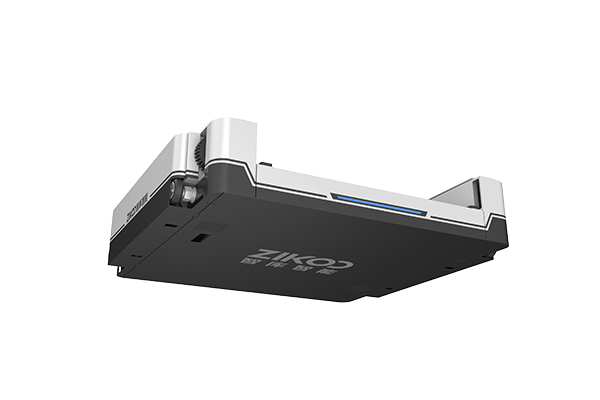
The R-bot Four-way Shuttle is an intelligent warehouse robot purpose-built for pallet-to-person dense storage scenarios. Its slim body, just 125 mm high, maximizes storage utilization. With a load capacity up to 1.5 tons, it handles a broad range of palletized goods. The R-bot delivers flexible four-way movement, intelligent autonomous handling, and supports multi-shuttle collaborative operation. This robot forms the foundation of highly efficient, automated storage systems.
2. Examining the Technical Specifications and Model Options of the R-bot
The R-bot is available in various models, each tailored to specific operational requirements.
| Model Type | Weight (kg) | Rated Load (kg) | Body Dimensions (L×W×H mm) | Supported Pallet Sizes (mm) | Empty Speed (m/s) | Loaded Speed (m/s) | Battery (V/Ah) | Continuous Operation (hours) | Temperature Range (°C) |
|---|---|---|---|---|---|---|---|---|---|
| Standard (R1200B) | 270 | 1200 | 1000 × 972 × 125 | 1200 × 800–1000 | 1.6 | 1.2 | 51.2/40 or 30 | 8 | down to -15 |
| American (R1200A) | 265 | 1200 | 1192 × 840 × 125 | 1016 × 1219 | 1.6 | 1.2 | 51.2/40 or 30 | 8 | down to -15 |
| Japanese (R1500J) | 270 | 1500 | 1192 × 900 × 125 | 1100 × 1100 | 1.6 | 1.2 | 51.2/40 or 30 | 8 | down to -15 |
| Heavy-duty (R1500B) | 275 | 1500 | 1192 × 972 × 125 | 1200 | 1.6 | 1.2 | 51.2/40 or 30 | 8 | down to -15 |
| Heavy-duty Large Pallet (R2000B) | 400 | 2000 | 1250 × 1300 × 150 | 1400 | 1.35 | 1.0 | 51.2/40 or 30 | 7 | down to -15 |
These specifications underscore the R-bot’s versatility and robustness across a range of industrial requirements. Operation down to -15℃ makes it a fit for many specialized environments.
3. Detailing the Diverse Application Scenarios and Custom Solutions
The R-bot Four-way Shuttle adapts well across many industries. It shines in dense storage settings such as e-commerce warehouses and distribution centers where rapid fulfillment matters. We also provide custom options for specialized environments. For cold chain, the solution uses a -25℃ low-temperature dedicated lithium battery for 6–8 hours of continuous operation, a low-temperature charging port, and special PCBA coating suited to high-humidity conditions. For new energy, the R-bot avoids metal materials like copper, zinc, nickel, and lead, using stainless steel frames with blackening treatment and all-rubber buffer wheels to prevent metal contamination. These tailored builds keep performance high in unique operational contexts.
Integrating the H-bot Vertical Bidirectional Shuttle for a Complete Solution
To realize the full potential of automated storage, we integrate the R-bot Four-way Shuttle with the H-bot Vertical Bidirectional Shuttle. This combination creates a complete, multi-dimensional warehousing system.
1. Understanding the Role of the H-bot as a Vertical Transportation Hub
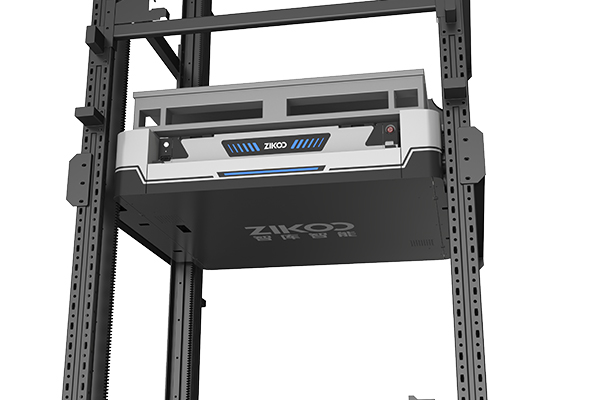
The H-bot Vertical Bidirectional Shuttle functions as the “vertical transportation hub” within our intelligent warehousing systems. It is designed to move pallets between different levels of the racking structure, enabling smooth vertical flow of goods. Its compact layout occupies only a single storage location, maximizing space efficiency. The H-bot’s role is central to linking multiple levels of dense storage, ensuring that the R-bot shuttles can access any pallet location efficiently.
2. Exploring the Technical Parameters and Performance Indicators of the H-bot
The H-bot is engineered for precision and reliability.
| Model Type | Body Weight (kg) | Body Dimensions (L×W×H mm) | Rated Load (kg) | Supported Pallet Sizes (mm) | Positioning Accuracy (mm) | Empty Speed (m/s) | Loaded Speed (m/s) | Empty Acceleration (m/s²) | Loaded Acceleration (m/s²) | Temperature Range (°C) |
|---|---|---|---|---|---|---|---|---|---|---|
| Standard (H1800B) | 345 | 1300 × 1464 × 288 | 1800 | 1200 × 800–1200 | ±1 | 1 | 0.5 | 1 | 0.3 | -25 to 45 |
| American (H1800A) | 325 | 1300 × 1332 × 288 | 1800 | 1016 × 1219 | ±1 | 1 | 0.5 | 1 | 0.3 | -25 to 45 |
| Japanese (H1800J) | 335 | 1300 × 1392 × 288 | 1800 | 1100 × 1100 | ±1 | 1 | 0.5 | 1 | 0.3 | -25 to 45 |
| Heavy-duty Large Pallet (Custom) | Custom | Custom | Custom | Custom | ±1 | Custom | Custom | Custom | Custom | -25 to 45 |
The H-bot’s ±1 mm positioning accuracy supports precise, safe pallet handling. Its robust design operates across a wide temperature range, suitable for diverse environments, including cold storage.
3. Realizing the Full Potential of a Six-Way Shuttle System for Enhanced Efficiency
When the H-bot and R-bot work together, they form a six-way shuttle system, creating a three-dimensional warehousing network. This system enables movement in all six spatial directions (X, Y, and Z axes), significantly improving the overall throughput and efficiency of the warehousing system. This integrated solution is ideal for high-rack stereoscopic warehouses and urban warehousing centers, providing unparalleled flexibility and speed. We believe this integrated approach redefines automated storage.
You might be interested in Six-Way Shuttle System: Multi-Scenario Solutions Redefining Pallet Storage and Picking.
Implementing 4-Way Shuttle Systems to Optimize Finished Goods Storage
Rolling out a four-way shuttle system calls for careful planning around existing infrastructure, potential ROI, and future scalability. We guide our clients through each step to ensure a smooth transition and maximum benefit.
1. Planning for Seamless Integration into Existing Warehouse Infrastructures
Integrating a four-way shuttle system into an existing warehouse starts with a detailed assessment of the current layout, racking, and operational processes. Our team works closely with clients to design a solution that minimizes disruption and maximizes compatibility. This often means optimizing rack configurations and ensuring reliable communication between the shuttle system and existing warehouse management software. Proper planning sets up an efficient deployment.
2. Calculating the Return on Investment and Long-Term Cost Savings
Investing in automated storage solutions like four-way shuttle systems delivers strong long-term gains. Businesses will experience reduced labor costs, increased storage capacity, and fewer operational errors. The enhanced efficiency and throughput lead to faster order fulfillment and improved customer satisfaction, which can drive revenue growth. We help clients calculate the specific ROI for their operations, demonstrating the clear financial advantages of automation. We are confident that our solutions provide substantial value.
For a deeper understanding of the financial benefits, consider reading Smart Warehousing Starts Here: Cost-Effective Four-Way Shuttle Systems.
3. Ensuring Scalability and Adaptability for Future Business Growth
Modern businesses need solutions that adapt as demand changes. Four-way shuttle systems scale naturally; additional shuttles can be added to increase throughput as needed, and the modular racking design allows for easy expansion of storage capacity. This adaptability ensures that the system can grow with your business, providing a future-proof solution for finished goods storage. We design our systems with future growth in mind.
Unlock the Future of Your Warehouse with Zikoo Robotics
Ready to modernize your finished goods storage with cutting-edge automation? Zikoo Smart Technology Co., Ltd. offers advanced four-way shuttle systems and integrated solutions designed to maximize your warehouse efficiency, density, and throughput. Our expert team is prepared to help you design and implement a tailored solution that meets your unique operational needs and drives significant ROI. Contact us today to discuss how we can revolutionize your logistics operations.
Email: info@zikoo-int.com
Phone: (+86)-19941778955
FAQs
1. What are the primary benefits of using 4-way shuttle systems for finished goods storage?
Four-way shuttle systems raise storage density by removing wide aisles and making better use of space. They lift retrieval speeds and throughput, which reduces bottlenecks. These systems also lower labor costs, minimize human error, and provide greater flexibility and scalability compared to traditional storage methods.
2. How do 4-way shuttle systems improve storage density compared to traditional methods?
They allow pallets to be stored deeper and higher within racks. Multi-directional movement enables flexible rack layouts that maximize cubic space. This design reduces the need for extensive aisles, converting circulation space into storage space, which is a key advantage over static racking.
3. Can Zikoo’s R-bot Four-Way Shuttle operate in cold storage environments?
Yes, Zikoo’s R-bot Four-way Shuttle offers a specialized cold chain custom solution. This version features a -25℃ low-temperature dedicated lithium battery, ensuring 6–8 hours of continuous operation in extreme cold. It also includes a low-temperature charging port and special PCBA coating for enhanced safety in high-humidity conditions.
4. What is the role of the H-bot Vertical Bidirectional Shuttle in a 4-way shuttle system?
The H-bot Vertical Bidirectional Shuttle acts as the vertical transportation hub in our intelligent warehousing systems. It efficiently moves pallets between different storage levels, integrating tightly with the R-bot Four-way Shuttles. This collaboration creates a six-way shuttle system, enabling comprehensive 3D movement and significantly boosting overall system throughput.
5. What kind of ROI can businesses expect from implementing these automated storage solutions?
Businesses can expect a significant return on investment through reduced operational costs, particularly labor expenses. Increased storage density optimizes warehouse space, deferring or eliminating the need for costly expansions. Improved throughput and accuracy lead to faster order fulfillment, enhanced customer satisfaction, and a stronger competitive position in the market.


