


Warehouses feel alive to me, each lift and pallet moving in a rhythm that either pays for itself or bleeds cash. When that rhythm falters, space and labor become costly pain points, which is why four-way shuttles have earned a permanent spot in my toolkit. In the pages ahead, I walk through where traditional operations fall short, how four-way shuttles work, why Zikoo’s R-bot lineup stands out with its specific models and cold chain options, how we pair it with the H-bot for true six-direction motion, the software that makes multi-robot coordination practical, and the gains I see day-to-day in density, throughput, safety, and scalable growth, followed by clear answers to common questions.
Why Traditional Warehouse Operations Need Advanced Automation Solutions
Traditional warehouse operations often struggle with inherent limitations that hinder efficiency and scalability. We see businesses facing increasing pressure to meet growing customer demands while simultaneously battling rising operational costs and space constraints. These challenges necessitate a shift towards more sophisticated automation.
1. Addressing the challenges of limited space and rising operational costs
Limited warehouse space presents a significant hurdle for many businesses. Traditional storage methods, such as static racking, often fail to maximize vertical and horizontal space utilization. I still walk into sites where the cubic capacity is half-used even though every aisle looks full. This inefficiency directly contributes to higher operational costs, including rent, utilities, and labor. Manual handling processes further exacerbate these issues, leading to increased labor expenses and potential for human error. The drive for cost-effectiveness and optimal space usage compels companies to seek innovative solutions.
2. Overcoming the limitations of conventional storage and retrieval methods
Conventional storage and retrieval methods, like forklifts and manual picking, are inherently slow and labor-intensive. They often result in bottlenecks, reduced throughput, and increased order fulfillment times. The reliance on human operators also introduces safety risks and inconsistencies in operations. These methods lack the precision and speed required to keep pace with today’s dynamic supply chains. If you’re interested, check 《Automated Warehousing Trends: Efficiency, Flexibility, and Cost – The Advantages of Four-Way Shuttle Systems》.
3. The growing demand for higher throughput and greater efficiency in logistics
The e-commerce boom and evolving consumer expectations have amplified the demand for faster order fulfillment and higher throughput. Businesses require systems that can process a large volume of orders quickly and accurately. Traditional methods are simply not designed to handle this scale, leading to customer dissatisfaction and lost revenue. Modern logistics necessitates solutions that can deliver both speed and efficiency.
How 4-Way Shuttle Systems Revolutionize Warehouse Storage and Retrieval
Four-way shuttle systems represent a significant leap forward in warehouse automation. They offer unparalleled flexibility and efficiency by enabling movement in all four horizontal directions within a racking structure. This capability fundamentally transforms how goods are stored, accessed, and moved throughout a facility.
1. Defining the core concept of a Four-Way Pallet Shuttle system in logistics
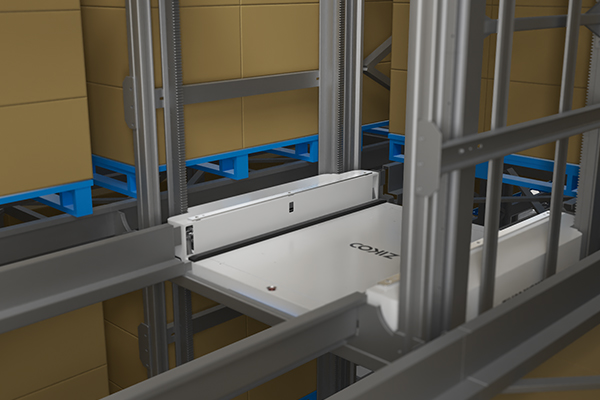
A four-way shuttle system utilizes autonomous robotic vehicles that can move pallets or containers in any direction, forward, backward, left, and right, within a dedicated racking structure. These shuttles operate independently on each level of the rack, retrieving and depositing goods with precision. This multi-directional movement eliminates the need for aisles dedicated solely to shuttle transfer, maximizing storage density. The system operates on a goods-to-person principle, bringing items directly to picking stations.
2. Exploring the mechanics of intelligent autonomous handling and movement
The intelligence of these shuttles lies in their advanced navigation and control systems. Each shuttle is equipped with sensors and software that allow it to navigate autonomously, identify storage locations, and execute tasks with high accuracy. They can communicate with a central warehouse management system (WMS) or warehouse execution system (WES) to receive instructions and report their status. This autonomous operation minimizes human intervention and optimizes travel paths. On projects I commission, the difference is obvious on day one, fewer touches and cleaner task flows.
3. Explaining the benefits of multi-shuttle collaborative operation for scalability
Multi-shuttle collaborative operation means that multiple four-way shuttles can work simultaneously and independently within the same racking system. This parallel processing capability drastically increases throughput and system redundancy. Should one shuttle require maintenance, others can continue operations, ensuring uninterrupted workflow. The modular nature of these systems allows for easy scalability; additional shuttles can be introduced to meet increased demand without significant infrastructure changes. If you’re interested, check 《The New Trend in Automated Warehousing: Why Four-Way Shuttle Systems Stand Out》.
Zikoo’s R-bot Four-Way Shuttle: A Leader in Pallet-to-Person Automation
Zikoo Smart Technology Co., Ltd. is at the forefront of pallet-to-person robotics, with our R-bot Four-way Shuttle exemplifying advanced automation. We designed the R-bot to meet the rigorous demands of modern warehousing, offering a robust solution for diverse operational needs.
1. Introducing the R-bot’s design for dense storage and intelligent handling
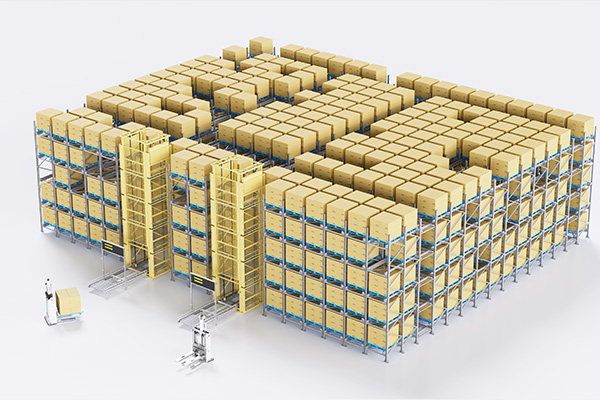
The R-bot is an intelligent warehouse robot specifically optimized for dense storage scenarios. Its slim body, only 125 mm thick, allows for maximum storage density within racking systems. Despite its compact size, it handles loads up to 1.5 tons, making it suitable for a wide range of palletized goods. The R-bot’s flexible four-way movement enables efficient navigation and intelligent autonomous handling, ensuring precise placement and retrieval. In tight backrooms and tall racks, that thin profile often makes the difference between cramming in another lane or not.
2. Detailing the R-bot’s technical specifications and model variations
The R-bot is available in several models, each tailored to specific operational requirements:
| Model | Weight (kg) | Rated Load (kg) | Dimensions (L×W×H mm) | Supported Pallet Sizes (mm) | Empty Speed (m/s) | Loaded Speed (m/s) | Battery Type & Capacity | Continuous Operation (hours) | Temperature Range (°C) |
|---|---|---|---|---|---|---|---|---|---|
| R1200B (Standard) | 270 | 1200 | 1000 × 972 × 125 | 1200 × 800–1000 | 1.6 | 1.2 | 51.2V/40Ah Lithium | 8 | -15 to 45 |
| R1200A (American) | 265 | 1200 | 1192 × 840 × 125 | 1016 × 1219 | 1.6 | 1.2 | 51.2V/40Ah Lithium | 8 | -15 to 45 |
| R1500J (Japanese) | 270 | 1500 | 1192 × 900 × 125 | 1100 × 1100 | 1.6 | 1.2 | 51.2V/40Ah Lithium | 8 | -15 to 45 |
| R1500B (Heavy-duty) | 275 | 1500 | 1192 × 972 × 125 | 1200 | 1.6 | 1.2 | 51.2V/40Ah Lithium | 8 | -15 to 45 |
| R2000B (Heavy-duty Large Pallet) | 400 | 2000 | 1250 × 1300 × 150 | 1400 | 1.35 | 1.0 | 51.2V/30Ah Lithium | 7 | -15 to 45 |
These specifications show how the range covers common regional pallet standards and heavier loads, which makes matching model to site conditions straightforward and reliable in practice.
3. Showcasing the R-bot’s adaptability across diverse application scenarios
The R-bot excels in various applications, from e-commerce fulfillment centers to manufacturing facilities. Its ability to handle different pallet sizes and weights makes it a flexible solution for diverse inventory types. We have seen its successful deployment in dense storage environments where space optimization is critical. The R-bot’s intelligent handling capabilities ensure efficient and accurate movement of goods.
4. Highlighting specialized solutions such as cold chain and new energy applications
For specialized environments, the R-bot offers custom solutions. Our cold chain variant features a -25℃ low-temperature dedicated lithium battery, providing 6–8 hours of continuous operation. It includes a low-temperature charging port for automatic charging and special PCBA coating for safety in high-humidity conditions. For new energy applications, the R-bot’s design avoids metal contamination by using stainless steel frames and all-rubber buffer wheels. If you’re interested, check 《Cold Chain Warehousing Revolution: Four-Way Shuttles 25℃ Extreme Challenge》.
Integrating 4-Way Shuttles for Enhanced Warehouse System Performance
The true power of four-way shuttle systems emerges when integrated into a comprehensive warehouse automation strategy. This integration allows for a synergistic operation that maximizes efficiency and throughput, extending beyond simple storage and retrieval.
1. Achieving six-way shuttle system functionality with vertical transportation robots
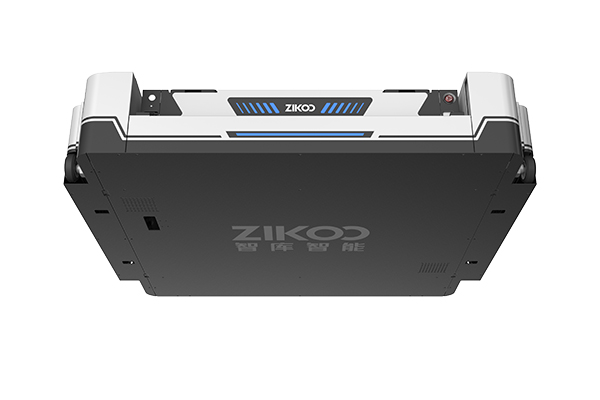
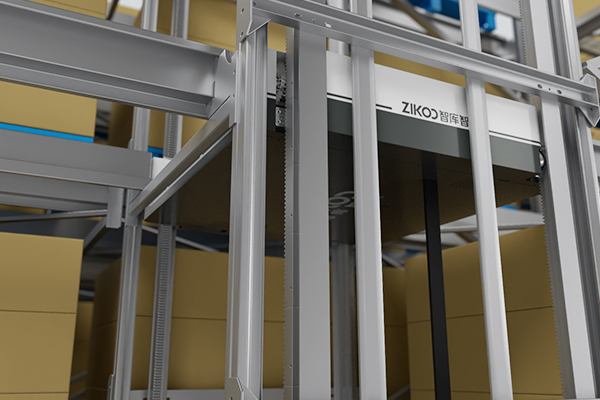
By combining the R-bot Four-way Shuttle with our H-bot Vertical Two-Way Shuttle, we achieve a six-way shuttle system. The H-bot acts as a vertical transportation hub, moving pallets between different levels of the racking structure. This collaboration creates a three-dimensional warehousing network, enabling movement in all six spatial directions. This integrated approach significantly enhances the overall operational efficiency of the warehousing system.
2. Optimizing space utilization and operational efficiency through system integration
Integrated shuttle systems dramatically improve space utilization by eliminating the need for wide aisles and maximizing vertical storage. The coordinated movement of shuttles and vertical lifts ensures a continuous flow of goods, reducing idle time and bottlenecks. This optimization translates into higher storage density and faster material flow within the warehouse. The system’s ability to adapt to varying storage depths and heights further enhances its efficiency.
3. The role of intelligent software in coordinating multi-robot operations
Intelligent software, such as our PTP Smart Warehouse Software, is crucial for orchestrating multi-robot operations. This software suite (WMS/WES/WCS/RCS) manages inventory, optimizes task assignments, and coordinates the movement of all robots. It ensures clear communication between shuttles, lifts, and other automated equipment, preventing collisions and maximizing efficiency. Real-time data analysis and predictive algorithms further enhance system performance. If you’re interested, check 《PTP Intelligent Warehousing Platform: Building a Flexible and Smart Logistics Ecosystem》.
The Tangible Benefits of Implementing 4-Way Shuttle Systems in Your Warehouse
Implementing four-way shuttle systems offers numerous advantages that directly impact a warehouse’s bottom line and operational capabilities. These benefits range from increased storage capacity to improved safety and scalability.
1. Maximizing storage density and minimizing warehouse footprint
Four-way shuttle systems significantly increase storage density by allowing deep-lane storage and reducing aisle requirements. This design maximizes the use of available floor space and vertical height, often doubling storage capacity compared to conventional methods. A smaller warehouse footprint translates into lower real estate costs and reduced energy consumption.
2. Significantly improving throughput and accelerating order fulfillment
The independent and simultaneous operation of multiple shuttles dramatically boosts throughput. Pallets can be retrieved and delivered to picking stations much faster than with manual or two-way shuttle systems. This accelerated process is critical for meeting tight delivery schedules and fulfilling high volumes of orders, especially in e-commerce. Faster order fulfillment directly enhances customer satisfaction.
3. Reducing labor costs and enhancing workplace safety
Automated four-way shuttle systems reduce the reliance on manual labor for repetitive and strenuous tasks. This automation lowers labor costs, addresses labor shortages, and reallocates human resources to more value-added activities. By minimizing human-machine interaction, these systems significantly enhance workplace safety, reducing the risk of accidents and injuries.
4. Providing flexibility and scalability for future growth and changing demands
The modular design of four-way shuttle systems offers inherent flexibility and scalability. Businesses can easily expand their storage capacity and throughput by adding more shuttles or integrating additional racking modules. This adaptability allows warehouses to respond quickly to fluctuating market demands and future growth without major operational disruptions. It ensures that the system remains relevant and efficient over time. If you’re interested, check 《Flexible Smart Warehousing: Tackling Multi-SKU Challenges in the Fast Fashion Era》.
Unlock Your Warehouse’s Full Potential
Ready to transform your warehouse operations with state-of-the-art automation? Zikoo Smart Technology Co., Ltd. offers advanced four-way shuttle systems designed to maximize your storage density, increase throughput, and reduce operational costs. Contact us today to discuss how our solutions can revolutionize your logistics.
Email: info@zikoo-int.com
Phone: (+86)-19941778955
FAQs
1. What is the primary advantage of a 4-way shuttle system over a 2-way shuttle?
The primary advantage of a 4-way shuttle system is its ability to move in all four horizontal directions within the racking structure. This multi-directional movement eliminates the need for dedicated transfer aisles, significantly increasing storage density and operational flexibility compared to 2-way shuttles which only move forward and backward.
2. How do 4-way shuttle systems handle different pallet sizes and weights?
Zikoo’s R-bot Four-way Shuttle models are designed to accommodate various pallet sizes and weights. For instance, models like the R1200B support 1200 × 800–1000 mm pallets with a 1200 kg load capacity, while the R2000B handles larger 1400 mm pallets up to 2000 kg. This versatility ensures adaptability to diverse inventory requirements.
3. Can 4-way shuttle systems operate in extreme temperature environments?
Yes, Zikoo’s R-bot Four-way Shuttle offers specialized solutions for extreme temperature environments. Our cold chain custom solution, for example, features a -25℃ low-temperature dedicated lithium battery and specialized components for safe and continuous operation in refrigerated or frozen warehouses.
4. What kind of infrastructure changes are needed to implement a 4-way shuttle system?
Implementing a 4-way shuttle system typically requires a specialized racking structure designed for deep-lane storage and shuttle operation. While it maximizes space, existing warehouses may need modifications to accommodate the new racking and ensure proper integration with vertical transportation systems and control software.
5. How does Zikoo’s R-bot integrate with existing warehouse management systems?
Zikoo’s R-bot integrates with existing warehouse management systems (WMS) through our PTP Smart Warehouse Software platform (WMS/WES/WCS/RCS). This software suite ensures intelligent coordination, task optimization, and real-time data exchange, allowing for efficient management of all automated operations.


